
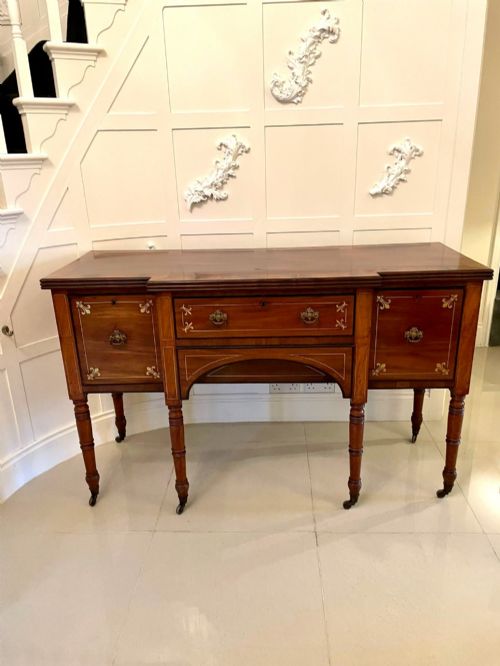
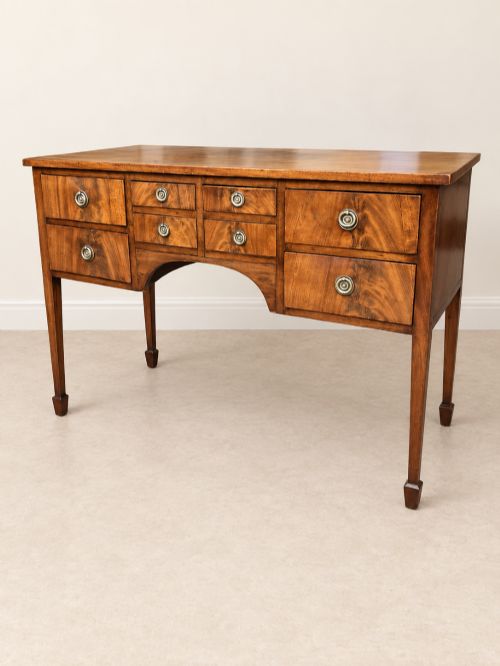
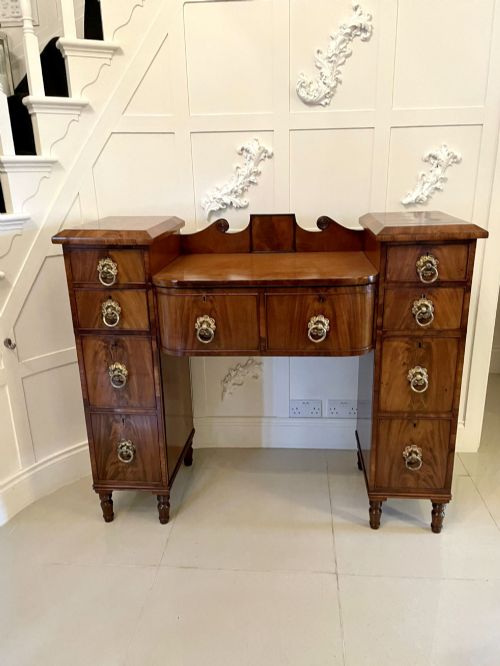
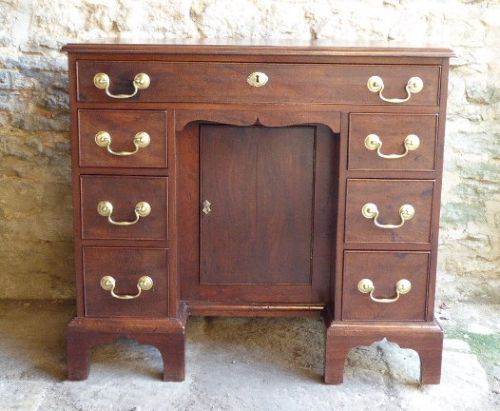
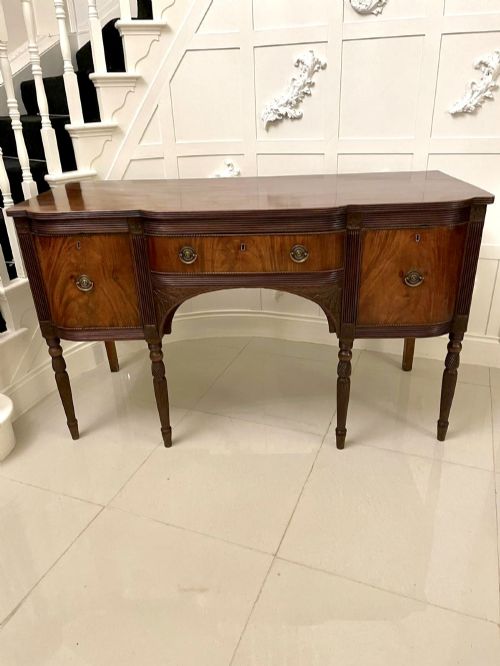
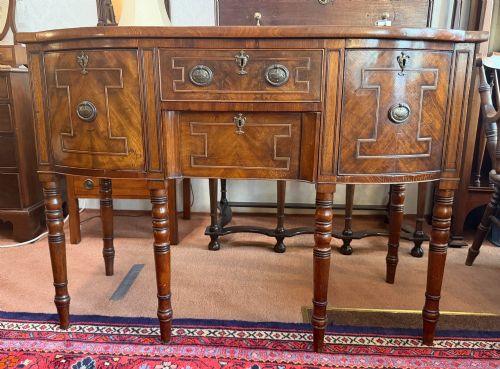
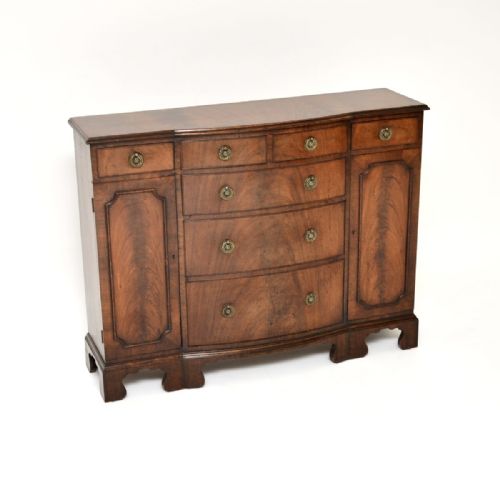
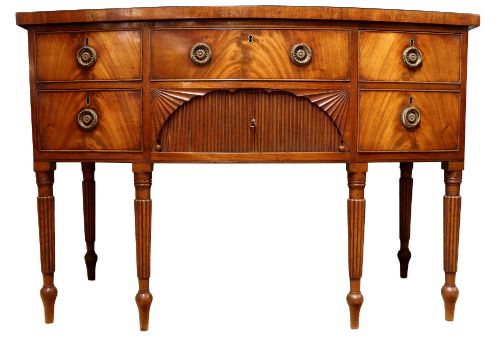
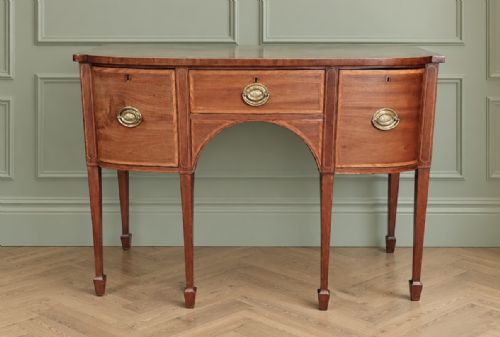
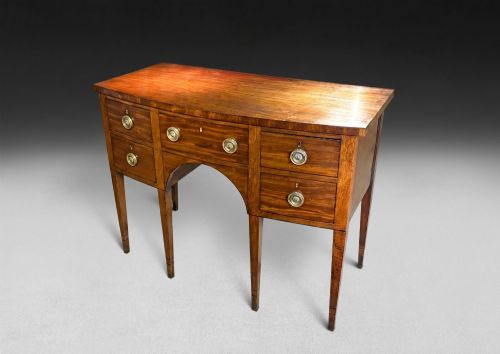
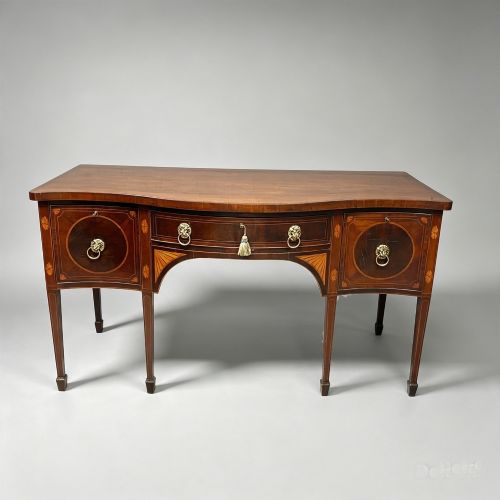
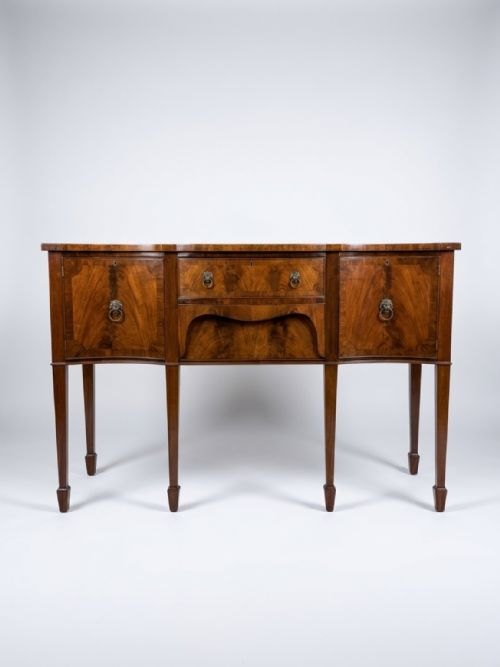
Georgian Mahogany Sideboard Table
A georgian mahogany sideboard table brings formal dining storage and rich timber grain into a room, spanning straight, bow-front and serpentine forms.
Georgian Mahogany Sideboard Table
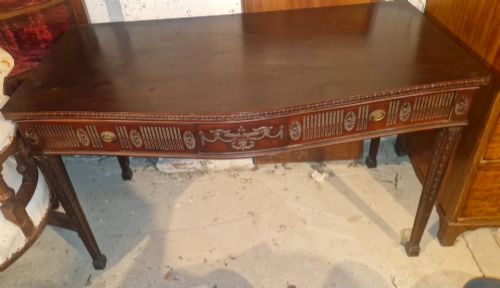
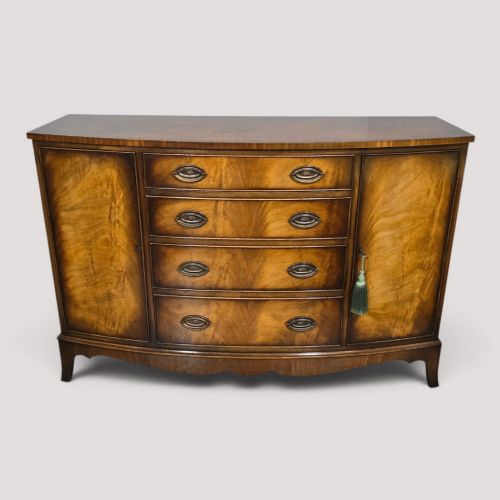
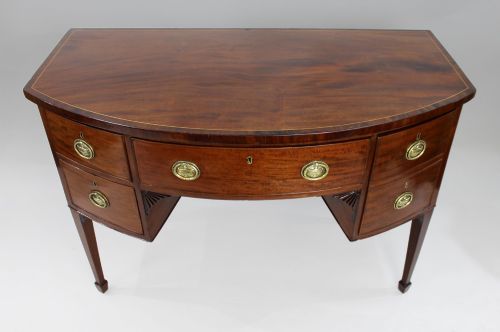
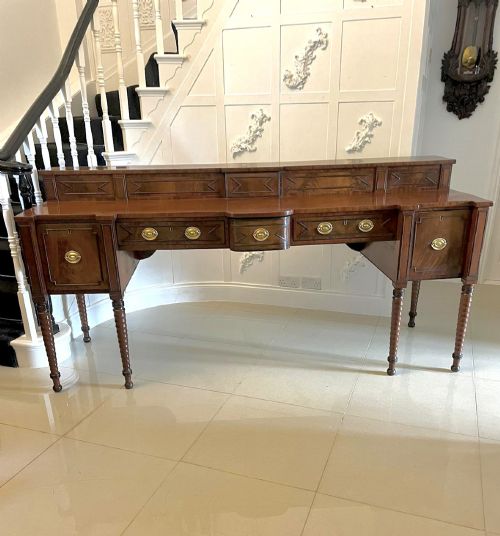
When you search for a georgian mahogany sideboard table, you encounter servers, consoles and dining-room pieces spanning the eighteenth and nineteenth centuries, alongside later revival interpretations. The forms include straight-front examples, bow-fronts, breakfronts and serpentine shapes designed for serving food and displaying silver in dining spaces.
The pieces on this page originate primarily from the Georgian, George III and Regency periods, augmented by Victorian, Edwardian and twentieth-century revivals. Regional variations such as Irish and Scottish pieces appear alongside English craftsmanship, utilising specific proportions suited to period interiors.
Timber and Inlay
Cabinet makers built these pieces using solid mahogany and flame mahogany veneer applied to secondary woods like oak, often selecting cuts for rich figure and depth of colour. Surfaces frequently feature contrasting decorative elements including satinwood, boxwood inlay and purpleheart banding.
Structural finesse relies on precise joinery, dovetailed drawer construction and turned or tapered supports, sometimes finished with brass handles, gallery rails or paw feet depending on the specific stylistic period.
Listings feature mahogany, satinwood inlay, boxwood and brass across Georgian, Regency and Edwardian periods.
Proportion and Finish
Quality rests in the crispness of the timber selection, particularly the choice of figured veneers, and the restraint or ambition of the inlay work. Pieces displaying harmonious proportions, such as very narrow or small-scale formats, demand greater joinery skill.
The integrity of the original surfaces, the subtlety of edge banding and the retention of period brass hardware distinguish finer examples from standard production pieces and later revivals.
M. D. Miller and Sons·George Hepplewhite·George Oakley
The Georgian Mahogany Sideboard Table Glossary
- Breakfront
- A cabinet or sideboard whose central section projects forward from the flanking outer sections. This arrangement creates architectural depth and visual weight.
- Serpentine
- A front profile characterised by a convex central curve flanked by concave sweeps, or vice versa. It requires considerable skill from the woodworker to shape accurately.
- Bow-front
- A convex, outwardly curved front that softens the angles of a room. This shape became popular during the late eighteenth century for servers and sideboards.
- Flame mahogany
- A veneer cut from the fork of the mahogany tree where the branch meets the trunk. It yields a distinctive, flame-like grain pattern prized for decorative drawer fronts.
- Inlay
- A technique where contrasting woods such as satinwood or boxwood are inserted into recesses cut into the primary surface. It creates geometric or floral borders.
Georgian Mahogany Sideboard Table: Frequently Asked Questions
What is a georgian mahogany sideboard table used for?
These tables served historically in dining rooms for holding dishes, silverware and serving platters during large meals. Today, they function similarly in domestic settings while providing surface display space and concealed drawer storage.
Their narrow profile allows them to sit flush against dining room or hallway walls without obstructing movement through the space.
How do I tell a georgian piece from a revival?
Original pieces from the eighteenth and early nineteenth centuries exhibit construction methods appropriate to their era, including hand-cut dovetails and timber shrinkage patterns. Revival pieces from the Edwardian or later periods often employ standardised fixings and different secondary woods.
Examining the underside, drawer linings and backboards reveals the age and working methods of the cabinet maker.
What is the difference between a sideboard and a serving table?
Serving tables generally offer an open frame beneath the top surface without integrated banks of drawers or cupboards. Sideboards incorporate built-in drawers and sometimes central cupboards for storing cutlery and linen.
Both forms share similar decorative vocabularies and timber choices across the Georgian and Regency periods.
How do I care for mahogany veneer?
Mahogany responds well to regular dusting with a soft, dry cloth and occasional applications of traditional beeswax to nourish the timber. Direct sunlight and sudden changes in room temperature should be avoided to prevent the veneer from lifting.
Keeping the surface clear of excessive moisture protects both the polished finish and the underlying secondary woods.