
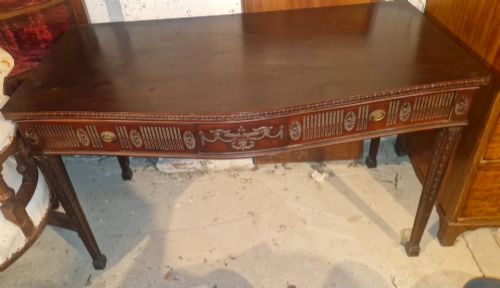
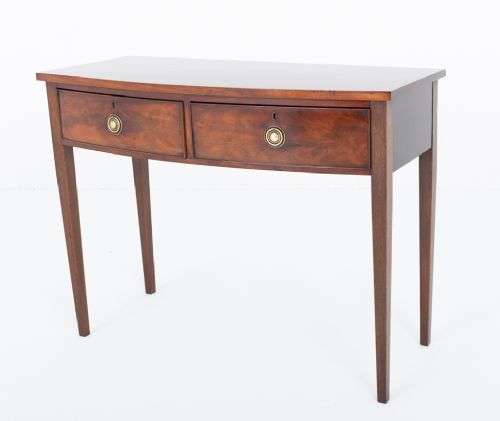
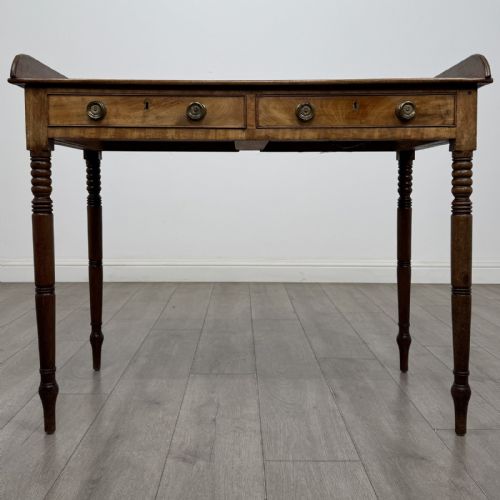
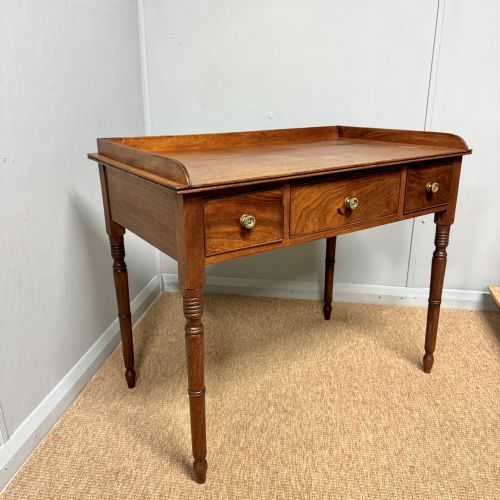
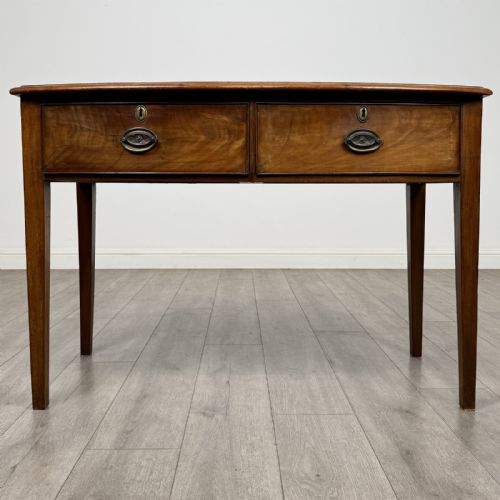
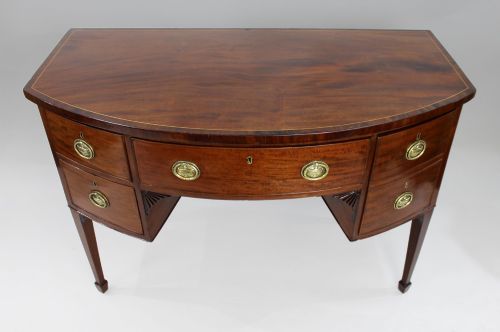
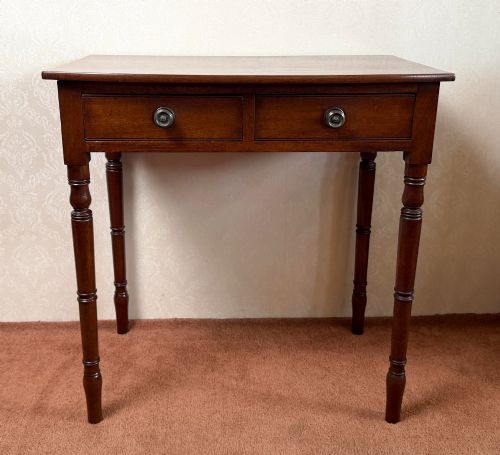
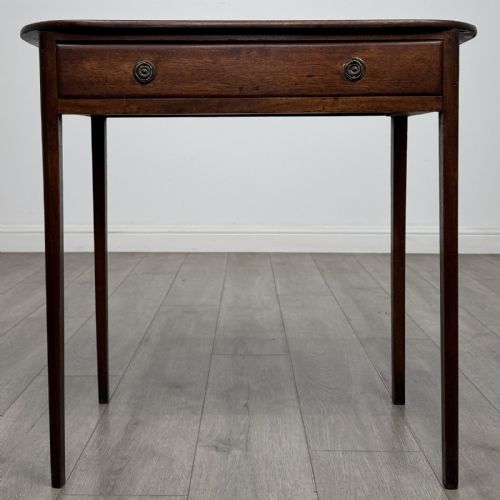
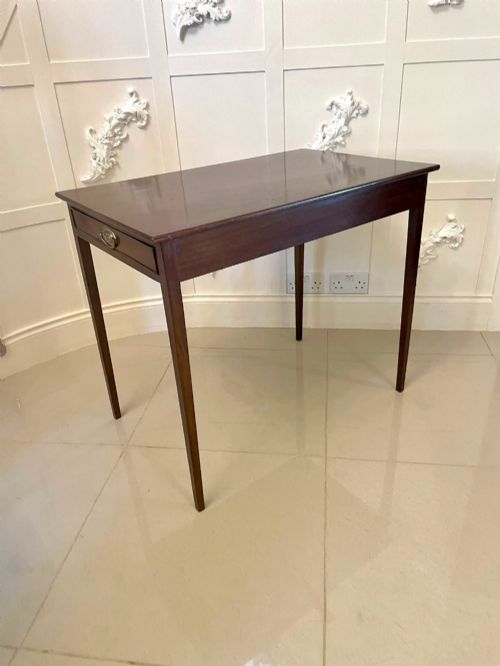
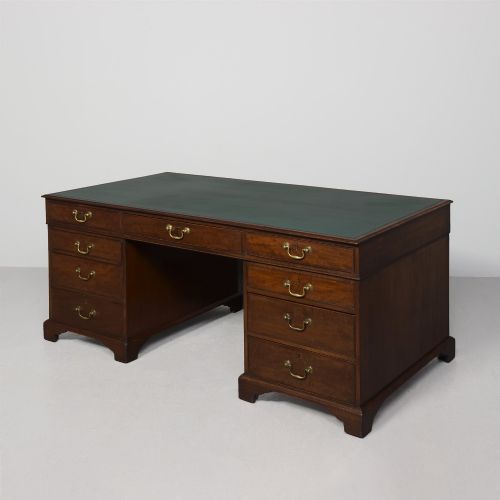
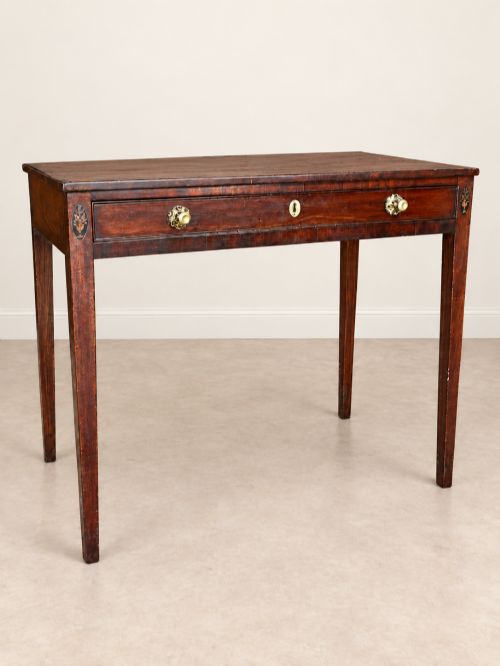
Georgian Mahogany Side Desk
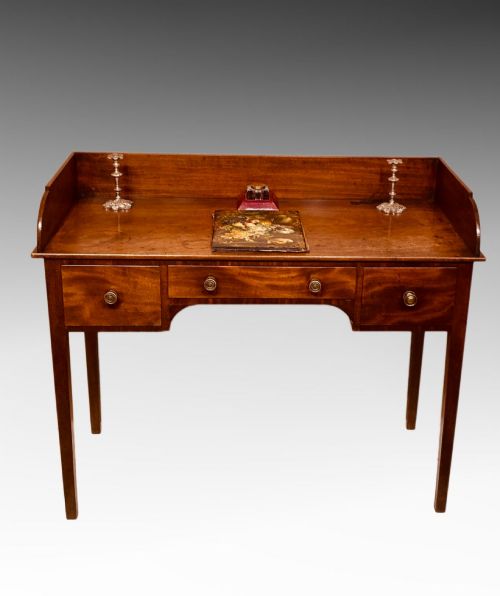
A georgian mahogany side desk brings timber warmth and functional writing space into a room.
Georgian Mahogany Side Desk
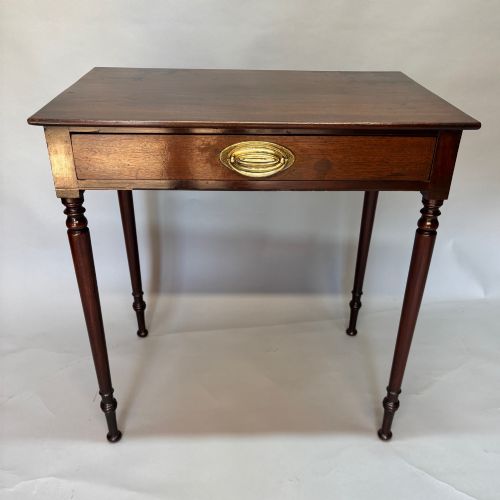
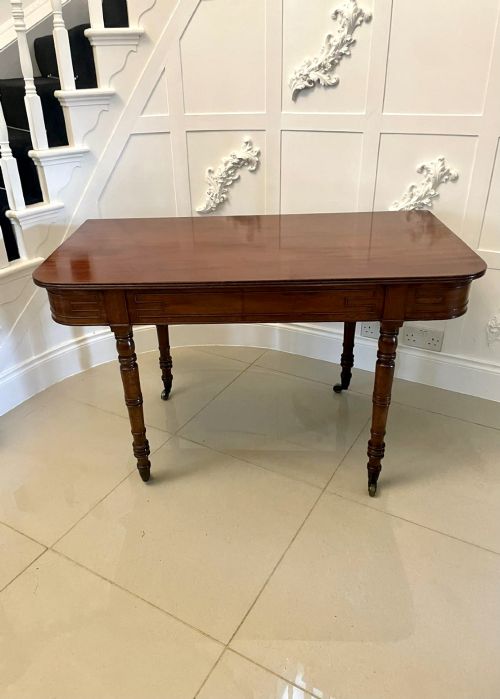
When searching for a georgian mahogany side desk, buyers encounter compact writing surfaces, lowboys, and occasional tables dating primarily from the eighteenth and nineteenth centuries. These pieces combine domestic utility with refined cabinetmaking, serving as practical writing stations or hallway side tables.
The selection ranges from George III kneehole desks to Pembroke tables and serpentine side tables. Mahogany dominates the corpus, often enriched with cross banding, satinwood inlay, or leather writing inserts.
Makers and designers of the period followed neoclassical and Chippendale styles, producing forms that transition easily between study spaces, drawing rooms, and bedrooms.
How They Were Made
Cabinetmakers built these tables using dense tropical hardwoods, predominantly mahogany and Cuban mahogany, frequently paired with secondary timbers for internal drawer construction. Timber selection prioritized straight-grained boards for structural integrity alongside flame grain veneers for primary visual surfaces.
Surface decoration relied on precision woodworking techniques such as cross banding, wood inlay, and fine stringing in contrasting timbers like satinwood. Brass hardware, including drop handles and escutcheons, completed the construction.
Leather inserts provided durable writing surfaces, while traditional joinery methods secured the frames, drawers, and drop leaves.
Listings feature mahogany, satinwood, brass, and leather across George III, Regency, and Victorian periods.
What Varies in Quality
The standard of a georgian mahogany side desk depends heavily on the choice of timber and the execution of its veneers. Flame grain mahogany and precise satinwood cross banding distinguish higher-tier examples from plain utility pieces.
Construction details reveal the maker's hand, particularly in the dovetailing of drawer boxes, the symmetry of inlay work, and the crispness of carved mouldings or bracket feet. Original brass hardware and intact leather writing surfaces preserve the integrity of the piece.
Gillows
The Georgian Mahogany Side Desk Glossary
- Cross banding
- A border technique where veneer strips run perpendicular to the main grain of the furniture top. This decorative framing highlights the central timber panel.
- Lowboy
- A small dressing table or side table featuring one or more rows of drawers beneath a flat top. These low tables typically stand on slender cabriole or straight legs.
- Pembroke table
- A drop-leaf table with hinged flaps on opposing sides designed to extend the surface area. They often incorporate a single drawer and slender legs.
- Serpentine
- A curved line that bends outward at the centre and inward at the sides. This contour appears frequently on the drawer fronts of finer side tables.
- Satinwood
- A lustrous, hard timber native to Ceylon and the West Indies used for contrasting inlay and stringing. Its pale yellow colour provides sharp definition against dark mahogany.
Georgian Mahogany Side Desk: Frequently Asked Questions
What is a georgian mahogany side desk used for?
These versatile tables served primarily for correspondence, household administration, and incidental display in eighteenth and nineteenth-century interiors. Their compact proportions allowed them to sit flush against walls in hallways, libraries, and bedrooms.
Today, they function effectively as laptop desks, dressing tables, or console surfaces in modern living spaces.
How do I distinguish George III pieces from later copies?
Authentic period pieces exhibit hand-cut dovetails, timber shrinkage appropriate to age, and secondary woods consistent with eighteenth-century workshop practices. Later revival items often display machine precision or timber characteristics typical of the Edwardian era.
Examining drawer linings and interior framing provides clear clues to the actual date of manufacture.
How should I care for mahogany furniture?
Keep wooden surfaces away from direct sunlight and heat sources to prevent the timber and veneers from drying out or splitting. Routine dusting with a soft, dry cloth maintains the finish without needing heavy polishes.
Condition leather writing inserts periodically with specialist balms to keep the material supple.
What styles fall under the Georgian heading?
The Georgian era encompasses several distinct design movements, including the heavy carved forms of the George II period and the neoclassical elegance associated with George III and Sheraton. Regency designs later introduced bolder classical motifs inspired by ancient Greece and Rome.
Each style brought shifts in leg shapes, ornamentation, and timber treatments.