
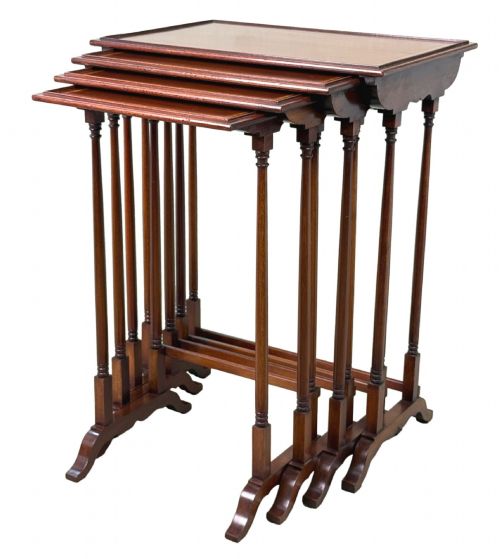


Georgian Mahogany Nest Tables
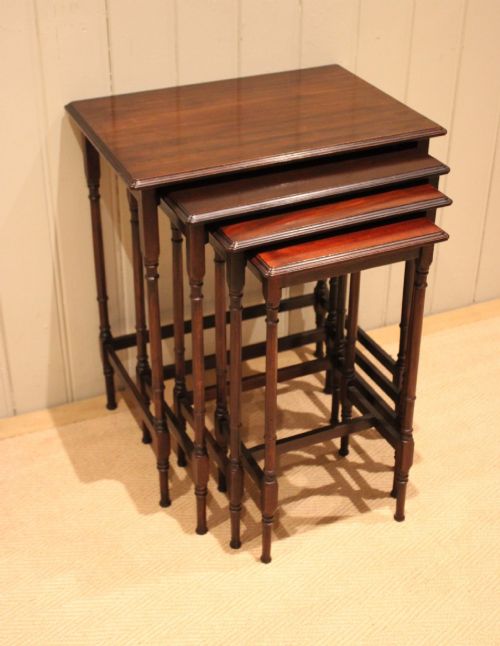
Georgian mahogany nest tables are stacking sets designed for flexibility, offering multiple surfaces that tuck neatly away when floor space matters most.
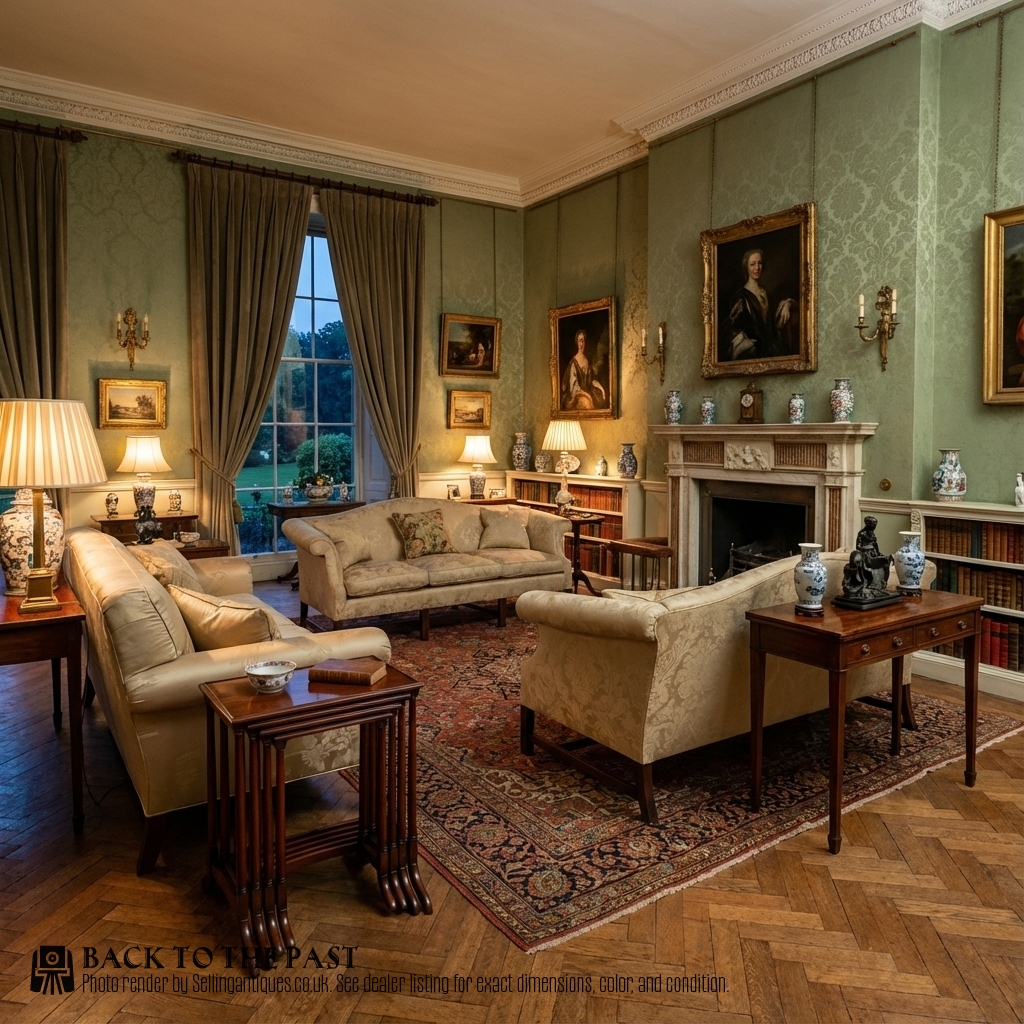
Georgian Mahogany Nest Tables
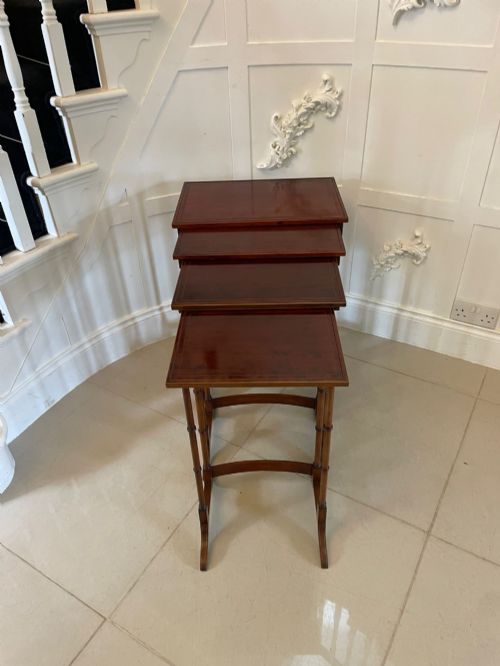
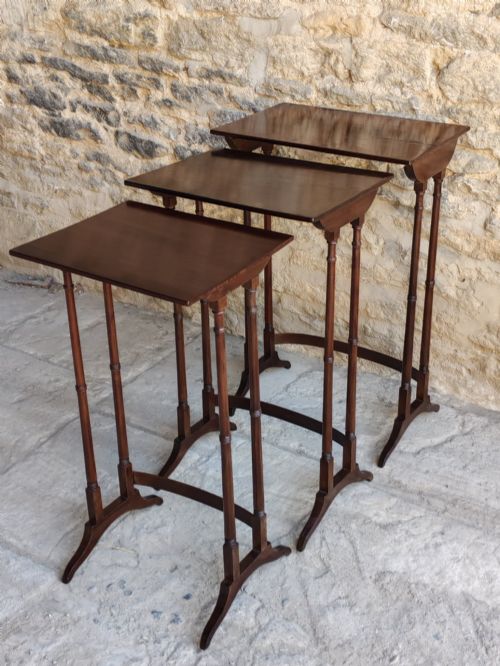
When you search for georgian mahogany nest tables, you encounter sets of graduated tables designed to slide beneath one another. These pieces emerge in formats containing three or four surfaces, often termed quartetto tables in period references.
While genuine period examples exist from the nineteenth century and earlier, many pieces date from later revivals during the Edwardian era and the early twentieth century. These later interpretations faithfully adopt Georgian proportions, maintaining the practicality of the original stacking concept.
What varies in quality
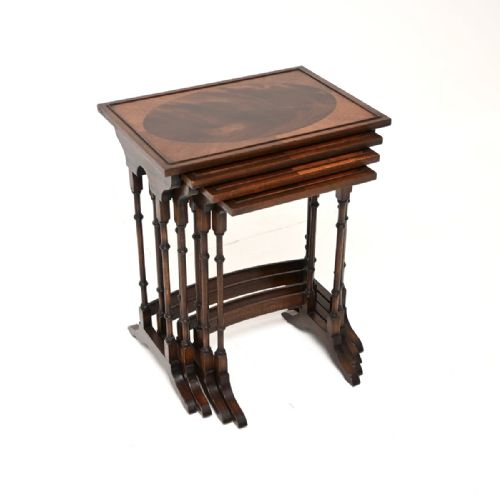
The standard of timber selection and grain figuring largely distinguishes the finer sets from ordinary production. High-grade pieces display carefully chosen veneers and crisp inlay work that remains intact across all surfaces.
Structural integrity also dictates worth, seen in how smoothly the tables slide into their nesting position and whether the joints maintain rigidity after decades of daily use.
Listings feature mahogany, satinwood, yew, and boxwood inlay across pieces spanning the Georgian, Victorian, Edwardian, and 1930s periods.
Waring & Gillow
The Georgian Mahogany Nest Tables Glossary
- Quartetto
- A matched set of four stacking tables designed to nest together. The term appears frequently in Edwardian and nineteenth-century descriptions for nesting sets.
- Veneer
- A thin layer of figured wood applied to a secondary timber base. This technique allowed cabinetmakers to display striking grain patterns on table tops.
- Inlay
- Contrasting woods such as boxwood or satinwood embedded into the primary surface to create decorative borders or motifs. It adds visual depth to mahogany furniture.
- Regency
- A British architectural and furniture style spanning the early nineteenth century. Pieces from this period often inform the classical lines seen in later nest tables.
Georgian Mahogany Nest Tables: Frequently Asked Questions
What is a quartetto nest of tables?
A quartetto nest consists of four tables graduated in size so each smaller one slides directly beneath the next largest one. This arrangement provides multiple usable surfaces while occupying the floor space of only a single small table.
Cabinetmakers favoured this format for entertaining, allowing hosts to deploy extra tea or side tables instantly and store them away compactly when guests departed.
Are these tables solid mahogany?
Most examples combine solid mahogany frames and legs with mahogany veneers applied to the table tops. Veneering allowed makers to utilise timber with attractive grain patterns without compromising the structural strength of the frame.
Secondary timbers and lighter woods like satinwood or boxwood also appear as inlay details or secondary framing materials in various pieces.
How were these tables used originally?
These tables served primarily as flexible occasional furniture for taking tea, needlework, or holding lamps in drawing rooms. Their stacking design meant servants could quickly rearrange a room for social gatherings without cluttering the space permanently.
Today, they function well as side tables, lamp stands, or coffee table alternatives in modern living areas where floor space remains at a premium.