


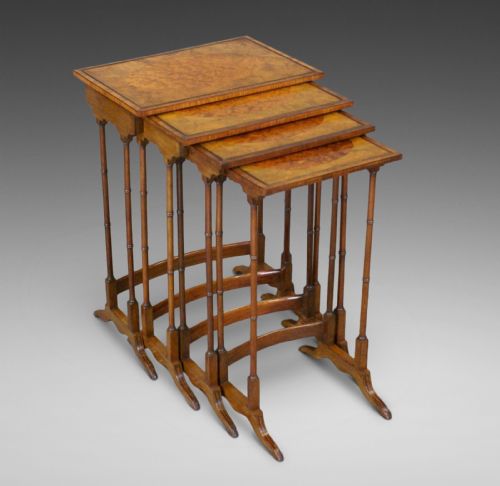

Vintage Quartetto Table Set
A vintage quartetto table set brings four graduated occasional tables together beneath a single top, offering a clever space-saving design.
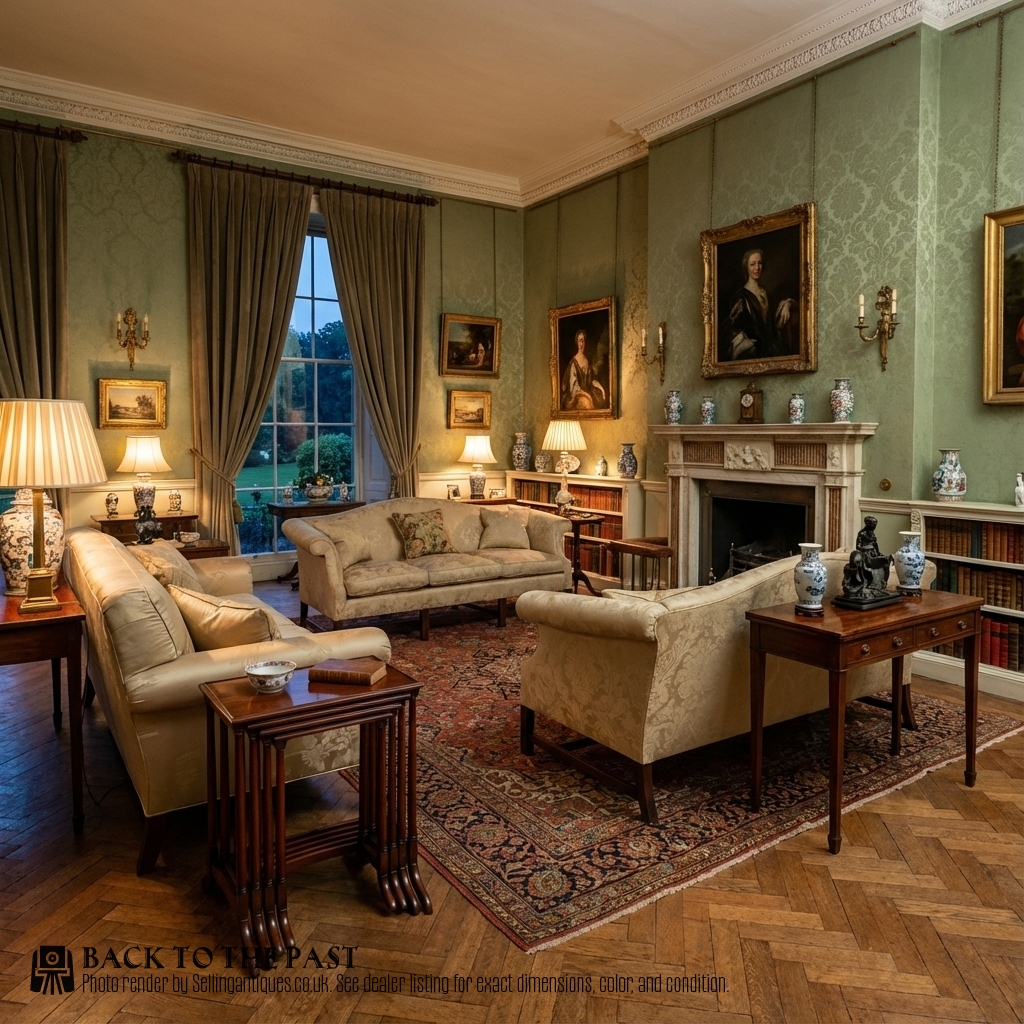
Vintage Quartetto Table Set
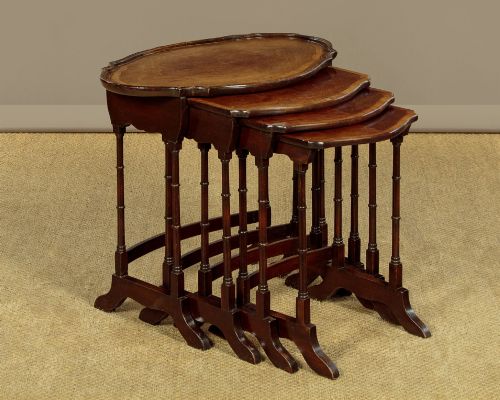
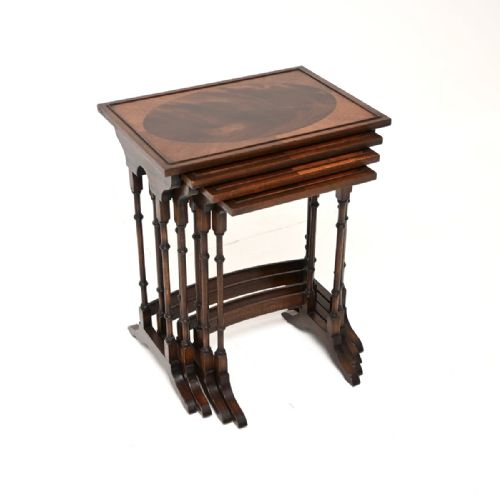
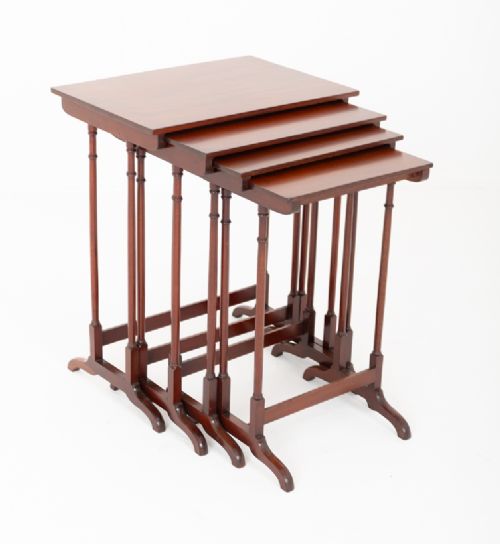
A vintage quartetto table set comprises four nesting tables designed to slide neatly beneath one another when floor space is at a premium. These sets appear most frequently in mahogany, often carrying the stylistic hallmarks of the Edwardian period or the Regency revival.
Makers produced these pieces across several decades, ranging from nineteenth-century examples to pieces from nineteen-thirty. The form consistently provides four separate surfaces that deploy independently for tea or side use before returning to a single compact footprint.
How they were made
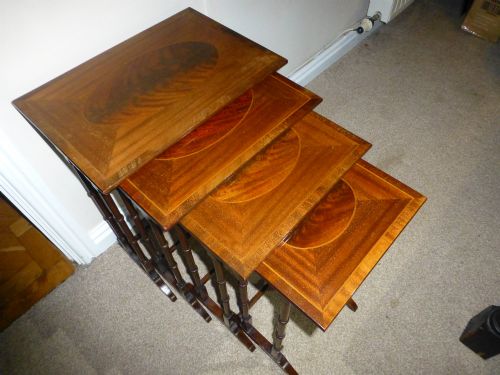
Cabinetmakers constructed these nesting sets primarily in solid mahogany and walnut, frequently applying fine veneers such as burr walnut to the primary surfaces. Workshops enhanced the visual depth of the timber through contrasting crossbanding and satinwood inlay.
Structural integrity relied on slender frames and square tapered legs that allowed each smaller table to clear the rails of the next size up. Brass inlay also appears on specific examples, adding metallic contrast to the timber tops.
The smallest table in the set occasionally hides so low to the floor it serves better as a footstool than a tea surface.
What varies in quality
The standard of timber selection divides the ordinary sets from the finer productions, particularly where figured mahogany or burr walnut shows deliberate grain matching across the nesting tops. Inlay work likewise separates standard pieces from superior examples, with crisp satinwood banding and precise stringing marking the better workshops.
Construction deftness dictates how smoothly the smaller tables glide within the frame of the largest table without binding or loosening the joints. Proportions also distinguish the output, where slender legs maintain stability without appearing heavy.
The Vintage Quartetto Table Set Glossary
- Quartetto
- A set of four nesting tables designed to slide one beneath another. The term derives from Italian and appears frequently in nineteenth and early twentieth-century descriptions.
- Crossbanding
- A narrow strip of veneer applied to the border of a table top so that the grain runs at right angles to the central panel. This technique frames the primary timber and adds decorative contrast.
- Satinwood
- A durable, yellowish timber imported from tropical regions, valued for its bright contrasting colour. Craftsmen utilised it extensively for inlay work and stringing on mahogany furniture.
- Stringing
- Thin lines of contrasting wood inlaid into channels cut into the surface of the furniture. This linear detail defines the edges and panels of Edwardian and Regency pieces.
Vintage Quartetto Table Set: Frequently Asked Questions
How do you use a quartetto set?
These sets function primarily as occasional side tables for holding drinks, books, or decorative items within a living room. You simply slide out each progressively smaller table from beneath the main top whenever extra surface area is needed.
When entertaining finishes, the tables stack back together into a single column that occupies the floor space of just one small table. This arrangement suits rooms where permanent placement of four separate tables would crowd the floor.
Are these tables sturdy enough for daily use?
The smaller tables in a set are intentionally lightweight by design to allow effortless lifting and sliding into position. Their slender legs and frame joints provide adequate stability for moderate everyday items like cups and small lamps.
Heavier loads or rough treatment can strain the delicate joints connecting the legs to the tabletop rails. Careful placement ensures the tables remain steady during normal domestic routines.
How do I tell Edwardian examples from nineteenth-century pieces?
Edwardian tables often feature lighter mahogany frames with delicate satinwood inlay and stringing reflecting the revival tastes of the nineteen hundreds. Nineteenth-century versions tend to display denser timbers, sometimes incorporating burr walnut or teak with simpler geometric lines.
Examining the construction methods inside the frame and the specific style of the crossbanding helps clarify the likely manufacturing period. Comparing the colour and finish of the timber against known period characteristics provides further guidance.
Why are nesting tables called quartetto?
The term quartetto stems from the Italian word for a group of four, reflecting the specific configuration of four graduated tables designed to nest together. Nineteenth-century retailers and makers adopted the word to market these multi-tiered sets of occasional tables.
While many people simply refer to them as nesting tables, the older trade catalogues frequently employed quartetto to distinguish sets of four from pairs or triads.