




Edwardian Nesting End Tables
Edwardian nesting end tables combine practical utility with clever space-saving design, offering multiple surfaces that tuck neatly away when not in use.
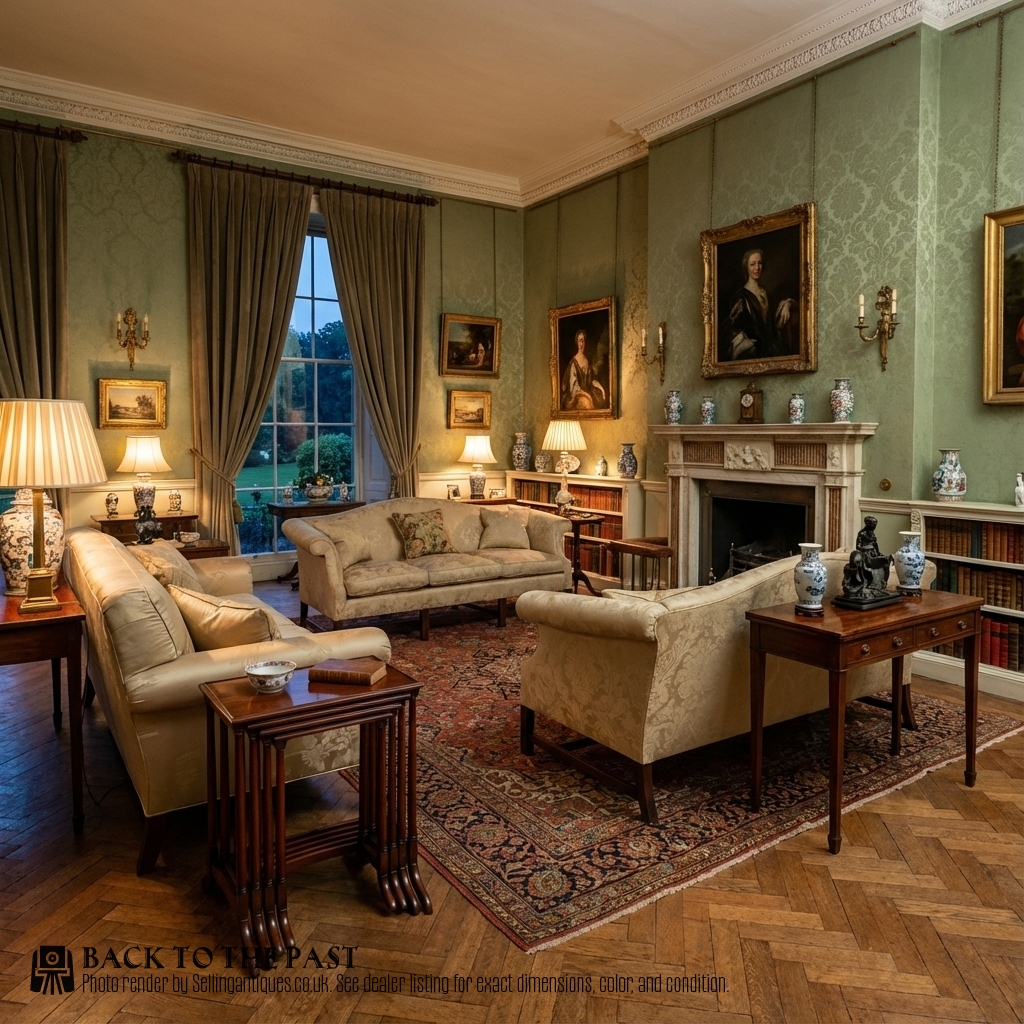
Edwardian Nesting End Tables
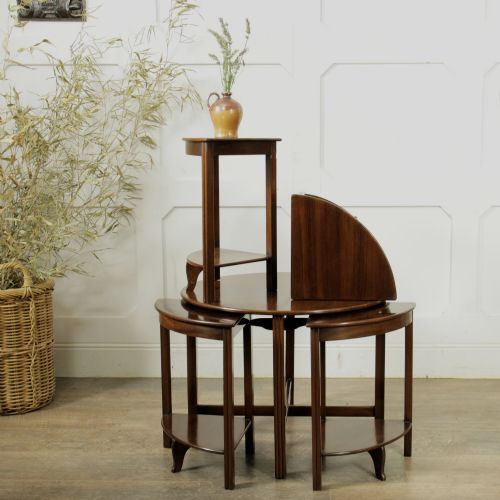
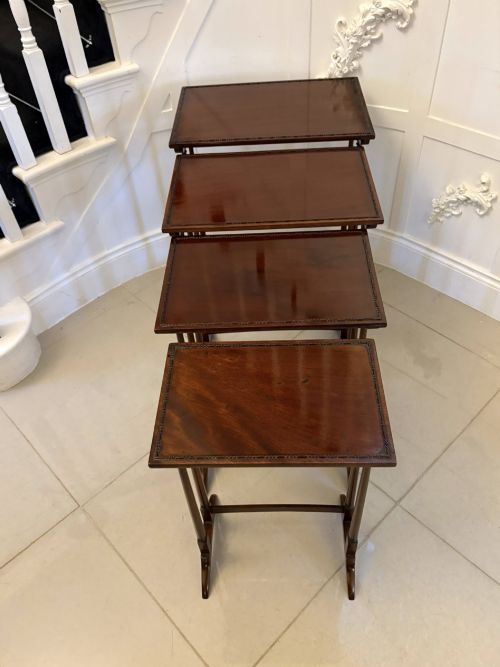
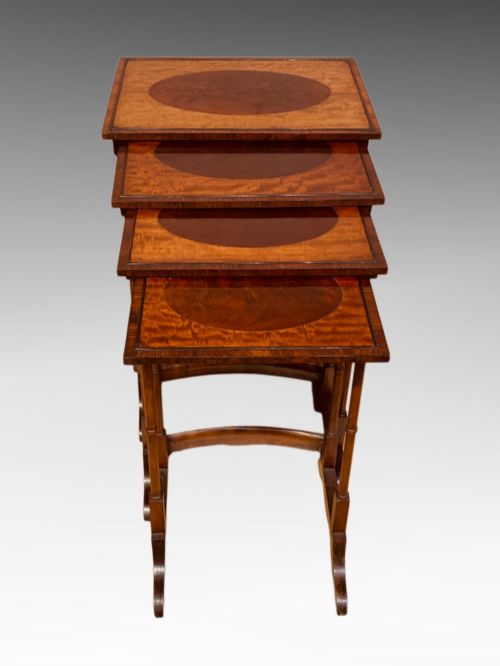
When you search for edwardian nesting end tables, you encounter sets designed to stack together sequentially, usually comprising three, four, or five graduating surfaces. These pieces appear most frequently in mahogany, often accented with satinwood or boxwood inlay.
The form spans the Edwardian period into the early twentieth century, alongside occasional Victorian and nineteenth-century examples. Alongside standard rectangular quartetto sets, circular configurations and variants with embossed leather or parquetry tops emerge across the selection.
How they were made
Cabinetmakers utilised dense timbers such as mahogany, walnut, and oak to construct the frames, ensuring the structural stability required for frequent stacking and unstacking. Selected pieces incorporate alternative woods including boxwood and satinwood for decorative contrast.
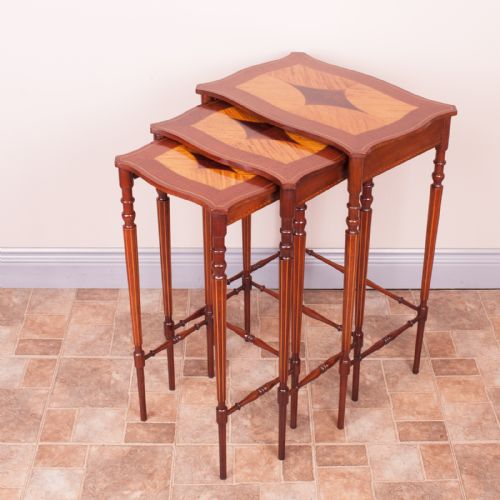
Inlay work and parquetry define the surface ornamentation on many examples, whilst turned elements like oak barley twist legs introduce vertical texture. Specialist touches include embossed leather inserts and gilt painting applied by identified makers.
Current listings feature mahogany as the dominant wood, accompanied by walnut and oak examples across the Edwardian period and nineteenth century.
What varies in quality
The distinction between standard examples and superior pieces rests upon the precision of the timber selection and the crispness of the wood inlay. Cabinetmaking that ensures each table slides smoothly into its neighbour without binding indicates higher workshop standards.
Finer items display thoughtful proportion across all graduating tiers and maintain structural rigidity even in the smallest, lowest table of the set. Details such as signed maker inscriptions or finely tooled leather tops elevate specific examples above simpler utility pieces.
Waring & Gillow·E Daligny
The Edwardian Nesting End Tables Glossary
- Quartetto
- A set of four nesting tables designed to fit progressively beneath one another. This term appears frequently in descriptions of nineteenth and early twentieth-century stacking tables.
- Inlay
- A decorative technique where contrasting pieces of wood, such as satinwood or boxwood, are fitted into recesses within a primary timber surface. It creates geometric or floral patterns across table tops.
- Parquetry
- A geometric mosaic of wood pieces used for decorative floors and table tops. It employs differing wood tones to form repeating patterns.
- Barley twist
- A type of furniture turning resembling a twisted rope or helix. This decorative style appears on table legs and supports.
- Embossed leather
- Leather decorated with a raised pattern pressed into the surface. It provides a durable and tactile writing or serving inset on select table tops.
Edwardian Nesting End Tables: Frequently Asked Questions
How were nesting tables used?
These tables served primarily in drawing rooms and parlours for serving tea, holding books, or supporting small lamps as needed by guests. When tea concluded or space was required, the smaller tables simply stacked back beneath the largest one.
Their modular nature meant homeowners could rapidly adapt a room's seating layout without cluttering the floor area permanently with multiple standalone pieces.
Why are they called quartetto tables?
The term quartetto originates from Italian musical terminology denoting a group of four, adapted by nineteenth-century cabinetmakers to describe sets of four graduating tables.
While many sets contain three or five pieces, the term specifically applies to the classic four-table nested configuration popularised during the Victorian and Edwardian eras.
How do I care for inlaid wooden tables?
Keep wooden nesting surfaces away from direct sunlight and heat sources to prevent the timber from drying out and the delicate inlay from lifting. Regular dusting with a soft, dry cloth maintains the finish without risking moisture damage to older polishes.
Apply a quality beeswax periodically to nourish the mahogany or walnut and preserve the depth of the grain across the graduating tiers.
How do I distinguish Edwardian from Victorian sets?
Victorian nesting tables tend to display heavier proportions, darker finishes, and denser carvings, reflecting the aesthetic preferences of the nineteenth century. Edwardian examples generally lean toward lighter construction, brighter mahogany tones, and refined satinwood or boxwood stringing.
Examining the underside of the tabletops and the framing construction often reveals construction methods characteristic of the respective eras.