




Sheraton Quartetto Tables
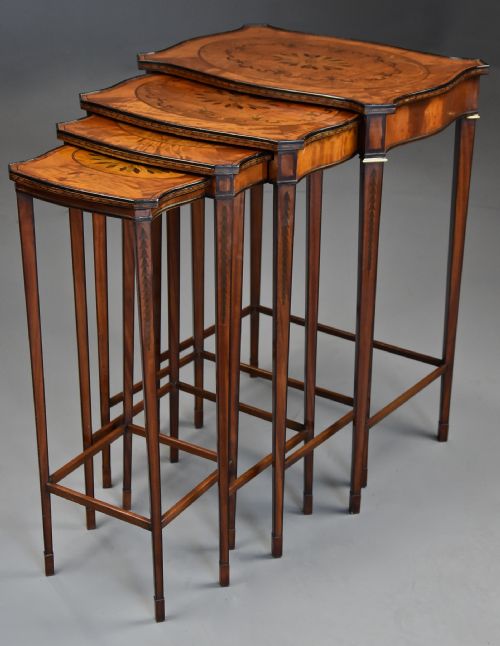
Sheraton quartetto tables are interlocking nests of graduating occasional pieces that slide neatly together, offering exceptional space-saving utility for the home.
Sheraton Quartetto Tables
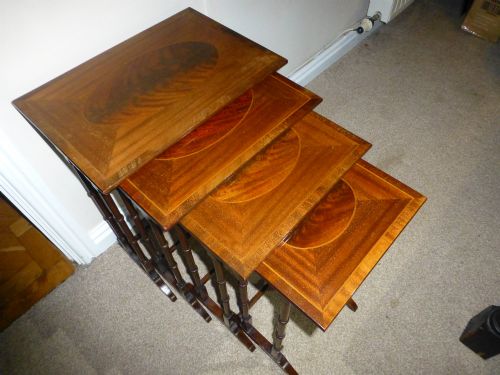
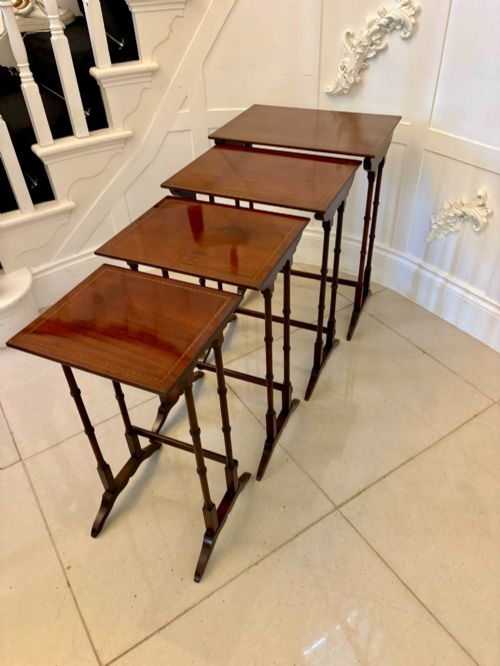
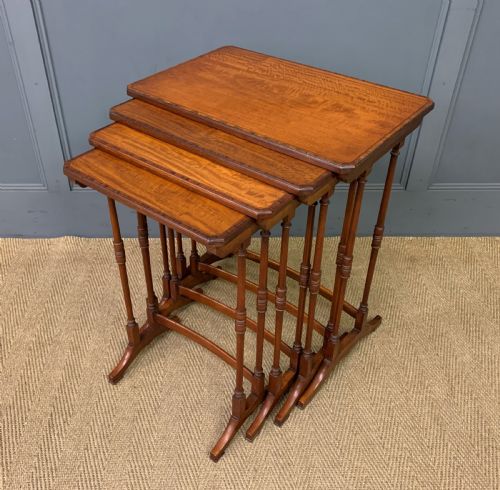
Sheraton quartetto tables comprise sets of graduating occasional tables designed to slide one beneath another into a single compact footprint. When you search for Sheraton quartetto tables, you encounter nested groups most frequently originating from the Victorian, Edwardian, and early twentieth-century periods.
The form typically consists of four tables, though three-table nests also appear, standing on slender supports that fit sequentially beneath the largest top. Most examples met on this page showcase the refined classical proportions and graceful linear framing characteristic of the Sheraton revival style.
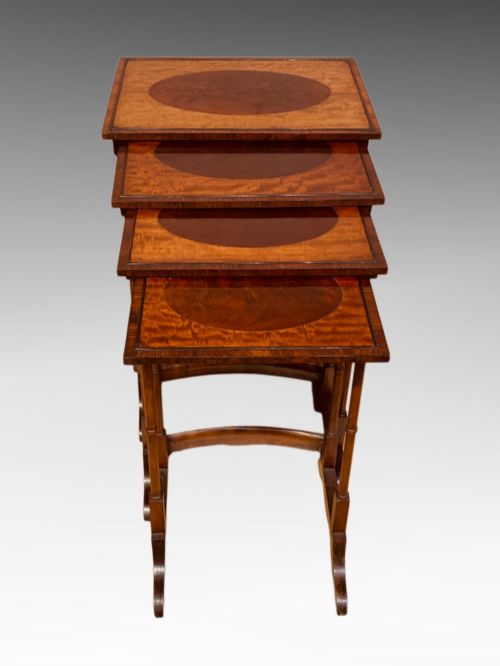
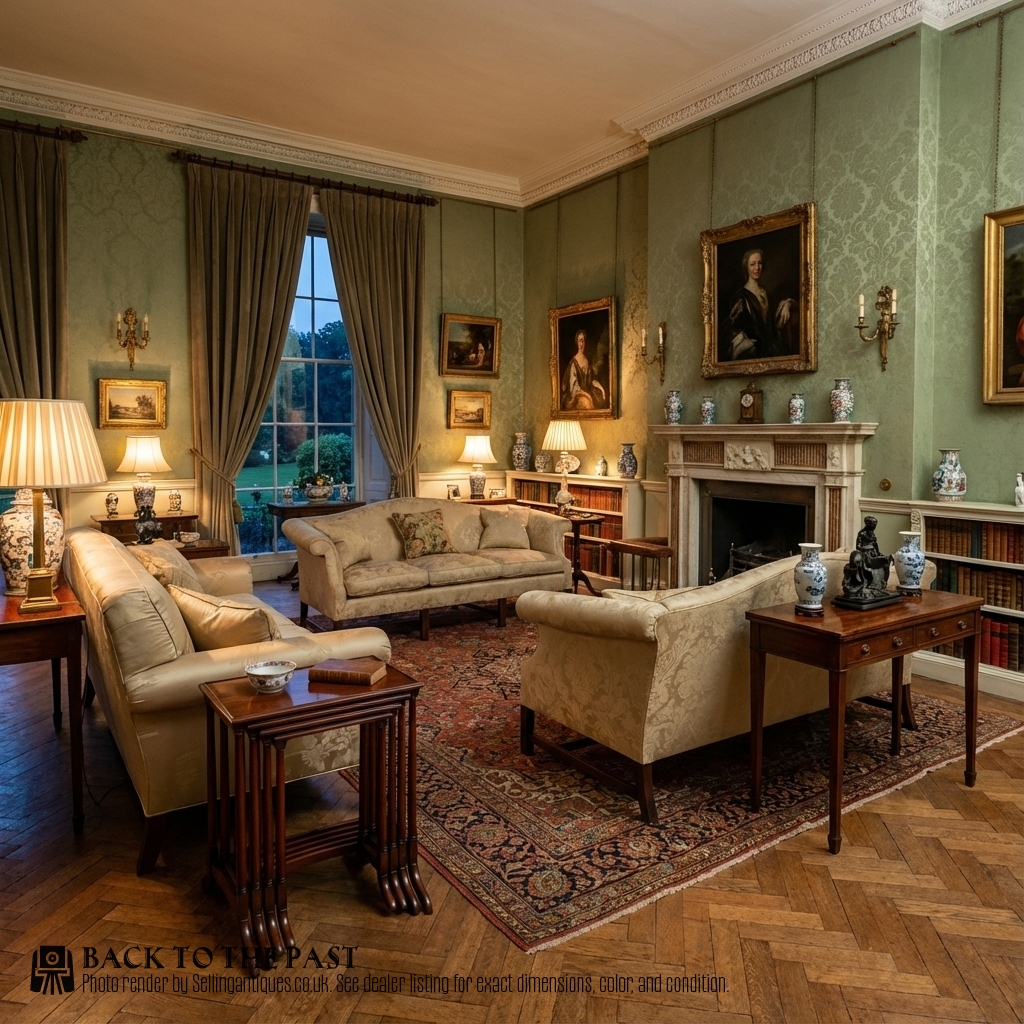
Originating as versatile pieces for drawing rooms and parlours, these tables served variously for tea, writing, or displaying ornaments without crowding the floor. Mahogany forms dominate the selection, frequently enhanced by contrasting timber inlays and satinwood crossbanding.
How Sheraton quartetto tables were made
Detailing relied on precision stringing and inlay work utilising boxwood and rosewood to delineate borders and geometric panels. The uprights frequently take a square tapered form, ensuring the individual tables slide smoothly into their nested position.
Listings demonstrate that mahogany remains the dominant timber for these nests, frequently paired with satinwood inlay and boxwood stringing.
What varies in quality
Quality in these nests rests upon the crispness of the inlay work and the selection of figured timbers for the primary surfaces. Finer examples display meticulous matching of satinwood veneers and delicate boxwood stringing that remains flush with the surrounding wood.
Structural integrity through the graduating sizes distinguishes superior pieces, ensuring each smaller table slides firmly into position without binding or wobbling. The refinement of the leg profile and the overall lightness of construction reflect the skill of the original workshop.
The Sheraton Quartetto Tables Glossary
- Quartetto
- A set of four graduating tables designed to nest together. The term derives from musical quartets and gained currency in English furniture making during the late eighteenth century.
- Satinwood
- A lustrous, hard timber native to Ceylon and the West Indies, displaying a golden yellow sheen. Cabinetmakers utilised it extensively for veneers and banding in classical revival pieces.
- Crossbanding
- A narrow strip of veneer laid around the border of a tabletop with the grain running perpendicular to the central panel. This technique creates a distinct visual frame.
- Stringing
- Very thin inlay lines of contrasting wood, such as boxwood, embedded into channels cut into the primary surface. It defines geometric shapes and panel borders.
- Serpentine
- A gently undulating curved line resembling a snake, used to shape tabletops and cabinet fronts. It adds visual movement and sophistication to the piece.
Sheraton Quartetto Tables: Frequently Asked Questions
What is a quartetto table?
A quartetto table is one of a set of four graduating occasional tables designed to slide neatly beneath one another. They provide versatile surface space that packs away into the footprint of the largest single table.
First popularised in the Georgian period and revived during the nineteenth and early twentieth centuries, these nests combine practical utility with elegant classical design.
How were Sheraton quartetto tables used?
These tables served primarily in drawing rooms and parlours for holding tea cups, reading materials, or small lamps. Because the smaller tables easily pull out, hosts could quickly provide guests with individual surfaces.
When not needed, the nested tables stored compactly against a wall or beside a chair, making them ideal for smaller reception rooms.
How do I date a nest of tables?
Dating relies on examining the timber selection, construction techniques, and overall stylistic revival cues. Pieces from the Victorian and Edwardian eras often utilise mahogany and satinwood with machine-cut veneers and fine boxwood stringing.
Earlier Georgian antecedents display hand-cut joinery and different secondary woods, though nineteenth-century Sheraton revival pieces represent the majority of available examples.
Are all quartetto sets made of four tables?
While the term strictly denotes a set of four, surviving nests occasionally comprise three tables due to losses over the decades. The graduating sizes are engineered so that each piece slides smoothly into the next largest frame.
Checking the dimensions and leg spacing helps confirm whether a surviving group originally formed a complete set of four.