


Georgian Mahogany Music Canterbury
A georgian mahogany music canterbury is a tidy multi-division rack designed to hold folios and sheets, prized for clean timber and practical freestanding utility.
Georgian Mahogany Music Canterbury
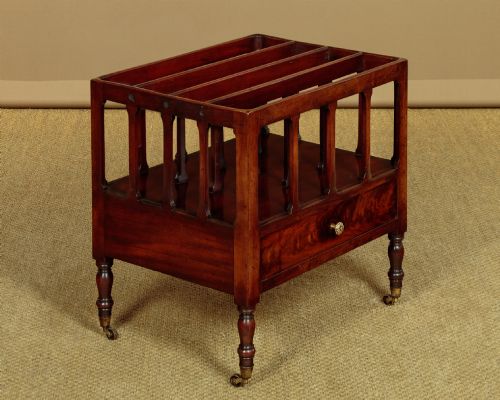
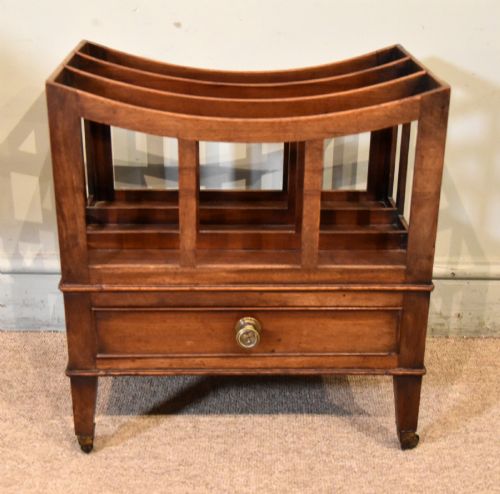
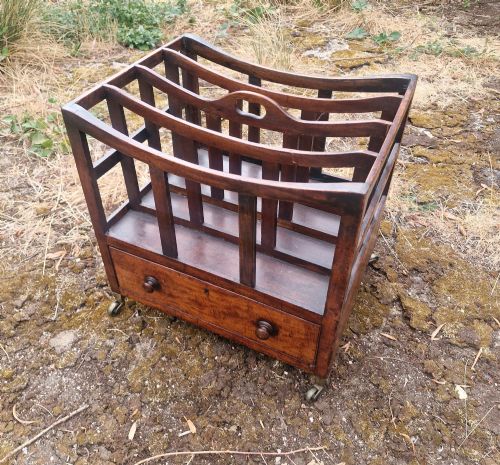
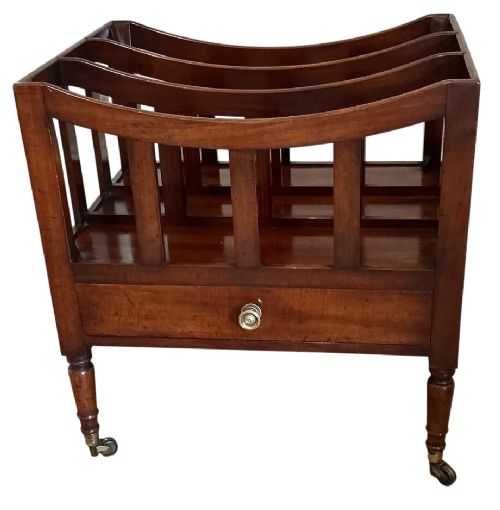
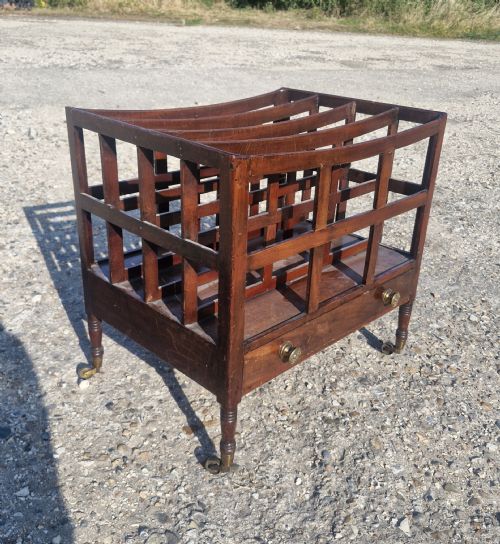
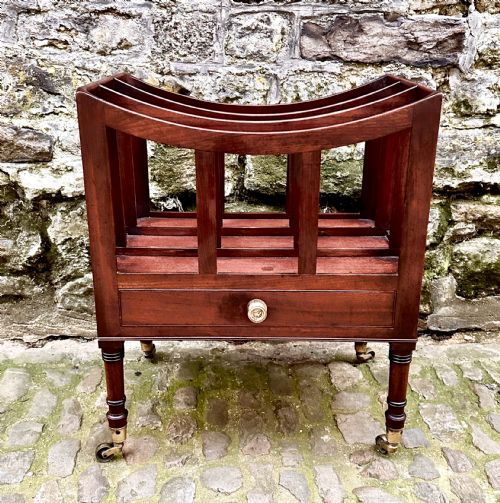
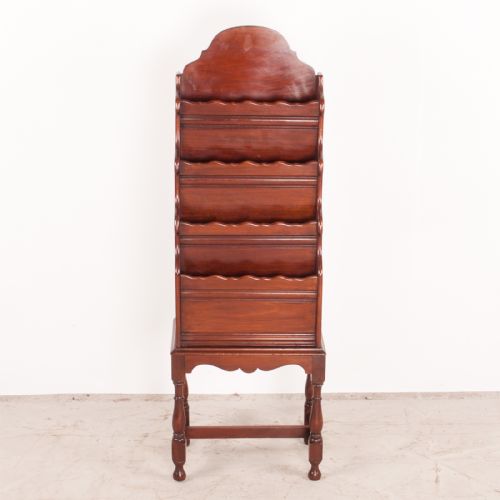
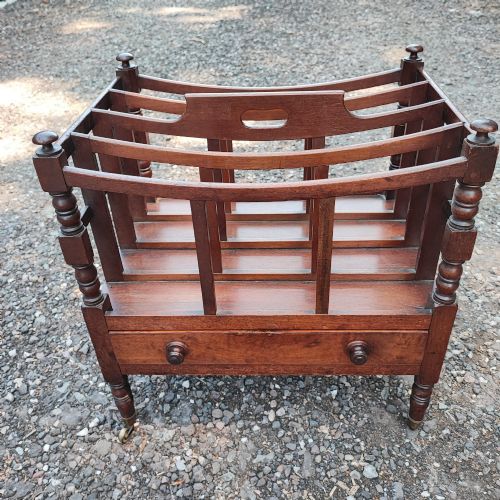
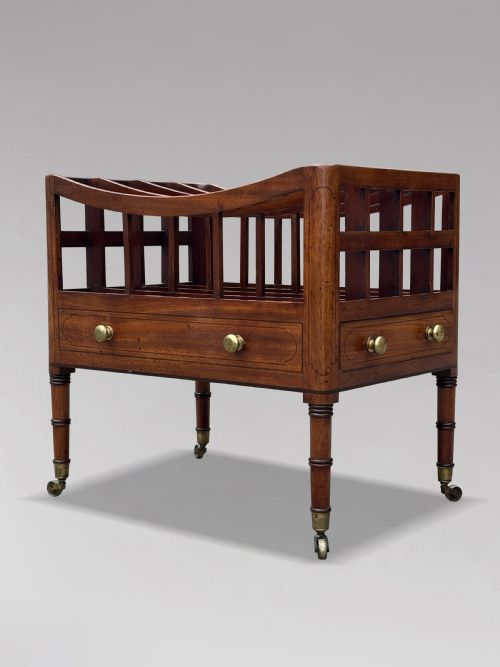
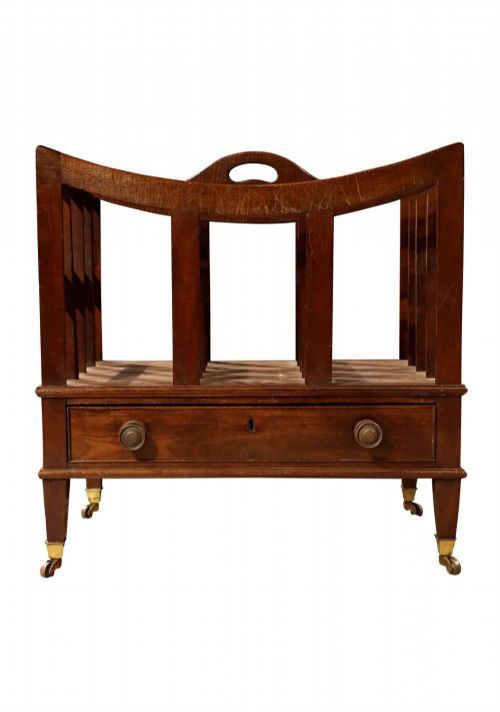
A georgian mahogany music canterbury serves as a dedicated stand for sorting scores, periodicals, and newspapers within a room. Most examples meet the eye as compartmented open racks or boat-shaped stands set upon low turned supports.
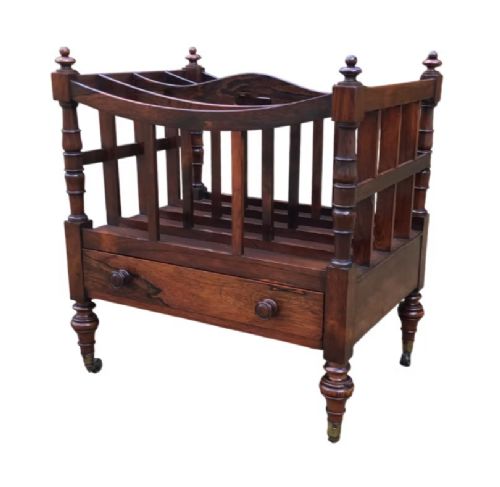
The prevailing styles span the Georgian, Regency, and George III periods, though later revivals also appear. Makers structured these pieces with divisions for upright storage, frequently incorporating a base drawer for smaller items.
How They Were Made
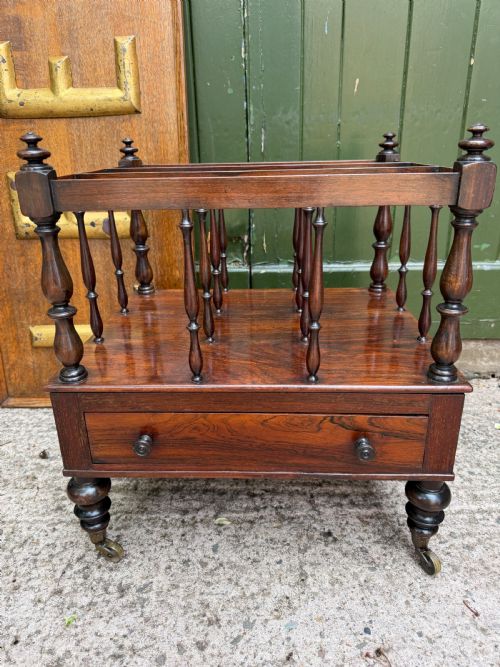
Cabinetmakers built these pieces primarily from mahogany and dense Cuban mahogany, sometimes selecting rosewood for contrast. Details often include boxwood and ebony banding, delicate inlay work, and brass castors affixed to the legs.
Construction relies on pierced scroll divisions or solid upright slats forming individual compartments for folios. Turned legs and smooth joinery underpin the structural integrity of these freestanding units.
Folio stands occasionally earned the name canterbury simply because an archbishop supposedly ordered one first.
What Varies in Quality
Quality rests upon the selection of timber, visible in the grain depth of the mahogany and the crispness of any boxwood or ebony banding. Well-executed division piercings and refined turnings on the legs elevate a piece above standard utility items.
Proportion and the integration of functional elements, such as a well-fitted lower drawer or original brass castors, separate finer workshop production from simpler country house pieces.
The Georgian Mahogany Music Canterbury Glossary
- Canterbury
- A low, freestanding stand with partitioned sections designed for holding sheet music, folios, and periodicals. The name supposedly derives from an archbishop who requested such a stand.
- Cuban Mahogany
- A dense, high-grade timber imported from the Caribbean, known for rich grain patterns and deep colour. Cabinetmakers utilised it for superior cabinet furniture.
- Boat Shaped
- A curved outline resembling a vessel hull, often applied to the sides and compartments of Regency pieces. This form softens the linear geometry of the rack.
- Castor
- A small wheel attached to the base of a leg to permit easy movement across floor surfaces. Many period examples retain original brass mountings.
Georgian Mahogany Music Canterbury: Frequently Asked Questions
What is a canterbury used for?
These pieces were originally built to hold sheet music, scores, and large folios near a pianoforte or music room. They functioned as tidy storage solutions for loose papers and reading materials.
Today, the divided sections suit modern use as magazine racks, newspaper holders, or desktop organisation stands in a study.
How do I date a mahogany canterbury?
Dating relies on observing stylistic markers, timber types, and leg design across different eras. George III and Regency pieces display specific turning details, boat shapes, or pierced scroll divisions characteristic of the early nineteenth century.
Later Victorian and Edwardian examples often emulate these earlier forms while exhibiting different secondary woods or machine-cut joinery traits.
Are these pieces freestanding?
Every recorded example functions as an independent, movable item designed to sit on the floor rather than attach to a wall. Their low centre of gravity and fitted castors allowed owners to reposition them easily.
They generally feature finished timber on all sides so they look correct when placed away from room boundaries.
What woods were used?
Mahogany forms the primary body of these stands, frequently selected for its durability and warm reddish-brown tone. High-end pieces specifically utilise dense Cuban mahogany for enhanced grain figure.
Secondary decorative touches often incorporate contrasting boxwood, ebony banding, and delicate inlay work around the drawer fronts or rails.