


Georgian Mahogany Liquor Chest
A georgian mahogany liquor chest keeps precious bottles secure and cool, bringing substantial eighteenth-century utility into your entertaining spaces.
Georgian Mahogany Liquor Chest
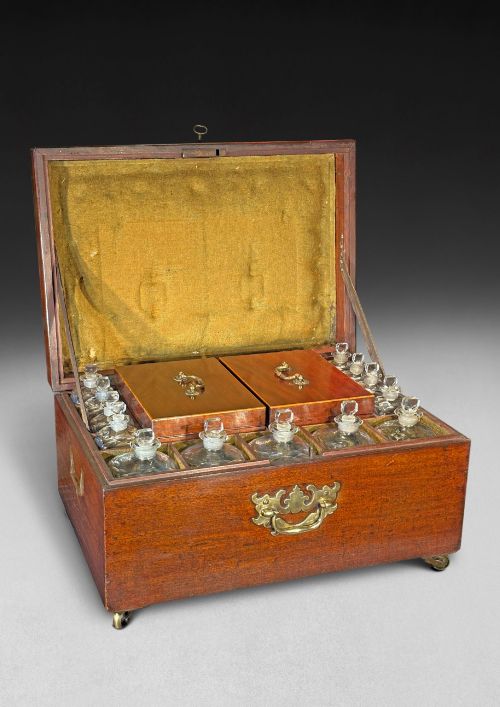
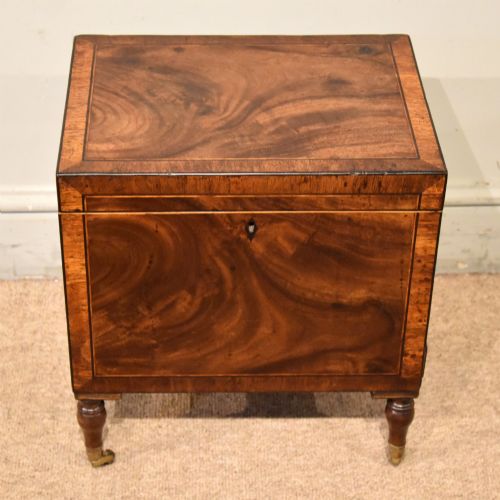
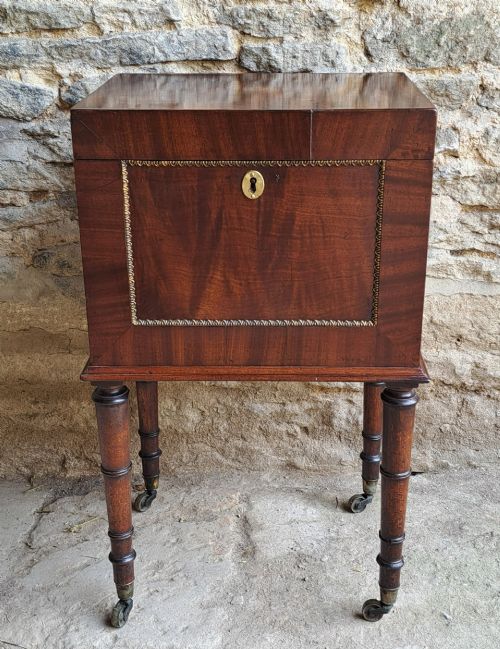
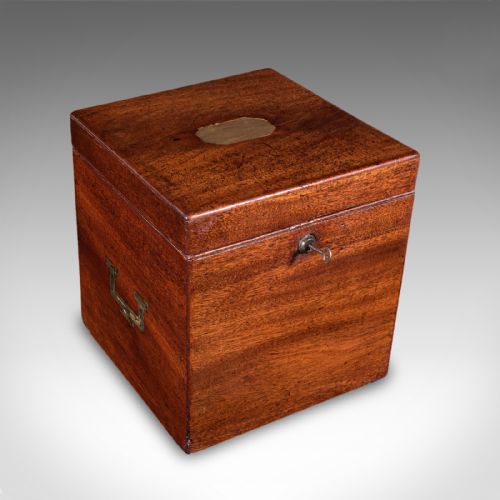
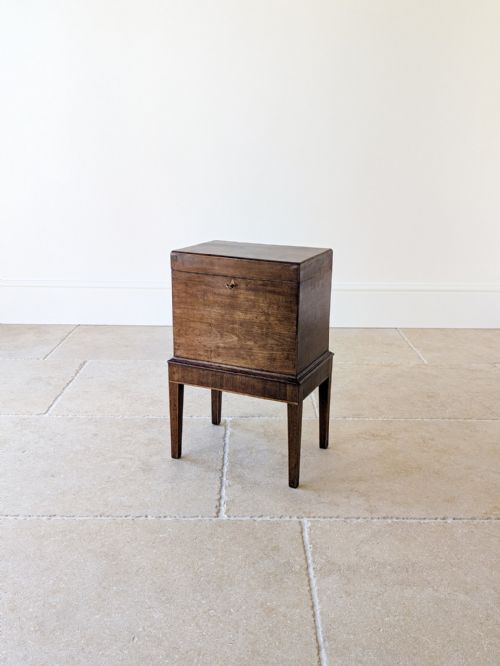
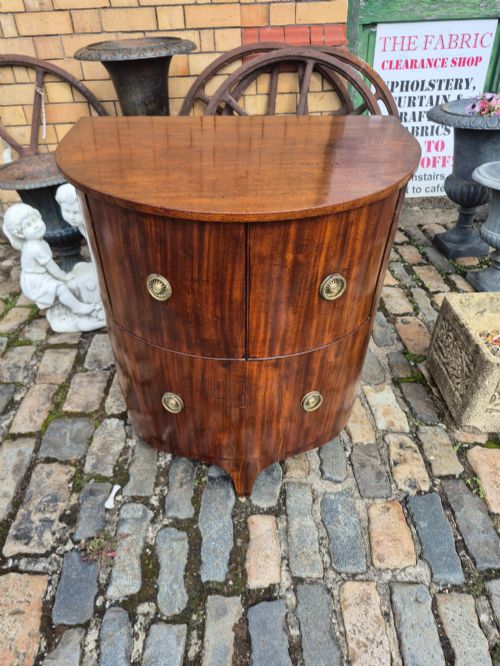
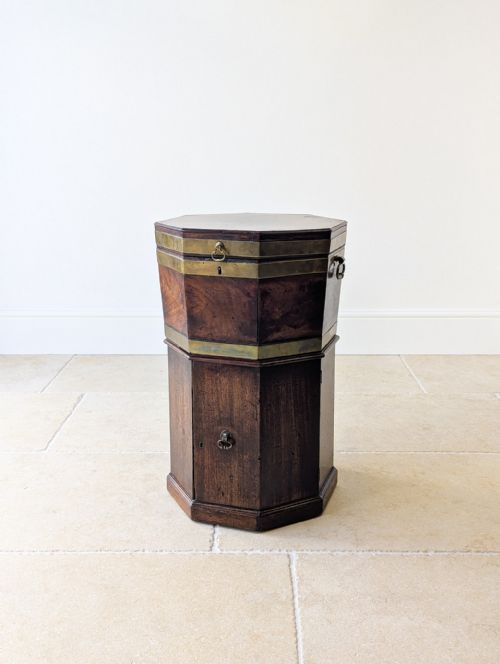
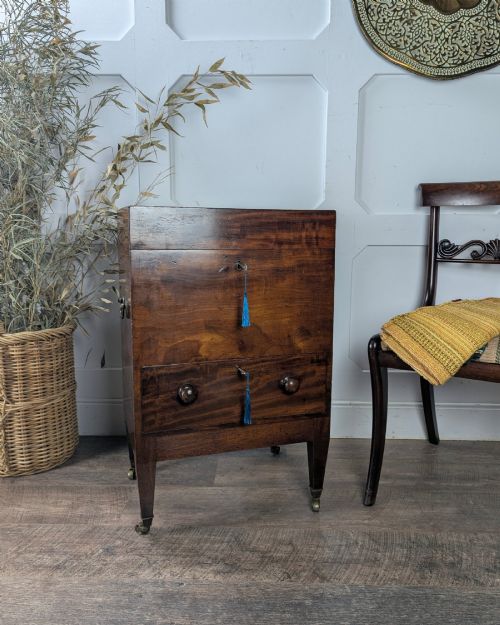
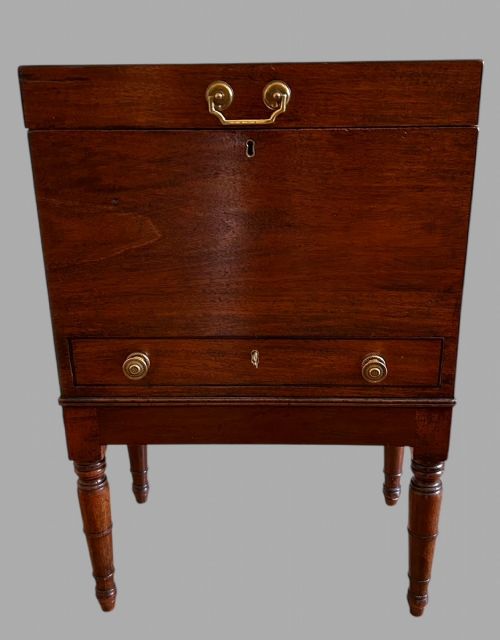
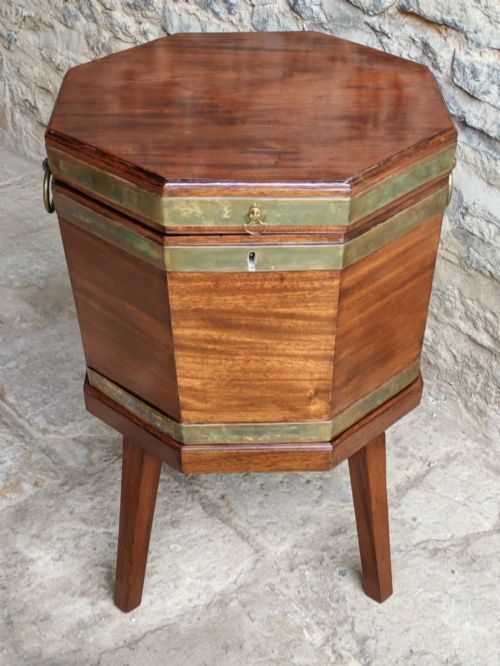
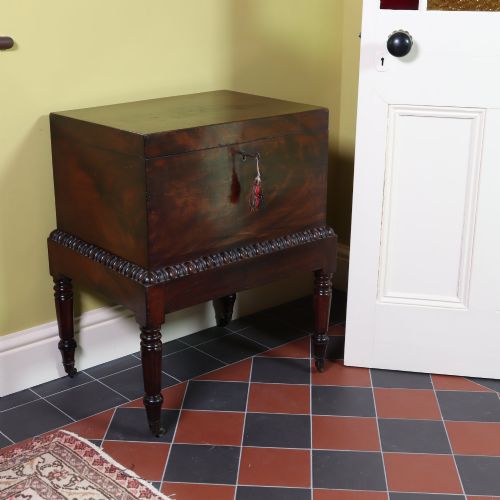
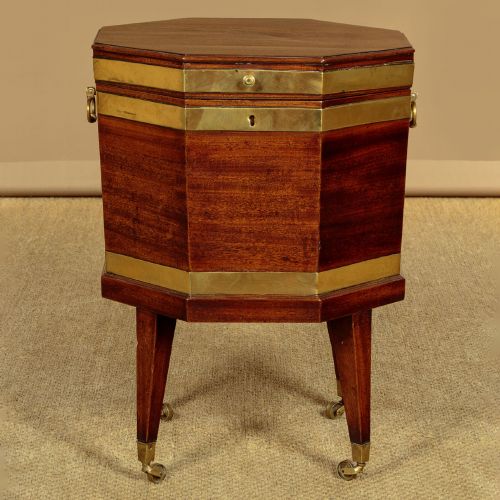
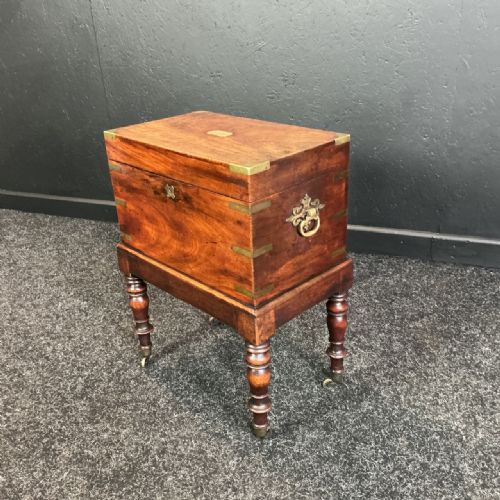
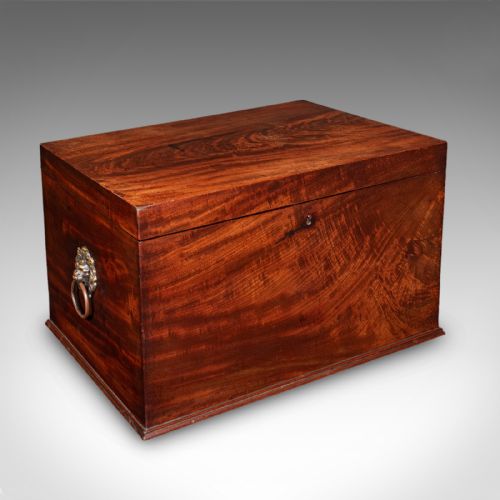
A georgian mahogany liquor chest encompasses portable decanter boxes, bottle cases, and substantial wine coolers designed to hold glass spirits containers safely. You will frequently encounter octagonal, oval, and sarcophagus forms dating from the Georgian and Regency periods, alongside later revival pieces.
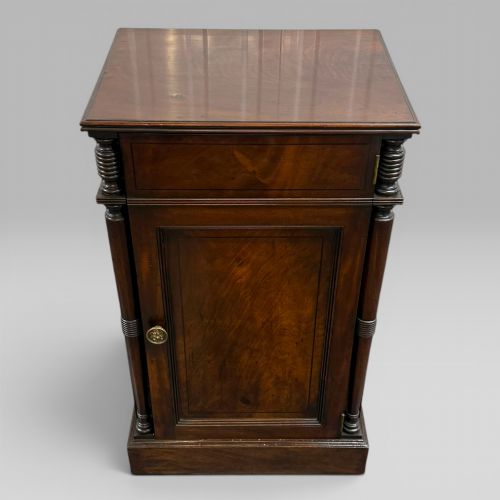
The objects serve as dedicated storage for drinking vessels and wine, taking the form of fitted boxes with secure locks or floor-standing pedestals with drawers. Most examples rely on the sturdy timber frameworks typical of eighteenth and nineteenth-century cabinetmaking.
Makers constructed these pieces to sit beneath sideboards or upon dedicated stands, ready to dispense contents during dining. The variations span from compact naval decanter chests intended for travel to grand architectural cellarettes.
Materials and construction
Makers relied principally upon solid mahogany and striking flame mahogany veneers, enhanced by contrasting satinwood and boxwood inlay for decorative banding. These rich timbers provide the structural integrity needed to house heavy glass decanters securely.
Metal fittings played an essential structural role, incorporating robust brass bands, hinges, and specialised hardware like Bramah locks to protect valuable contents. Ormolu mounts occasionally appear on finer Regency examples, adding polished metallic contrast to the dark wood.
Interiors were thoughtfully configured with wooden dividers and glass bottle holders to prevent shifting during use. Joinery techniques ensured the heavy carcase could withstand the weight of multiple liquid-filled vessels.
Georgian Mahogany Liquor Chest Retail Price Guide 2026
Typical asking prices for georgian mahogany liquor chest among the pieces listed under this phrase on Sellingantiques today, from the lower quarter to the upper quarter. They describe what is for sale here now, not the wider market.
The inventory records octagonal, oval, and sarcophagus forms, demonstrating how cabinetmakers adapted wine storage containers across different decorative eras.
Markers of distinction
The fineness of the timber selection distinguishes standard containers from superior pieces, particularly the depth of grain in flame mahogany and the precision of boxwood or satinwood stringing. Superior examples often display thoughtful proportions and harmonious architectural outlines rather than plain box construction.
Hardware quality marks the division between everyday storage and exceptional cabinetwork, visible in heavy cast brass mounts and fully functioning, high-security locks. The complexity of the internal wooden frame designed to cushion glass bottles also reflects the original maker's ambition.
Gillows·Gillingtons·Robert Strahan And Co
The Georgian Mahogany Liquor Chest Glossary
- Cellarette
- A lockable container designed for storing wine and spirits near the dining table. They appear in box form, octagonal shapes, and grand sarcophagus silhouettes.
- Decanter chest
- A portable wooden box fitted to hold multiple glass bottles upright during travel or storage. These compact examples feature secure brass carrying handles and reliable locks.
- Flame mahogany
- A highly figured wood grain exhibiting distinctive flickering patterns caused by cutting across the branch junction. Cabinetmakers prized this veneer for principal exterior surfaces.
- Bramah lock
- A patented high-security cylindrical lock mechanism invented in the late eighteenth century. They frequently secure fine decanter boxes and liquor chests.
- Ormolu
- Gilded bronze mounts applied to furniture for decorative accent during the Regency period. This costly finish highlights classical motifs on select pieces.
- Sarcophagus
- A monumental cabinet shape inspired by ancient stone tombs, popular for large wine coolers during the Regency era. These pieces typically feature tapering bodies on low feet.
Georgian Mahogany Liquor Chest: Frequently Asked Questions
What is a georgian mahogany liquor chest?
A georgian mahogany liquor chest is a specialised storage box or cooler built to house glass decanters and wine bottles safely. These pieces range from portable table boxes to large floor-standing cellarettes.
Craftsmen utilised dense mahogany timbers and secure locks to protect expensive spirits from household staff and pilfering. They formed an essential part of dining room furniture during the eighteenth and nineteenth centuries.
How were these chests used?
These chests kept wine and spirits cool or stored away until guests gathered for dining and post-meal drinking. Servants unlocked the containers to serve drinks directly from the sideboard or stand.
Compact naval versions allowed travellers to transport glass decanters securely across rough journeys without breakage. Larger floor models remained stationary in grand dining spaces as permanent fixtures.
How do I date a cellarette?
Dating relies on examining the timber grain, hardware styles, and overall architectural silhouette of the piece. Georgian examples frequently show straight lines, octagonal geometries, and simple brass banding.
Later Regency pieces often adopt heavier sarcophagus shapes, paw feet, and elaborate ormolu mounts. Internal partitions and lock types also offer clear clues to the manufacturing decade.
Can I use one as a cocktail cabinet?
These boxes adapt naturally to modern homes as secure storage for modern liquor bottles and glassware. Their divided interiors provide ready-made organisation for contemporary entertaining accessories.
Placing a chest on a sideboard or dedicated table creates a striking focal point with genuine historical character. The deep mahogany surfaces and brass mounts complement both traditional and modern interiors.