
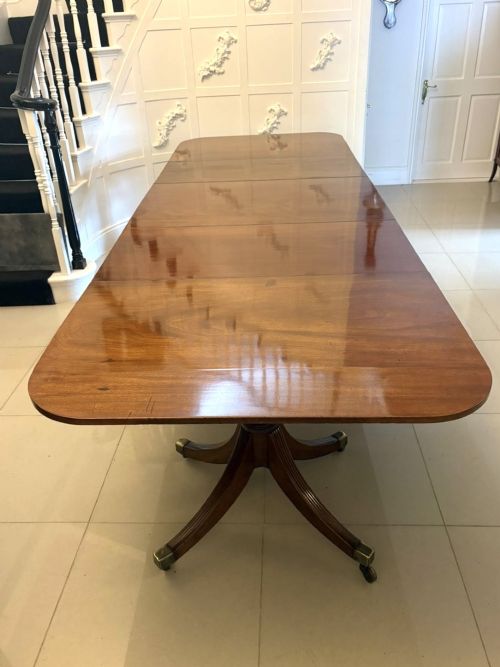
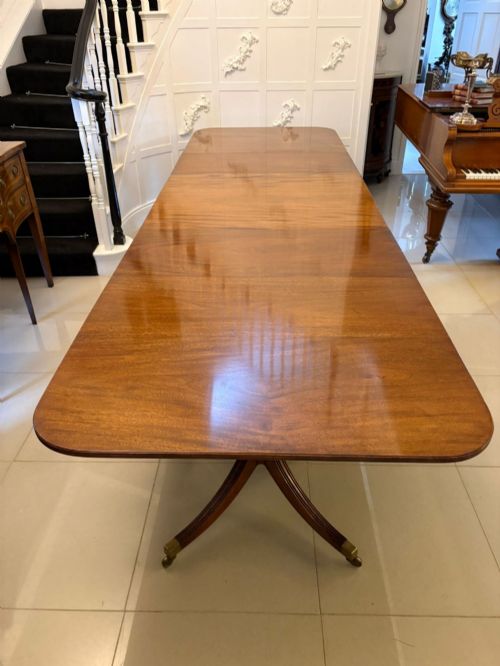
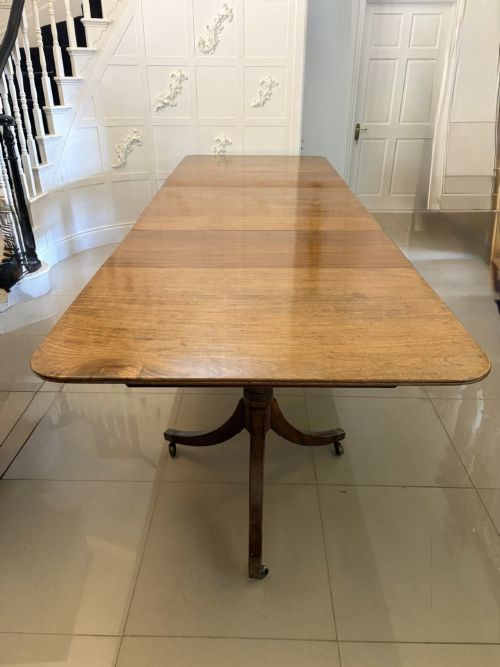

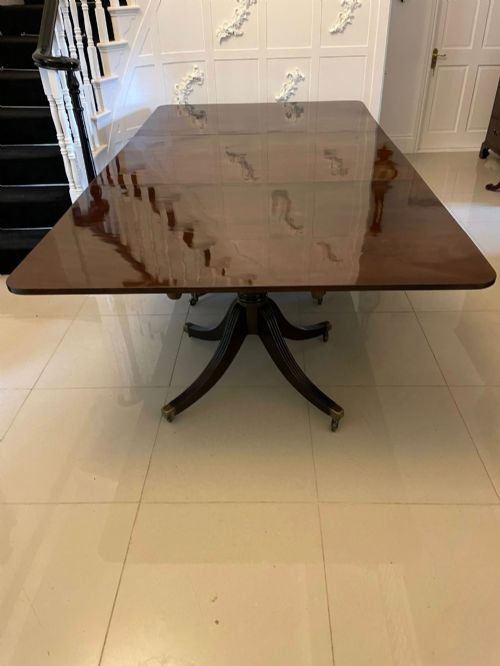
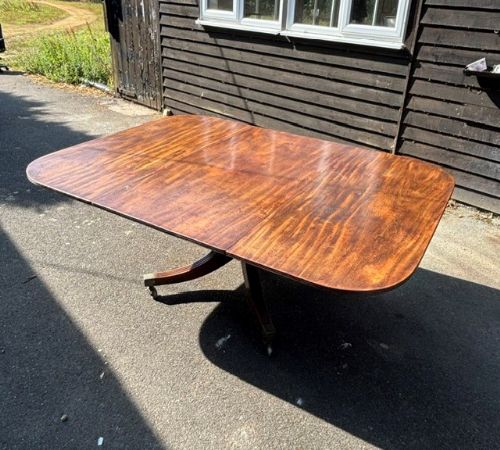
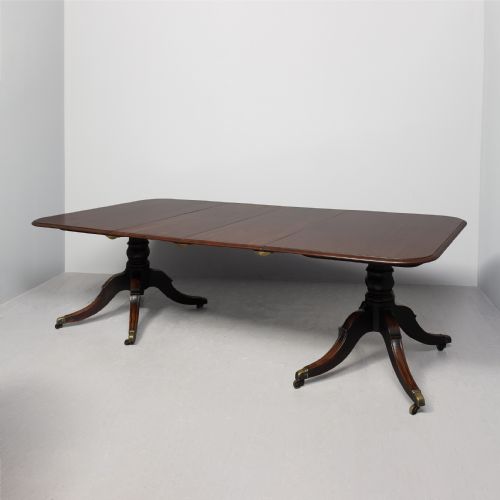
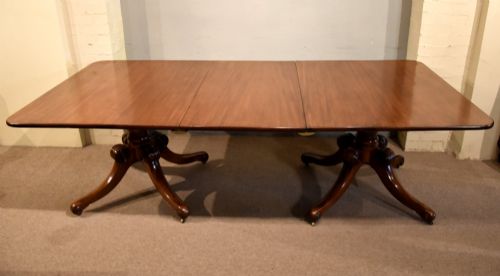
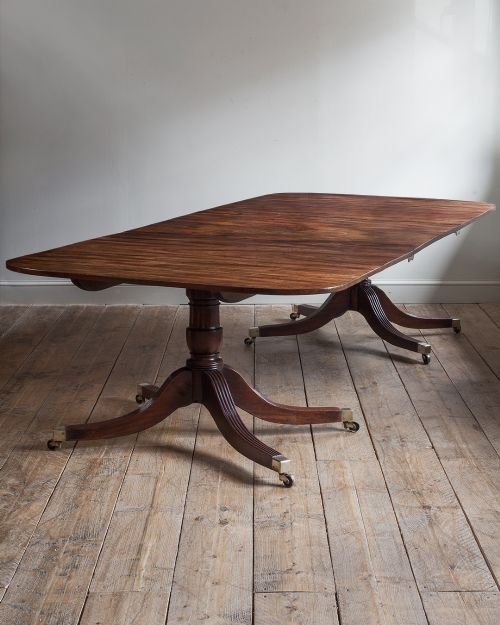
Georgian Mahogany Extending Table
A georgian mahogany extending table brings practical scale and adaptable dining capacity to a room through time-tested mechanisms.
Georgian Mahogany Extending Table
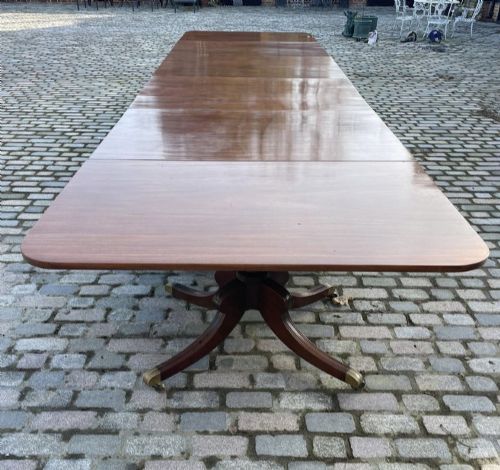
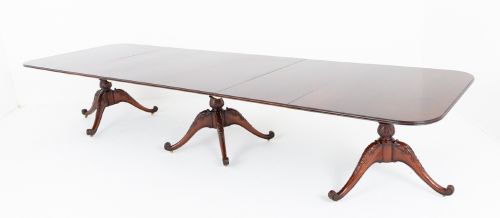
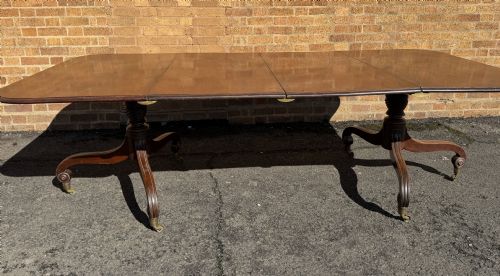
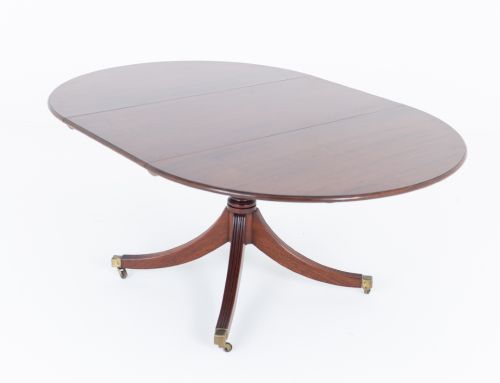
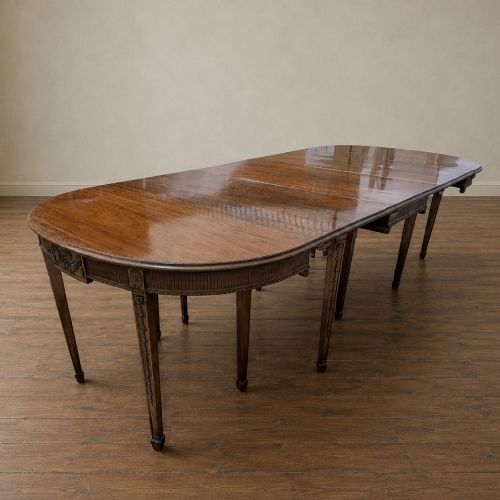
A georgian mahogany extending table spans formats from twin-pillar and triple-pedestal designs to D-end pairs and drop-leaf arrangements. These pieces originate primarily across the eighteenth and nineteenth centuries, alongside later Regency revival interpretations.
The version most commonly met on this page uses removable leaves and pedestal bases or pull-out actions to accommodate large dining parties. Console tables that convert into full dining lengths also appear frequently in the record.
Craftsmanship and Proportion
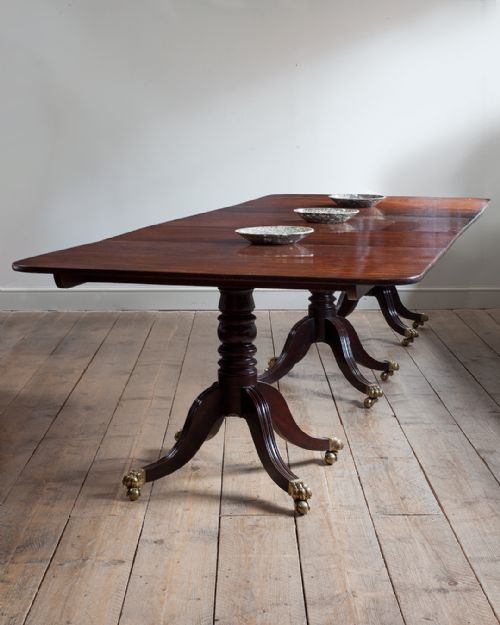
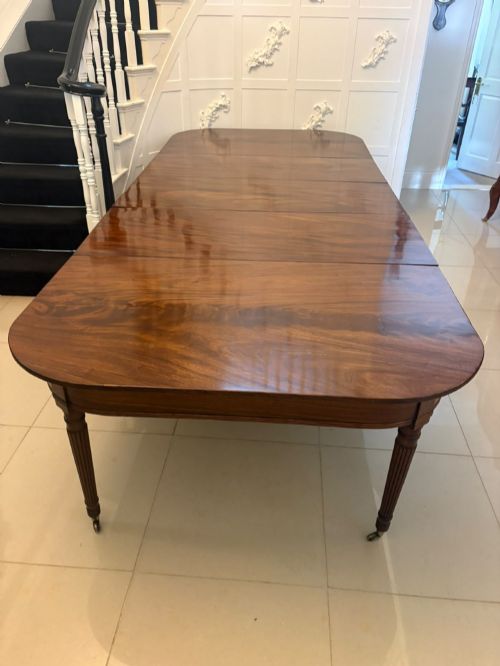
Quality rests upon the selection of figured or Cuban mahogany timber and the precision of the extending mechanism. Superior examples maintain smooth operation across multiple pillars and leaves while preserving balanced proportions at any length.
Secondary elements such as reeded leg detailing, brass castors, and original timber leaves elevate a piece above standard workshop production. The integrity of the foundational framing dictates the long-term stability of the table.
Some tables extend far enough to host twenty-eight diners, requiring an engineering feat robust enough to support a small feast.
Thomas Butler of London·Gillows·Wilkinson and Wilkinson
The Georgian Mahogany Extending Table Glossary
- D-End
- A table end shaped in the semi-circular form of a capital letter D. These sections often detach to function as console tables.
- Pedestal
- A central columnar support resting on branching feet. Multiple pillars distribute weight across large extending formats.
- Reeded
- A decorative moulding formed of parallel convex strips carved directly into the wood. This detail appears frequently on Regency table legs.
- Metamorphic
- Describing furniture designed to transform its function or size. These pieces shift from console tables to full dining settings.
Georgian Mahogany Extending Table: Frequently Asked Questions
How do these tables extend?
Many examples utilise a pull-out pillar action where the central frame separates to receive drop-in leaves. Other formats rely on drop-leaf actions or console pairs that link together.
Pedestal versions shift apart on tracks, allowing additional sections to drop securely into the centre of the surface.
How many people do they seat?
Seating capacity ranges from compact formats for eight diners up to extensive arrangements seating sixteen to twenty-eight guests. The inclusion of multiple original leaves determines the maximum length.
Proportions vary significantly between standard domestic examples and large country house commissions.
How do I identify a Regency piece?
Regency examples often feature bold mahogany grain, brass castors, and reeded pillar supports reflecting classical revival tastes. The design emphasises clean lines and structural versatility.
Later revivals from the twentieth century replicate these specific stylistic markers using period timber.
How do I care for the surface?
Polished mahogany surfaces require protection from excessive moisture, direct heat sources, and prolonged sunlight. Regular dusting with a soft cloth preserves the timber finish.
Applying appropriate wax feeds the dense grain without building up a heavy residue over time.