
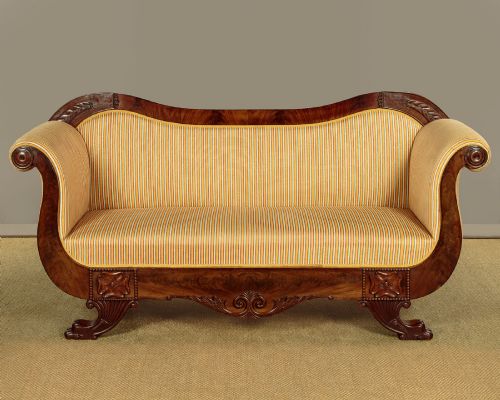


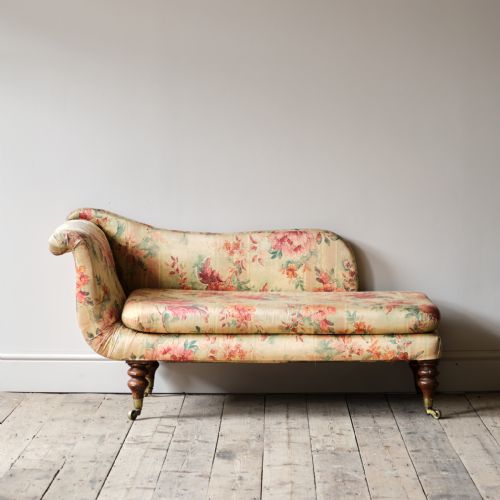


Georgian Mahogany Daybed
A georgian mahogany daybed brings architectural grace to a room, offering a long timber frame designed for reclining.
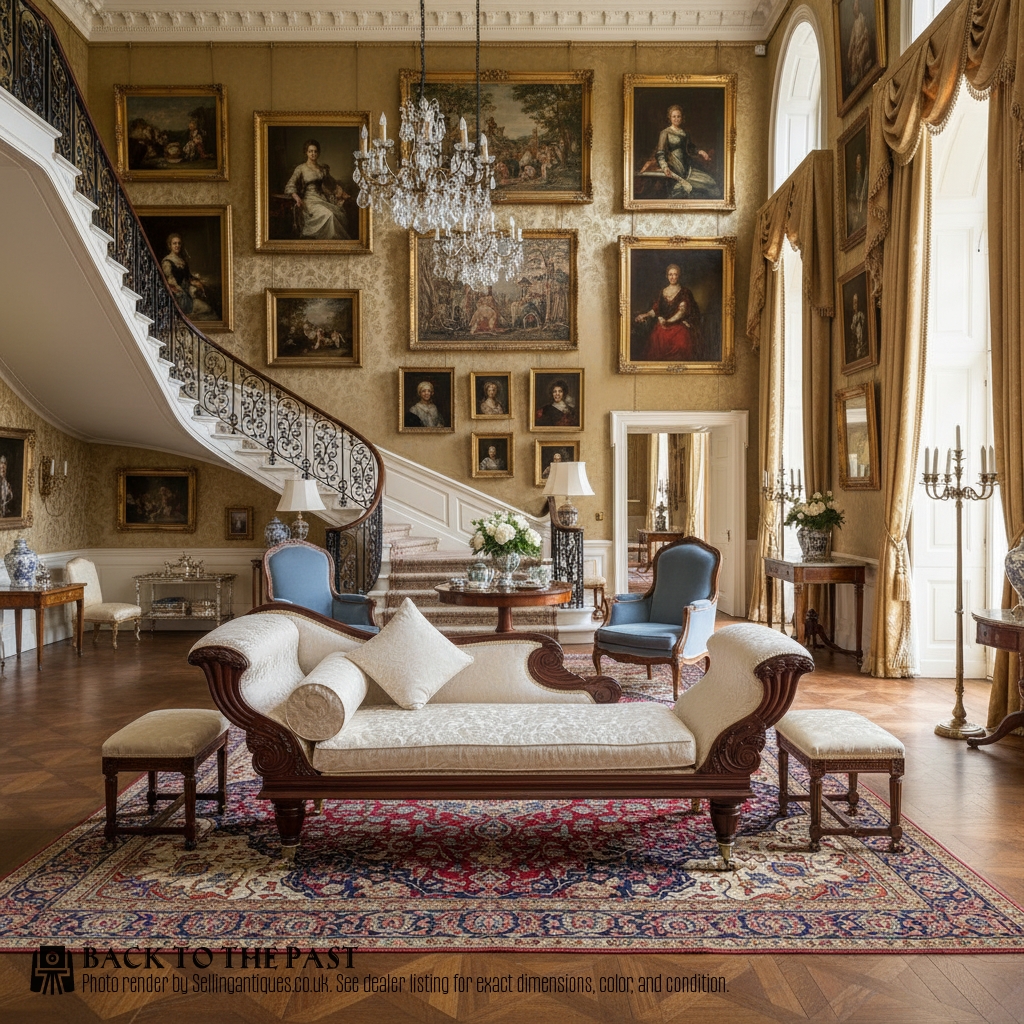
Georgian Mahogany Daybed
A georgian mahogany daybed is a substantial piece of seating furniture designed for resting in a semi-recumbent position. These items appear in forms such as scroll end sofas, chaise longues, double ended sofas, and campaign beds. When searching this phrase, a buyer meets pieces originating from the Regency, William IV, and George IV periods.
The timber framework typically employs rich mahogany, complemented by scroll ends and carved details. Pieces range from country house hall sofas to paired chaise longues and folding campaign beds. The structural forms span single-ended couches to large four-seater settees constructed during the early nineteenth century.
Factors of quality
The refinement of the carved mahogany frame distinguishes finer examples from simpler provincial pieces. Crisp execution on scroll ends and classical carved details indicates skilled cabinet work. Proportion and scale also influence the standing of a piece within the range.
The retention of original timber patination and the quality of secondary woods affect the overall integrity. Pieces bearing specific stylistic traits associated with known design traditions hold particular interest for collectors.
Some nineteenth-century campaign daybeds cleverly fold away, proving that portable luxury is not a modern invention.
Gillows
The Georgian Mahogany Daybed Glossary
- Scroll end
- A sweeping curved terminal on a sofa or daybed arm, characteristic of Regency design. This stylistic feature mimics classical scrollwork found in ancient furniture.
- Chaise longue
- An elongated upholstered chair or daybed designed for reclining with support for the legs. French for long chair, it became popular in British interiors during the early nineteenth century.
- Récamier
- A type of daybed or sofa with two raised ends and an open side, named after Madame Récamier. It reflects the classical influence on nineteenth-century furniture forms.
- Campaign bed
- A portable folding bed constructed for travel or military use, often featuring clever mechanical joints. Mahogany and brass were standard materials for officer variants.
- Double ended sofa
- A seating form with identical scroll ends rising at both extremities of the frame. This symmetrical design allows a person to recline facing either direction.
Georgian Mahogany Daybed: Frequently Asked Questions
How do I date a daybed?
Dating relies on examining the stylistic markers, timber characteristics, and structural joints of the piece. Regency and George IV examples frequently feature bold scroll ends and carved mahogany frames.
Comparing the specific turnings, feet, and upholstery profiles with dated pieces helps narrow the decade of manufacture. Most surviving examples originate from the early nineteenth century.
Where were daybeds placed?
Daybeds were typically positioned in principal reception rooms, drawing rooms, or large entrance halls of country houses. Their decorative frames allowed them to sit away from walls as freestanding furniture.
They served as versatile resting places during the day for reading or socialising. The aesthetic appeal of mahogany made them suitable for formal entertaining spaces.
Are these pieces comfortable?
Comfort depends heavily on the quality and firmness of the modern or traditional upholstery within the frame. Many historical daybeds feature deep padding supported by sprung or webbed bases.
While designed for reclining rather than sleeping through the night, they offer substantial support for daytime lounging. Fabric choices such as velvet or satin add a soft tactile surface.