


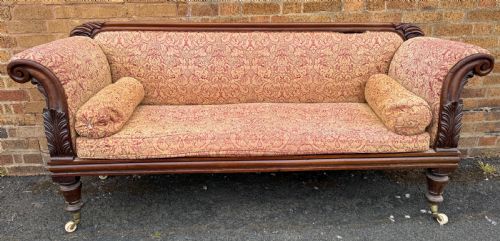


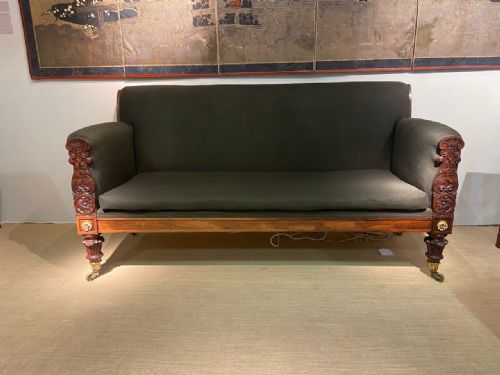


William IV Mahogany Settee
A William iv mahogany settee brings substantial nineteenth-century presence to a drawing room, offering scrolled ends and timber frames built for formal seating.
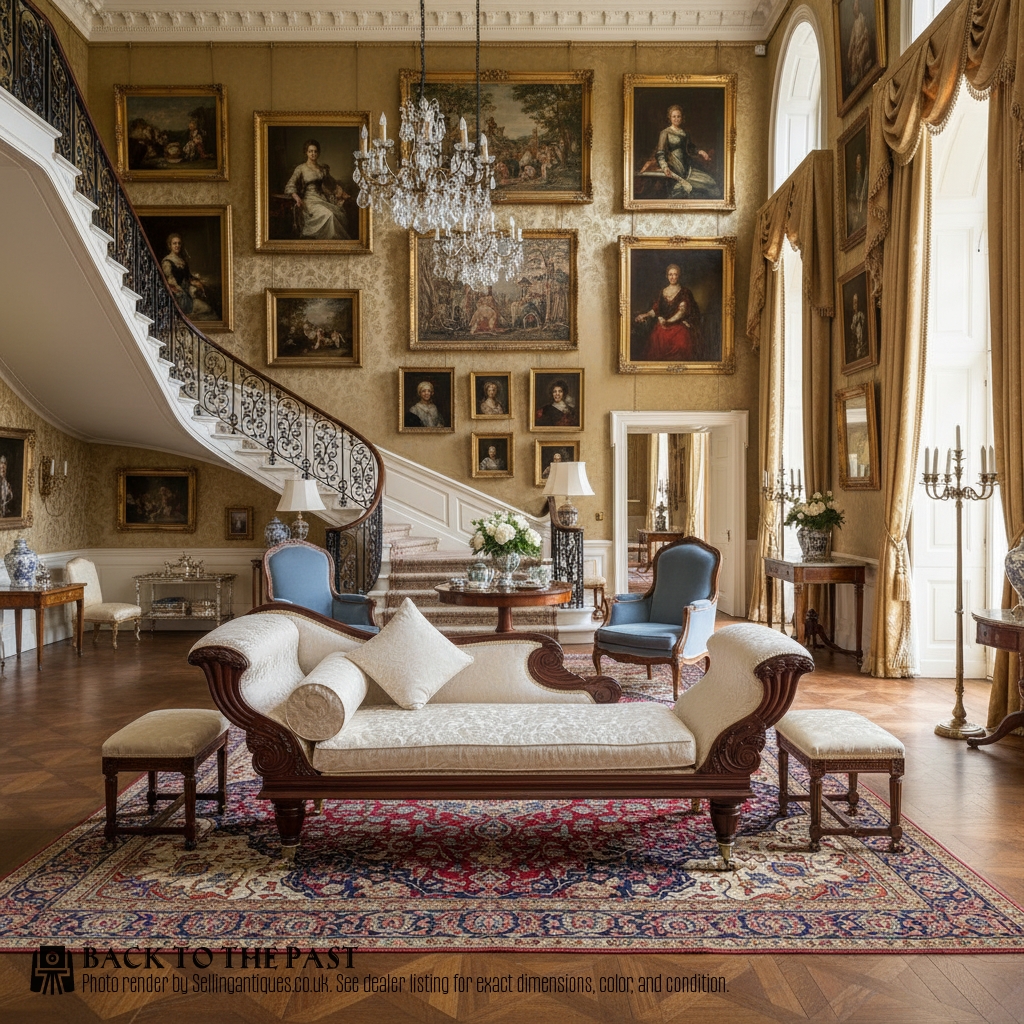
William IV Mahogany Settee
A william iv mahogany settee represents a distinct phase of nineteenth-century seating, commonly appearing with scroll ends and double-ended designs. These substantial pieces frequently measure large in scale, suitable for country house drawing rooms and formal interiors.
The materials recorded in these seating forms include mahogany framing paired with rosewood accents, supporting various textiles such as damask, hessian, leather, and traditional upholstery fabric. Regional examples from Ireland also emerge within the selection.
Makers and craftsmen of the period utilised specific structural variations, ranging from simple show frames to heavily carved scroll-arm sofas and metamorphic couch designs.
Materials and Construction
Construction relies heavily on solid mahogany timbers, occasionally complemented by rosewood veneers, shaped into structural show frames that support the upholstered body. Brass castors frequently finish the feet beneath heavy scroll ends.
Upholstery techniques involve traditional stuffing secured with hessian and finished in damask, leather, or patterned upholstery fabric. Carved wooden details define the show frames, reflecting the transition from Regency elegance to fuller Victorian proportions.
William IV Mahogany Settee Retail Price Guide 2026
Typical asking prices for william iv mahogany settee among the pieces listed under this phrase on Sellingantiques today, from the lower quarter to the upper quarter. They describe what is for sale here now, not the wider market.
Evaluating Timber and Carving
Quality rests in the depth and crispness of the timber carving on the show frame, particularly along the scroll ends and legs. Richness of grain in the mahogany distinguishes finer examples from plainer utility pieces.
The integrity of the structural frame and the execution of the double-ended scroll work dictate the overall architectural success of the settee.
The William IV Mahogany Settee Glossary
- William IV
- A British design period spanning the reign from 1830 to 1837, characterised by robust proportions and classical revival motifs.
- Double Ended
- A sofa or settee design featuring identical scrolled ends at both extremities, allowing a person to recline from either side.
- Scroll Arm
- A structural arm carved into a sweeping, cylindrical scroll shape that curves outward.
- Show Frame
- A wooden structural framework left exposed around the upholstered elements to display the grain and carving of the timber.
- Chaise Longue
- An elongated upholstered chair or day bed designed for reclining, sometimes taking the form of a Récamier.
William IV Mahogany Settee: Frequently Asked Questions
How do I date a William IV settee?
Dating relies on stylistic markers such as heavy scroll ends, turned legs, and dense mahogany timbers typical of the 1830s.
Compare the construction methods and upholstery substructure against documented pieces from the nineteenth century.
Where should I place a large settee?
These substantial pieces suit large drawing rooms, formal reception halls, or spacious libraries where their length commands the space.
Ensure adequate floor clearance around the scroll ends to appreciate the show frame.
Did Irish makers build different settees?
Irish examples often display distinct carving patterns and heavier proportions within the mahogany framework.
These regional variations remain sought after by collectors focusing on nineteenth-century seating.