
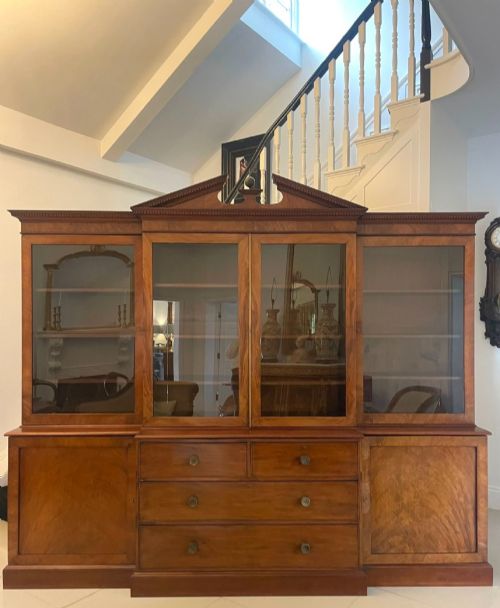
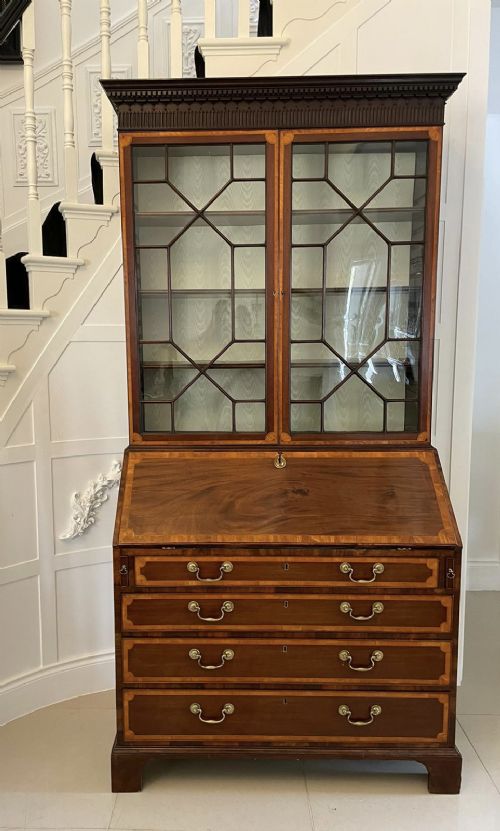
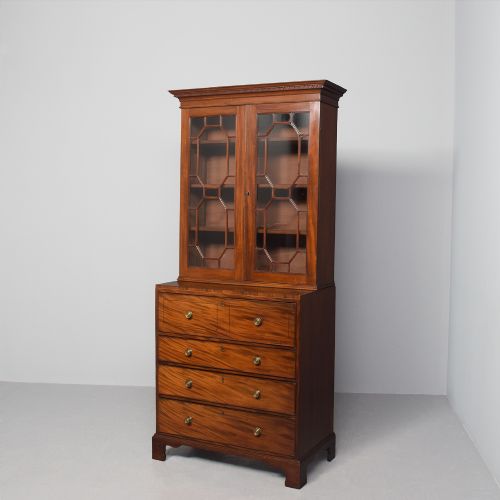
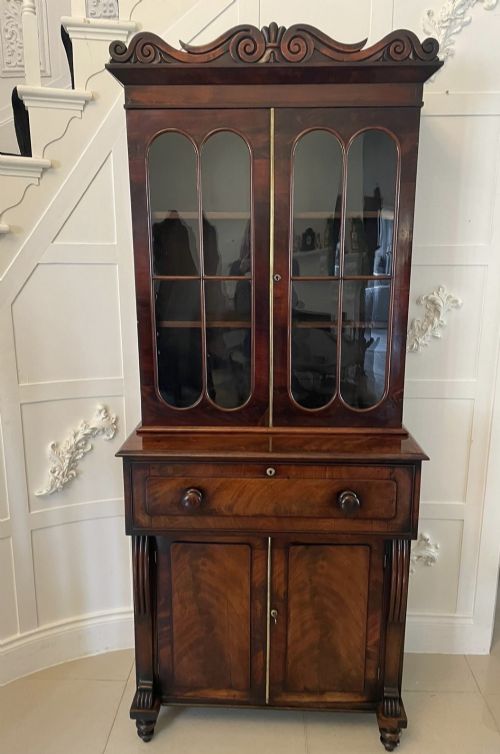
Georgian Mahogany Bookcase Cabinet
A Georgian mahogany bookcase cabinet combines grand architectural proportion with practical library storage, bringing timeless timber grain and refined glass display into the room.
Georgian Mahogany Bookcase Cabinet
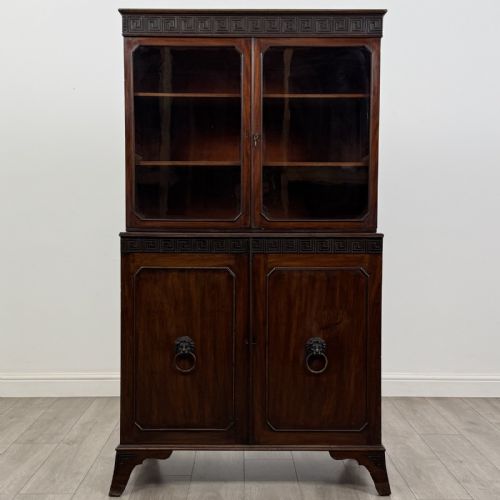
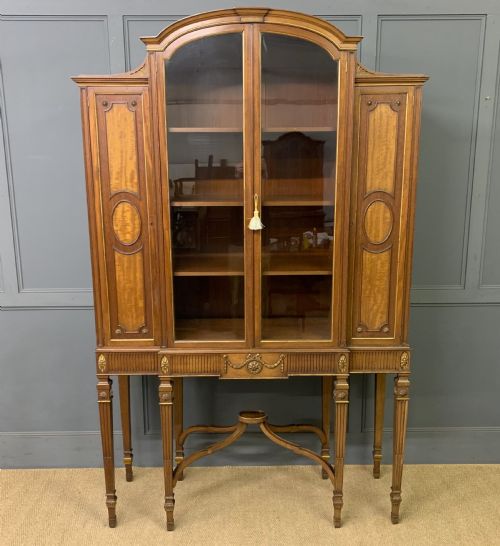
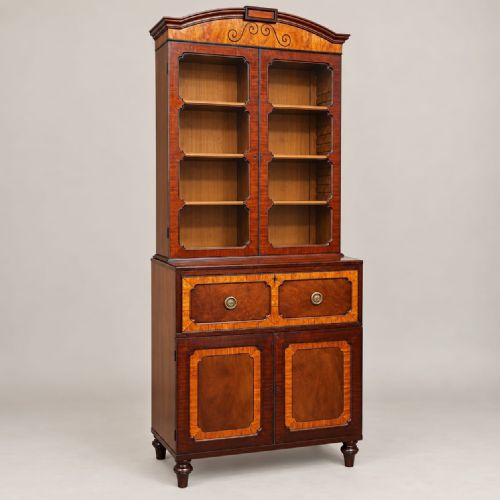
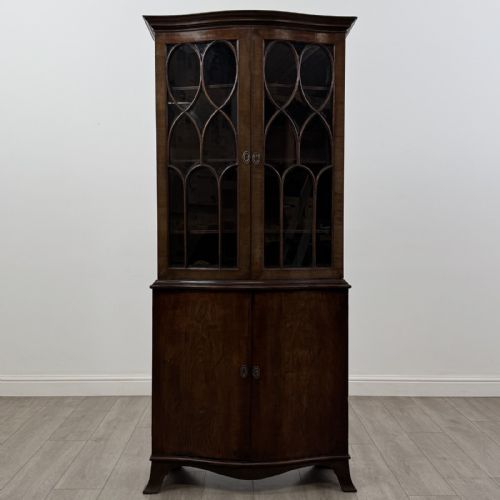
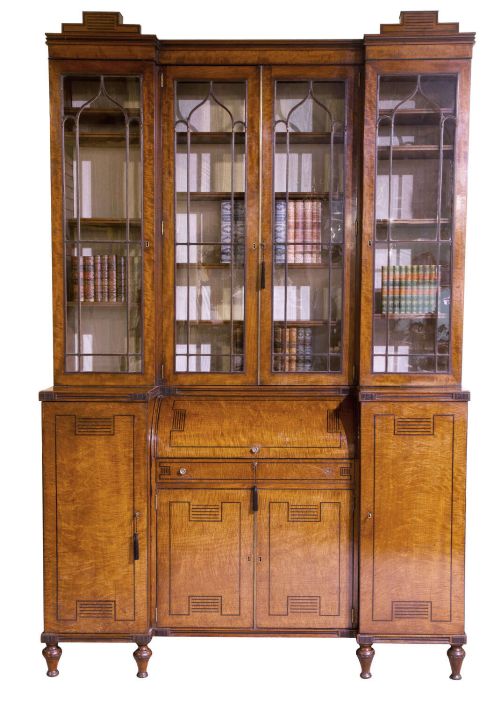
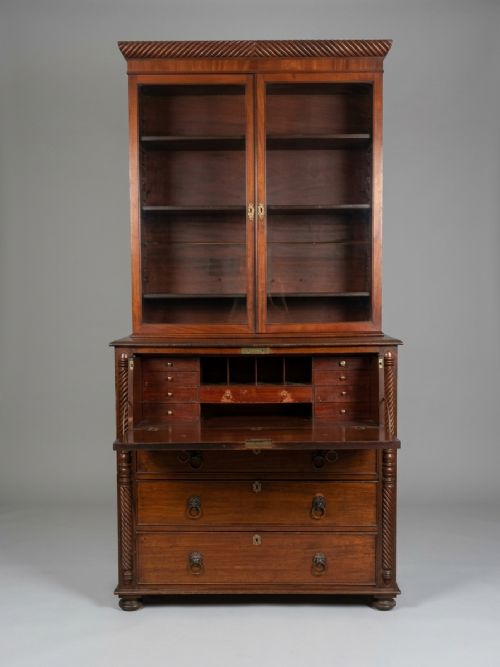
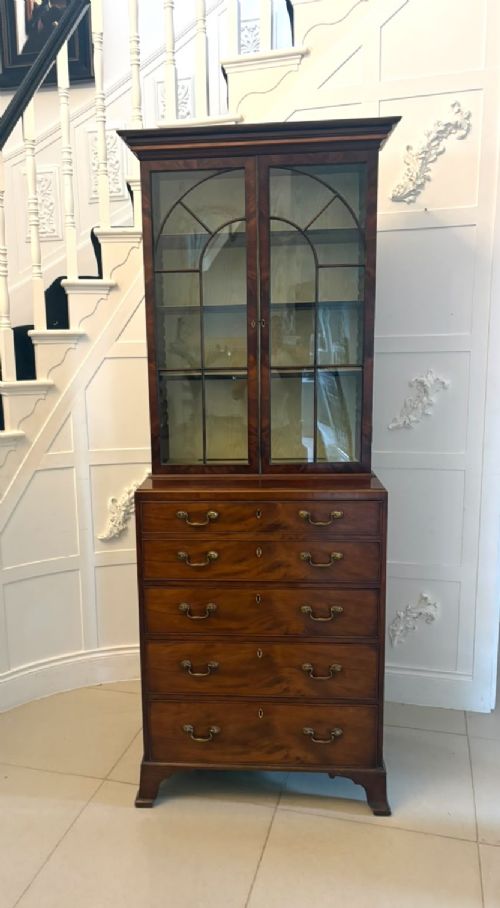
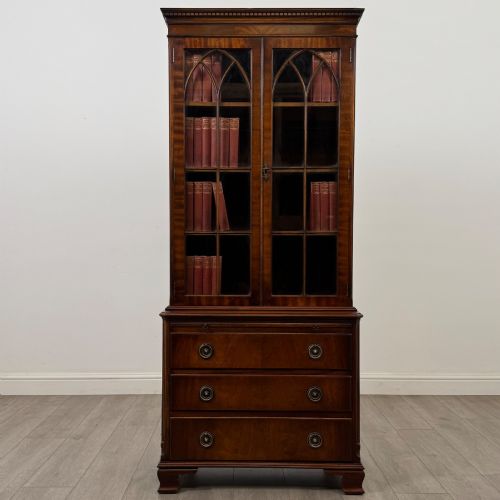
A georgian mahogany bookcase cabinet brings together upper glazed shelving and lower closed storage, with bureau variants incorporating a fitted writing drop-front for dual utility in the home. These pieces emerge primarily from Georgian, Regency, and William IV periods, alongside later revival interpretations spanning into the twentieth century.
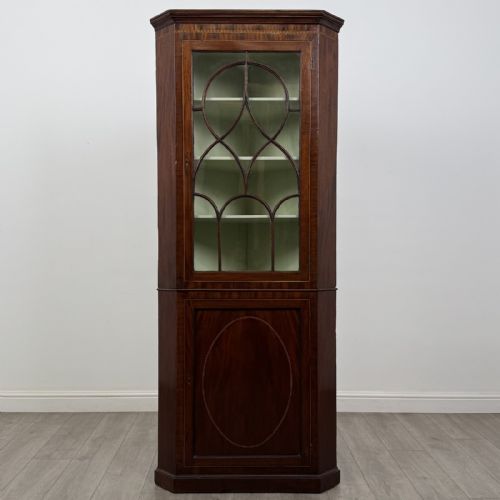
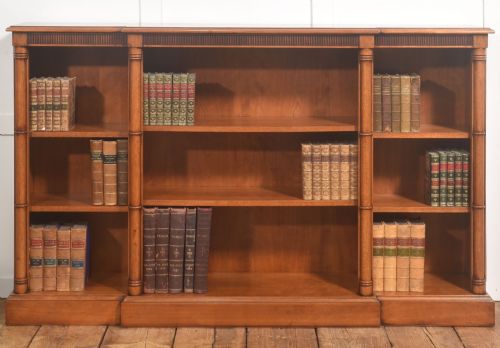
Forms vary from grand breakfront library bookcases and triple cabinets down to compact corner cupboards, waterfall shelves, and chiffoniers. The overriding presence is architectural and formal, designed to house library collections and display precious objects behind timber-framed glass doors.
How they were made
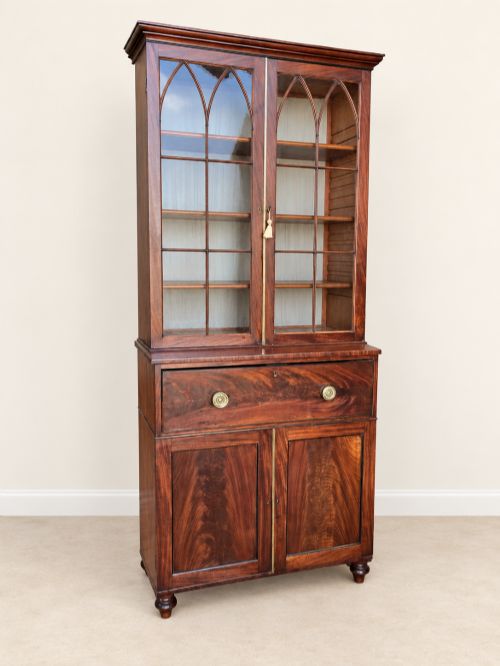
Cabinetmakers utilised dense solid timber and figured veneers, selecting flame mahogany to create rippling grain patterns across large door panels and fall fronts. Secondary timbers such as oak provide structural rigidity to drawer linings and internal framing.
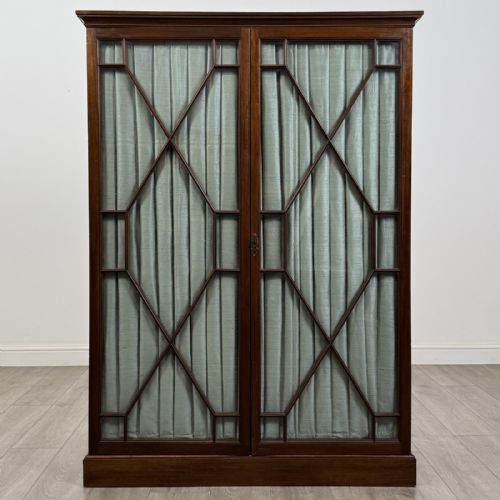
Glazing relies on delicate astragal bars forming geometric or Gothic lattice work, while finer examples incorporate inlay work using satinwood and ebony, complemented by cast brass handles and escutcheons.
Some secretaire bookcases hide secret little drawers inside for love letters, proving that even serious Georgian literature needed a bit of mystery.
What varies in quality
Grading depends heavily on the choice of timber figure, where symmetrical flame mahogany veneers and thoughtful grain matching elevate a piece far above plain stock timber. The crispness of carved mouldings, astragal bars, and inlaid stringing also dictates the level of workshop execution.
Internal engineering marks the division between standard and superior pieces, seen in fitted pigeonholes, secret compartments within secretaire drawers, and original brass hardware that moves with precision.
The Georgian Mahogany Bookcase Cabinet Glossary
- Astragal
- Moulding profile used to divide panes of glass in cabinet doors. These thin wooden bars create geometric patterns that define the visual rhythm of the upper bookcase.
- Secretaire
- A drawer containing a fitted writing desk with small drawers and pigeonholes, dropping forward on hinges. This hides a functional writing surface behind standard drawer fronts.
- Breakfront
- A cabinet facade where the central section projects forward from the flanking wings. This architectural layout adds depth and shadow to large library pieces.
- Flame mahogany
- A veneer cut from the branch junction where the grain swirls into dramatic, flame-like patterns. Cabinetmakers reserved this timber for principal doors and drawer fronts.
- Chiffonier
- A low cabinet featuring shelving or a small bookcase superstructure on top. It serves as a versatile storage and display piece originating in the Regency period.
Georgian Mahogany Bookcase Cabinet: Frequently Asked Questions
How do I date a mahogany bookcase?
Dating relies on observing construction methods, timber selection, hardware styles, and architectural details such as astragal bar thickness and cornice design. Pieces from the eighteenth century often display hand-cut dovetails and subtle proportions, whereas later revival items adopt heavier Victorian or Edwardian scaling.
Secondary woods like oak in drawer linings and specific inlay mediums such as ebony or satinwood also help narrow the decade of manufacture when combined with overall stylistic evidence.
Are glazed cabinet doors original?
Original glazed doors show consistent timber ageing, matching wood species inside the rebate, and hand-blown glass panes containing subtle bubbles and ripples. The delicate astragal bars should match the internal construction quality and timber tone of the main cabinet body.
Replacing broken glass was common over the centuries, so inspecting the putty lines and timber joints provides clues to the integrity of the front elevation.
Where should I place a large bookcase?
Large breakfront and double-height bookcases require a stable interior wall away from direct sunlight and sudden radiator heat to protect dry mahogany timber and delicate veneers. Ensuring the floor level is true helps heavy double-door cabinets hang properly and latch squarely.
Allowing sufficient clearance for opening deep lower cupboard doors and pull-out secretaire drawers ensures the piece remains fully functional in daily use.