
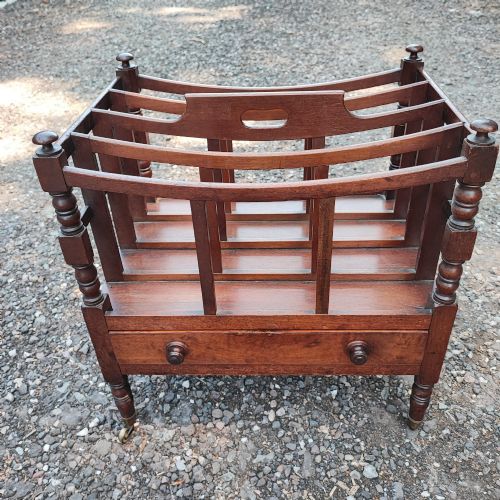
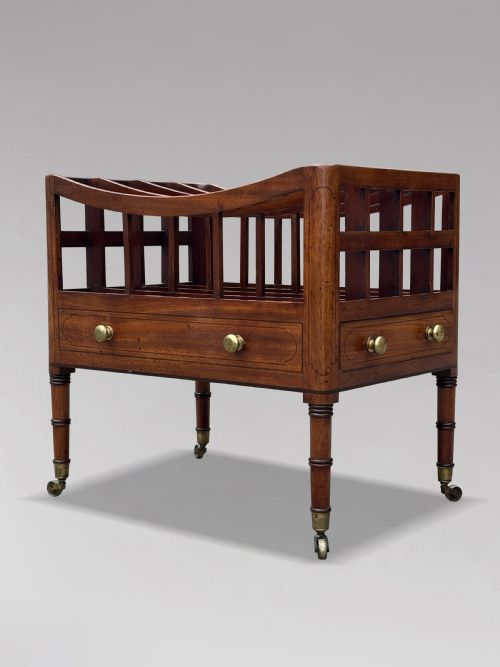
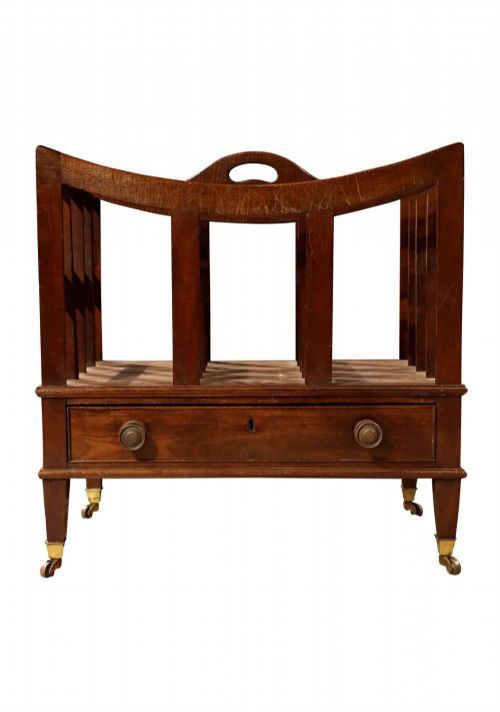


Georgian Magazine Stand
A georgian magazine stand organises periodicals with refined timber divisions and practical elegance.
Georgian Magazine Stand
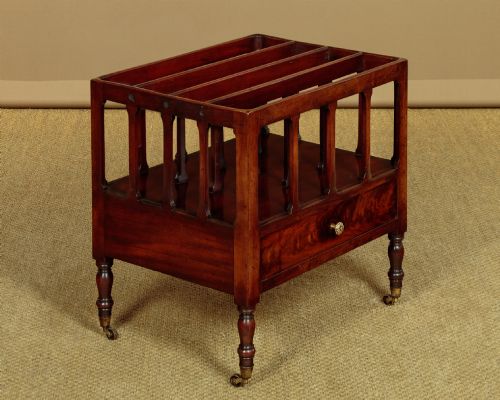
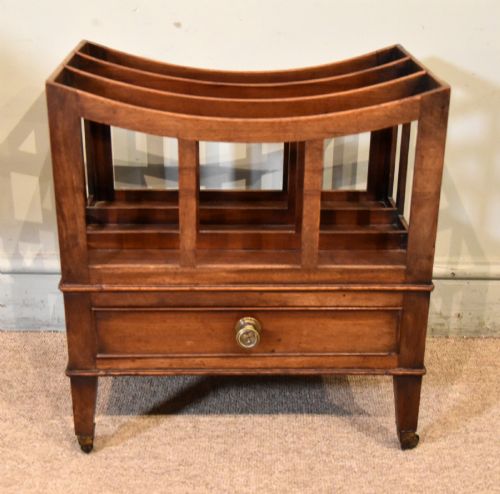
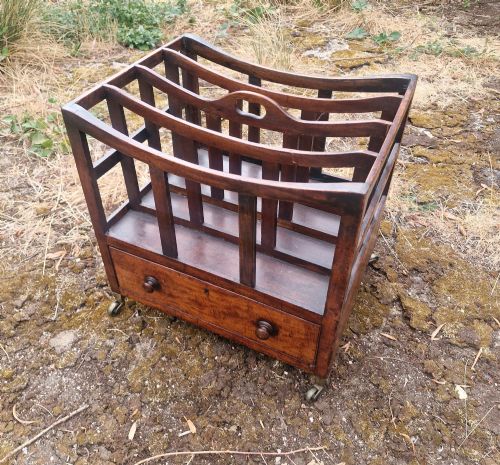
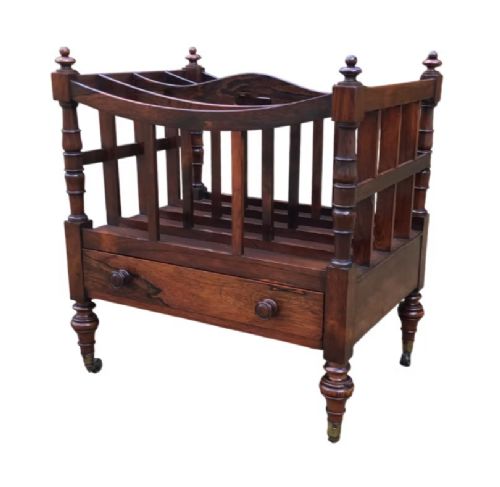
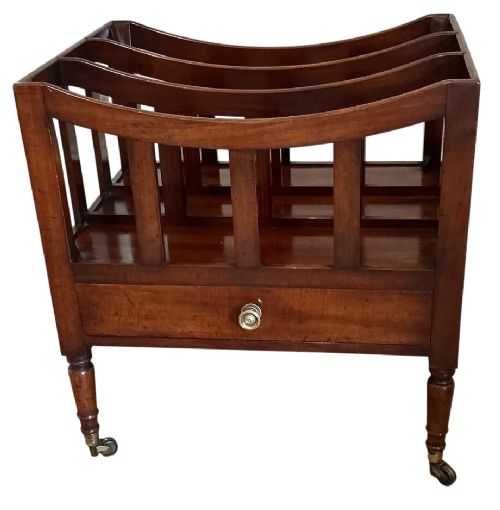
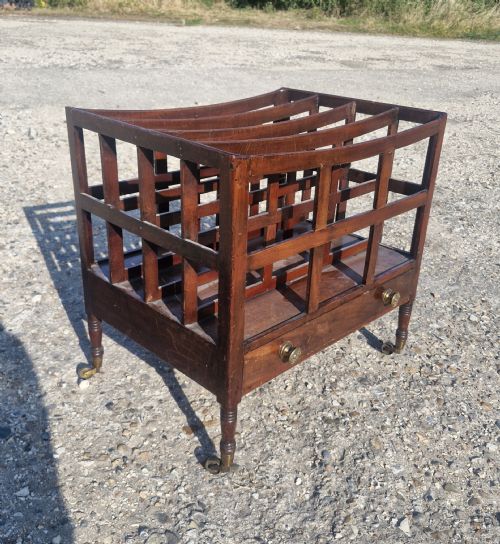
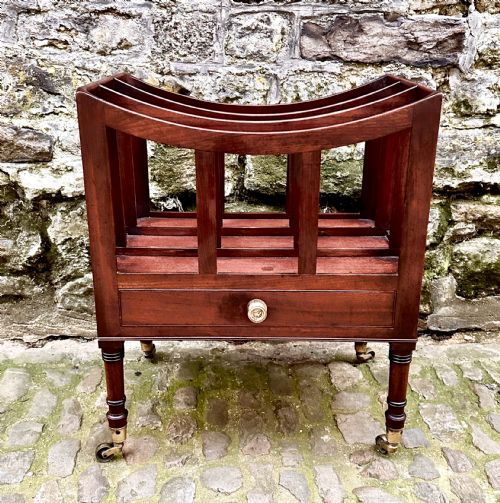
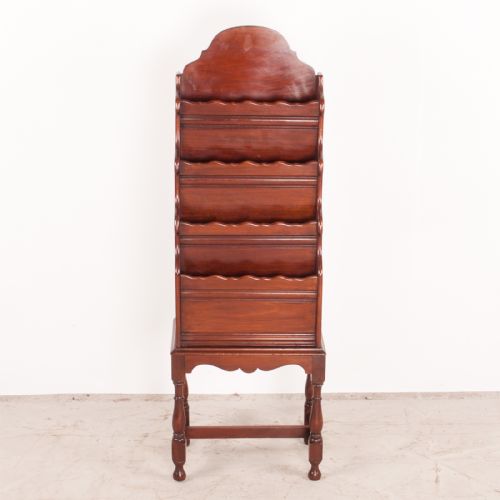
A georgian magazine stand usually takes the form of a freestanding canterbury, designed with slatted partitions to hold newspapers, folios and sheets of music. These pieces span the Georgian, Regency and William IV periods, alongside later Edwardian and revival interpretations.
The materials recorded in the evidence range from standard mahogany and rosewood to figured Cuban mahogany, painted wood and brass details. Most examples operate as low stands featuring multiple divisions, sometimes accompanied by a base drawer or castors.
Distinction in Craft
Quality rests upon the selection of timber grain, seen in richly figured Cuban mahogany or deeply polished rosewood, contrasted with plain painted softwoods. Finer examples display meticulous craftsmanship in turned legs, carved details such as Prince of Wales feathers, and integrated brass castors.
The structural integration of drawers and the precision of the slatted divisions separate standard utility pieces from sophisticated cabinetwork attributed to known design influences.
The listings show pieces spanning the eighteenth century through to the Edwardian era, constructed primarily in mahogany and rosewood.
The Georgian Magazine Stand Glossary
- Canterbury
- A low freestanding stand with slatted divisions used for holding newspapers, magazines and music sheets. It typically includes a carrying handle or a single drawer beneath.
- Folio stand
- A piece designed specifically for storing large loose papers, prints or architectural drawings. These often feature adjustable frames.
- Regency
- A stylistic period spanning the early nineteenth century defined by classical restraint and influences from ancient Roman and Greek design. Pieces from this era often incorporate rosewood and brass mounts.
- Inlay
- A decorative technique where contrasting pieces of wood or metal are inserted into depressions within the primary timber surface. This creates geometric patterns or pictorial motifs.
Georgian Magazine Stand: Frequently Asked Questions
What is a canterbury?
A canterbury is a small freestanding stand featuring vertical partitions designed to hold periodicals, newspapers and sheet music.
Many examples include a low drawer at the base and small wheels for mobility across a library or drawing room floor.
How do I date a stand?
Dating relies upon timber selection, hardware and stylistic cues such as turned legs or brass castors.
Earlier pieces from the eighteenth century favor solid mahogany, whereas Regency examples frequently utilise rosewood with ebony banding.
Were these used for music?
Yes, many early nineteenth-century stands served as sheet music holders alongside their function for newspapers and folios.
The slatted divisions kept bound scores and loose manuscript sheets upright and organised near a pianoforte.
Where should I place one?
These pieces fit beside a sofa or armchair to keep current reading material within easy reach.
Their compact freestanding design allows them to sit openly in a study, library or sitting room.