
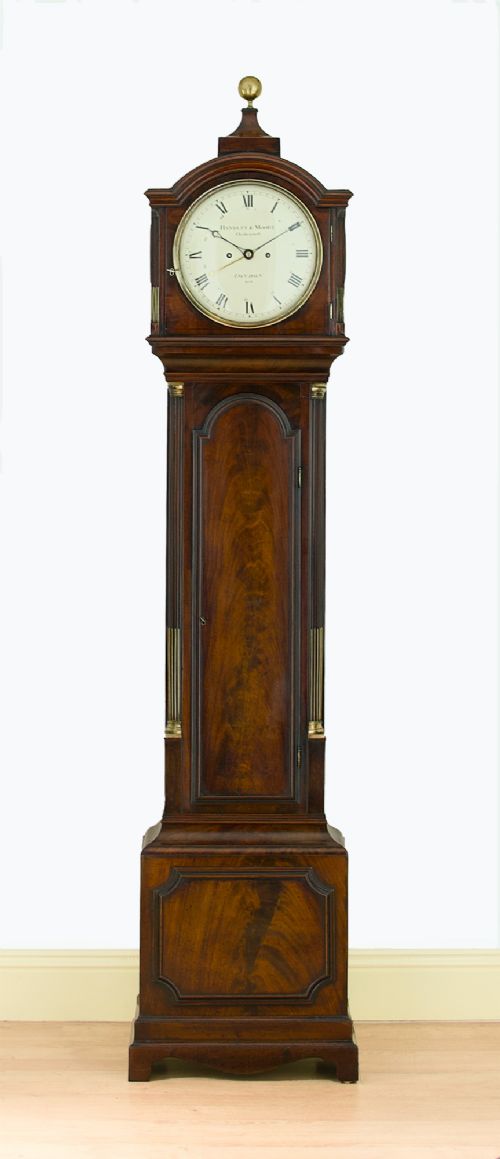
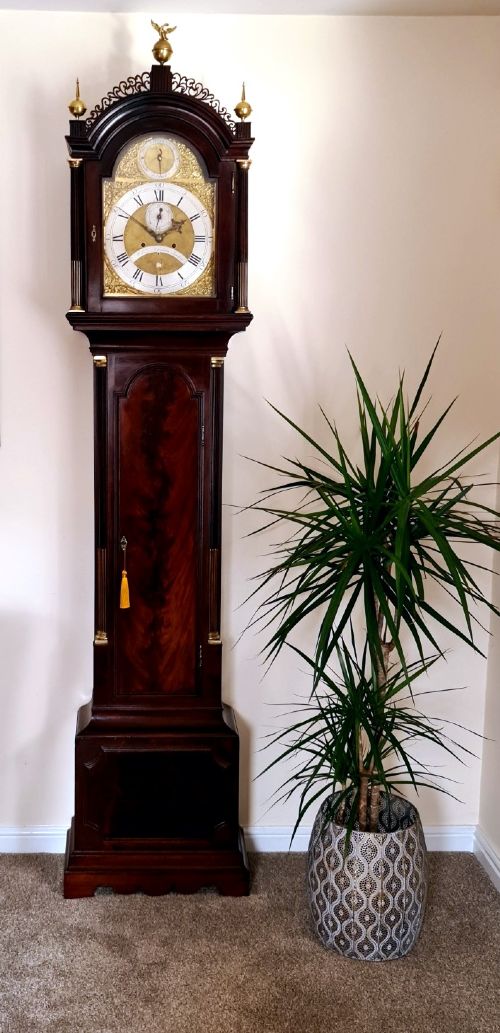
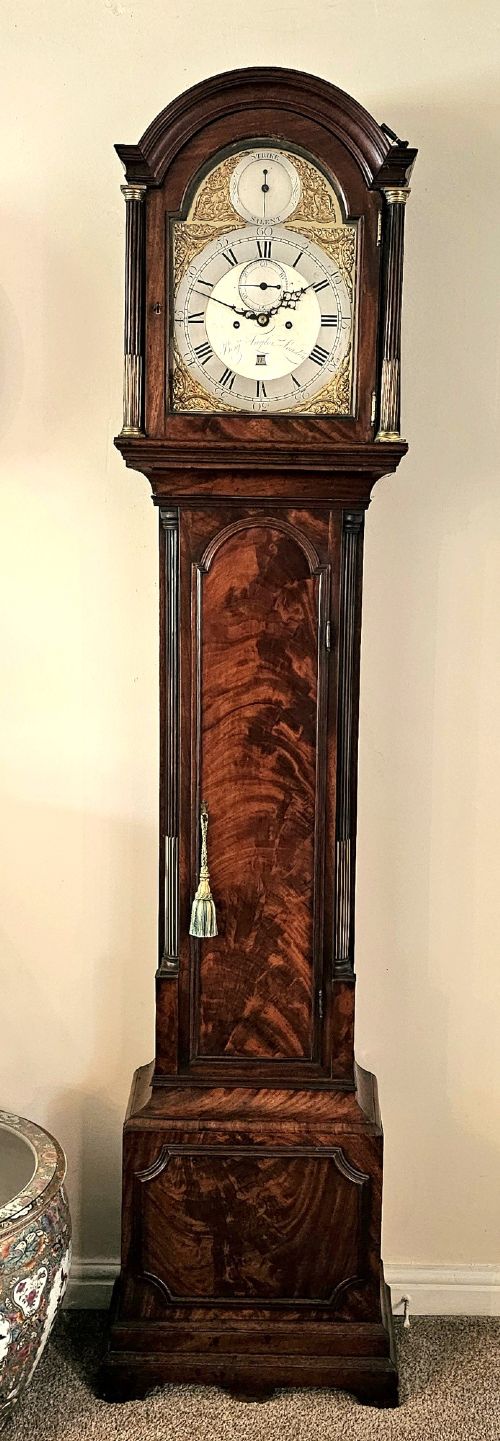
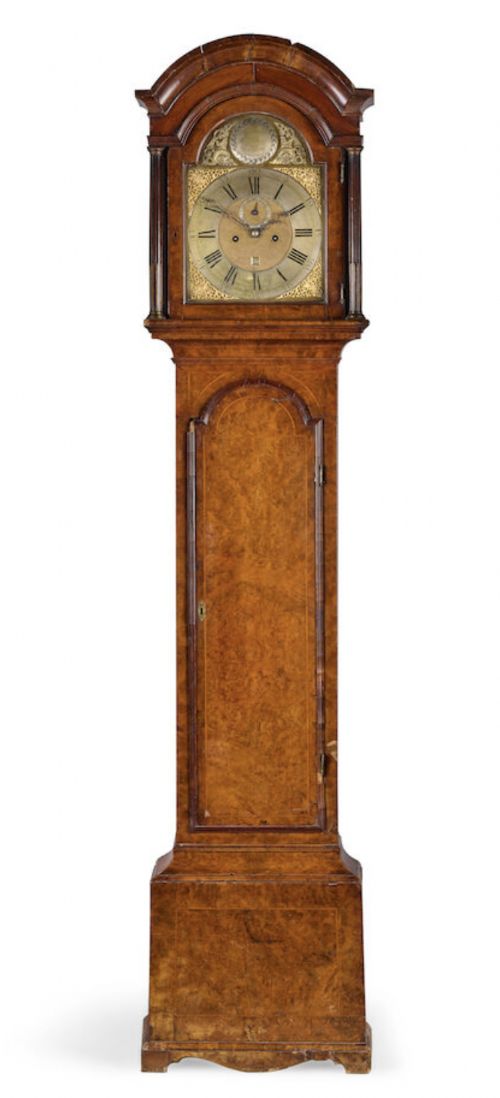

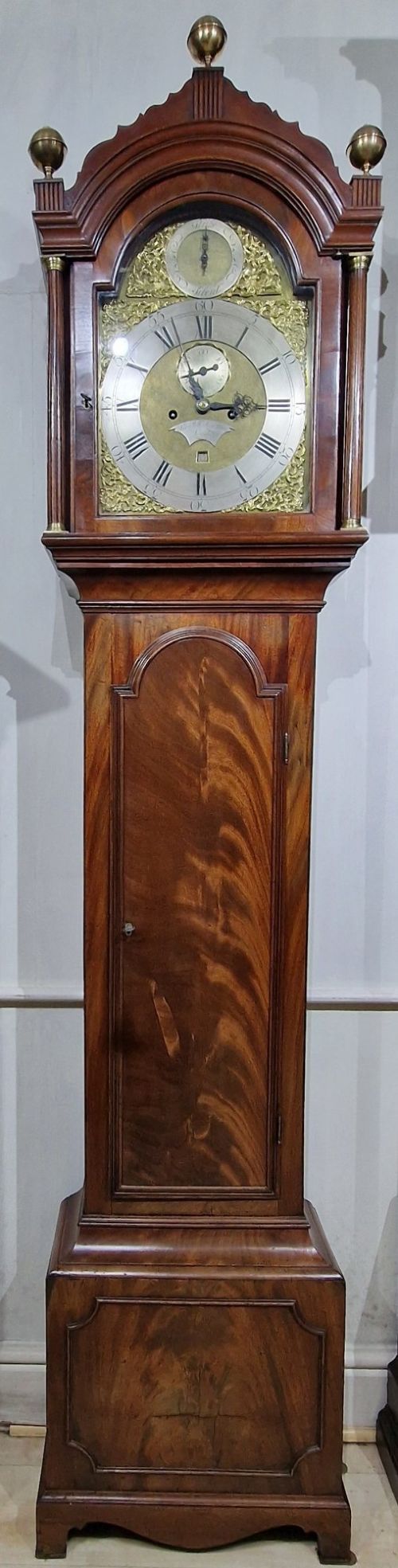


Georgian London Grandfather Clock
When sourcing a georgian london grandfather clock, expect towering floor-standing timepieces built by metropolitan makers spanning several decorative epochs.
Georgian London Grandfather Clock
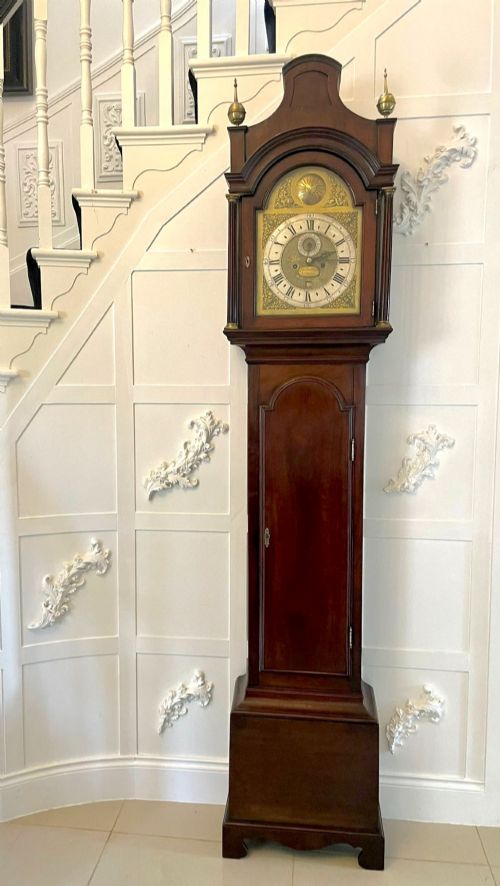
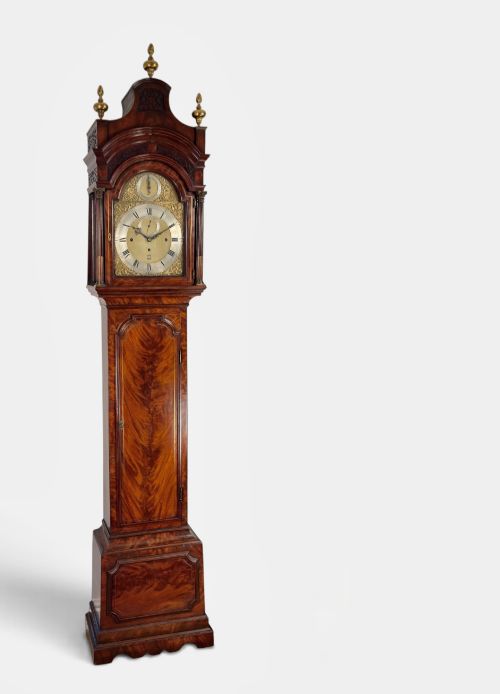
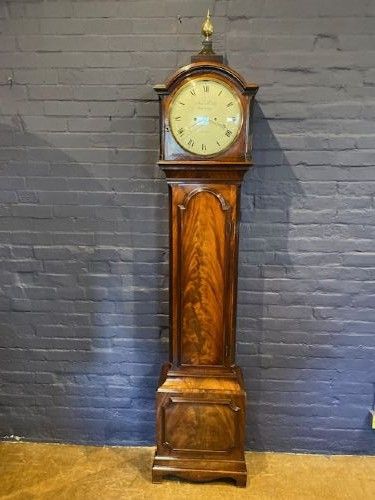
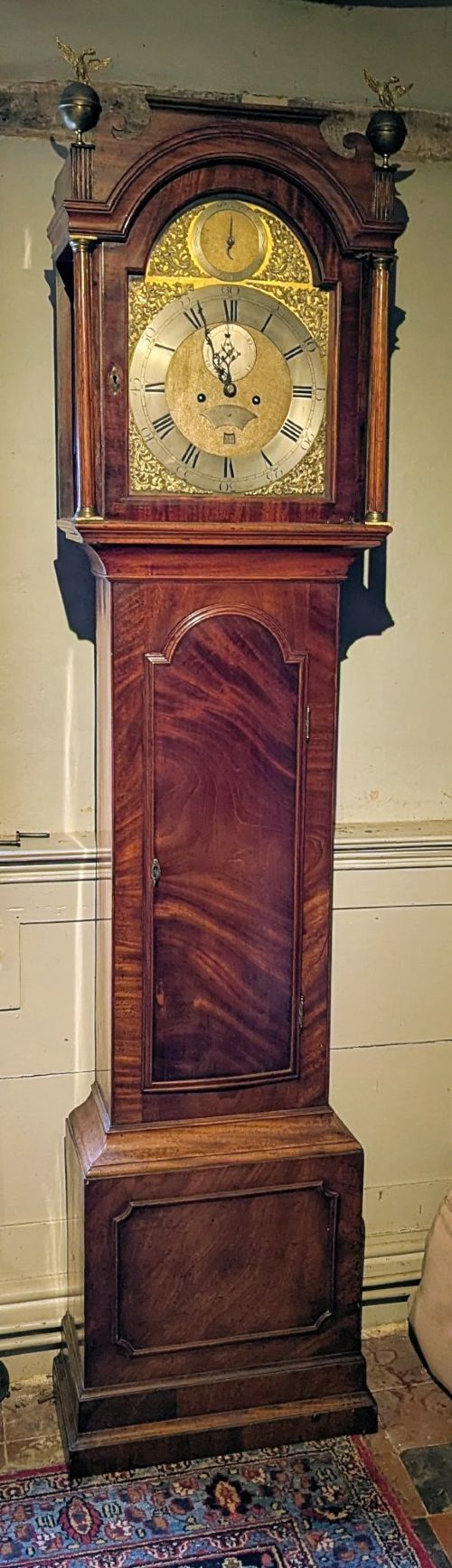
A georgian london grandfather clock is a tall domestic timekeeper designed to stand on the floor, housing weights and a pendulum within a protective wooden case. These objects combine precision horology with cabinetmaking, serving as both functional instruments and architectural furniture for domestic spaces.
The pieces appearing on this page originate predominantly from the eighteenth and early nineteenth centuries, aligning with Georgian and Regency periods. Mahogany and walnut cases dominate the selection, frequently featuring figured veneers and glazed dial hoods.
Makers working in the capital produced longcase clocks in various stylistic iterations, ranging from restrained architectural designs to decorative forms incorporating chinoiserie and gilt-lacquer finishes. Most examples operate on eight-day movements, requiring weekly winding via keys inserted into the dial face.
How They Were Made
Cabinetmakers constructed the tall cases using solid timbers and decorative veneers such as mahogany, flame mahogany, and burr walnut over supporting pine or oak carcases. Glass panels were fitted into the hood doors to protect the hand-engraved brass and silvered dials from dust and damage.
Horologists built the internal movements from brass and steel, incorporating wheels, gear trains, and escapements designed to maintain accurate time over extended periods. Specialised mechanisms for quarter-striking, moon phases, and automata were integrated into advanced examples by skilled urban artisans.
Listings feature mahogany, walnut, and ebonised timber cases housing brass and steel movements.
What Varies in Quality
The sophistication of the internal movement establishes the baseline of horological merit, distinguishing standard time-and-strike mechanisms from complex movements featuring moon phases, silent pull systems, or quarter-striking capabilities. Movement quality relies on the precision of wheel cutting, the integrity of the pillars, and the original signature of the maker.
Case execution separates ordinary domestic furniture from exceptional workshop production through the selection of timber, such as highly figured flame mahogany or burr walnut veneers. Proportions, carving detail on the hood and trunk, and the preservation of original surface patination further differentiate superior examples.
Charles Shuckburgh·John Ellicott·James McCabe·Handley & Moore·William Jourdain·Benjamin Taylor·Windmills and Wightman·Henry Weedon·Thwaites·William Kipling·Thomas Vernon·Langley Bradley·William Allam·James Tregent·John Rainsford·Francis Perigal·Wightman·Parkinson & Frodsham·John Shelton·John Thompson·Gardner·James Bullock·George Graham·William Tomlinson·Dent
The Georgian London Grandfather Clock Glossary
- Longcase clock
- A tall, weight-driven pendulum clock housed in a wooden floor-standing case, commonly called a grandfather clock. These pieces measure time through descending weights suspended by cords or chains.
- Movement
- The internal mechanical assembly of gears, springs, escapements, and dials that drives the timekeeping and striking functions. Horologists construct these assemblies primarily from brass and steel.
- Hood
- The upper section of a longcase clock enclosing the dial and movement, usually featuring a glazed door for viewing. This component often incorporates architectural mouldings, frets, or pagoda tops.
- Dial
- The visible face of the clock displaying hours, minutes, and subsidiary indicators using engraved brass, silvered chapter rings, or painted iron. Makers frequently signed their work directly onto this surface.
- Chinoiserie
- A decorative style employing European interpretations of Chinese artistic motifs, executed in lacquer and gilt on furniture surfaces. This technique appears on select eighteenth-century clock cases.
- Quarter-striking
- A complex mechanical complication enabling a clock to chime the quarters of the hour on additional bells or gongs. This feature requires intricate train work within the movement.
Georgian London Grandfather Clock: Frequently Asked Questions
How do I wind an eight-day grandfather clock?
Winding requires inserting a crank key into the winding holes on the dial face and turning it clockwise until the weights rise to the top. Care must be taken not to overwind the movement.
Most eight-day clocks require this process once a week. Maintaining a consistent schedule helps preserve the accuracy of the pendulum.
Where should I place a longcase clock at home?
Select an interior wall away from direct sunlight, heating vents, and exterior doors to protect the wood and mechanism from temperature fluctuations. Stability is essential for proper operation.
The floor must be level so the pendulum swings evenly. Securing the case to the wall using hidden brackets prevents accidental tipping.
How do I identify the period of a London clock?
Examine the dial style, case wood, and signature to determine the era of production. Earlier eighteenth-century models often feature brass dial plates with separate silvered chapter rings, while mahogany replaced walnut as the dominant primary timber around seventeen-seventy.
Researching the recorded working dates of the maker named on the dial provides a reliable timeframe. Case proportions and decorative details like fretwork also evolve across the Georgian and Regency periods.
Why does my clock need to be beat-adjusted?
Beat adjustment ensures the escapement releases the anchor evenly on both sides, producing a steady tick-tock rhythm. Uneven beats cause the clock to stop running.
Adjusting the crutch rod connecting the pendulum to the movement corrects the beat. Consulting professional guidance prevents damage to delicate internal linkages during this process.