
Georgian Lead Glass Stemware
Georgian lead glass stemware brings tactile weight and historic form to the table, offering drinking glasses shaped by eighteenth-century craft.
Georgian Lead Glass Stemware
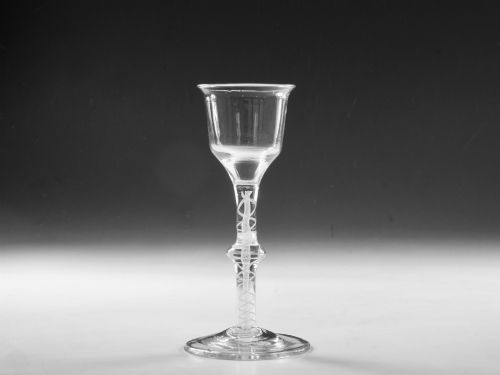
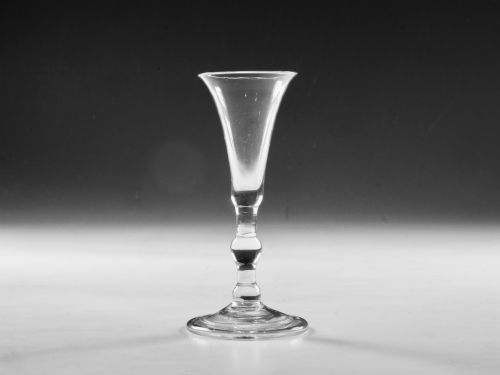
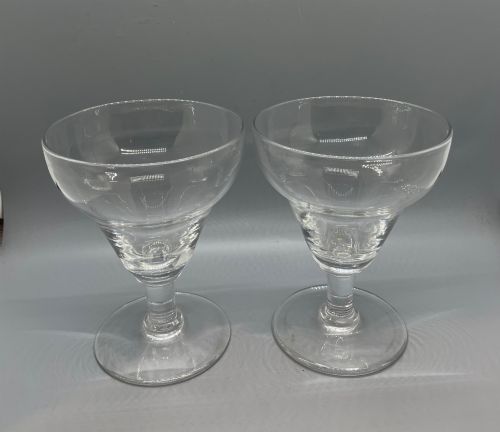
When you search for georgian lead glass stemware, you encounter vessels designed for wine, ale, drams, and rummers produced across the eighteenth century and into the regency period. The selection on this page centres heavily on eighteenth-century wine glasses, alongside ale glasses, dram glasses, and larger goblets.
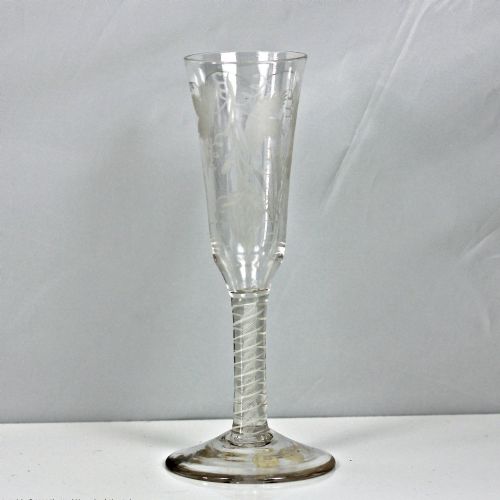
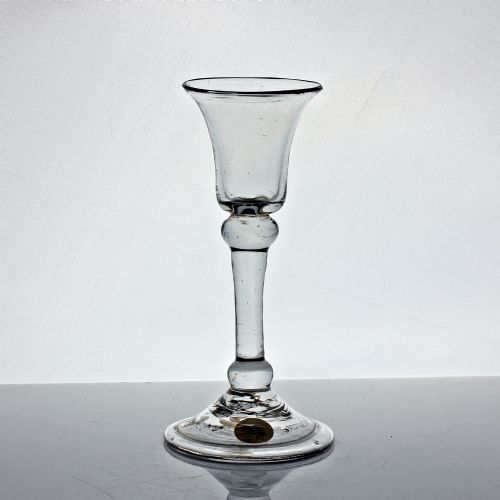
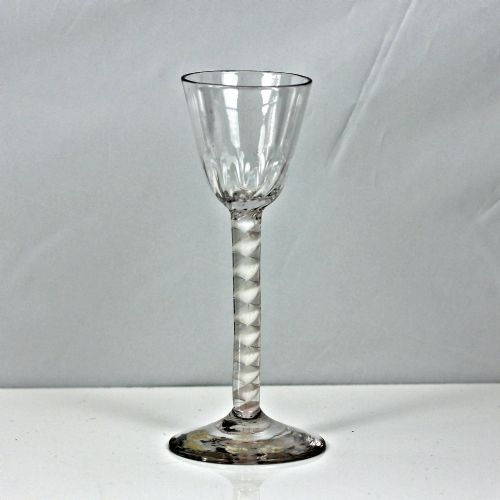
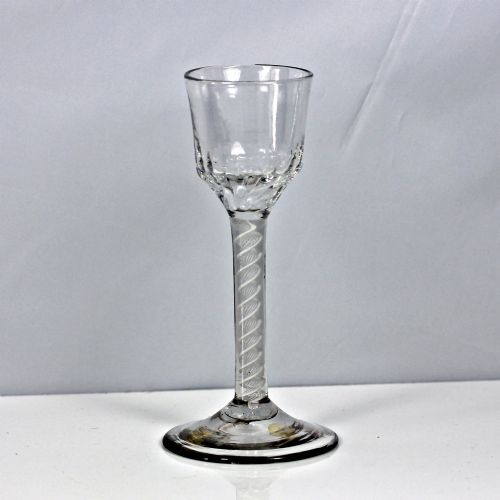
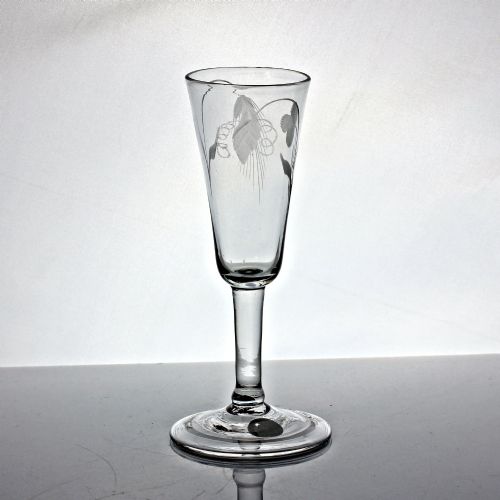
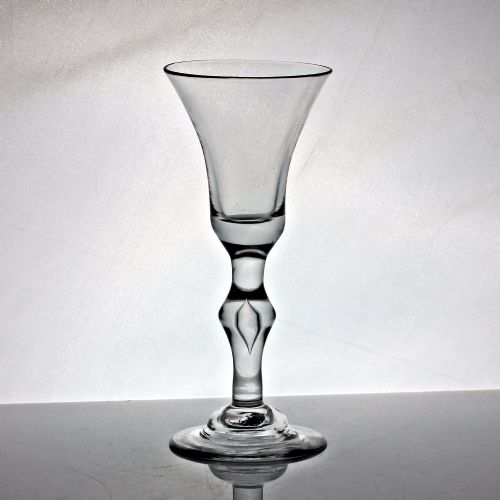
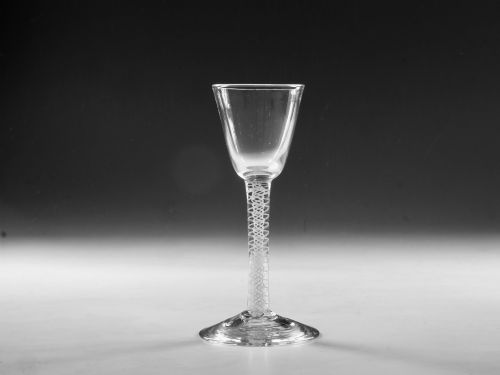
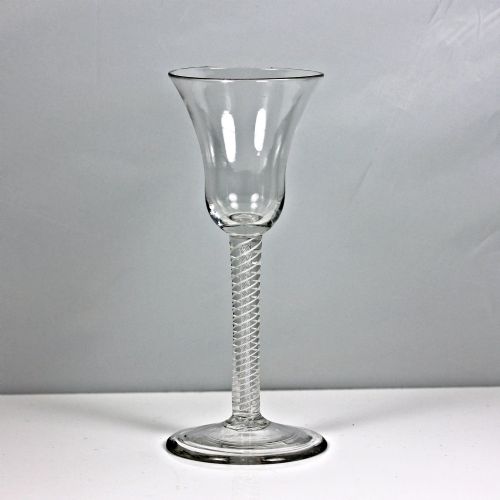
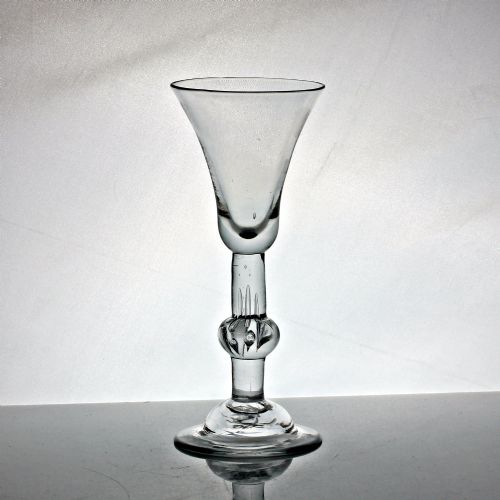
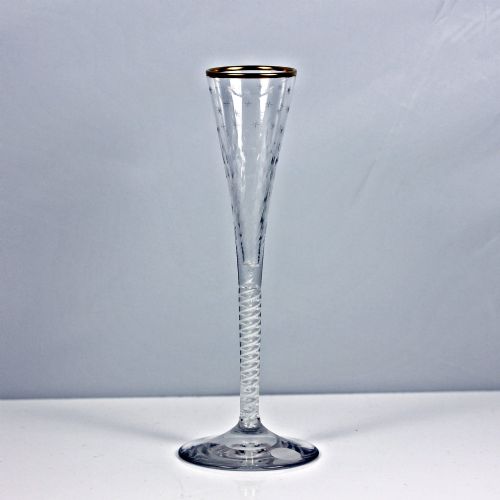
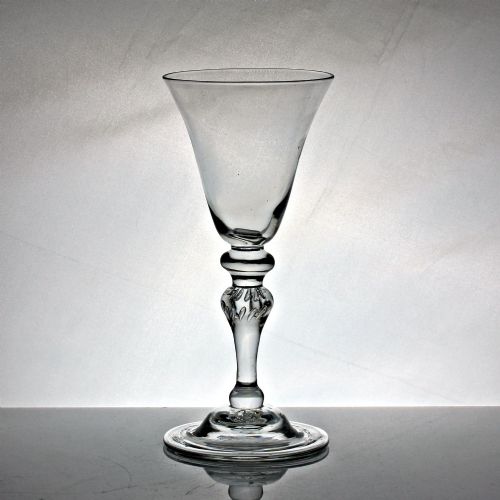
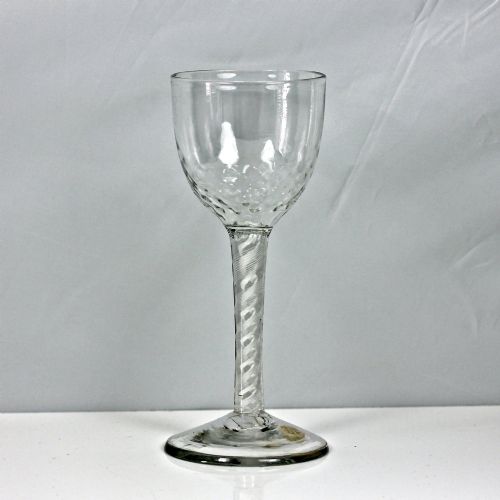
The forms range from heavy baluster wine goblets and balustroid examples to lighter vessels with air twist, opaque twist, or mixed twist stems. You also find specialised pieces such as champagne or sweetmeat glasses, port glasses, and engraved rummers originating from English and North-East English workshops.
Materials and construction
The pieces listed are formed from lead glass, clear lead glass, flint glass, and glass, frequently incorporating white enamel within twist stems. Makers shaped the material into bowls like pan tops, ogees, trumpets, and bells, often supporting them on folded feet, domed feet, or wide foot bases.
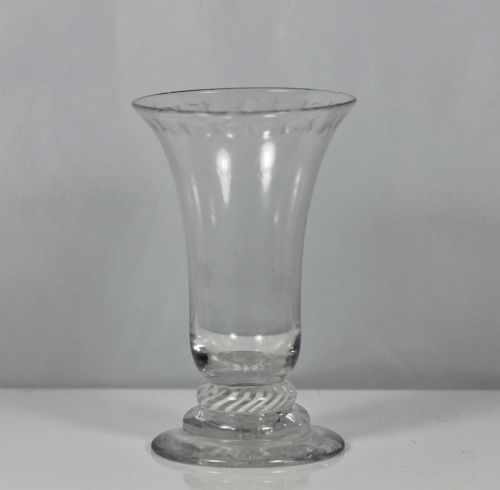
Decoration relies on techniques such as engraving, petal moulding, wrythen ribbing, and optical manipulation trapping air bubbles within the stems or knops. Knops, collars, and annular rings provide structural articulation along the baluster and pedestal stems.
One exceptional small rummer carries the hearty eighteenth-century toast 'Women & Wine' engraved across its bowl.
Assessing the work
Quality in georgian lead glass stemware rests on the clarity and heft of the metal, together with the precision and balance of the stem formation. Twist stems demand exceptional control from the glassmaker to maintain even thread distribution without distortion in the glass.
Engraved decoration demonstrates further distinction, moving from simple stylistic motifs to intricate heraldic or thematic work that matches the proportions of the bowl. The integration of structural details like folded feet or heavy baluster knops defines the ambition of the piece.
The Georgian Lead Glass Stemware Glossary
- Air twist
- A stem formation containing elongated internal air bubbles drawn into spirals. This technique creates delicate optical threads within the glass rod.
- Opaque twist
- A stem containing white enamel rods twisted into opaque white threads. These threads run singly or in double series through the clear glass.
- Baluster
- A heavy, thick stem style characterised by knops and swelling profiles reminiscent of architectural balusters. They are typical of earlier eighteenth-century forms.
- Ogee
- A bell-shaped bowl curving outward at the rim and inward at the base. This profile appears frequently on mid-eighteenth-century wine glasses.
- Rummer
- A large, robust drinking glass with a short stem or foot, common in the late eighteenth and early nineteenth centuries. They were utilised for ale, wine, or punch.
Georgian Lead Glass Stemware: Frequently Asked Questions
What is lead glass?
Lead glass is a heavy glass composition incorporating lead oxide, which increases the refractive index and weight of the vessel. This material allowed makers to fashion sturdier drinking vessels with brilliant clarity.
In eighteenth-century production, this heavier metal supported the development of complex baluster stems and detailed wheel engraving without losing structural integrity.
How do air twists differ from opaque twists?
Air twists contain spiral channels of trapped air inside the clear stem, created by drawing bubbles through the molten metal. Opaque twists incorporate solid white enamel rods twisted into distinct threads.
Both techniques were mastered by glassmakers to add decorative movement to the stem while keeping the bowl plain or lightly engraved.
What were rummers used for?
Rummers were capacious drinking glasses utilised for ale, wine, or spirits during the late eighteenth and early nineteenth centuries. Their sturdy proportions made them suitable for everyday tavern or domestic use.
Many examples feature wheel engraving, commemorating specific sentiments or occasions while retaining a heavy foot and short stem.