


Georgian Landscape Painting
Georgian landscape painting captures pastoral views and estate scenes that bring period charm into a room.
Georgian Landscape Painting
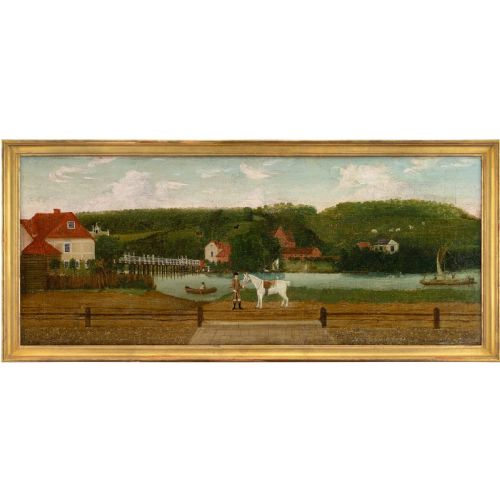
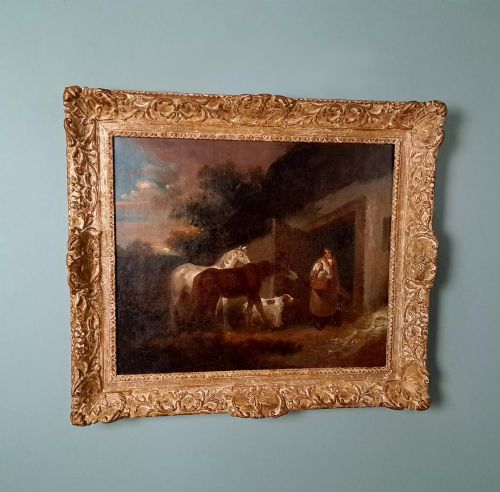
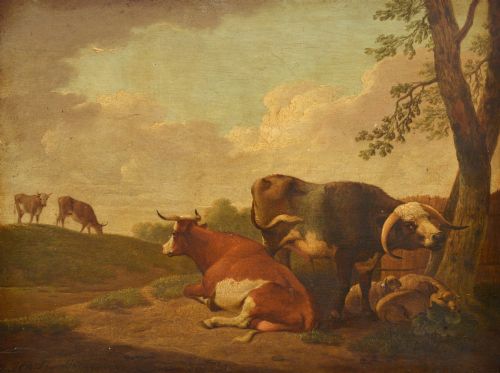
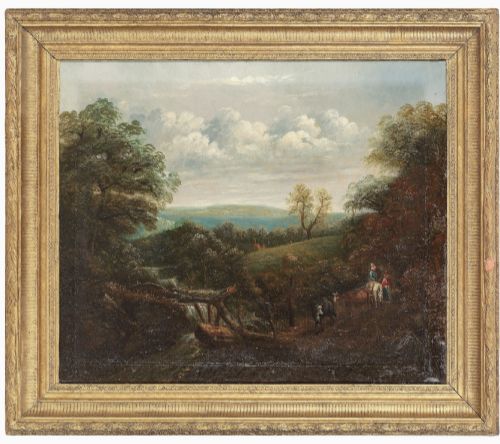
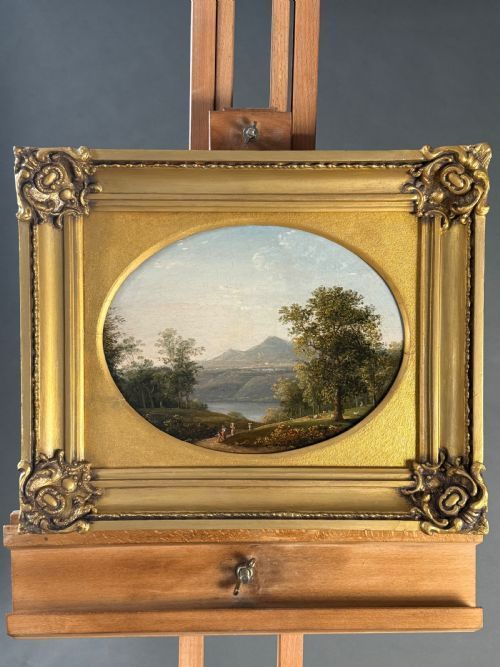
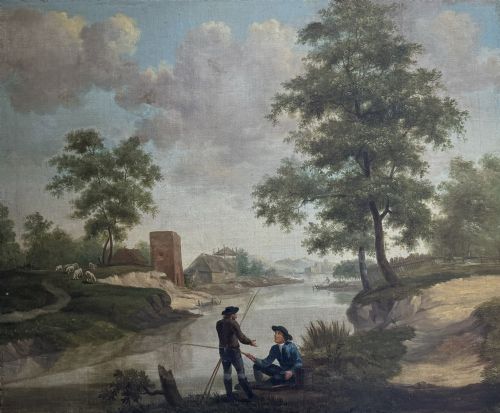
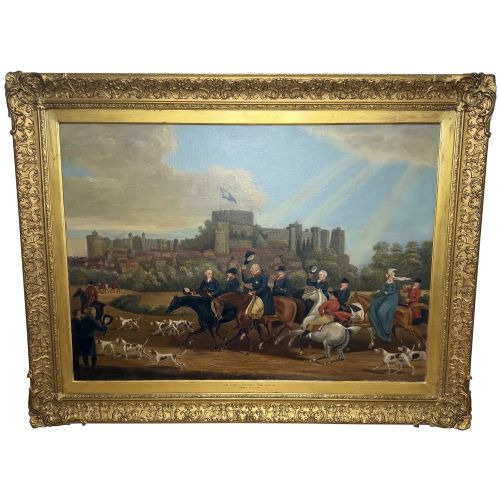
Georgian landscape painting encompasses oil canvases, board studies, and watercolours produced across the eighteenth and early nineteenth centuries. These works record country paths, riverside estates, and pastoral views populated by figures, cattle, and horses.
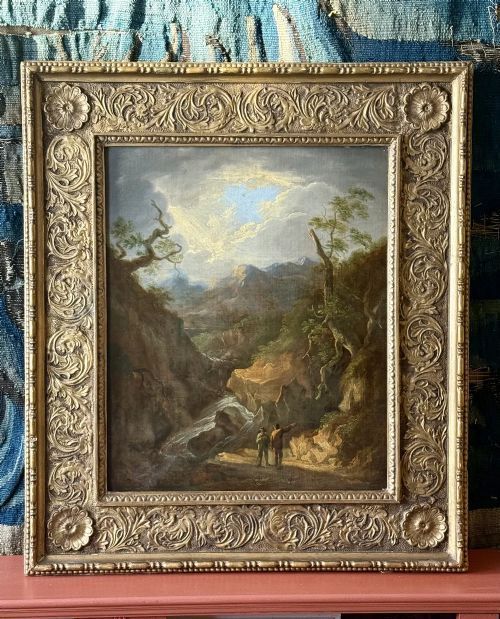
Buyers encounter regional British school pieces alongside continental Grand Tour scenes influenced by classical ruins. Many surviving works reflect the pastoral traditions of the Norwich School or follow the manner of notable painters.
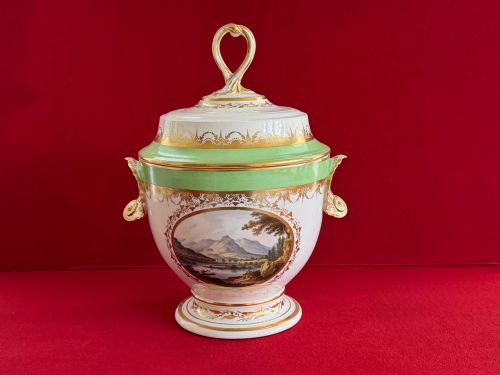
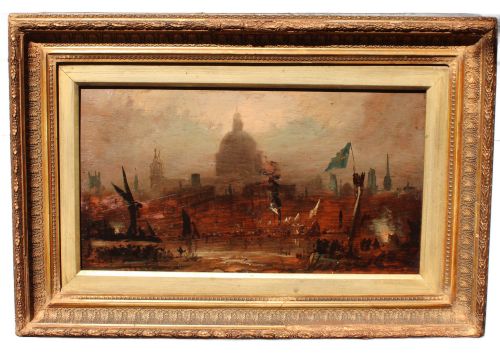
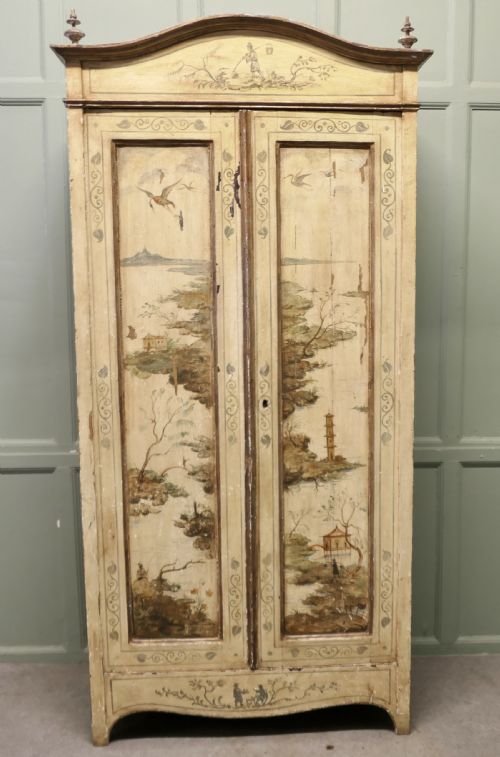
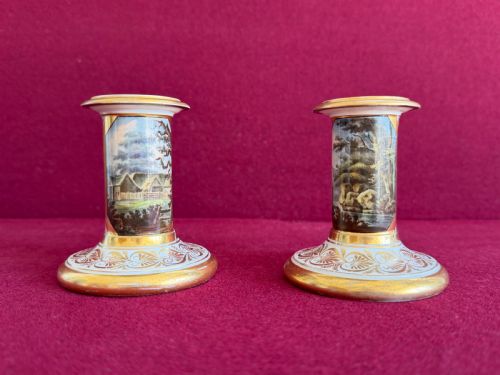
Beyond framed canvases, landscape subjects appear on porcelain vessels, ice pails, and painted overdoor panels. This selection represents the breadth of rural and urban topography collected from the period.
Materials and execution
Painters applied oil and watercolour pigments onto stretched canvas, wooden panels, or artists' board. Canvases occasionally show later conservation work, such as being laid onto board for structural support.
Frames play an integral role in presentation, utilising carved giltwood, gesso, and gold leaf. Surviving mirrors and trumeau panels incorporate painted landscape scenes alongside glass plates.
Georgian Landscape Painting Retail Price Guide 2026
Typical asking prices for georgian landscape painting among the pieces listed under this phrase on Sellingantiques today, from the lower quarter to the upper quarter. They describe what is for sale here now, not the wider market.
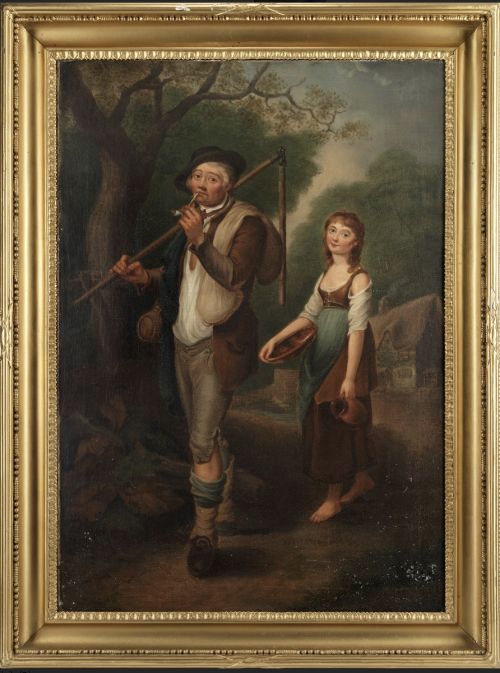
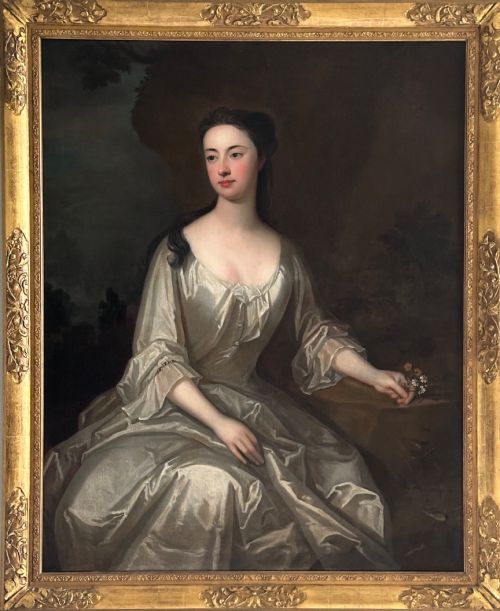
Subjects range from pastoral river scenes and architectural townscapes to portraits set against pastoral landscapes.
Distinguishing quality in works
Technical execution separates routine topographical records from accomplished artistic studies. Confident brushwork, handling of atmospheric light, and balanced composition distinguish the work of trained hands from naive provincial pieces.
The integrity of the original surface, minimal restoration, and the quality of the accompanying giltwood frame influence the standing of a canvas. Signed attributions or documented provenance further elevate specific works within the field.
William Joseph Shayer Senior·Hendrik Willem Schweickhardt·Thomas Barker of Bath·Benjamin Barker of Bath·Jacob Philipp Hackert·John Hamilton Mortimer·Zachariah Boreman·George Robertson
The Georgian Landscape Painting Glossary
- Grand Tour
- An extended continental journey undertaken by wealthy young Europeans to study classical art and antiquities. Paintings from this tradition often feature Italianate ruins and classical landscapes.
- Norwich School
- The first provincial art movement in Britain, founded by artists inspired by local Norfolk scenery and Dutch landscape traditions. Works associated with this group emphasise naturalistic lighting and rural topography.
- Giltwood
- Wood coated with a thin layer of gold leaf or gilt powder over a prepared gesso ground. This material defines the frames and trumeau mirrors associated with the period.
- Grisaille
- A painting executed entirely in shades of grey or neutral monochrome. This technique often served as a preparatory study or a decorative scheme for architectural panels.
- Trumeau
- A wall mirror featuring an upper panel decorated with a painting or an eglomisé glass insert. These architectural pieces combined illumination with landscape art.
Georgian Landscape Painting: Frequently Asked Questions
How do I date a Georgian landscape painting?
Dating relies on costume details of figures, architectural clues, stretcher construction, and canvas types. Signatures, exhibition labels, and written inscriptions on the reverse also provide chronological markers.
Stylistic shifts between classical idealism and early romantic naturalism help narrow the decade of production. Comparative study with dated works by known regional schools offers further precision.
Where were these paintings displayed originally?
Landscapes hung within country houses, town residences, and estate reception rooms, often commissioned to document family property. Overdoor panels and trumeau mirrors integrated directly into interior decorative schemes.
Smaller watercolours and oil studies were kept in portfolios or displayed in private parlours. Their subject matter reflected contemporary tastes for pastoral retreat and picturesque travel.
What is the difference between oil on canvas and oil on board?
Oil on canvas involves pigment applied to woven fabric stretched over a wooden frame, allowing for larger compositions and textured brushwork. Oil on board uses a rigid wooden or millboard support, typical of smaller field studies and sketches.
Board paintings offer structural stability without canvas sag, while canvas works capture the traditional texture valued by academic painters. Both mediums coexist across the period's output.
How do I care for antique oil paintings?
Keep paintings away from direct sunlight, high humidity, and rapid temperature fluctuations that threaten the canvas and gesso frame. Dust surfaces gently with a soft, dry brush without applying liquid cleaners.
Avoid touching the painted surface, as natural oils from skin damage fragile varnish layers. Professional conservation is recommended for any structural repairs or cleaning.