






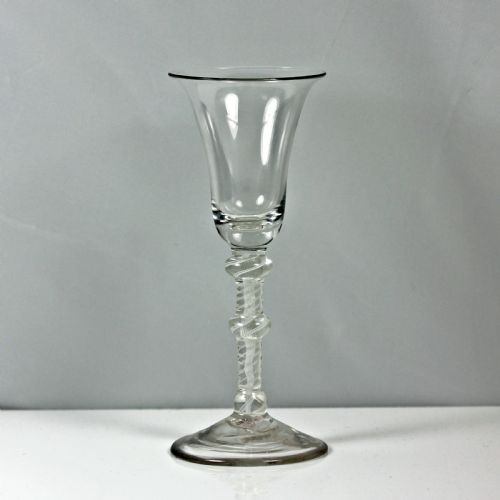

Georgian Knopped Wine Glass
A georgian knopped wine glass brings tangible eighteenth-century weight and clarity to the table, prized for tactile stems and deep metal.
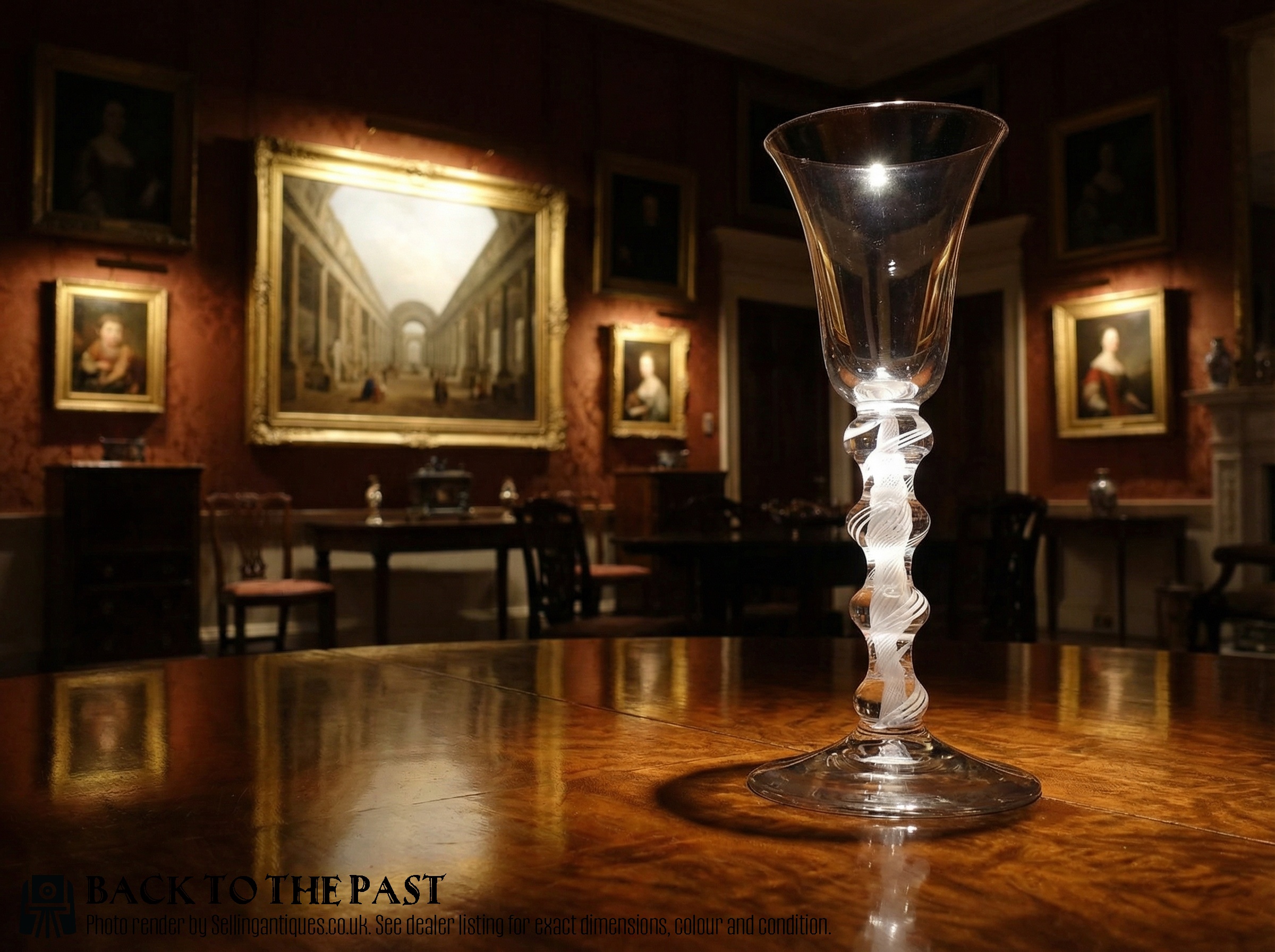
Georgian Knopped Wine Glass
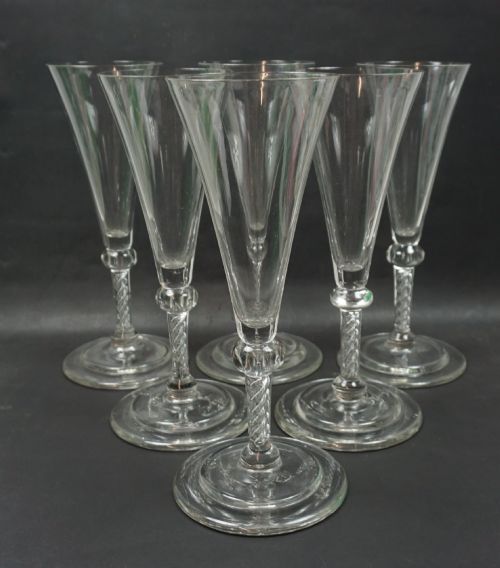
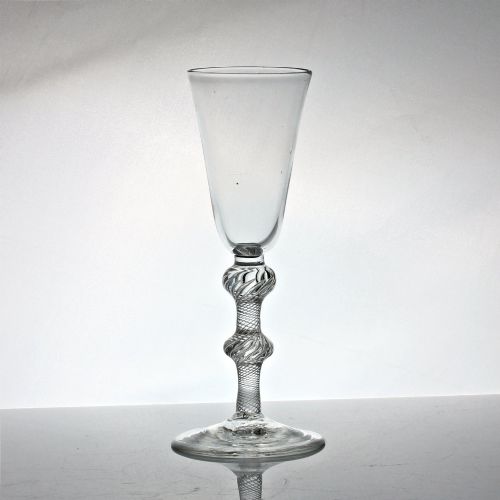
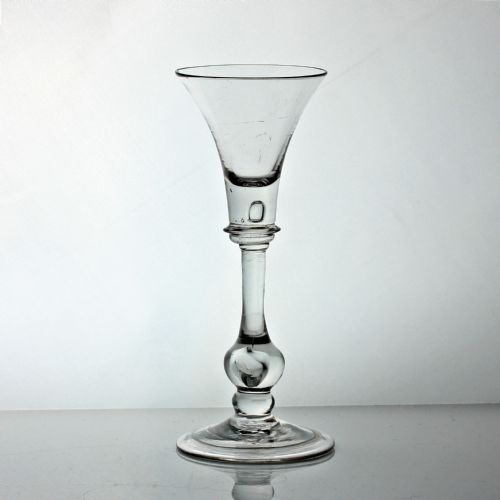
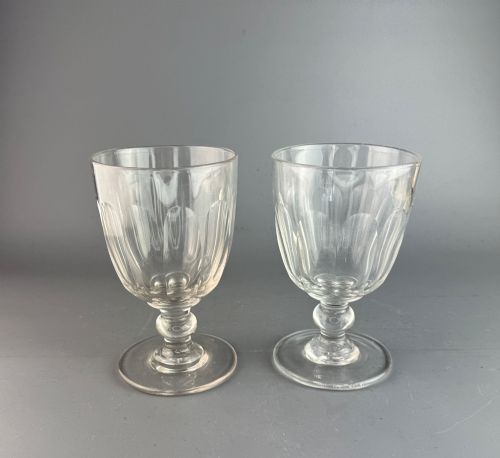
A georgian knopped wine glass centres on drinking vessels formed with thickened nodes or protuberances along the stem, separating the foot from the bowl. These pieces appear primarily from the eighteenth century, spanning periods from Queen Anne and George II reigns through to the broader Georgian era.
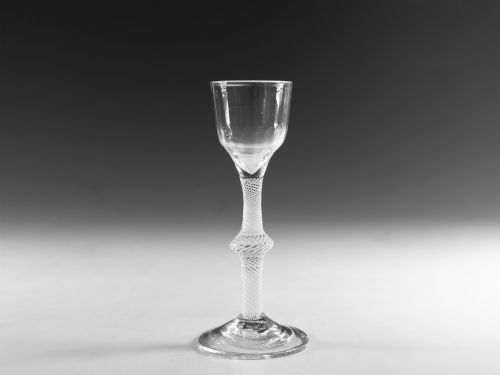
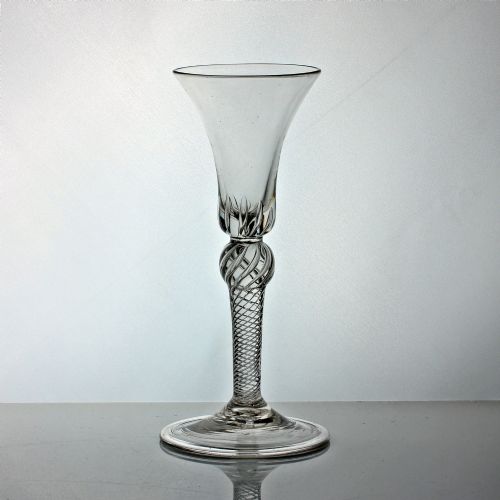
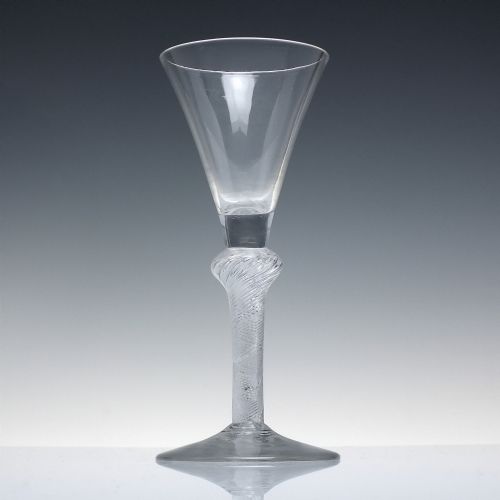
Buyers encounter forms featuring distinct bowl shapes such as bell, pan top, and cup bowls, paired with stems incorporating air twists, opaque twists, and baluster profiles. While the core of the selection stems from the seventeen-hundreds, related pieces stretch from early examples down to later revivals.
Origin points encompass English production alongside continental items such as Liege glass, offering variety in moulding and engraving. Pieces range from simple tavern or domestic glasses to heavily knopped stems carrying complex air-teared formations or historical engravings.
How They Were Made
These items rely on lead glass, lead crystal, and flint glass, materials offering high refractive brilliance and substantial weight in the hand. Glassmakers manipulated the molten metal while hot, drawing out air bubbles into multi-spiral twists or forming opaque white enamel threads within the stem.
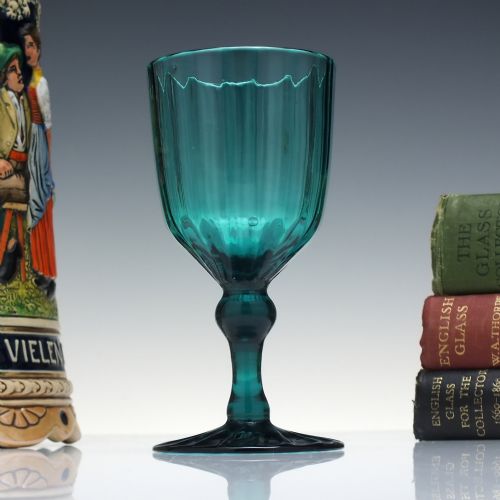
Stems and bowls were shaped using techniques including rib moulding, nut moulding, and honeycomb moulding, creating tactile surface textures before final fire-polishing. Knops were formed by gathering extra glass on the stem and tooling it into single, double, triple, or four-knop configurations.
Some eighteenth-century drinkers toasted absent friends using glasses specifically engraved to honour secret societies.
What Varies in Quality
Quality rests upon the proportion and balance between the bowl, stem, and folded or plain foot, determining the visual rhythm of the vessel. The complexity of the internal twist or the symmetry of the knop formation dictates the skill involved in execution.
The clarity and resonance of the lead crystal elevate certain examples, alongside the crispness of facet cutting or the finesse of contemporary engraving. Heavier, well-balanced baluster and balustroid forms demonstrate superior glasshouse artistry compared to simpler utilitarian counterparts.
The Georgian Knopped Wine Glass Glossary
- Knop
- A knob or protuberance on the stem of a glass, designed to improve grip and visual weight. These can be single, double, or multiple.
- Air Twist
- A stem formation containing elongated spiral bubbles trapped inside the clear glass during manufacture. It is created by drawing air from headed metal.
- Opaque Twist
- A stem containing white or coloured enamel threads twisted into spirals within the clear glass rod. These threads contrast sharply against the surrounding metal.
- Baluster
- A heavy, thick stem style echoing architectural pillars, featuring swelling profiles that dominated early eighteenth-century glassware. Lighter versions are termed balustroid.
- Folded Foot
- A foot where the outer rim of the glass is tucked underneath to create a thickened, rounded edge for extra strength. This feature is common on earlier pieces.
Georgian Knopped Wine Glass: Frequently Asked Questions
How do I date a glass?
Dating relies on combining stylistic markers like bowl shapes, metal composition, and stem construction. Earlier pieces often show heavier baluster profiles, while air and opaque twists belong to the mid-eighteenth century.
Changes in manufacturing techniques, such as pontil mark characteristics and foot styles, further narrow down the decade of production.
What is an air twist stem?
An air twist stem contains fine, helical channels of trapped air running through the transparent glass. Makers formed these by pricking air into hot metal before pulling and twisting the glass rod.
This technique creates shimmering optical effects when the glass catches the light.
Can I use these for wine?
These historical glasses are robust enough for occasional gentle use, though many collectors prefer display. Hand washing in tepid water without soaking protects the fragile lead crystal and historic surfaces.
Sudden temperature changes should be avoided to prevent thermal shock to the old glass.
What does baluster mean?
A baluster refers to a heavy, swelling stem shape inspired by architectural columns of the period. These sturdy stems give the glass substantial weight and a low centre of gravity.
Over the decades, these forms evolved into lighter, more slender balustroid variants.
Are all these pieces English?
While the majority originate from English glasshouses, continental pieces also appear. Items from Liege and other European centres bring distinct moulding styles to the selection.
Examining the metal type and moulding characteristics helps distinguish regional origins.