
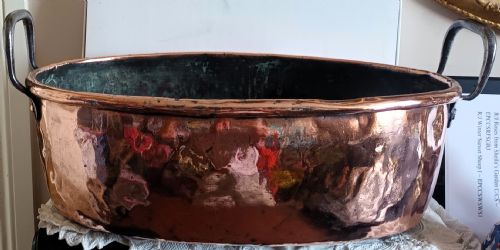


Georgian Kitchen Copper
Georgian kitchen copper brings heavy gauge metal and practical utility straight to the hearth, offering sturdy pots and vessels built for daily food preparation.
Georgian Kitchen Copper
When you search for georgian kitchen copper, you encounter utilitarian vessels and cookware made during the Georgian period, including 1800 and the nineteenth century. These pieces encompass pots, pans, kettles, water urns, jugs, and pitchers designed for heavy use in domestic kitchens and dairies.
The versions you meet most frequently on this page are George III cooking pots, copper pans, kettles, and large jugs holding multiple pints. English makers produced these items in various capacities, from three-pint jugs to massive two-gallon vessels and large hanging water urns.
Alongside standard cookware, the evidence includes specialised dairy items like cream setting pans, jam pans, ladles, and buttermilk skimmers. These objects reflect the functional demands of period food processing rather than purely decorative display.
How they were made
Makers formed these items primarily from heavy copper, often incorporating brass, iron, wrought iron, and tin. The use of wrought iron appears in structural elements like handles and hanging bails on heavy pots and water urns.
Construction techniques involved hammering sheets of copper into deep vessels, saucepans, and kettles, sometimes utilising stamps to mark specific makers or volumes. Artisans combined durability with thermal conductivity to ensure the cookware withstood open hearth flames and daily kitchen routines.
Someone once used these exact copper ladles and buttermilk skimmers to skim cream before the morning fire had even properly caught.
What varies in quality
The standard of these pieces depends upon the thickness of the metal sheet and the integrity of the original construction. Heavier gauge copper and substantial wrought iron attachments indicate vessels designed for rigorous, sustained culinary use rather than lighter domestic tasks.
Makers' marks, such as stamps by Liptons, distinguish individual workshops and add documentary value to specific saucepans and kettles. Scale also separates ordinary items from exceptional large water urns, multi-pan sets, and multi-gallon jugs.
Liptons
The Georgian Kitchen Copper Glossary
- Cream setting pan
- A wide vessel used in dairies to let cream rise to the top of milk before skimming. These deep pans facilitated traditional dairy work in large kitchens.
- Water urn
- A large container designed for heating and storing water near the fire, often featuring hanging bails. These vessels provided a ready supply of hot water in Georgian households.
- Wrought iron
- A tough, malleable iron alloy beaten into shape by hand, frequently utilised for handles, rims, and hanging loops on copper pots. It offered the necessary strength to support heavy filled vessels.
- George III
- The period of the reign of King George III, spanning from seventeen sixty to eighteen twenty, which encompasses the majority of the dated cookware on this page.
Georgian Kitchen Copper: Frequently Asked Questions
How do I clean antique copper?
Maintenance requires gentle cleaning methods that preserve the natural metal surface and any historical patina accumulated over centuries of use.
Avoid harsh abrasives that remove the character of early nineteenth-century hand-beaten metal.
Can I still cook with these pots?
Many of these vessels retain their original heavy gauge structure, but modern culinary use depends on the condition of any internal tin lining.
Kitchen copper from the Georgian era often serves best as decorative display or collection pieces unless professionally re-tinned.
How do I identify a George III piece?
Dating relies on stylistic markers, construction methods like hand hammering, and specific period forms such as cream setting pans and large water urns.
Makers' stamps and documentary evidence from the archive help narrow down the production era to around eighteen hundred.
Where were these utensils used?
These items originated in large English domestic kitchens, dairies, and sculleries where heavy cookware was essential for daily food preparation.
Vessels like jugs, kettles, and saucepans managed boiling, heating, and liquid storage near the hearth.