
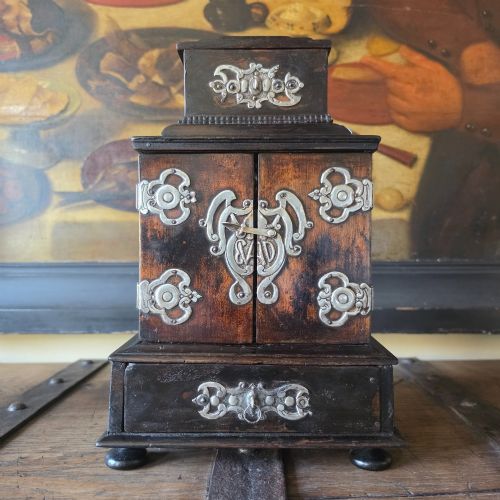
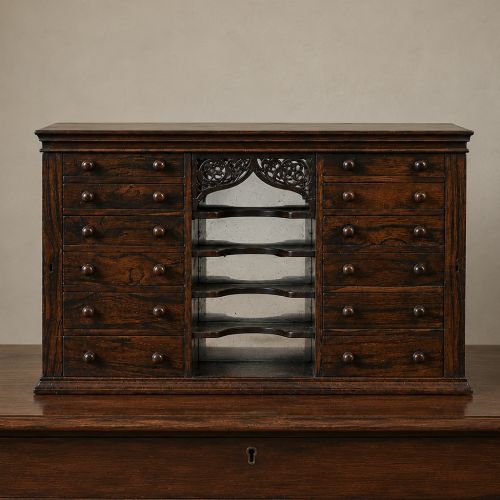
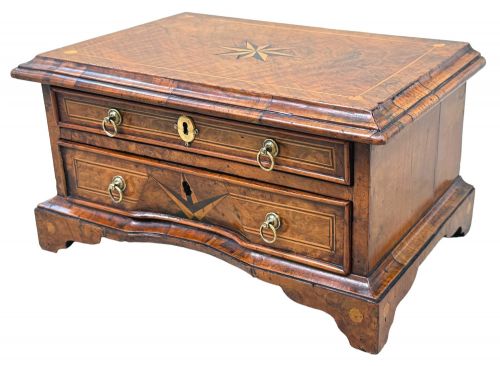


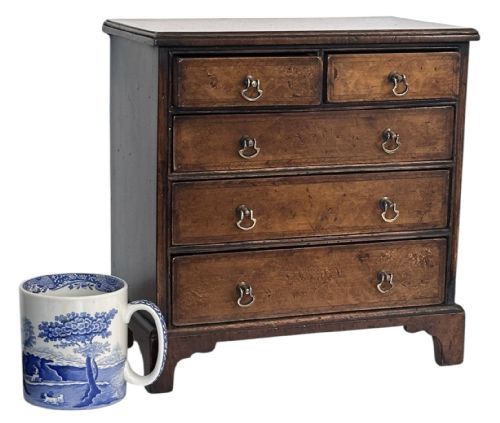


Georgian Jewellery Cabinet
A georgian jewellery cabinet is a small, finely crafted chest or tabletop piece designed to hold precious items, offering exceptional timber work and period charm.
Georgian Jewellery Cabinet
A georgian jewellery cabinet takes the form of a miniature chest of drawers, table cabinet, or display piece designed to house small valuables. These items appear across periods such as the 18th century, Regency, and Victorian eras, reflecting the craftsmanship of their larger domestic counterparts.
Mahogany forms the most common timber found in these selections, frequently accompanied by rosewood, walnut, and oak. Collectors encounter miniature chests alongside specialised workboxes, bijouterie cabinets, and table cabinets suited for intimate storage.
Materials and Construction
Cabinet makers utilised solid timbers like mahogany, walnut, and rosewood, often pairing them with fine veneers and brass hardware. Inlays of mother of pearl, specialised penwork, and japanning added decorative surface detail to select pieces.
Joinery techniques followed traditional cabinet-making standards, producing functional drawers and hinged doors on a reduced scale. Glass panels appeared on display variations to showcase contents securely.
Some miniature chests served as apprentice pieces, where hopeful woodworkers proved their joinery skills to guild masters.
Quality and Distinction
Superior examples display precise timber selection, such as figured mahogany or rich walnut grain, matched with original brass fittings and intact internal linings. The crispness of inlaid details and the smooth operation of miniature drawers indicate higher workshop standards.
Proportion and scale distinguish finer pieces, where miniature forms maintain the architectural balance of full-sized furniture rather than appearing clumsy. The integrity of secondary woods and original surface patination further separate standard items from exceptional survivals.
The Georgian Jewellery Cabinet Glossary
- Bijouterie cabinet
- A tabletop or freestanding display case designed specifically for small ornaments, jewels, and curiosities. These pieces often feature glass tops or panels.
- Miniature chest of drawers
- A scaled-down version of a full-sized chest, historically produced as a master craftsman's showcase piece or a specialised tabletop accessory.
- Japanning
- A European imitation of East Asian lacquerwork, applied as a decorative finish using specialised varnishes and metallic dusts.
- Penwork
- A surface decoration technique utilising fine ink drawing on wood, protected by clear varnishes to create intricate linear patterns.
- Wellington chest
- A tall, narrow chest of drawers secured by a locking side pilaster bar that fastens over the drawer edges.
Georgian Jewellery Cabinet: Frequently Asked Questions
What is a georgian jewellery cabinet used for?
These compact cabinets served historically to store rings, small valuables, and personal trinkets on dressing tables or writing desks.
Today, collectors utilise them for the same purpose, placing them on sideboards or desks to hold modern accessories safely.
How do I identify a genuine period piece?
Examine the timber choice, secondary woods, and the construction methods used inside the drawer linings and carcase. Period pieces display traditional joinery and natural patination appropriate to the eighteenth or nineteenth century.
Look for hand-cut dovetails and original hardware that match the expected technological standards of the stated era.
Are these cabinets made of solid wood?
Many examples utilise solid timbers such as mahogany, oak, or walnut for the main structure and drawer frames. Finer decorative surfaces frequently employ choice veneers applied over stable secondary woods.
Cabinet makers balanced structural integrity with aesthetic appeal by selecting dense hardwoods for external visibility.
How should I care for rosewood and mahogany?
Keep wooden cabinets away from direct sunlight and heat sources to prevent the timber from drying out or splitting. Maintain stable indoor humidity levels to protect delicate veneers and original polishes.
Dust the surfaces gently with a dry, soft cloth and avoid chemical polishes that can damage historic finishes.