




Walnut Jewellery Cabinet
A walnut jewellery cabinet holds personal treasures with intimate craftsmanship, offering collectors a compact piece of period furniture.
Walnut Jewellery Cabinet
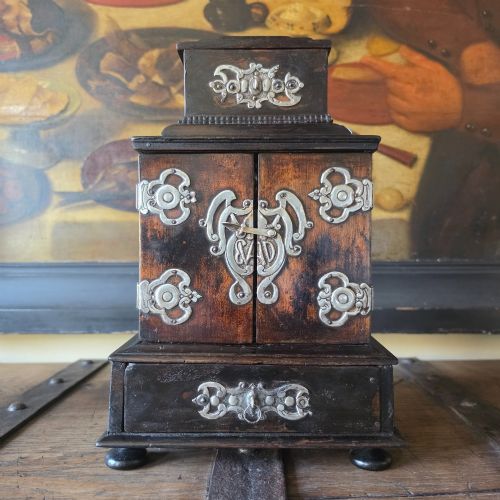
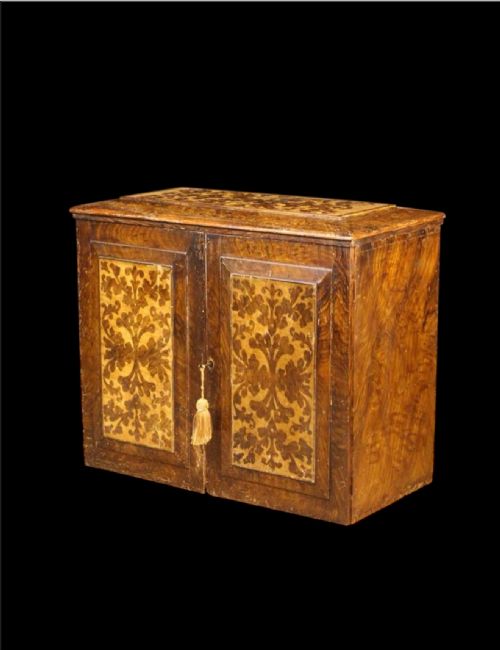
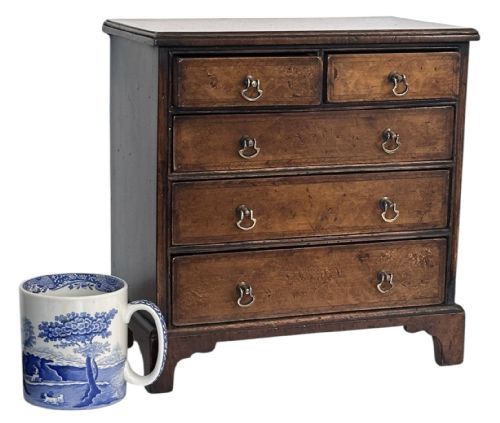
A walnut jewellery cabinet brings together small-scale cabinetry and functional storage, appearing frequently as miniature chests of drawers, table cabinets, and glass-fronted vitrines. These pieces span centuries of design, ranging from 17th-century works to Victorian table models and later manifestations.
Buyers encountering this page will most commonly find Victorian examples, alongside miniature apprentice pieces and tabletop collectors cabinets. They double as miniature furniture and practical receptacles, designed to sit upon desks or dressing tables.
Origins stretch across English workshops and continental makers, incorporating styles such as Queen Anne, Louis XV Revival, and Flemish Baroque. Each variation reveals how artisans scaled down full-size architectural and furniture forms for domestic keepsakes.
How they were made
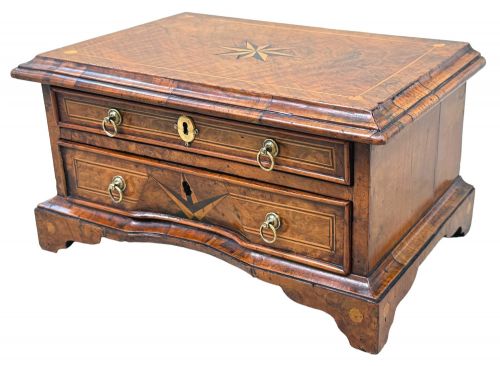
Cabinet makers utilised solid timber and figured veneers, selecting burr walnut and burl walnut for their striking grain patterns. These wooden surfaces frequently met contrasting inlays of satinwood, while internal compartments relied on linings of velvet to protect delicate items.
Structural integrity and decoration depended on metalwork, with brass handles, hinges, and ormolu mounts securing the timber panels and drawers. Glass elements, including bevelled panes in doors and display tables, permitted visibility for contents while keeping dust at bay.
Carved wooden animals occasionally peer out from continental cabinets, reminding us that early makers loved hiding secret compartments behind tiny carved paws.
What varies in quality
The standard of a walnut jewellery cabinet rests in the selection of the wood veneer and the precision of its application. Highly figured burr and burl surfaces matched across drawer fronts elevate a piece far above plain timber constructions.
Internal execution determines the tier of the cabinet, particularly the smoothness of drawer movement and the quality of velvet or fabric linings. Finer examples display meticulous attention to metal fittings, secure brass locks, and robust joinery that withstands decades of handling.
The Walnut Jewellery Cabinet Glossary
- Burr walnut
- A prized timber harvested from walnut tree growths, displaying swirling, knotty grain patterns. It provides a highly decorative surface for cabinet facades and lids.
- Apprentice chest
- A small-scale chest of drawers made by a craftsman to demonstrate skill for guild membership or training completion. These miniature pieces mirror full-sized furniture joinery.
- Bijouterie
- Glass-topped display furniture or cabinets designed to showcase small decorative objects, medals, or jewellery. They frequently feature hinged or glazed lids for tabletop viewing.
- Ormolu
- Gilded bronze ornamentation applied to furniture and cabinetwork during the 18th and 19th centuries. This decorative metalwork accents corners, handles, and lock escutcheons.
- Vitrine
- A glass-panelled cabinet intended for the display of precious items or curiosities. The glass allows panoramic viewing while protecting the interior contents.
Walnut Jewellery Cabinet: Frequently Asked Questions
How were these cabinets used?
Owners placed these compact cabinets on dressing tables, desks, or sideboards to house rings, brooches, and small documents. Some functioned as sewing boxes or general collectors cabinets.
Their enclosed compartments and velvet-lined drawers kept delicate possessions organised and shielded from daily wear.
How do I date a walnut cabinet?
Dating relies on observing construction methods, timber choices, and stylistic cues such as Queen Anne legs, Victorian marquetry, or 17th-century mouldings. Hardware like brass handles and locks also offers chronological clues.
Comparing the dovetail joints and secondary woods helps place the piece within periods spanning the 17th to the 20th centuries.
Where should I place it?
These cabinets suit tabletops, chests of drawers, and mantel surfaces where their compact footprint and detailed grain can be appreciated up close. They require stable environments away from direct heat sources.
Placing them in studies or bedrooms preserves their original function as intimate receptacles for personal treasures.