


Georgian Japanned Clock
A georgian japanned clock brings orientalist fantasy and meticulous hand-lacquered decoration into a room through monumental timekeeping forms.
Georgian Japanned Clock
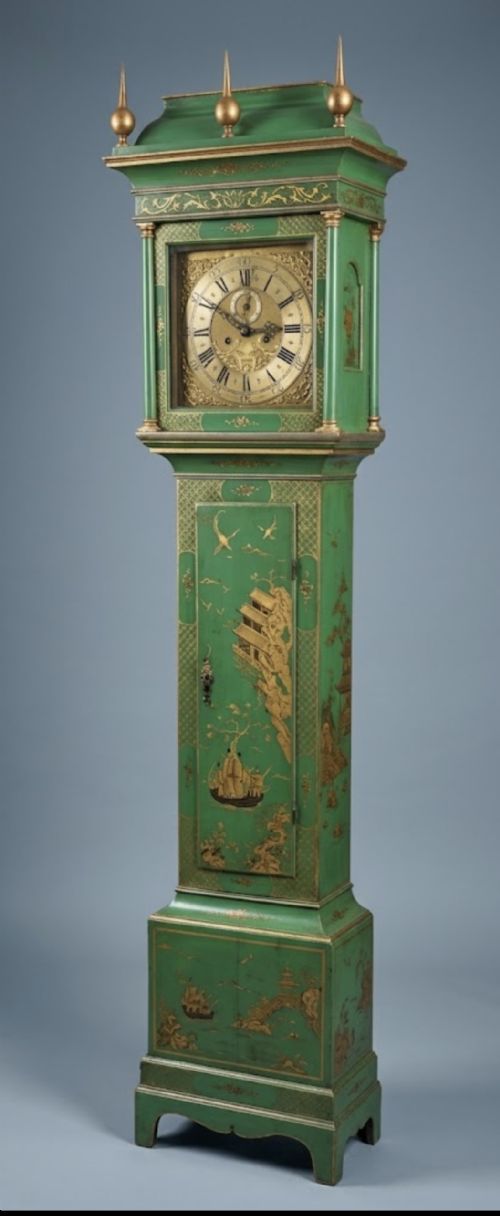
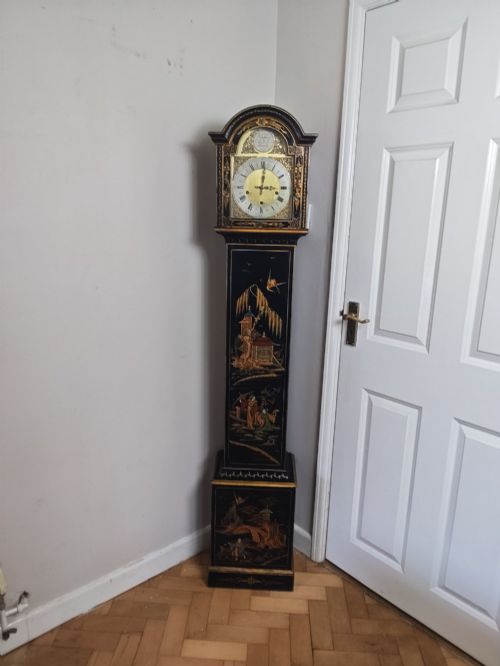
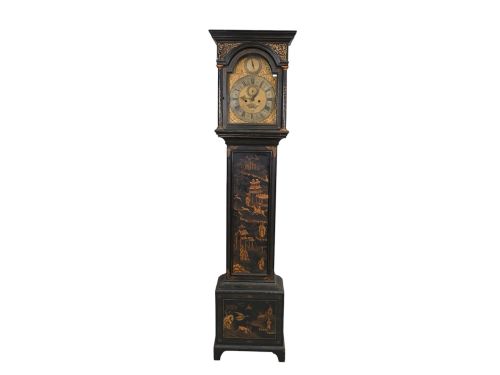
A georgian japanned clock stands as a striking domestic timekeeper, most frequently appearing here as an tall longcase clock or occasionally as a smaller bracket clock. These pieces combine British clockmaking with decorative lacquering that mimics East Asian export screens.
The selection ranges from early examples dating to the seventeen-twenties through to later nineteenth-century interpretations and twentieth-century musical grandmother clocks. Longcase formats dominate the available examples, housing brass movements inside decorated wooden trunks.
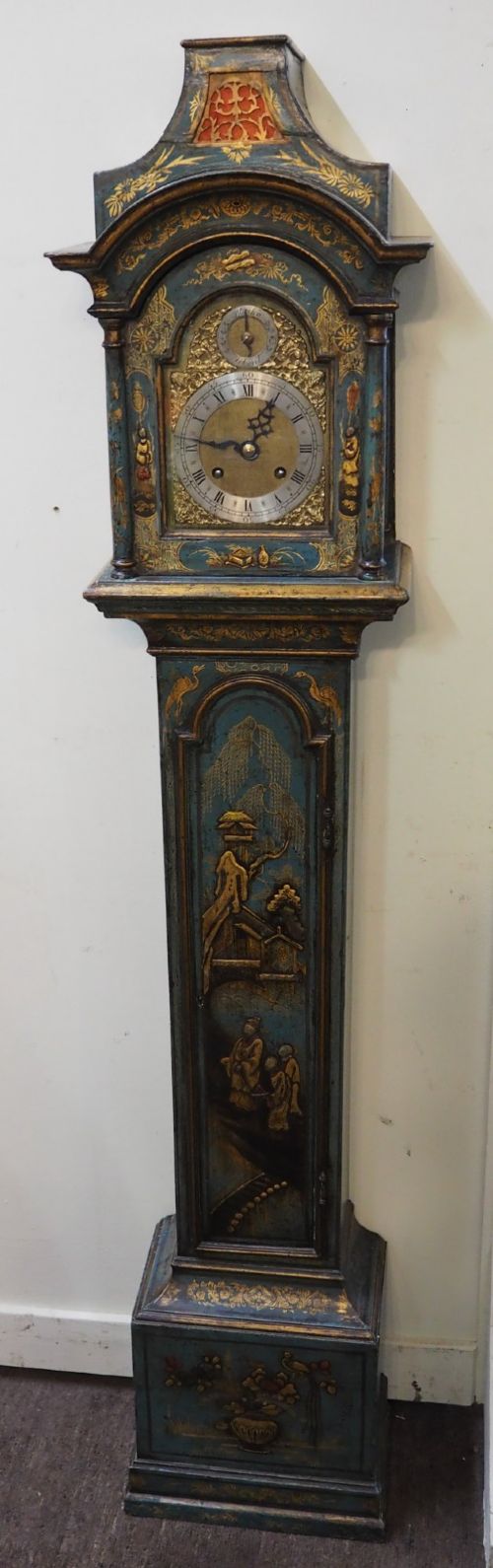
Makers working in London, Reading, Alton, Yarmouth, and Edinburgh produced these timepieces, applying layered lacquer finishes in green, blue, red, and dark tones. Each piece displays distinct regional variations in dial work and painted surface detail.
Materials and construction
Craftsmen built the carcases from wood before applying multiple layers of lacquer to create a smooth ground for decoration. Gilt and gold leaf were then used to render raised chinoiserie motifs of figures, pavilions, and flora across the case.
Mechanical elements rely on brass movements, often driving eight-day trains, striking mechanisms, automata, or musical cylinders. Glass panels protect the dial face, allowing visibility of the chapter ring and hands while safeguarding the interior.
Georgian Japanned Clock Retail Price Guide 2026
Typical asking prices for georgian japanned clock among the pieces listed under this phrase on Sellingantiques today, from the lower quarter to the upper quarter. They describe what is for sale here now, not the wider market.
Keep an eye out for Father Time rocking back and forth above the dial, quietly reminding everyone that even the finest lacquer cannot halt the hours.
Markers of quality
Quality rests significantly in the depth and preservation of the japanned surface decoration, where crispness of the raised gilt figures and richness of the coloured lacquer ground distinguish superior examples. Retaining original painted details without excessive overpainting elevates a piece.
The sophistication of the movement and the signature of the maker heavily influence standing. Clocks featuring automata like rocking figures, musical capabilities, or complex striking trains by recorded makers represent higher tiers of craftsmanship.
John Fielder of Alton·William Kipling London·Wise of Reading·Thomas Utting of Yarmouth·Gardner of London·James Smith London·Chater & Son London·Robert Berry
The Georgian Japanned Clock Glossary
- Japanned
- European imitation of East Asian lacquerwork using layered varnish and raised metallic decoration. This technique involved building up surfaces and dusting them with gold leaf to depict oriental scenes.
- Chinoiserie
- European decorative style reflecting Chinese and East Asian artistic influences. It manifests on these clocks through whimsical landscapes, pagodas, and elongated human figures.
- Longcase clock
- Tall freestanding weight-driven clock housed in a wooden case, commonly known as a grandfather clock. These tall enclosures protect the pendulum and descending weights.
- Bracket clock
- Portable table or mantel clock originally designed to sit on a wall bracket. They frequently feature carrying handles and striking mechanisms.
- Automaton
- Moving mechanical device designed to mimic human or animal actions. Examples on these clocks include rocking figures such as Father Time above the dial.
Georgian Japanned Clock: Frequently Asked Questions
What is a japanned finish?
A japanned finish is a European lacquer technique created to imitate Asian wares. Layers of varnish are applied to a wooden base and ornamented with raised gilt motifs.
Artisans built up these surfaces using heavy application before painting intricate scenes of figures and landscapes in gold leaf.
How do I care for a lacquered clock?
Keep the clock away from direct sunlight and sudden temperature changes to protect the delicate lacquer ground. Dust surfaces gently with a soft dry cloth.
Avoid liquid polishes or chemical cleaners which can damage the fragile gilt decoration and coloured varnish layers.
What is a grandmother clock?
A grandmother clock is a slender, scaled-down version of a traditional longcase clock. They generally stand shorter than standard grandfather clocks.
These smaller timepieces became popular in later periods, offering the aesthetic of tallcase clocks in more compact spaces.
Where were these clocks made?
Makers constructed these clocks in workshops across Britain, spanning from major metropolitan centres like London down to regional towns. Provincial clockmakers often sourced movements locally while housing them in decorated cases.
Regional variations appear in both the styling of the painted lacquer scenes and the mechanical complexity of the brass movements.