


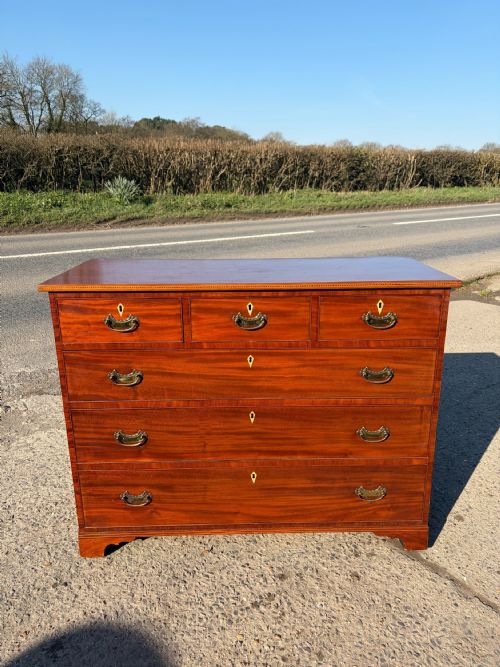


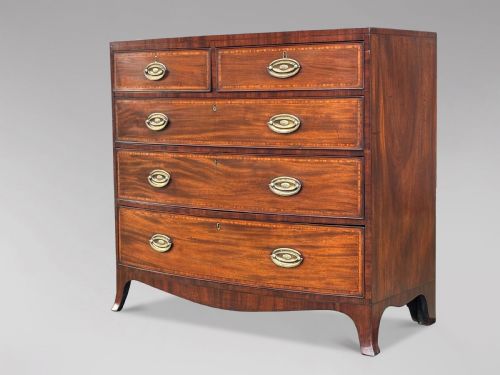

Georgian Inlaid Storage Bureau
A georgian inlaid storage bureau offers timeless drawer capacity and cabinet craftsmanship that anchors a traditional room.
Georgian Inlaid Storage Bureau
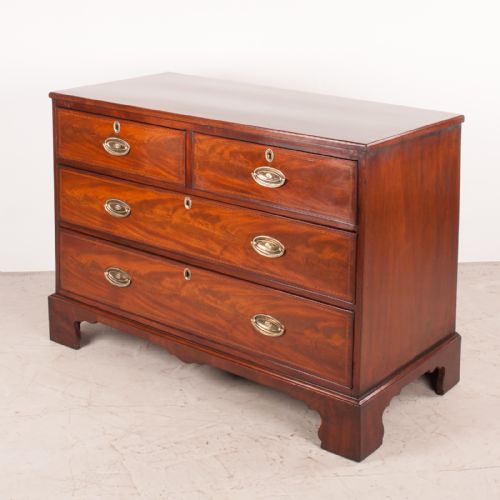
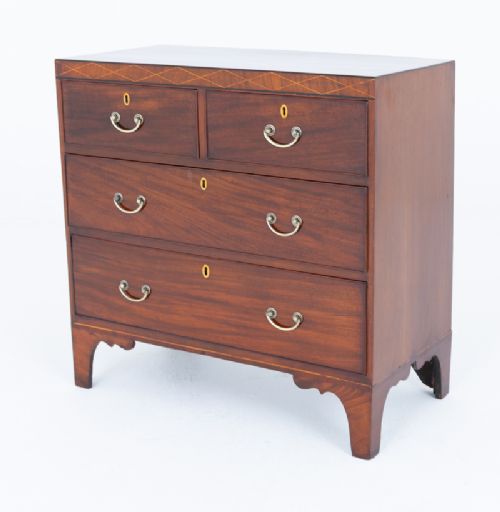
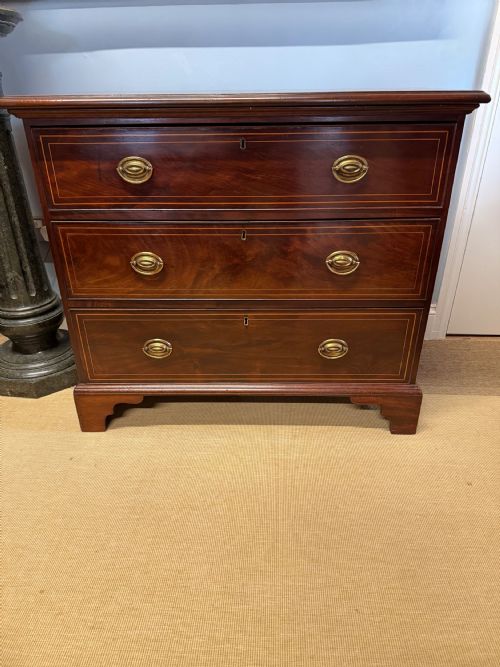
A georgian inlaid storage bureau or chest of drawers provides essential household storage through stacked drawer configurations. The pieces on this page span several eras from the eighteenth century through the Edwardian period, uniting functional storage with decorative cabinetry.
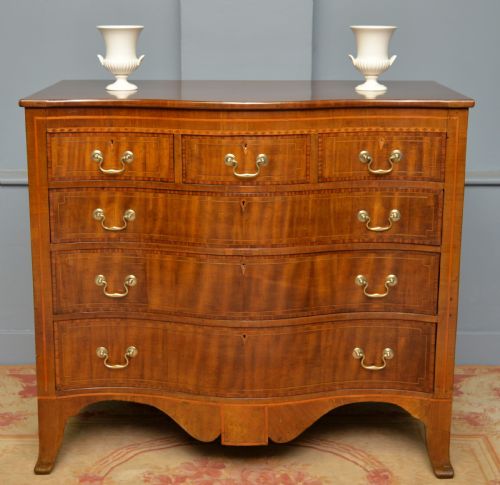
Most examples you encounter here are mahogany chests of drawers, frequently enhanced with boxwood or satinwood inlay, and walnut surfaces. Formats range from serpentine fronts to simple bracket feet and caddy tops.
How They Were Made
Cabinet makers built these storage pieces primarily using mahogany and walnut timbers, often selecting fiddleback grain for visual depth. Structural stability relied on dense hardwoods like oak for internal framing and drawer linings.
Decorative detailing involved precise boxwood and satinwood inlay, alongside feather-banded borders. Brass hardware provided functional pulls and escutcheons across the drawer faces.
Listings feature mahogany, walnut, and oak timbers combined with boxwood and satinwood inlay.
What Varies in Quality
The sophistication of the timber selection dictates much of the distinction between pieces, with fiddleback mahogany and figured walnut sitting at the higher end. The precision and delicacy of the boxwood or satinwood line inlay also signal the skill of the original workshop.
Structural flourishes such as serpentine fronts, bracket feet, and bone details require advanced carpentry compared to plain straight-front designs. Original brass hardware and well-preserved borders elevate a piece.
Mawer & Stephenson
The Georgian Inlaid Storage Bureau Glossary
- Serpentine
- A curved front shape featuring a convex centre flanked by concave sides. This undulating profile requires expert carpentry.
- Caddy top
- A raised or moulded lid design sitting atop the main body of the chest. It adds a distinct architectural edge.
- Feather-banding
- A decorative border made from veneers laid diagonally to form a herringbone pattern. It frames the main drawer surfaces.
- Boxwood inlay
- Contrasting light-coloured wood inserted into the darker primary timber in thin lines. This technique defines classical geometric motifs.
Georgian Inlaid Storage Bureau: Frequently Asked Questions
How do I spot a genuine Georgian piece?
Examine the timber choices and the construction methods used inside the drawers. Eighteenth-century pieces typically feature hand-cut dovetails and native secondary woods.
Check for period-appropriate hardware holes and surface patination that develops over centuries of use rather than artificial ageing.
Where should I place a chest of drawers?
These storage pieces suit bedrooms, hallways, or living rooms where vertical wall space benefits from classic cabinetry. Keep them away from direct heat sources to protect the mahogany and walnut veneers.
Allow adequate clearance in front of the piece so the drawers open smoothly without obstruction from surrounding furniture.
How do I care for inlaid wood?
Dust the surfaces regularly with a soft, dry cloth to prevent grit accumulation in the fine inlay channels. Apply quality beeswax occasionally to nourish the timber and maintain a gentle sheen.
Avoid chemical polishes and excessive moisture, which can loosen boxwood or satinwood stringing over time.
What is the difference between serpentine and bow front?
A bow front curves outward in a single continuous convex arc towards the viewer. It offers a smooth, rounded profile typical of Regency and later designs.
A serpentine front incorporates multiple curves with both convex and concave sections. This shape demands greater skill from the cabinet maker.