

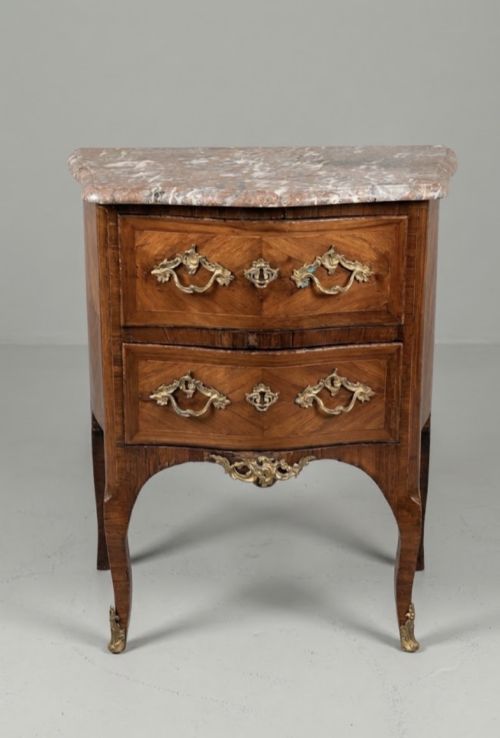
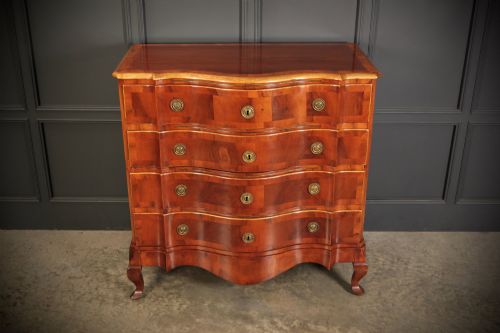
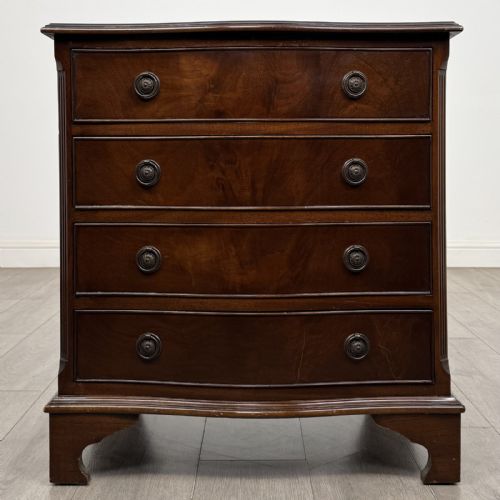
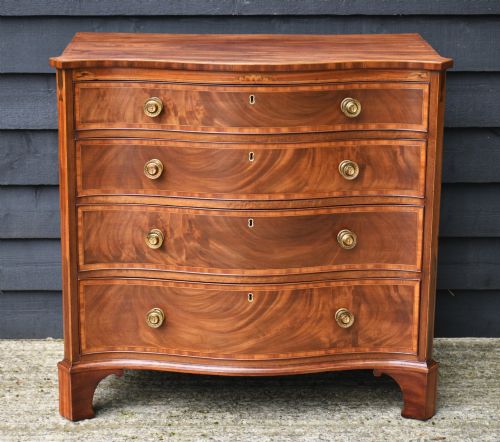
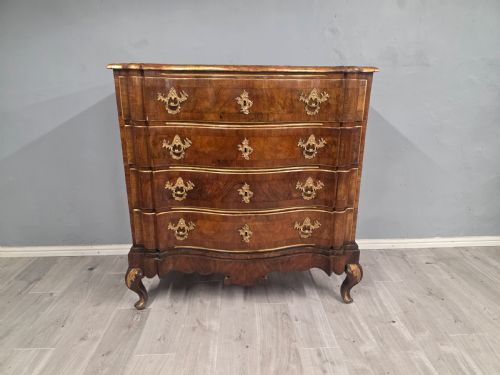
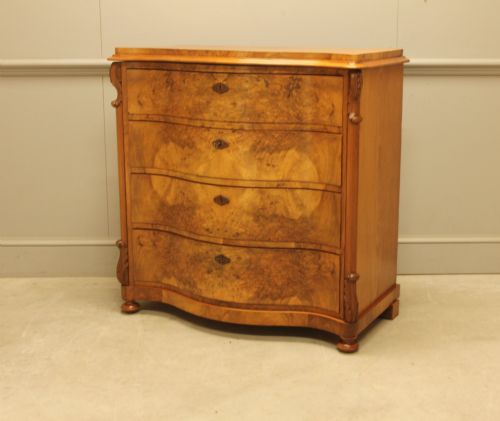
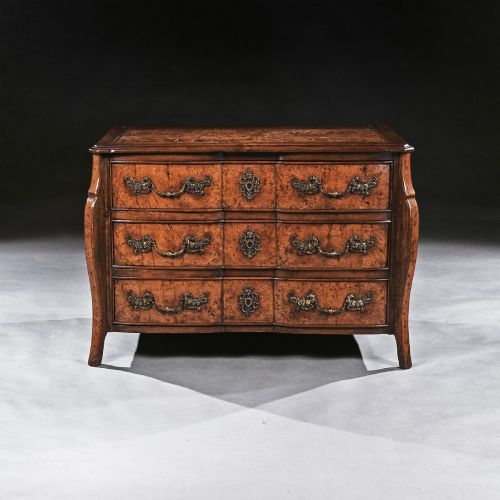
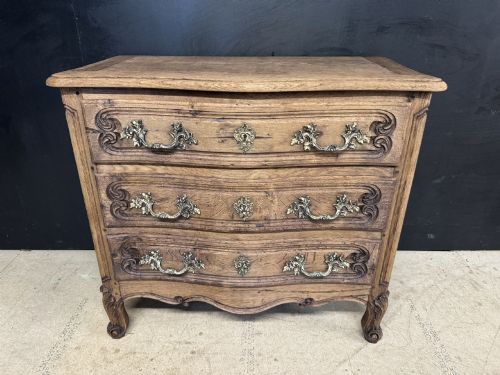
Serpentine Front Chest of Drawers
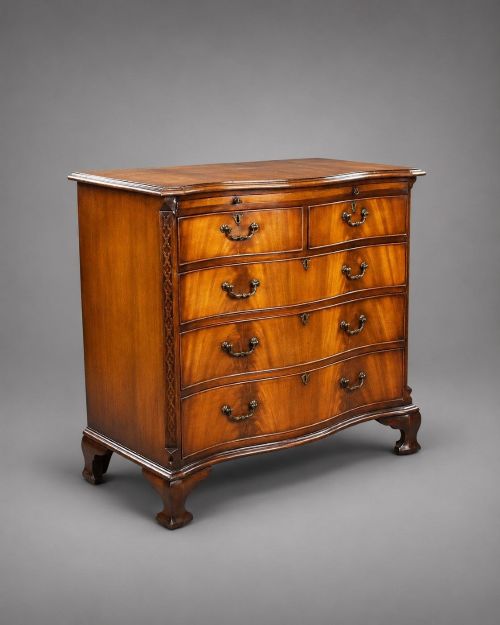
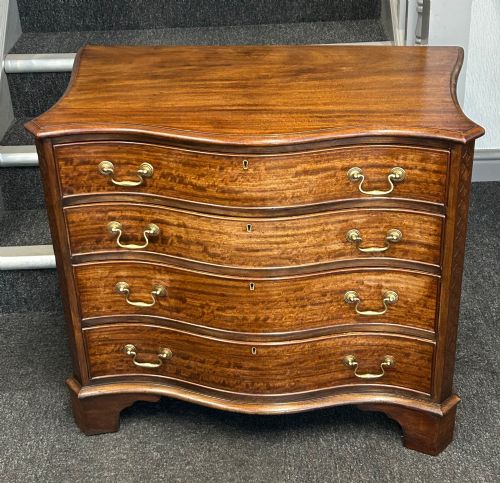
A serpentine front chest of drawers brings undulating curves and refined proportions to a room, offering both sculptural presence and deep storage.
Serpentine Front Chest of Drawers
Buyers encounter various forms ranging from standard multi-drawer chests and tallboys to compact bedside tables, diminutive miniatures, and elaborately shaped commodes. The overarching design demands precise carpentry to ensure the drawers follow the undulating contour smoothly without binding in their frames.
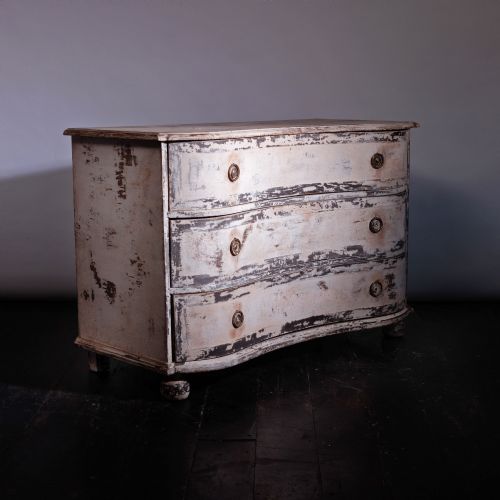
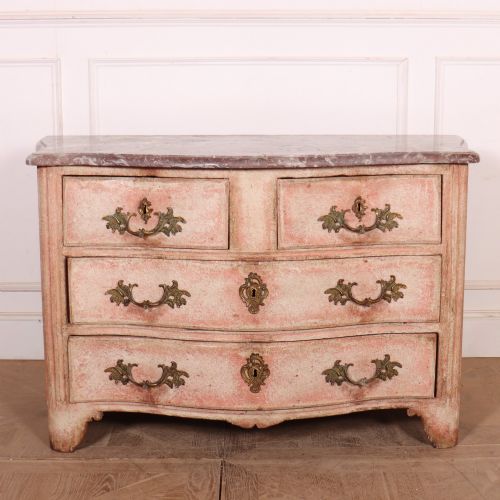
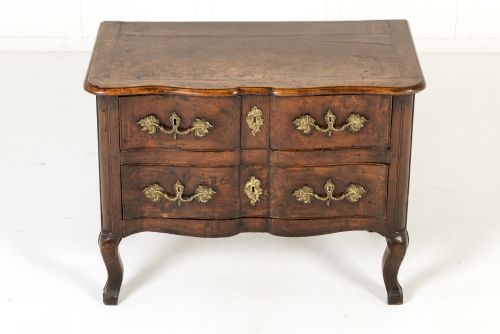
Examples on this page span British, French, Dutch, and Swedish origins, reflecting both domestic cabinet-making and continental influences like the bombe shape or Rococo detailing. Woods shift from native mahogany and oak to highly figured burr walnut, olive wood, and painted finishes.
Materials and Construction Methods
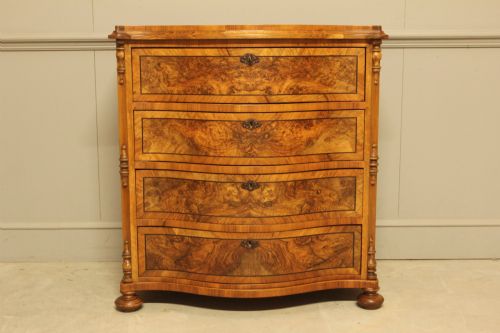
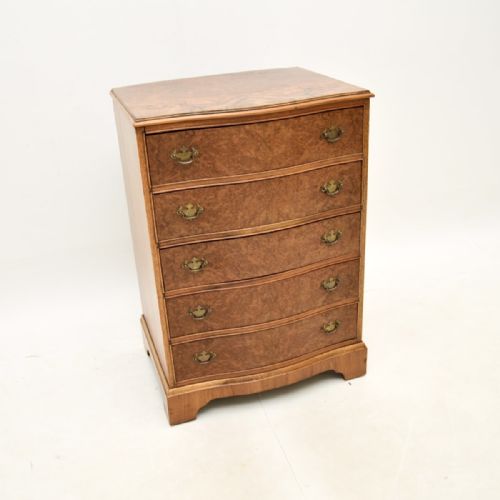
Cabinet-makers built these carcasses using dense timbers such as mahogany and walnut, frequently applying decorative veneers like burr walnut, flame mahogany, or marquetry to the undulating drawer fronts. Solid woods handled the structural demands of curved drawer rails, while veneers added rich grain patterns across the sweeping surfaces.
Specialist joinery was essential for shaping the multi-directional curves of a serpentine front chest of drawers, requiring segmented blocks of timber glued and carved to achieve the signature profile. Drawer dividers and carcase linings were often fashioned from secondary woods like oak or pine to maintain structural stability.
Finishing touches involved cast brass handles, escutcheons, and occasionally pull-out writing slides or brushing trays integrated above the upper drawers. Ormolu mounts, hand-painted details, and line inlay appeared on continental commodes and later revival pieces to accentuate the rhythmic lines.
Serpentine Front Chest of Drawers Retail Price Guide 2026
Typical asking prices for serpentine front chest of drawers among the pieces listed under this phrase on Sellingantiques today, from the lower quarter to the upper quarter. They describe what is for sale here now, not the wider market.
Listings feature pieces spanning the 18th, 19th, and early 20th centuries, executed in mahogany, walnut, oak, and painted finishes.
Markers of Quality
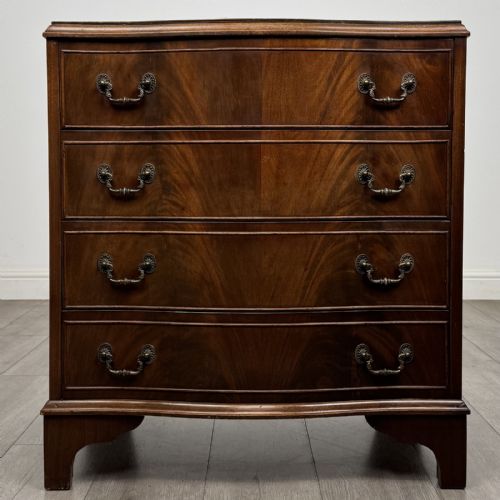
Superior quality in a serpentine front chest of drawers reveals itself in the handling of the wood grain across the curved facade, where book-matched veneers mirror each other precisely along the centreline. The sweep of the drawer fronts should feel continuous and organic rather than blocky or abruptly angled.
The integrity of the internal construction dictates longevity, observable in the tightness of the drawer dovetails and the smoothness with which each curved drawer glides within its channel. Premium pieces maintain flush fits along the undulating edges even after decades of wood movement.
The crispness of carved mouldings, the weight and original patina of the brass hardware, and the choice of secondary timbers all distinguish master workshops from regional or later commercial copies. Finer examples retain balanced proportions where the depth of the curve complements the overall width of the case.
Maple and Co
The Serpentine Front Chest of Drawers Glossary
- Serpentine
- A furniture front shaped with a convex centre flanked by concave curves. This profile requires immense skill from the cabinet-maker to ensure the drawers operate smoothly.
- Commode
- A low chest of drawers or cabinet, often originating from French or continental traditions. These pieces frequently stand on slender legs and display decorative marquetry or painted surfaces.
- Crossbanded
- A border technique where thin strips of veneer are laid perpendicular to the grain of the main panel. This frames the undulating drawer fronts of the chest.
- Tallboy
- A tall chest of drawers, sometimes built as a chest on chest where one cabinet sits atop another. They maximise vertical storage while retaining the serpentine facade.
- Brushing slide
- A pull-out shelf integrated just beneath the top surface of the chest. It provided a clean temporary writing or sorting space in the 18th century.
Serpentine Front Chest of Drawers: Frequently Asked Questions
How do I date a serpentine chest?
Dating relies on examining the secondary timbers inside the drawers, the style of the brass hardware, and the construction methods used for the dovetails. 18th-century examples typically show hand-cut joinery and native woods like mahogany, whereas Edwardian and later revival pieces often utilise machine-cut elements.
Secondary clues include the depth of the patina and the nature of the primary veneers. Burr walnut and flame mahogany appear heavily in both Georgian originals and 1920s revivals, requiring close inspection of the internal carcase to confirm the era.
Will a serpentine chest fit a small bedroom?
Many variations exist beyond the grand 18th-century proportions, including compact Edwardian models, miniature chests, and bedside table versions. Measuring the floor space carefully ensures the curved front does not obstruct walking routes.
The undulating facade actually projects less in its concave side sections, which can help a medium-sized chest feel visually lighter in a tight alcove or narrow room than a flat-fronted piece of the same volume.
What is the difference between a commode and a chest?
In British cabinet-making terminology, the term chest of drawers generally refers to upright storage units with three or more stacked drawers. A commode often denotes a lower, more decorative continental piece originating from French or Dutch traditions.
Many listings use the words interchangeably when describing imported furniture or French provincial styles. Both share the signature undulating front profile, though commodes more frequently feature painted finishes or elaborate marquetry.
How do I maintain the wood finish?
Maintaining antique timber involves keeping the piece away from direct sunlight and sudden temperature shifts that cause veneer to crack or lift. Regular dusting with a soft, dry cloth preserves the natural lustre of the wax polish.
Avoid using modern silicone sprays or heavy liquid polishes, which can penetrate porous historical finishes and damage the underlying wood. Periodic application of a traditional beeswax feed helps protect dry walnut and mahogany surfaces.