

Georgian Inlaid Desk
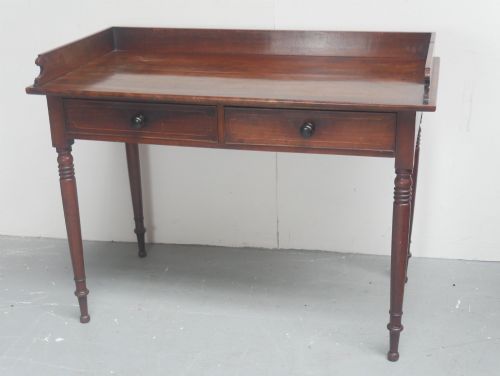
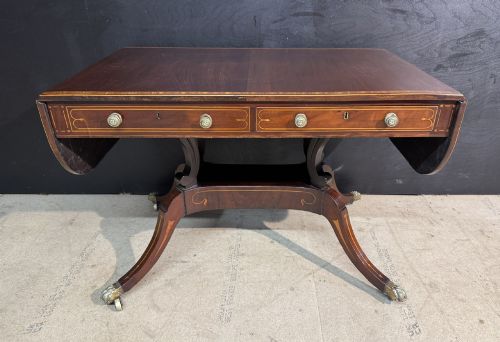
When you search for a georgian inlaid desk, you are looking at tactile pieces of writing furniture built with detailed contrasting wood motifs.
Georgian Inlaid Desk
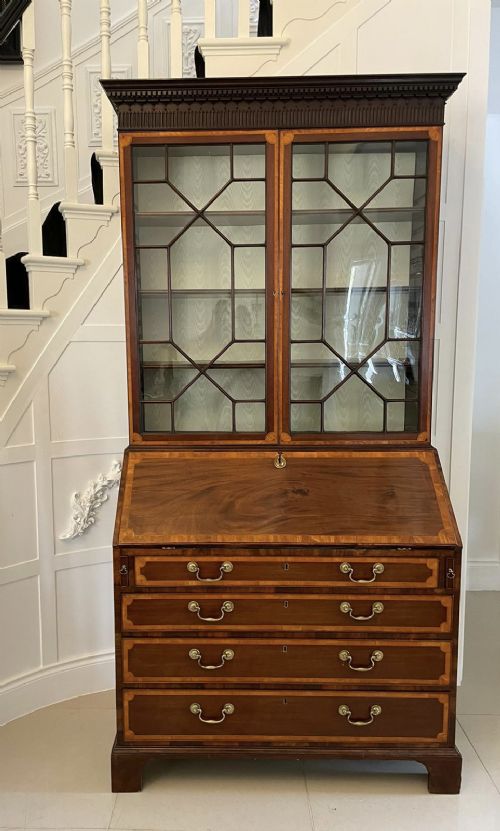
A georgian inlaid desk brings together practical writing surfaces and decorative craftsmanship from the eighteenth and early nineteenth centuries. The pieces on this page span several decades, reaching from mid-eighteenth-century walnut and oak examples to later mahogany and satinwood forms.
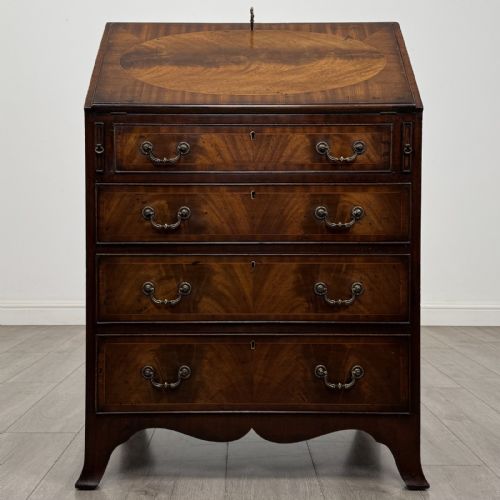
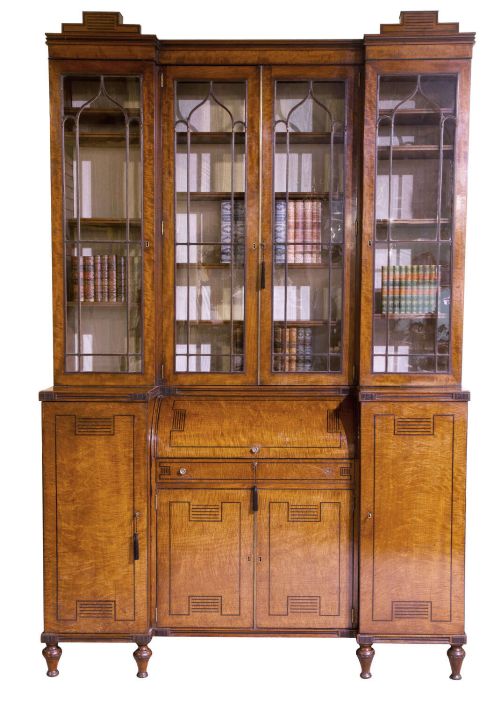
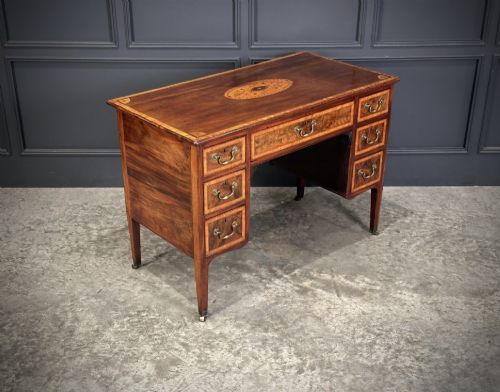
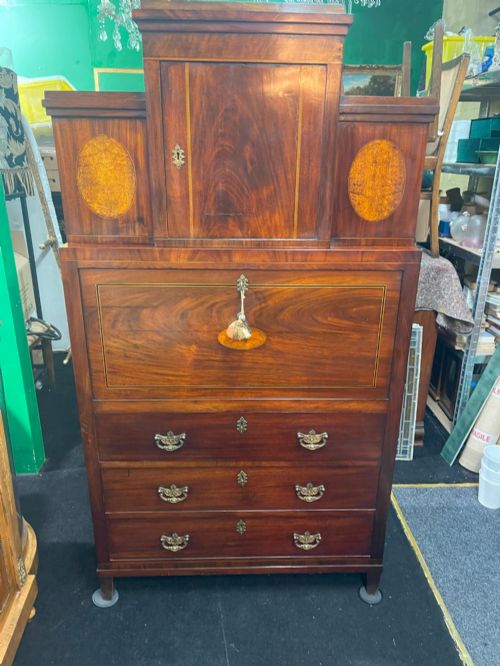
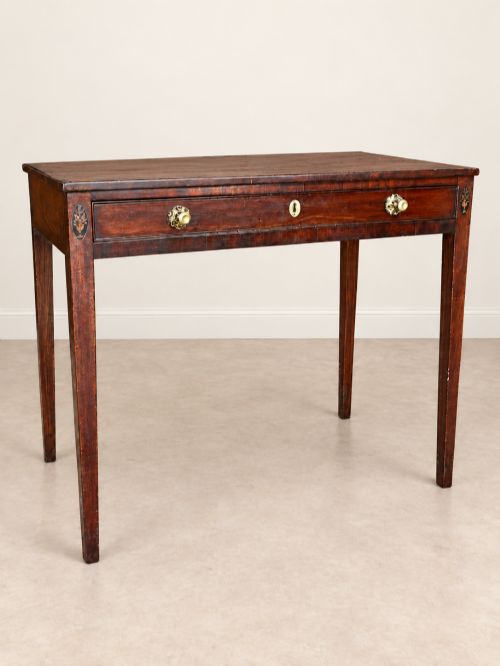
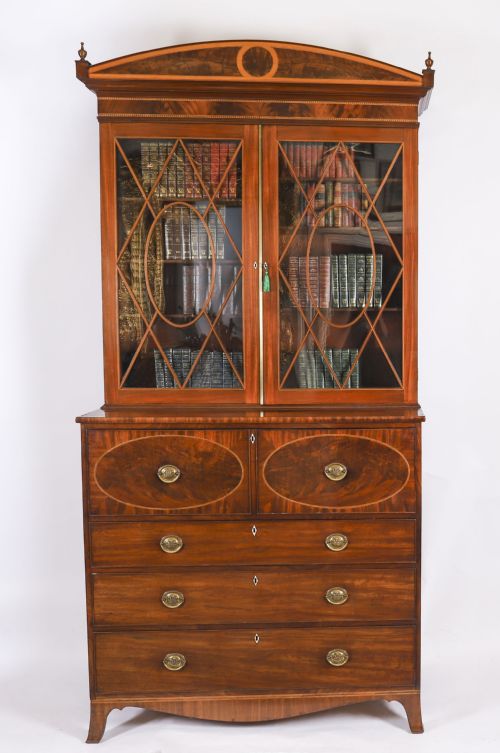
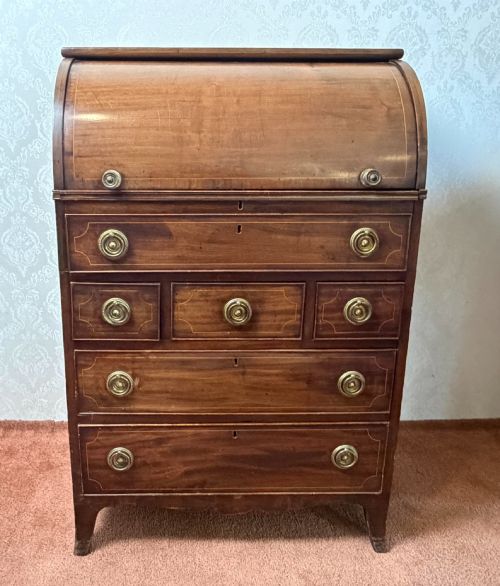
Buyers will encounter various writing forms within this group, including slope-front bureaux, secretaire bookcases with fitted interiors, and freestanding writing tables. Many incorporate tambour shutters or cylinder tops that conceal pigeonholes and small drawers.
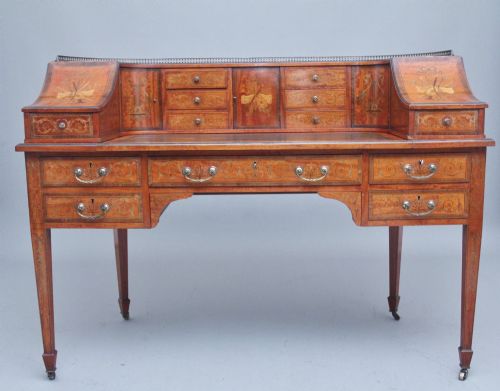
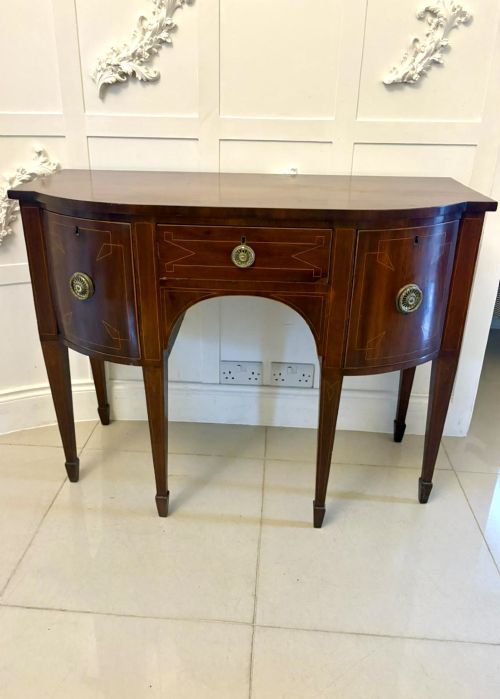
The aesthetic bridges formal architectural proportions with delicate surface decoration. Workshops utilised geometric stringing and floral motifs to frame drawer fronts and tabletops.
Materials and construction
Makers built these pieces primarily using solid and veneered timbers such as mahogany, walnut, oak, and satinwood. Flame and burr figures were selected for primary surfaces to catch the light.
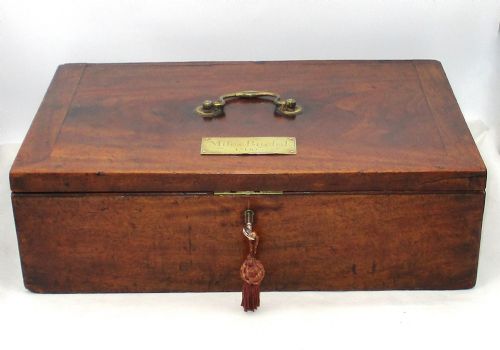
Inlay and marquetry required precise hand-cutting of contrasting woods like boxwood and ebony, inlaid into recesses to create crisp linear borders or pictorial panels. Brass hardware and leather writing inserts completed the construction.
Listings feature eighteenth-century walnut, oak, and mahogany alongside nineteenth-century satinwood and rosewood examples.
Distinctions in quality
The standard of a georgian inlaid desk rests on the crispness of the cabinetmaking and the precision of the veneer work. Superior examples exhibit tightly fitted interior drawers, smooth sliding mechanisms, and meticulously aligned grain patterns.
Weaker pieces often display clumsy timber selection, poorly matched veneers, or replacement hardware that disrupts the original proportions of the carcass.
John Broadwood
The Georgian Inlaid Desk Glossary
- Inlay
- The technique of inserting contrasting strips or pieces of wood into a prepared recess to form a decorative pattern. This defines the linear borders seen on many cabinet fronts.
- Secretaire
- A desk or cabinet containing a concealed writing drawer or a fold-down writing flap. It usually houses an arrangement of small pigeonholes and letter drawers.
- Tambour
- A flexible shutter made of narrow vertical strips of wood glued to a fabric backing. It slides in a track to cover the writing compartment of a cylinder or tambour desk.
- Marquetry
- An elaborate form of inlay where wood veneers are cut into pictorial or floral designs. It covers entire tabletops and fall-fronts rather than following simple geometric lines.
- Stringing
- Thin, narrow strips of contrasting wood inlaid into channels around drawer edges or tabletops. It provides a subtle framing effect for the primary timber.
Georgian Inlaid Desk: Frequently Asked Questions
What is a tambour desk?
A tambour desk utilises flexible strips of wood sliding in a groove to enclose the writing surface. This mechanism allowed makers to conceal drawers and pigeonholes without needing a heavy hinged lid.
Such desks became popular in the late eighteenth century as a lighter alternative to traditional solid-lid bureaux.
How do I identify a secretaire bookcase?
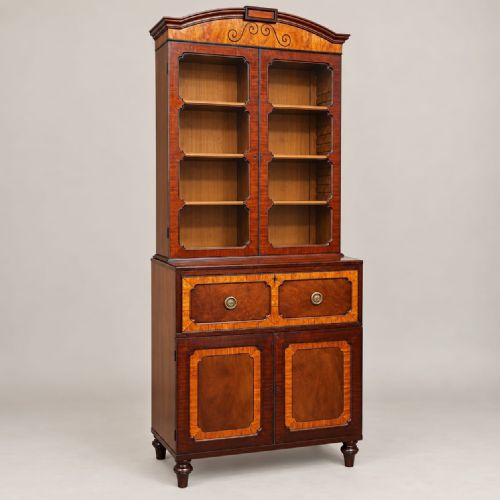
A secretaire bookcase combines a bookshelf upper section with a lower chest featuring a pull-down writing drawer. Dropping the front reveals a fitted interior with miniature drawers and pigeonholes.
This form served as a dual-purpose piece for both storing a library and conducting correspondence in compact Georgian rooms.
What woods are typical for these desks?
Mahogany, oak, walnut, and satinwood dominate the construction of these pieces. Cabinetmakers utilised figured timbers for visible drawer fronts and tabletops.
Contrasting woods like boxwood provided the fine lines and geometric stringing characteristic of the period.
Where were these pieces used?
These desks functioned in private libraries, formal drawing rooms, and master bedrooms of period homes. They provided a secure place for managing household accounts and writing letters.
Their polished backs and finished sides indicate they stood away from walls in the centre of rooms.