




Georgian Desk with Gallery
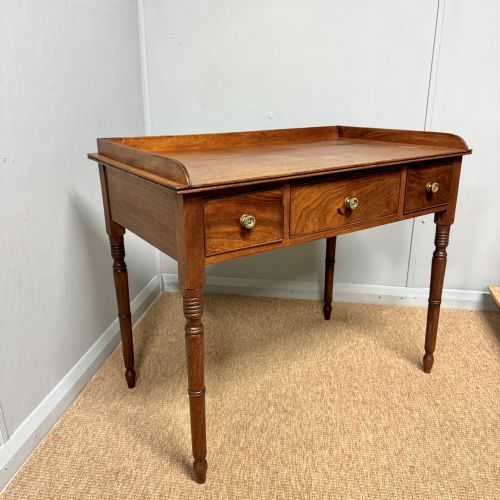
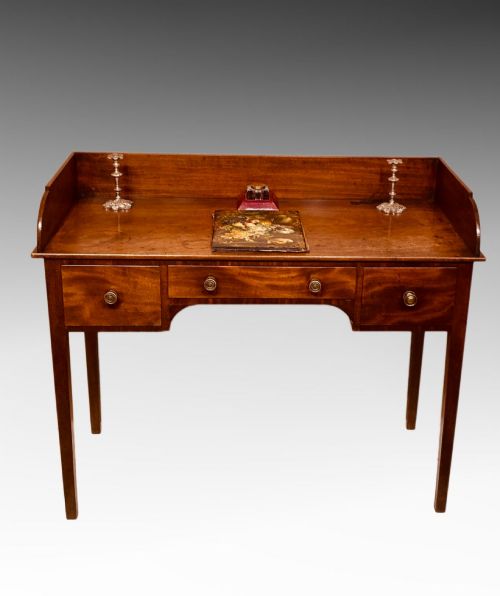
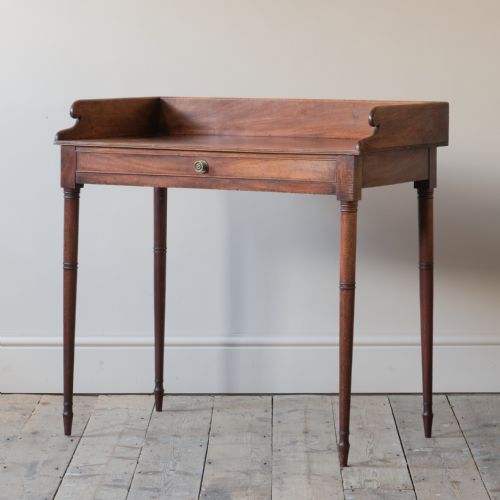
A georgian desk with gallery brings purposeful elegance to any study, offering tidy upper shelving alongside a solid writing surface.
Georgian Desk with Gallery
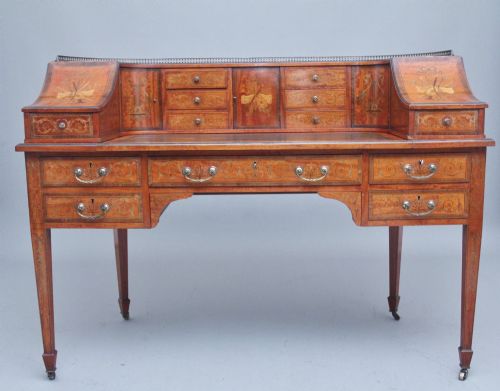
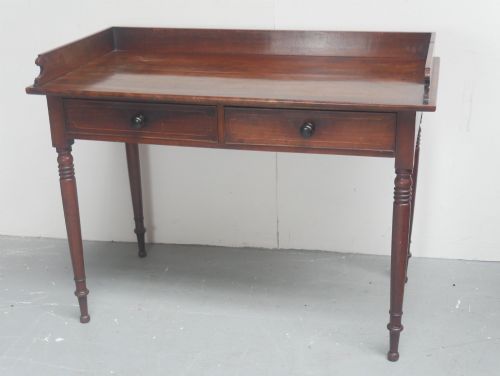
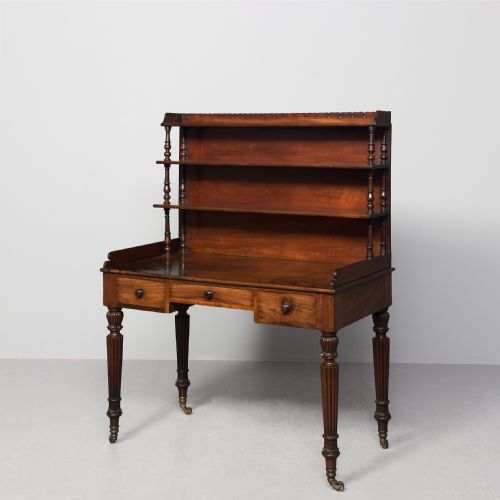
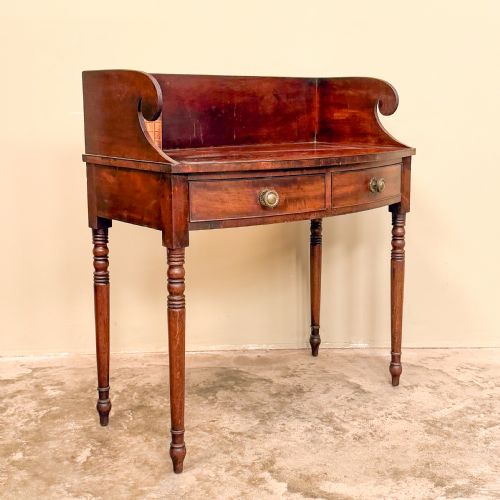
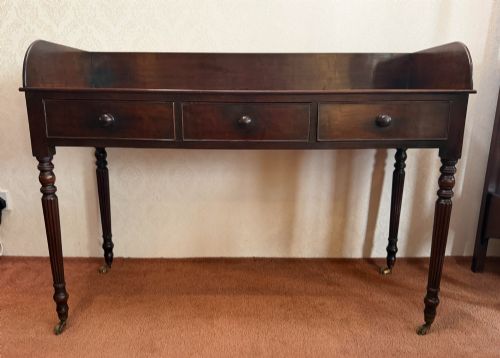
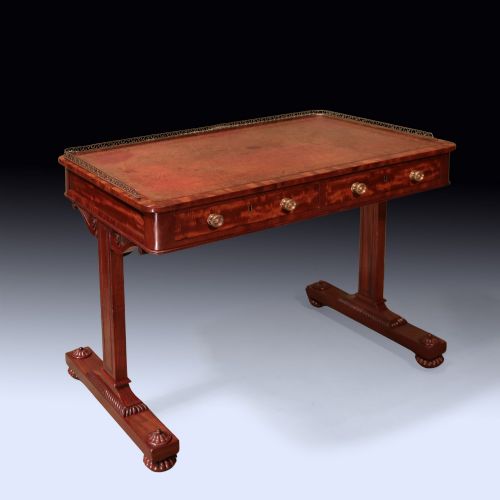
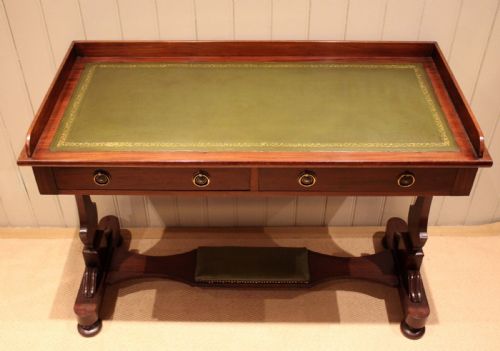
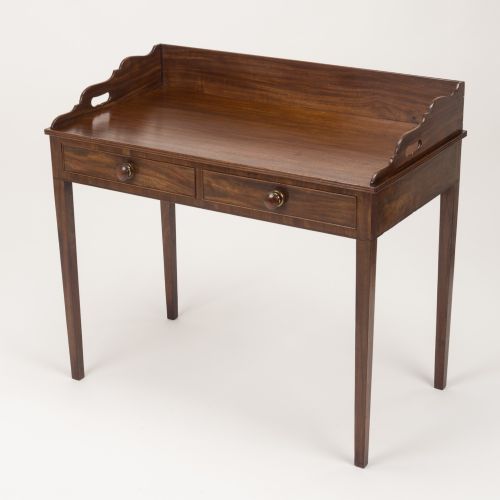
A georgian desk with gallery combines practical writing surfaces with raised wooden or brass upstands at the back and sides to keep papers secure. The pieces seen on this page span the Georgian, Regency, and Victorian eras, alongside later revival styles from the early twentieth century.
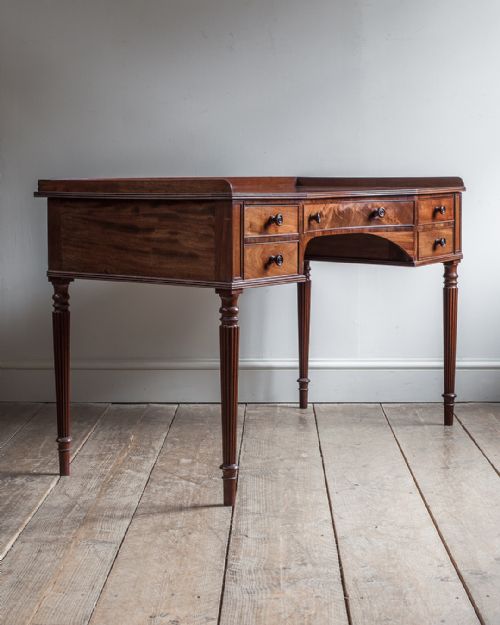
Most examples are constructed from rich mahogany, occasionally enriched with satinwood inlay or fitted with brass galleries. Formats range from traditional kneehole dressing tables and writing cabinets to side tables adapted for correspondence.
Materials and construction
Cabinetmakers relied heavily on solid and veneered mahogany, often pairing the dark timber with contrasting satinwood inlay for decorative panels and drawer borders. Metal components such as brass galleries and delicate handles provide both structural support and refined visual contrast.
Joinery techniques focus on sturdy drawer construction and the careful mounting of raised three-quarter gallery surrounds. These upstands were either pegged directly into the top surface or formed as part of an integrated tier.
Listings feature timber varieties including mahogany and satinwood, paired with brass gallery hardware across multiple nineteenth-century periods.
Evaluating quality and proportion
The distinction between standard pieces and finer examples rests upon the crispness of the timber grain and the delicacy of the gallery work. Superior pieces display harmonious proportions where the height of the upstand complements the depth of the writing surface without appearing heavy.
Integration of secondary timbers and the subtlety of inlaid details further separate workshop standards. A well-balanced frame retains its original brasswork and structural integrity through centuries of daily use.
James Mein of Kelso
The Georgian Desk with Gallery Glossary
- Gallery
- A raised railing or set of small shelves along the back and sides of a desk top, designed to prevent items from rolling off. They are found in both turned wood and polished brass.
- Kneehole table
- A desk or dressing table featuring a central recess for the user's legs, flanked by pedestals of small drawers. This form became popular during the eighteenth century.
- Satinwood
- A lustrous, fine-grained exotic timber used primarily for veneers and contrasting inlay work. Its pale yellow colour brightens dark mahogany surfaces.
Georgian Desk with Gallery: Frequently Asked Questions
How do I date a mahogany desk?
Dating relies on examining the construction methods of the drawers, the choice of secondary woods, and the overall style of the legs and handles. Earlier eighteenth-century pieces often display hand-cut dovetails and deep, rich timber patination.
Later revival pieces from the early twentieth century utilise more uniform machinery milling and occasionally lighter internal framing.
Where were these desks used?
These writing tables served in private libraries, drawing rooms, and country house estate offices for daily correspondence and record keeping. Their compact proportions also made them suitable for ladies writing cabinets and dressing rooms.
The addition of upper tiers allowed for the neat display of small books and personal items.
Are brass galleries original?
Determining originality involves looking closely at the mounting pins and the wear patterns around the holes in the wood. Authentic brass galleries match the age and oxidation of the surrounding hardware.
Replacement galleries often leave distinct secondary bore holes or lack the correct period patina.