
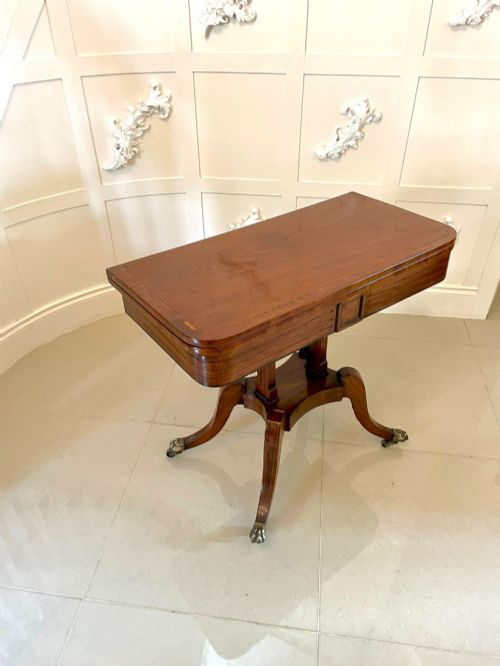
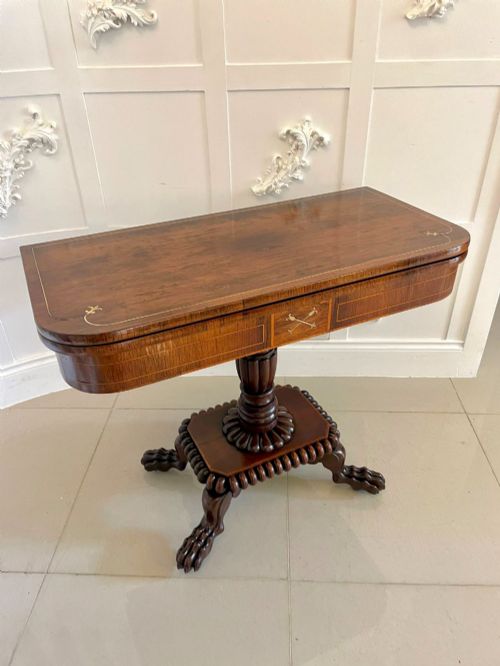
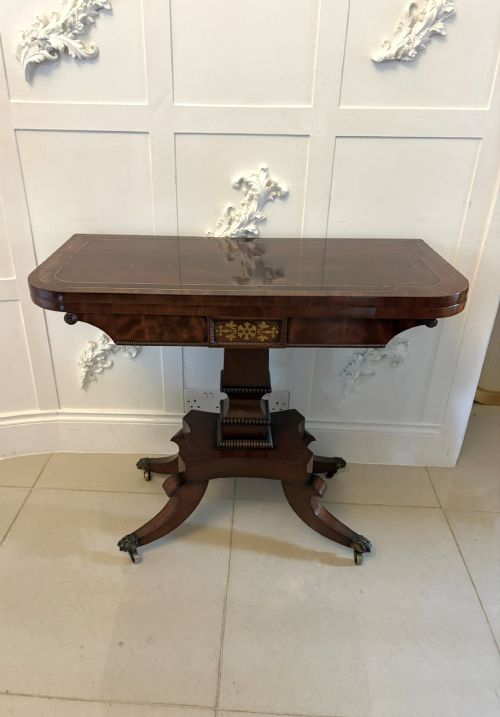
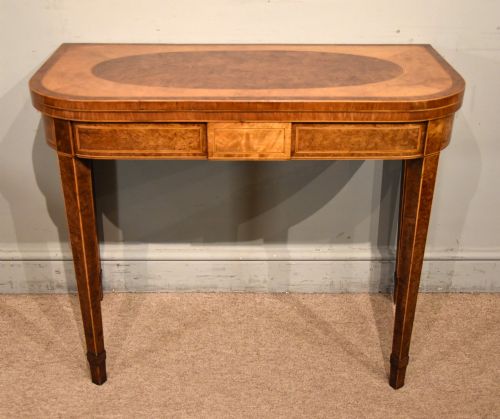
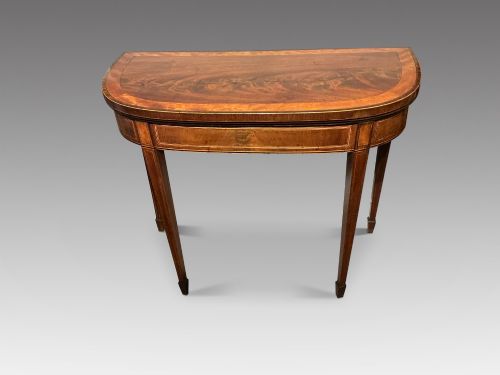


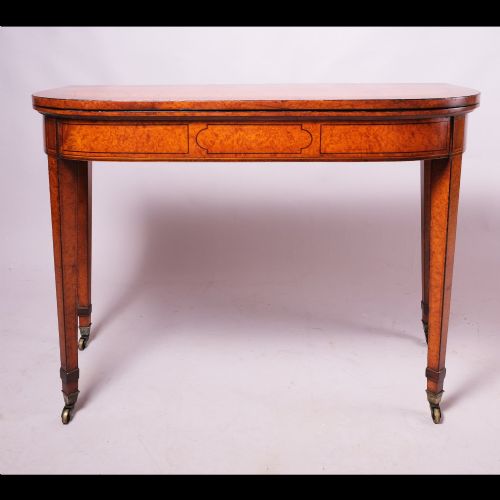
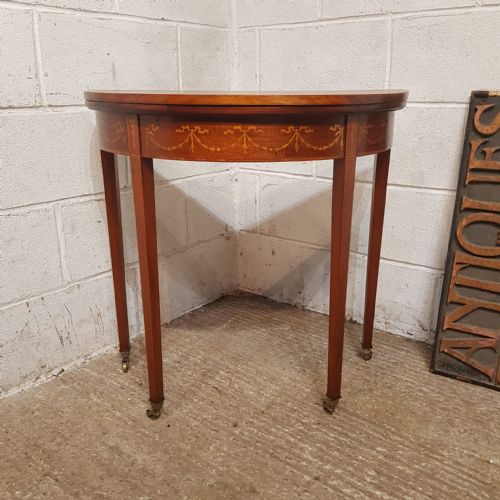
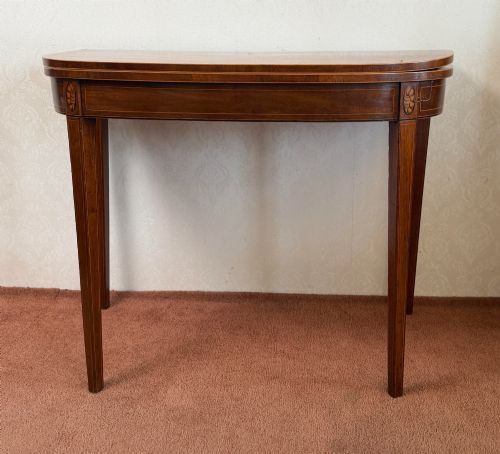
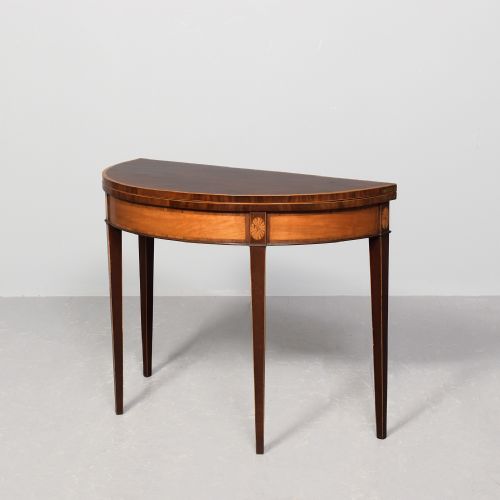
Georgian Inlaid Card Table
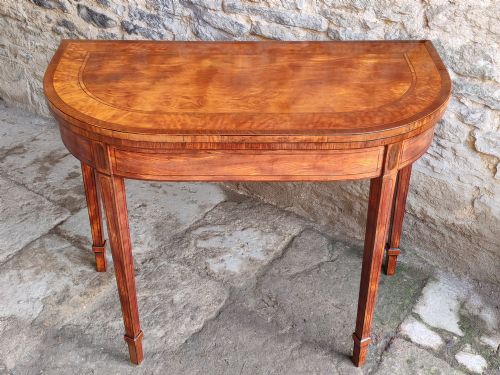
A georgian inlaid card table brings folding utility and crisp marquetry into a room, spanning the late eighteenth century into the regency.
Georgian Inlaid Card Table
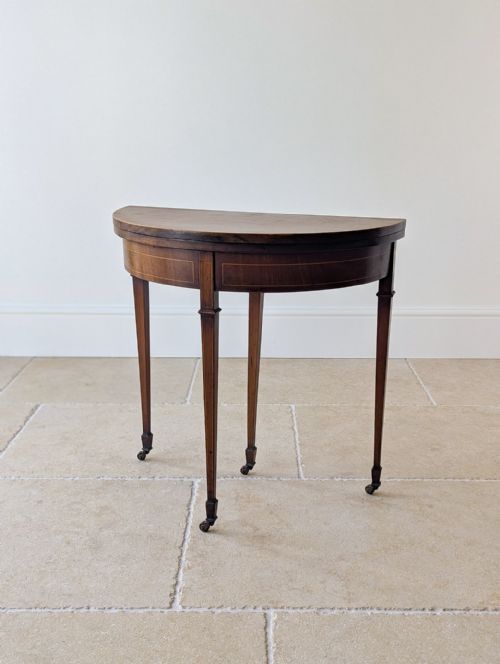
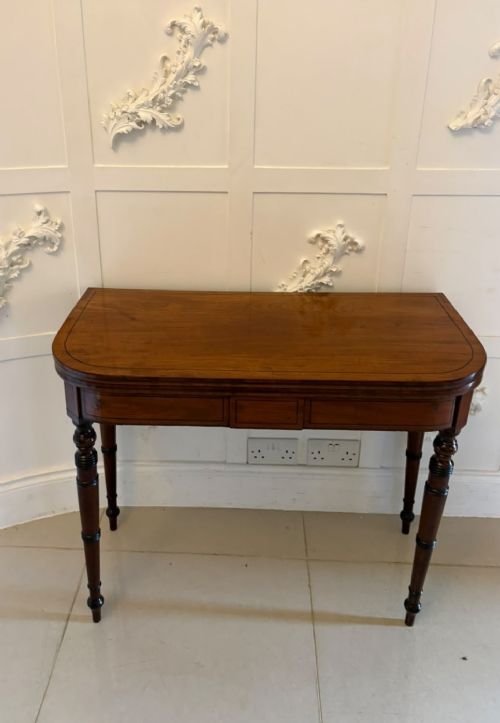
A georgian inlaid card table is typically encountered as a demi-lune, D-shaped, or serpentine folding piece designed to sit against a wall when not in use. These tables date predominantly from the eighteenth and nineteenth centuries, taking shape under george iii and regency periods.
The objects function as console and tea tables when closed, opening to reveal a baize-lined surface intended for card games. Examples span english, irish, and scottish workshops, utilising mahogany, satinwood, and rosewood forms.
Materials and Technique
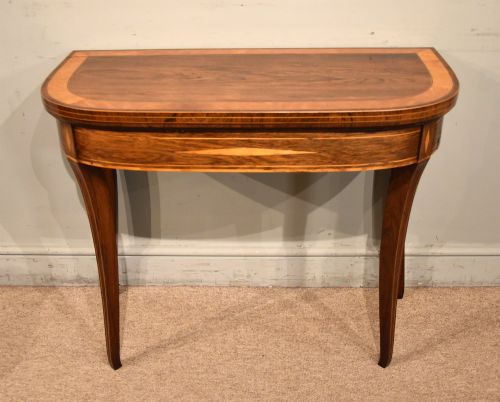
Construction relies heavily on solid mahogany and fruitwood frames, surfaced with finely figured veneers of satinwood, rosewood, and burr yew wood. Cabinetmakers applied contrasting stringing in boxwood and ebony to outline the edges and borders.
Inlay work often incorporates satinwood and marquetry motifs set directly into the timber tops, paired with hinged fold-over leaves supported by pivoting rear legs.
Table forms span demi-lune, serpentine, and D-shaped designs functioning as console, tea, and games tables.
Craftsmanship and Proportion
Quality rests in the selection of the timber, seen in deeply figured Honduras mahogany or richly grained plum pudding mahogany tops rather than plain stock. The precision of the boxwood and satinwood inlay and the crispness of any brass stringing or brass inlay dictate the tier of the piece.
Structural integrity of the folding mechanism and the harmony of the proportion when the table stands open separate standard cabinetwork from master output.
Bruce & Burns of Edinburgh
The Georgian Inlaid Card Table Glossary
- Demi-lune
- A half-moon shape characteristic of many tables designed to stand flat against a wall. This format allowed the furniture to occupy minimal floor space when closed.
- Fold-over
- A hinged table top that opens outward to double its surface area for dining or gaming. It relies on a swinging rear leg or gate-leg action for support.
- Marquetry
- Decorative patterns formed by fitting together thin slices of various woods, shells, or ivories into a veneer. It appears frequently on satinwood gaming surfaces.
- Stringing
- Thin lines of contrasting timber inlaid into channels cut into the solid wood or veneer. Boxwood and ebony are common choices for this linear detailing.
- Serpentine
- A curved line that undulates outward in the centre and inward at the sides. This contour requires careful hand-shaping of the solid timber and veneer.
Georgian Inlaid Card Table: Frequently Asked Questions
What is a georgian inlaid card table used for?
These tables served primarily as dual-purpose furniture for the home, functioning as console or side tables against a wall during the day. When evening arrived, the top folded open to reveal a baize-lined surface for card games and social entertainment.
They also doubled as tea tables in fashionable drawing rooms, providing a stable, decorative surface for serving tea before the gaming began.
How do I identify a regency card table?
Regency examples often incorporate bolder brass inlay, rosewood veneers, and classical brass mounts or stringing lines that reflect early nineteenth-century taste. The legs may show heavier reeving, sabre shaping, or pillar and platform bases rather than the slender tapered legs common to earlier eighteenth-century pieces.
The overall silhouette leans toward architectural restraint and strong contrast between dark rosewood and bright brass elements.
What woods were used on these tables?
Mahogany served as the primary structural and surface timber, particularly Honduras mahogany and figured varieties like plum pudding mahogany. Satinwood, rosewood, and amboyna were frequently employed as contrasting veneers for the top and frieze.
Finer details utilised boxwood and ebony for stringing lines, while fruitwood appeared in regional or provincial cabinetmaking.
Where should I place a fold-over card table?
These tables suit hallways, living rooms, and drawing rooms where a flat surface is needed against a wall. Placing them closed allows the figured top and inlay work to function as a decorative console piece.
Ensure the room has sufficient clearance if you intend to open the leaf for display or use, keeping the timber away from direct heat sources.