





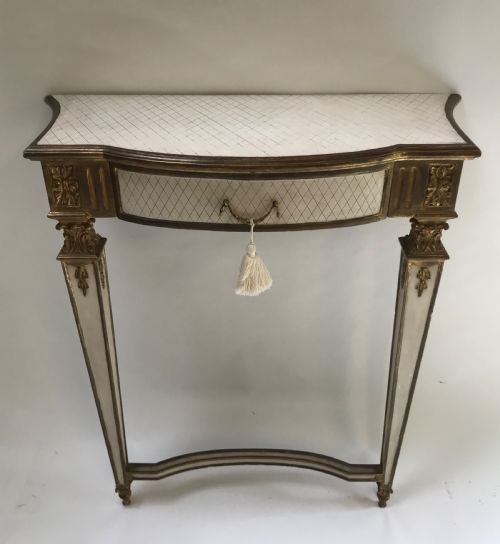


Neoclassical Entryway Table
These neoclassical entryway table examples bring architectural line and formal balance to a hall, uniting classical proportion with decorative restraint.
Neoclassical Entryway Table
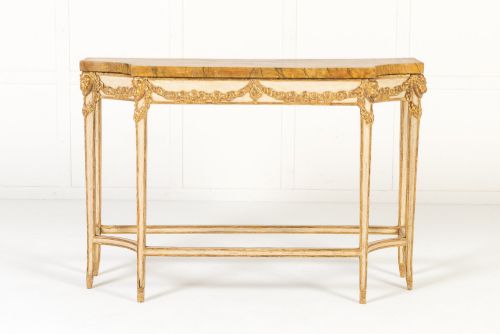
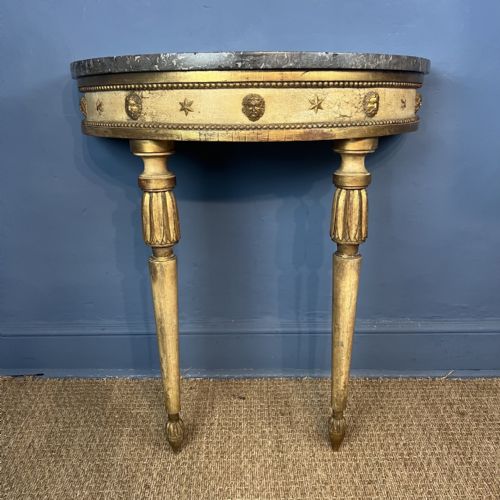
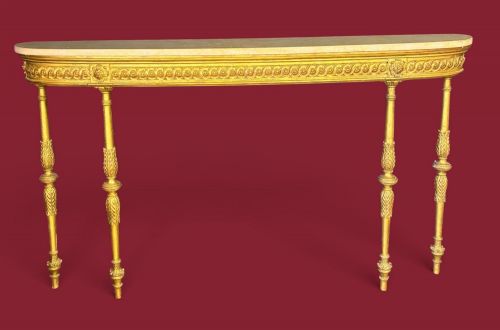
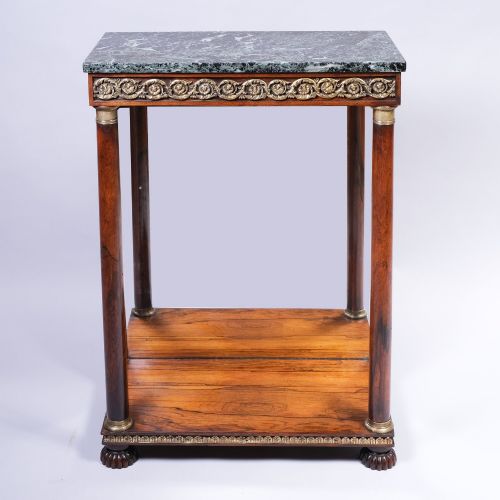
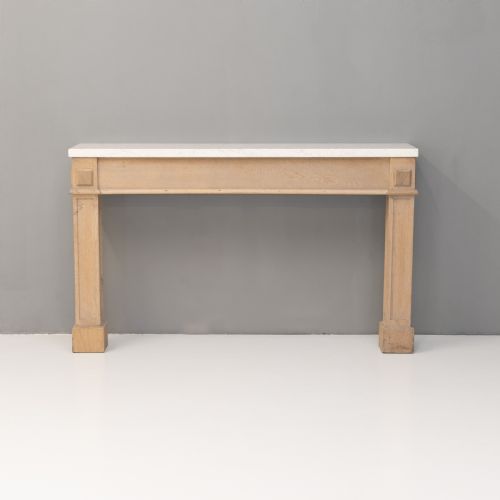
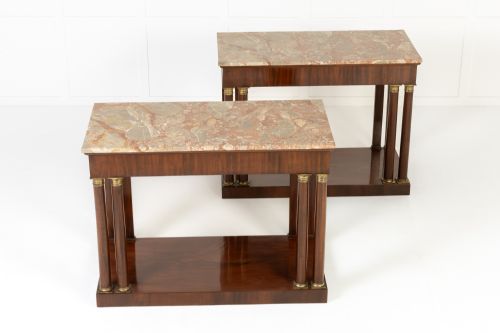
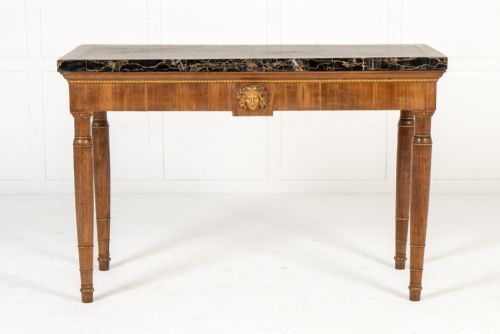
A neoclassical entryway table stands as a statement piece in a hallway, drawing on classical motifs, symmetry and refined proportions. Buyers searching for a neoclassical entryway table encounter console tables, side tables and tea tables designed to sit flush against a wall.
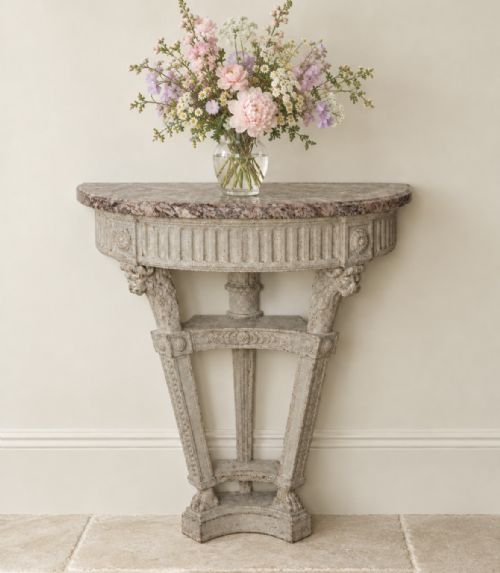
The pieces on this page span the eighteenth century, the nineteenth century and the early twentieth century, taking in Georgian, Regency, French Empire and Italian neoclassical styles. Forms range from D-shaped demi-lune tables to rectangular console formats designed for narrow spaces.
Origins stretch across England, France and Italy, reflecting regional interpretations of neoclassical design. English pieces favour mahogany and satinwood, while continental examples frequently employ painted finishes, parcel gilt and marble tops.
Distinguishing quality
Quality rests in the crispness of the carving, the integration of the stone top, and the cohesion of the painted or gilded surface. Finer examples display precise hand-carved motifs and balanced proportions that respect classical rules.
The choice of materials marks a clear division, with heavy fossil marble or granite tops and dense hardwoods such as mahogany representing a more substantial build than secondary woods or simpler painted pine.
Neoclassical Entryway Table Retail Price Guide 2026
Typical asking prices for neoclassical entryway table among the pieces listed under this phrase on Sellingantiques today, from the lower quarter to the upper quarter. They describe what is for sale here now, not the wider market.
Listings span multiple centuries from the seventeen hundreds through to nineteen twenty, featuring mahogany, marble, gesso and painted wood.
The Neoclassical Entryway Table Glossary
- Console table
- A table designed to be fixed against a wall, frequently supported by front legs with the rear secured to the masonry. They provide a narrow surface for display in hallways and formal rooms.
- Demi-lune
- A half-moon shape used for table tops and frames, popular in eighteenth and nineteenth-century design. This profile allows tables to sit tightly against a wall while offering adequate surface depth.
- Giltwood
- Timber carved and coated with a thin layer of gold leaf or gesso preparation. It catches candlelight and daylight in a room.
- Parcel gilt
- Wood finishes where only specific carved details or mouldings receive gold leaf application, contrasting with painted or natural wood grounds.
- Fossil marble
- Limestone containing distinct organic fossils, polished to a smooth surface for table tops. It introduces natural pattern and durability.
Neoclassical Entryway Table: Frequently Asked Questions
Where should I place a neoclassical entryway table?
These tables suit narrow halls, corridors and reception spaces where a shallow footprint is necessary. Their flat backs allow them to anchor against a wall beneath a mirror or painting.
Because many feature finished stone tops such as marble or granite, they handle everyday placement of keys and small objects while maintaining a formal appearance.
How do I identify a Georgian piece?
Georgian and George III examples often rely on mahogany or satinwood construction, showcasing wood grain rather than heavy paint. They frequently take D-shaped or demi-lune formats with restrained carving.
In contrast, continental pieces from Italy and France more commonly employ painted and parcel gilt surfaces paired with marble tops.
Can these tables hold heavy items?
Tables featuring solid marble or granite tops possess considerable weight and structural integrity, though their primary function remains decorative display rather than heavy load-bearing.
Console tables are traditionally anchored or balanced against walls for stability, particularly variants with slender legs.
What is the difference between a console and a side table?
Console tables are historically designed to stand against a wall, sometimes relying on wall fixings or front legs for support. Side tables are free-standing items of furniture with four independent legs.
In neoclassical design, both forms serve similar placement roles in hallways and reception rooms.