


Brown Wood Foldover Table
A brown wood foldover table is a flexible piece of period furniture designed to expand for dining, cards or tea.
Brown Wood Foldover Table
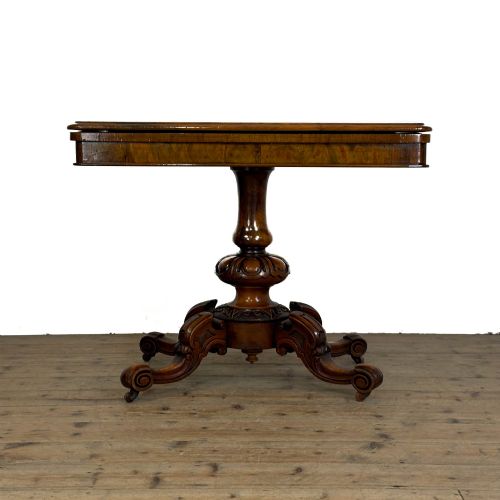
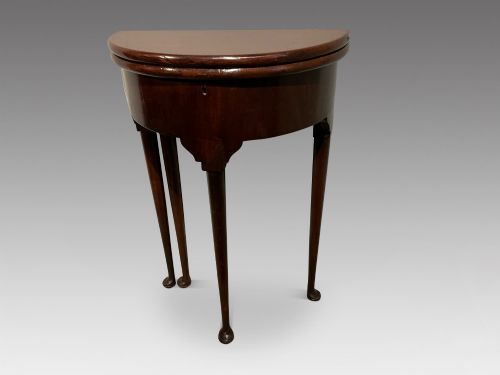
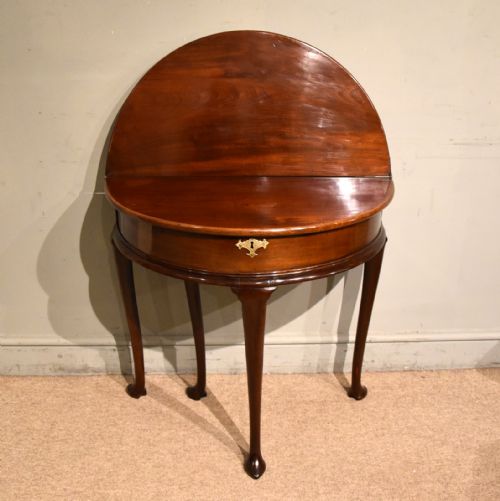
A brown wood foldover table typically takes the form of a card table, games table or tea table originating from the Georgian, Victorian or 19th Century periods. These pieces are chosen for their dual functionality, functioning as a compact console or side table against a wall before opening out to reveal a baize-lined playing surface or a larger timber top.
Mahogany and walnut dominate the selection, appearing either as solid timbers or rich wood veneers shaped into D-shaped, demi-lune, rectangular or butterfly formats. Many examples incorporate clever concertina actions, pedestal bases or lyre supports to handle the weight of the pivoting top leaf safely.
Materials and construction
Cabinet makers utilised dense hardwoods such as mahogany and walnut for the primary structure and frame, often applying fine wood veneer or intricate parquetry and satinwood inlay across the top surface. Boxwood lines edges and stringing details, while brass hinges, swing legs and occasional castors manage the movement of the folding leaf.
The inner mechanics rely on robust pivot hinges, concertina frames or gateleg actions designed to support the cantilevered weight when open. Joinery methods of the period ensure the timber accommodates seasonal movement without splitting the delicate veneers or straining the hinges.
Secret compartments inside some games tables hold long-lost counters, waiting quietly for a Victorian card game to resume.
Factors determining quality
Superior examples distinguish themselves through the choice of timber, displaying highly figured burr walnut, rich mahogany grains or precise parquetry and satinwood inlay rather than plain veneers. The crispness of the carving, the symmetry of the foldover mechanism and the tightness of the joinery mark the distinction between standard production and master cabinet work.
Proportion and stability heavily influence the overall standard of the piece. The best-executed pieces maintain a balanced stance whether closed as a console or opened as a games table, with hinges that sit flush and leaves that align perfectly without sagging.
Edwards & Roberts
The Brown Wood Foldover Table Glossary
- Concertina action
- An expanding framework that pulls out evenly from the frame to support all four sides of a foldover top when opened. This mechanical arrangement represents a higher tier of cabinet making.
- Demi-lune
- A half-moon shape characteristic of tables designed to sit flush against a wall. When two are paired together, they form a complete circular dining or games surface.
- Parquetry
- Geometric wood patterns created by fitting small veneers together. It frequently decorates the top surfaces of 18th century examples.
- Satinwood inlay
- A contrasting pale timber inlaid into darker mahogany or walnut surfaces to create decorative borders and motifs. It is typical of the Sheraton and revival styles.
- Foldover leaf
- A hinged section of timber that doubles the surface area when pivoted open. This design allows a compact console to function as a table.
Brown Wood Foldover Table: Frequently Asked Questions
What is the difference between a card table and a tea table?
Card tables generally feature a green baize or felt playing surface on the interior, sometimes with small corner depressions for counters or candlesticks. Tea tables usually present a polished wood interior surface designed for porcelain and silver.
While both share the foldover mechanism, tea tables often date from the 18th century Georgian period, whereas card and games tables continue strongly into the Victorian era.
How do I date a brown wood foldover table?
Examine the timber species, leg styles and construction methods beneath the frame. Georgian pieces frequently use solid mahogany with straight or cabriole legs, while Victorian examples often feature walnut veneers, turned pedestal bases or intricate inlay.
Check the hinges and screw types as well, noting whether they show hand-cut threads or machine-made consistency. These physical clues align with the distinct design periods of the 18th and 19th centuries.
Can I use these tables for dining?
Most foldover tables are built for card games or tea service rather than heavy everyday dining. The pivoting leaf and concertina or swing-leg supports are engineered to hold lighter loads and playing components.
Using them occasionally for light dining is possible, but care must be taken to protect the polished wood or veneer surface from heat and moisture.