
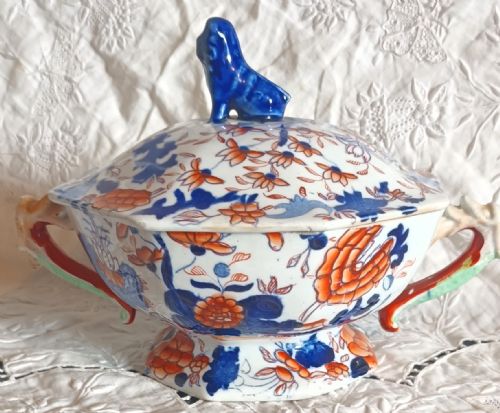
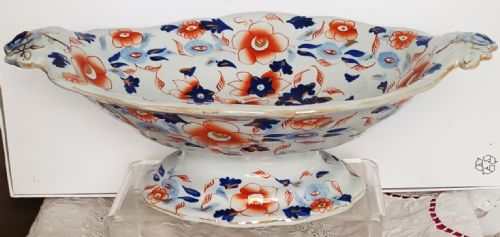


Georgian Imari Ceramic Dish
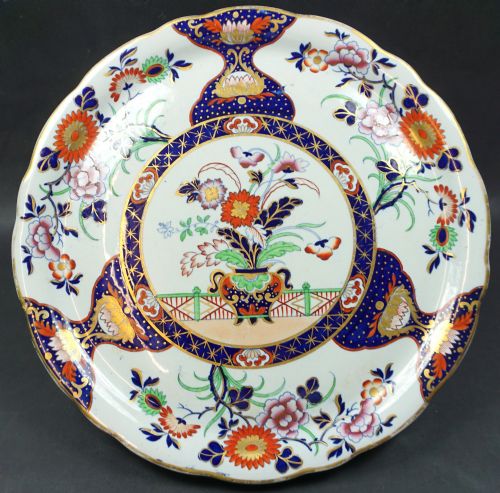
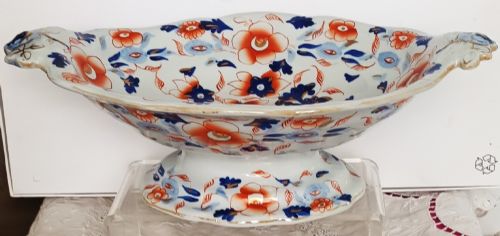
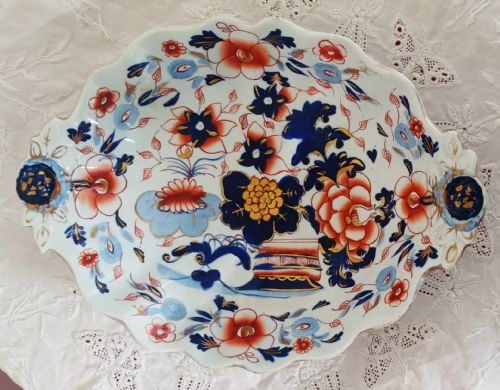
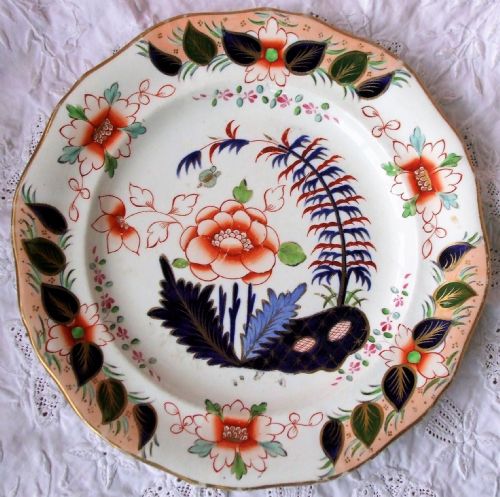
A georgian imari ceramic dish brings bold colour and pattern to a table, combining British ceramic forms with vibrant Japanese-inspired palettes.
Georgian Imari Ceramic Dish
When searching for a georgian imari ceramic dish, buyers encounter a rich variety of serving pieces, plates, and tureens spanning the late eighteenth century through the nineteenth century.
The selection on this page centres on sturdy ironstone and refined porcelain vessels, with plates, comports, and covered tureens forming the core of the available items.
Originating across periods including the Georgian and Regency eras, these objects reflect both everyday dining utility and decorative ambition in British households.
Materials and Manufacture
Potters shaped these vessels from ceramic bodies such as ironstone and porcelain, building durable forms designed for regular dining use.
Decorators applied rich enamel colours and gold leaf highlights, often using glaze and gilding to accentuate intricate Chinoiserie and Japanese-inspired patterns.
Some adventurous plates proudly display a dragon, a kylin, or a 'crazy cow' staring back from the dessert course.
Judging Quality
The distinction between standard utility items and masterworks rests on the crispness of the hand-painted enamel and the preservation of the gold leaf gilding.
Balanced proportions and the complexity of patterns, such as detailed dragons or Kakiemon motifs, separate ordinary production pieces from exceptional factory output.
Hicks & Meigh·John Davenport·Mason·Worcester Flight Barr·Minton·Chamberlain Worcester·Derby
The Georgian Imari Ceramic Dish Glossary
- Ironstone
- A dense, durable type of ceramic patented in the early nineteenth century to rival true porcelain. It provided a robust body for heavy kitchen and dining service ware.
- Comport
- A decorative footed dish or bowl raised above the table surface for serving fruit or dessert. These pieces often anchor a multi-piece dessert service.
- Chinoiserie
- European decorative art influenced by Chinese and East Asian artistic traditions. It appears frequently in the hand-painted motifs of these ceramic pieces.
- Kakiemon
- A style of Japanese porcelain decoration featuring asymmetric floral and animal motifs in vibrant enamels. British potteries frequently borrowed these palettes.
- Tureen
- A deep covered vessel used for serving soups, sauces, or vegetables at the dining table. Matching stands and covers completed the set.
Georgian Imari Ceramic Dish: Frequently Asked Questions
How were these dishes used originally?
These ceramic pieces served functional roles in formal dining, holding everything from meats and vegetables to desserts and sauces on large dining tables.
Wealthy households utilised matching services to present courses with visual harmony during long dinner parties.
How do I care for ironstone and porcelain?
Wash these antique ceramics gently by hand in warm water using a mild detergent, avoiding modern dishwashers entirely.
Protect the fragile enamel and gold leaf gilding by storing dishes with felt separators between stacked plates.
How can I tell the period of a piece?
Examine the weight and composition of the ceramic body, noting whether it is heavy ironstone or lighter porcelain characteristic of the Regency era.
Look for maker marks, pattern numbers, and stylistic cues like Chinoiserie borders to narrow down the decade of manufacture.
What defines the Imari style?
The style takes inspiration from Japanese export wares, featuring a distinctive palette dominated by underglaze blue, iron red, and abundant gold leaf.
British factories adapted these vibrant colour schemes to suit domestic tastes across plates, tureens, and serving dishes.