
Georgian Hepplewhite Chairs
Georgian Hepplewhite chairs bring elegance and classical restraint to a dining room through their distinctive shield backs and slender, tapered legs.
Georgian Hepplewhite Chairs
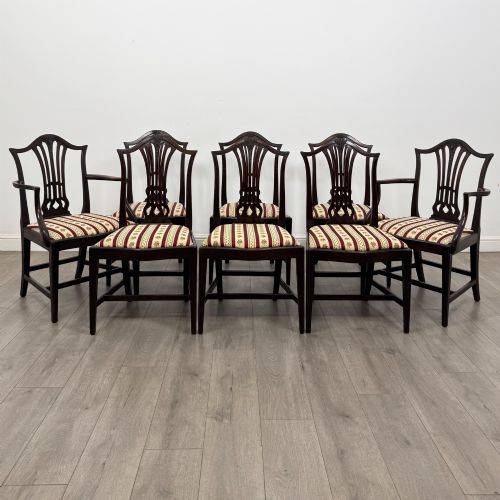
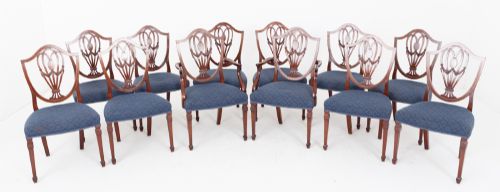
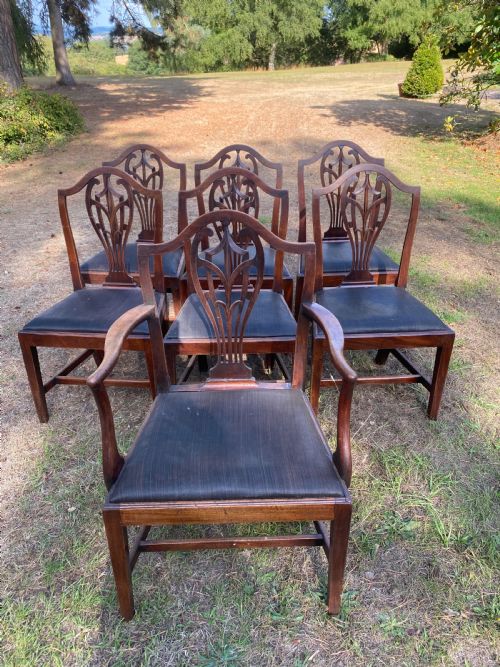
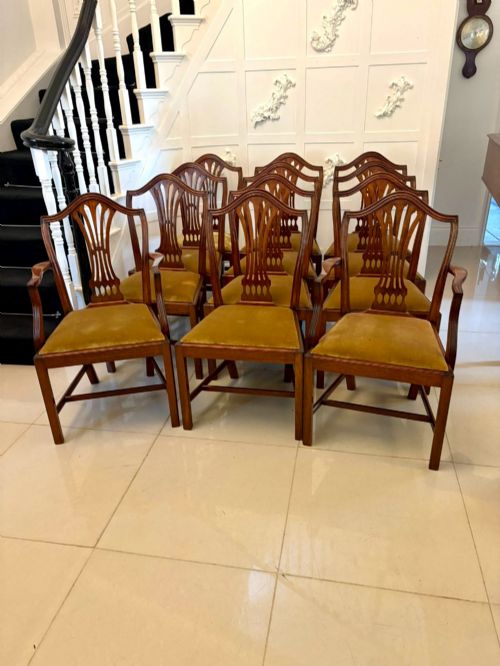
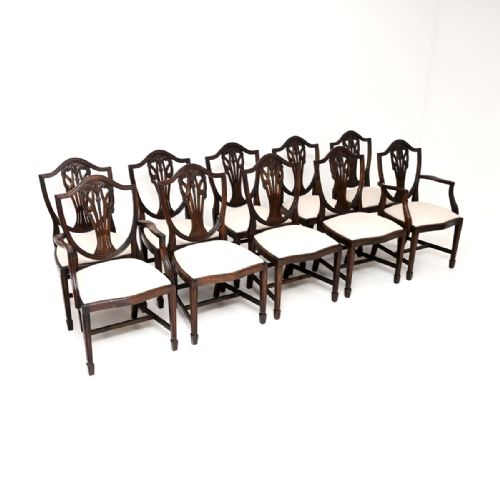
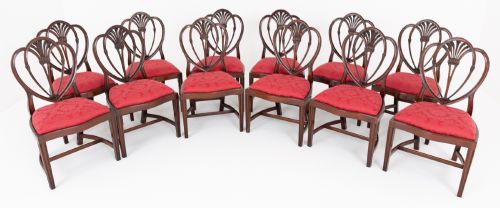
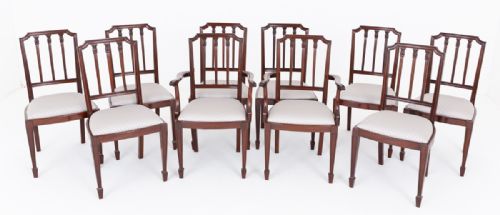
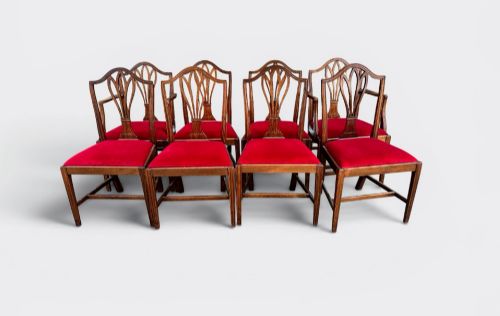
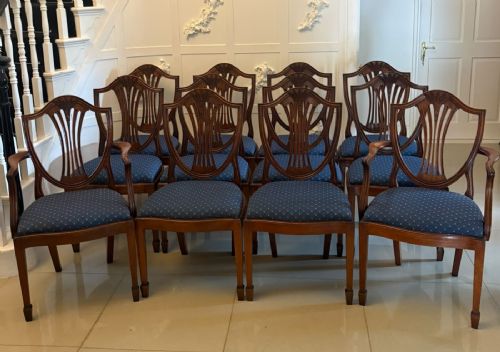
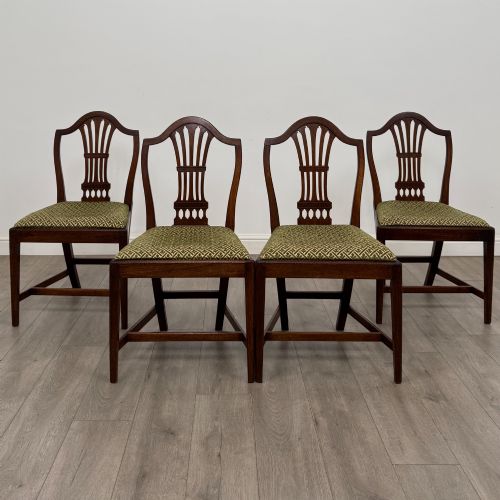
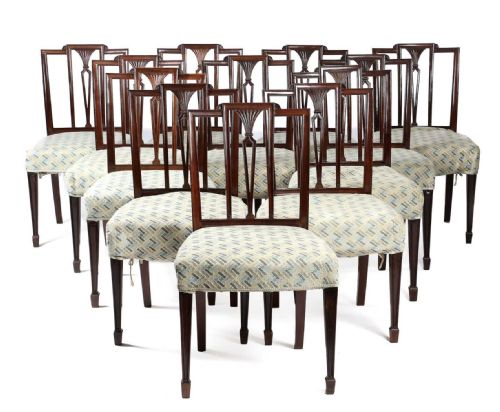
When searching for georgian hepplewhite chairs, a buyer typically encounters dining chairs, armchairs, and carvers dating from the eighteenth century through to later revival periods. The most frequent form on this page is the dining chair, often found in sets of varying sizes from pairs up to large groups of twelve or sixteen. These seating options span original eighteenth-century craftsmanship as well as nineteenth-century interpretations and twentieth-century revival pieces.
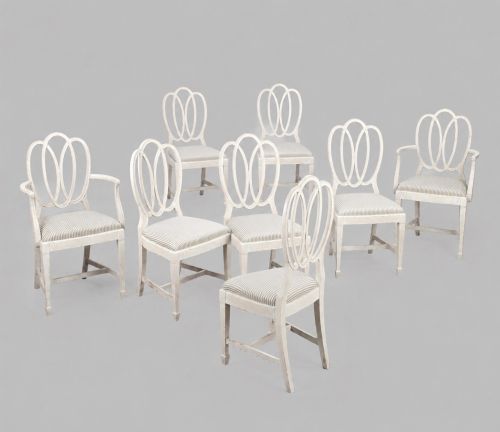
Original eighteenth-century sets are complemented by late-nineteenth and early-twentieth-century reproductions created during periods of revived interest in Georgian design. Buyers will find both single chairs and matched sets, with many larger dining sets comprising a mix of side chairs and matching carvers. The materials cover solid hardwoods paired with diverse upholstery options including leather, horsehair fabric, silk, and modern textiles.
How they were made
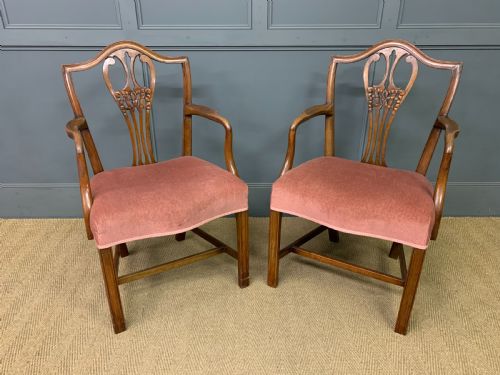
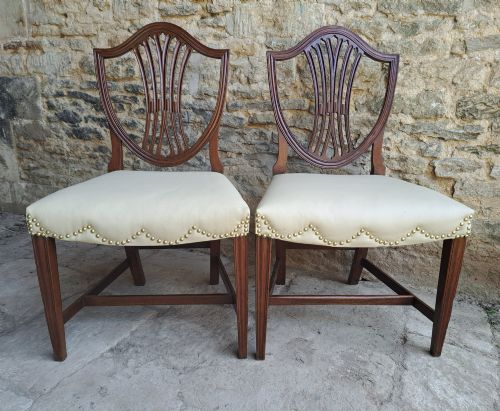
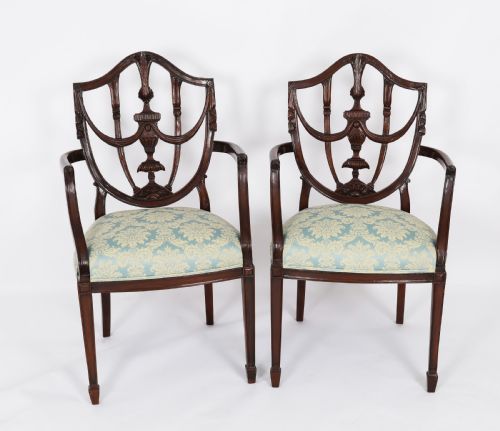
Cabinetmakers constructed these frames primarily from solid mahogany, walnut, oak, and elm, often utilising carved details such as Prince of Wales feathers, wheat ears, or subtle drapery on the splats. The iconic shield-back and camel-back silhouettes were shaped from joined timber, frequently enhanced with inlaid satinwood or delicate stringing.
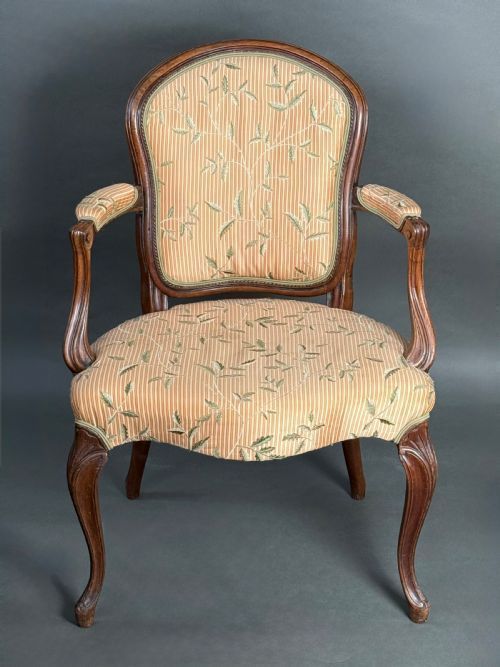
Upholstered drop-in seats or stuffed seats were finished in various materials including horsehair fabric, leather, silk, and contemporary upholstery fabrics. Frame construction relies on traditional joinery, with straight or moulded forelegs sometimes featuring spiral carving, spades, or tapered profiles.
Some chairs sport carved royal feathers to make diners feel like royalty.
What varies in quality
The distinction between tiers rests upon the crispness of the wood carving, the choice of timber figure, and the integrity of the frame construction. Superior examples display deeply sculpted shield backs and harmonious proportions, whereas lesser pieces may show routine turning or simpler joinery.
Original eighteenth-century seating commands attention for period authenticity, while revival pieces from the nineteenth and twentieth centuries vary according to the fidelity of their interpretation and the quality of the replacement upholstery and interior webbing.
J. Yorke
The Georgian Hepplewhite Chairs Glossary
- Shield back
- A chair back shaped in the contour of a heraldic shield, characteristic of the Hepplewhite style. This silhouette often incorporates pierced central splats carved with ornamental motifs.
- Carver
- An armchair designed to match a set of dining side chairs, traditionally placed at the heads of a dining table. These pieces feature functional armrests integrated into the upper frame.
- Splat
- The vertical wooden strip down the centre of a chair back, connecting the top rail to the seat. In these designs, the splat is frequently pierced and carved.
- Spade foot
- A square-tapered foot that widens slightly at the very bottom, resembling the blade of a garden spade. This foot form frequently terminates the legs of Hepplewhite seating.
- Camel back
- A chair back featuring a smooth, undulating convex curve along the top rail resembling a camel's hump. This upholstered or wooden profile provides an alternative to the shield back.
Georgian Hepplewhite Chairs: Frequently Asked Questions
How do I identify a true period chair?
Authentic eighteenth-century examples exhibit period construction methods, timber ageing, and hand-cut joinery consistent with the late seventeen-hundreds. Secondary woods and hand tools leave distinct marks beneath the seat frame.
Revival pieces from later centuries often use machine-cut elements and standardised sizing while still emulating the classic Hepplewhite proportions.
What is the difference between a side chair and a carver?
Side chairs are narrower seats built without arms, designed to fit compactly around the sides of a dining table. Carvers are armchairs constructed in the same aesthetic to sit at the ends.
Sets often combine a majority of side chairs with a pair of carvers for the hosts.
Can I mix these chairs with a modern table?
The understated elegance of mahogany timber and classical lines allows these seats to complement modern or antique dining tables alike. Their slender tapered legs maintain a visually light footprint in a contemporary dining space.
Upholstery can also be adapted to bridge historical frames with modern interiors.
How should I care for the wood and upholstery?
Maintain the timber surfaces with appropriate wax polish applied sparingly to preserve the natural grain of the mahogany, walnut, or oak. Avoid placing antique seating in direct sunlight or near heat sources to prevent timber splitting.
Upholstery care depends on the fabric chosen, ranging from traditional horsehair to leather or silk.