
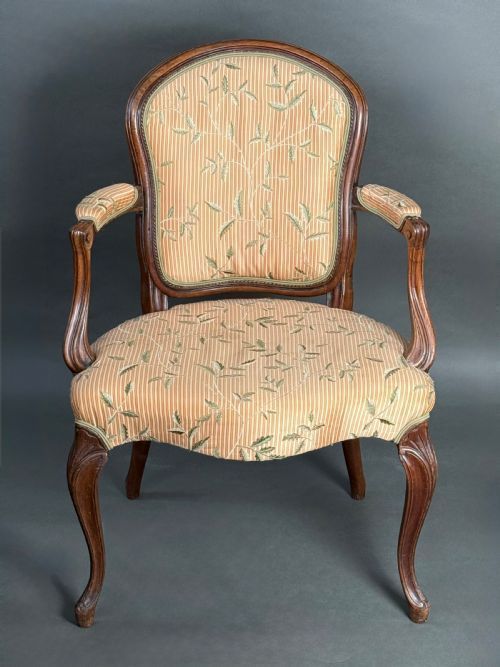
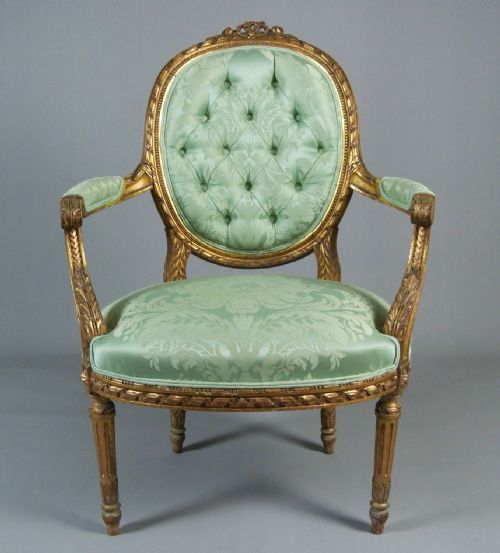
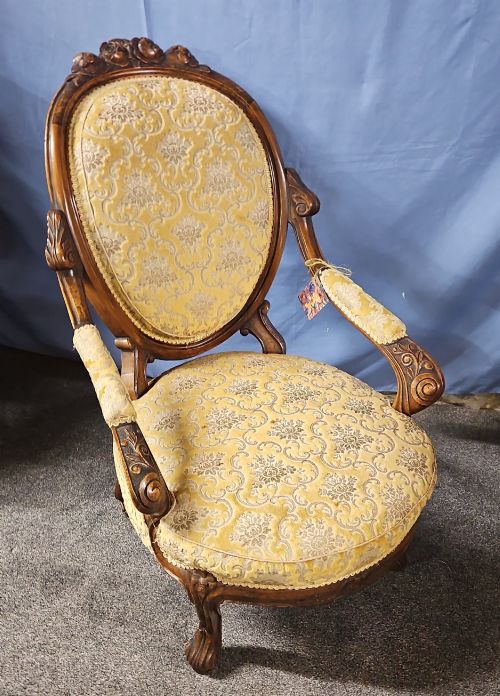


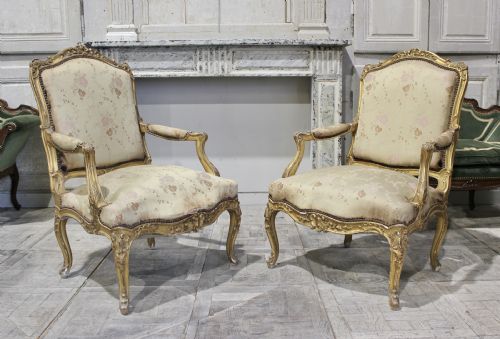


Padded Arm Fauteuils
These padded arm fauteuils bring classical French and British seating into a room with substantial frames and historic upholstery.
Padded Arm Fauteuils
When you search for padded arm fauteuils, you encounter historic seating spanning from the seventeenth century through to the twentieth century. These armchairs typically combine wooden frames with upholstered armrests designed for comfort.
The selection includes pieces created in distinct revival styles such as Louis XV and Louis XVI, alongside Victorian and George III interpretations. Walnut, beech, and giltwood form the primary structural foundations for these seating choices.
Makers and workshops applied various decorative coverings, ranging from silk damask and needlework to contemporary fabric choices. Such chairs serve as functional accent seating in traditional and eclectic interiors alike.
How they were made
Craftsmen shaped structural elements from solid hardwoods like walnut, beech, and rosewood, often employing painted finishes or gilding to enhance the surface. Carved details define the framework, reflecting the prevailing stylistic periods from French Rococo to Victorian revivalism.
Upholstery techniques involved securing fabric over padded armrests and seats using traditional stuffing methods. Silk damask, needlework, and standard fabrics were then fastened to complete the seating surface.
Current listings feature pieces spanning the seventeenth through to the twentieth century, utilising walnut, beech, giltwood, and painted wood.
What varies in quality
The sophistication of the wood carving and the integrity of the underlying frame determine the standing of an individual piece. Original painted surfaces or period gilding contribute substantially to the character of a chair.
The choice of upholstery materials, whether historic needlework or fine silk damask, influences how a piece represents its designated period style. Structural solidity in the joints and arms separates standard workshop production from finer examples.
Thomas Chippendale·Colefax and Fowler
The Padded Arm Fauteuils Glossary
- Fauteuil
- An open-framed upholstered armchair originating in France, typically featuring exposed wooden armrests and legs. These chairs became prominent during various Louis periods.
- Giltwood
- Timber treated with gold leaf or a gold-coloured metallic finish for decorative effect. This treatment frequently appears on formal eighteenth-century framework.
- Damask
- A reversible figured fabric woven on a jacquard loom, often utilised for historical upholstery. Silk damask appears on refined seating examples.
- Needlework
- Hand-stitched textile work utilised for covering chair seats and backs. Such covers often display intricate floral or geometric patterns.
Padded Arm Fauteuils: Frequently Asked Questions
How do I identify a Louis XV style chair?
Louis XV style chairs typically display characteristic curved lines, cabriole legs, and understated carved ornamentation. The frames are constructed from walnut or beech with integrated padded armrests.
These pieces often reflect nineteenth-century revival movements inspired by earlier French designs. Examining the fluidity of the woodwork helps distinguish this style from more geometric periods.
What materials were used for the frames?
Frameworks primarily consist of hardwoods such as walnut, beech, and rosewood. Some examples feature applied paint or gold leaf over the timber substrate.
Secondary materials include brass fittings and structural joinery appropriate to each specific manufacturing era. The choice of wood often aligns with the geographic origin and period of the furniture.
Are these chairs suitable for daily use?
Historic armchairs provide functional seating, though their suitability depends on the stability of the antique frame and internal padding. Many examples have undergone reupholstery to ensure structural integrity.
Placing these seats in low-traffic areas helps preserve fragile textiles like silk damask or older needlework covers. Careful consideration of joint strength ensures safe daily interaction.
How can I tell the period of an armchair?
Dating relies on observing stylistic markers, wood species, and construction techniques characteristic of centuries ranging from the seventeenth to the twentieth. Details such as carved motifs and frame proportions indicate whether a piece originates from the eighteenth century or a later revival.
Comparative analysis with documented examples helps clarify the distinction between original period pieces and later interpretations. Secondary evidence like upholstery tacks and tool marks further informs the timeline.