
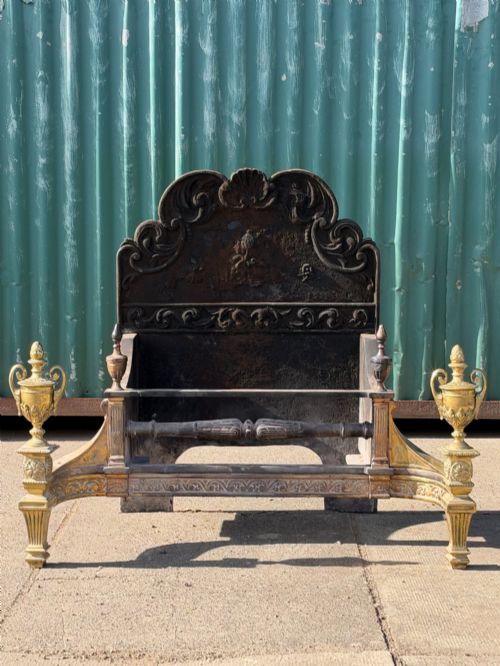
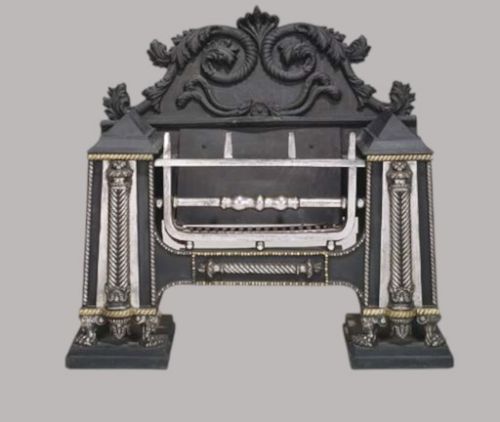
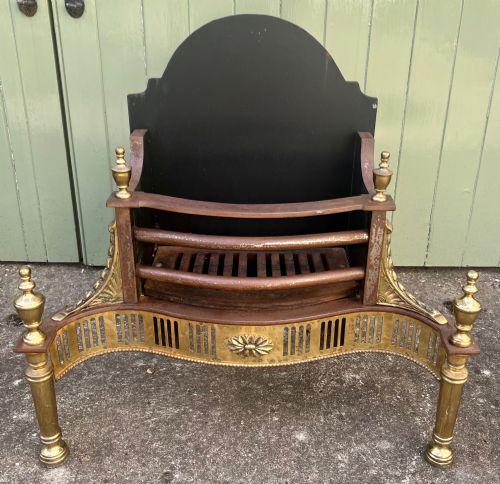
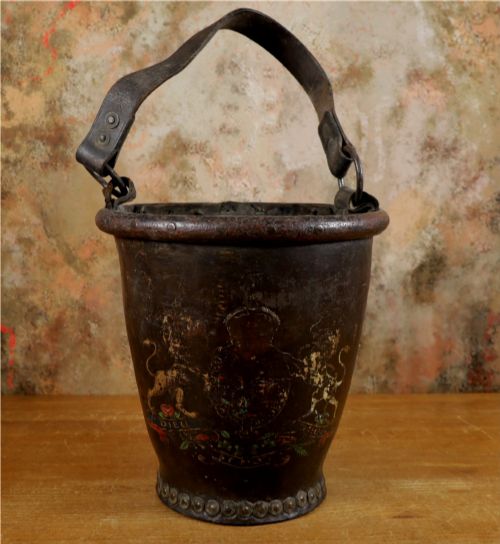
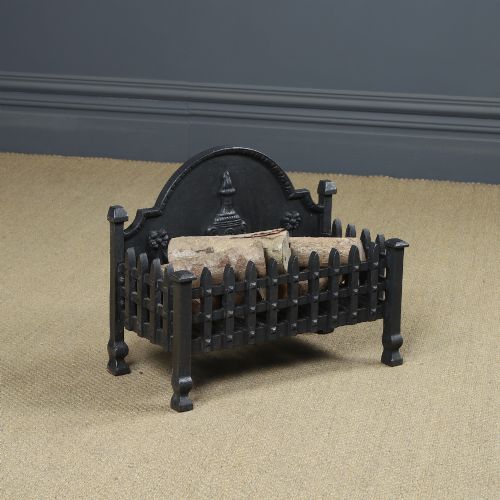


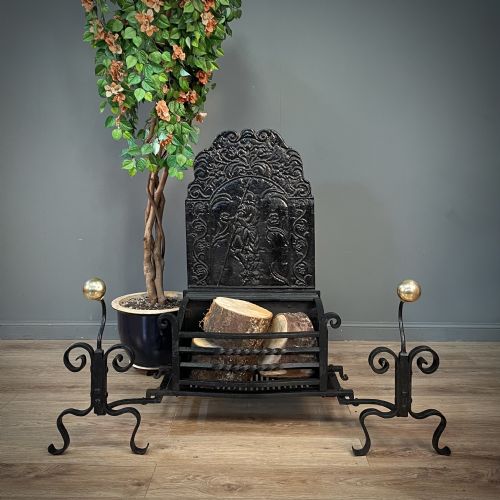
Georgian Hearth Fire Basket
A georgian hearth fire basket brings genuine period presence and open-fire warmth to a room.
Georgian Hearth Fire Basket
A georgian hearth fire basket forms the structural heart of a traditional fireplace, designed to hold coal or logs safely within the chimney breast. Buyers searching for a georgian hearth fire basket typically encounter functional metal grates alongside related hearth furniture such as log bins and leather fire buckets.
The selection ranges from robust cast and wrought iron hob grates to refined Adam style brass inserts and Regency designs. These objects originate predominantly from the Georgian era through to the nineteenth century, with some later revival pieces maintaining traditional forms.
How they were made
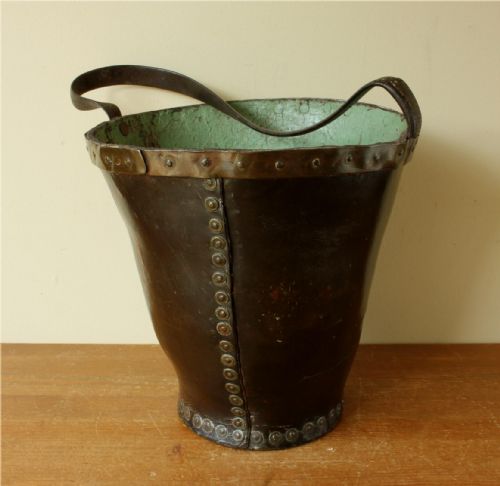
Leather and copper appear in companion items such as fire buckets and log bins, often finished with studded detailing, painted coats of arms or applied pigment.
Materials across these listings span cast iron, brass, wrought iron, copper, leather, pigment, firebrick and standard iron.
What varies in quality
Quality rests in the crispness of the iron casting and the delicacy of brass enrichment, where finer pieces display sharper neoclassical detail and better balanced proportions. The integration of structural wrought iron with decorative cast elements distinguishes superior utilitarian work from standard production.
Secondary items show variance in the quality of the leatherwork, the weight of the copper sheeting and the neatness of the studded embellishments.
The Georgian Hearth Fire Basket Glossary
- Hob grate
- A type of fireplace grate featuring raised side platforms, or hobs, historically used for boiling kettles. It represents a common form within early ironwork.
- Register grate
- A fireplace insert featuring a moveable flap or plate to regulate the draught up the chimney. This mechanical improvement helped control the fire.
- Andiron
- A horizontal metal support raised on legs, placed in a hearth to hold logs. They often accompany fire baskets in larger hearth settings.
- Adam style
- A neoclassical design style popular in the eighteenth century, characterised by symmetrical ornamentation and urn motifs. It heavily influences lighter brass fire grates.
Georgian Hearth Fire Basket: Frequently Asked Questions
Are these fire baskets still usable?
Many cast iron fire baskets remain robust enough for regular burning, provided a professional checks them for structural integrity before use.
Some buyers prefer to utilise them purely for decorative display or as sculptural hearth ornaments filled with logs.
How do I identify a Georgian piece?
Authentic Georgian pieces display the weight, construction methods and material patination typical of eighteenth-century metalwork.
Later revival items from the nineteenth century or the nineteen-twenties often emulate these forms but carry subtle differences in casting technique.
What is the difference between a fire basket and a log bin?
A fire basket is an iron or brass grate designed to sit within the fireplace and hold burning fuel.
A log bin is a freestanding container, often formed from copper or studded leather, kept beside the hearth to store unburnt wood.
How do I care for cast iron hearth items?
Cast iron benefits from regular dusting and occasional treatment with suitable black grate polish to maintain its dark finish and prevent surface rust.
Brass components require gentle cleaning with a non-abrasive metal cleaner to preserve their warm metallic lustre.