
Georgian Hand Painted China
Georgian hand painted china brings together delicate floral sprays, armorial crests and intricate Chinoiserie scenes created by historic English porcelain factories.
Georgian Hand Painted China
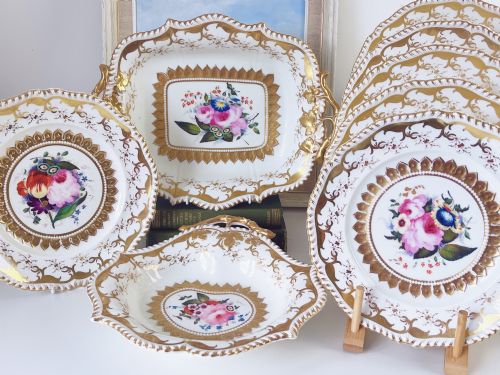
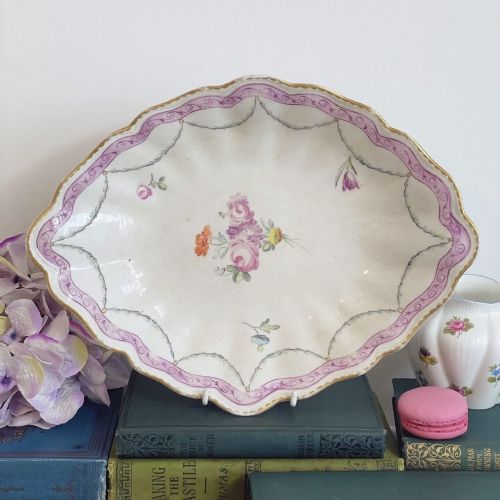
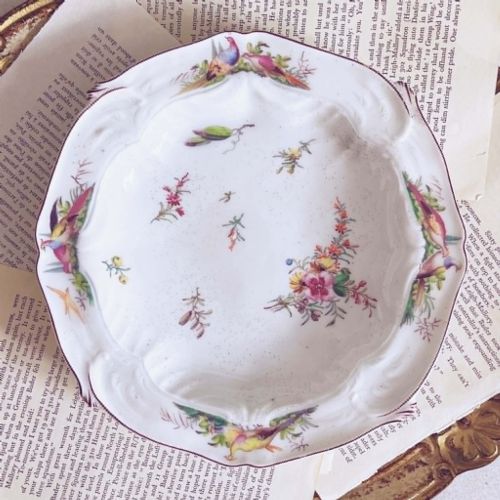
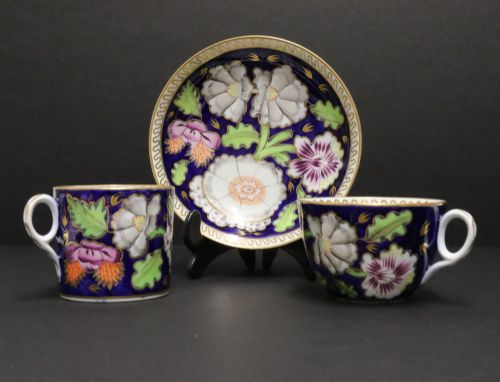
Georgian hand painted china encompasses tea wares, dessert services, decorative plates and serving dishes produced during the eighteenth and early nineteenth centuries. These items reflect both functional dining use and ornamental display in domestic interiors of the period.
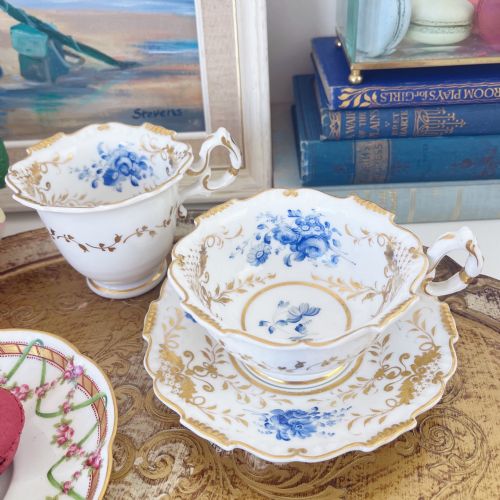
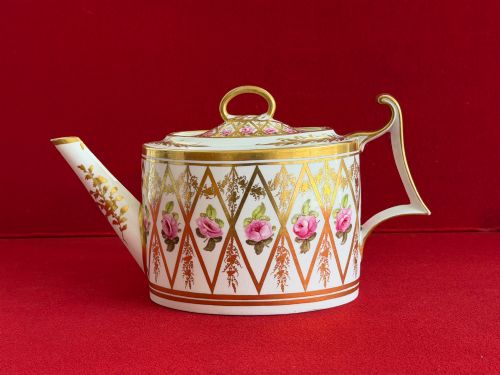
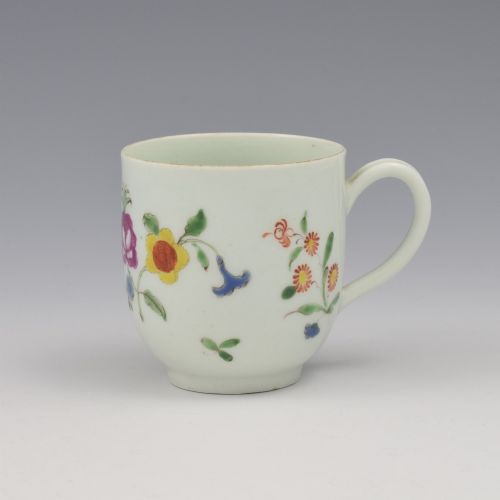
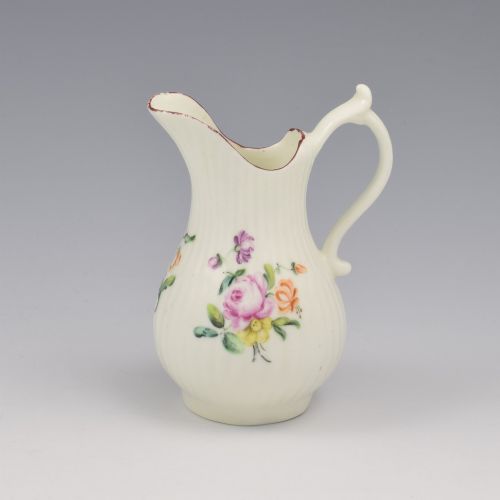
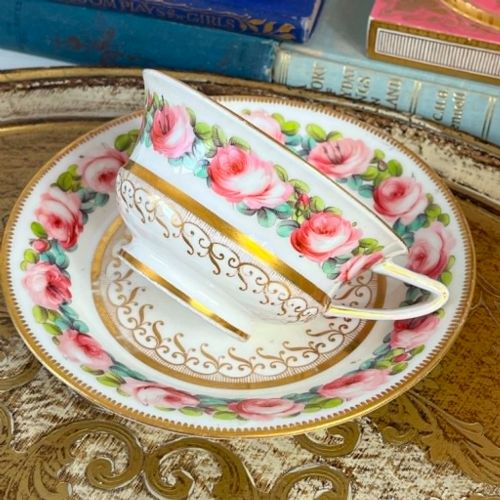
The pieces you encounter most frequently on this page span the Georgian and Regency eras, alongside related nineteenth century productions. Common forms include teacups and saucers, teapots, cream jugs, sauce boats and cabinet plates decorated by hand.
Makers range from early factories such as Bow, Chelsea and Worcester to later nineteenth century establishments like Coalport, Spode and Derby. Each manufacturer utilised distinct ceramic bodies and painting styles that define the character of individual pieces.
Materials and Manufacture
Potters shaped these vessels using soft-paste porcelain, bone china, ironstone and enamel, often forming them in moulds for items like sauce boats and comports. Early pieces relied on soft-paste porcelain bodies which required careful firing and developed a distinctive translucent glaze.
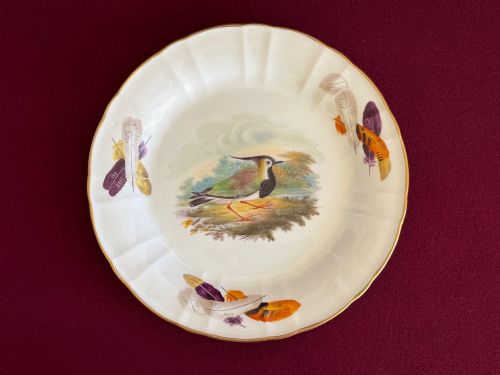
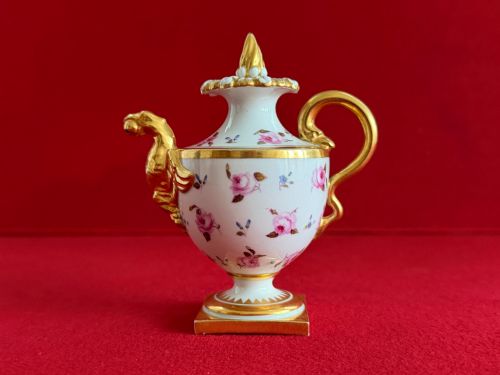
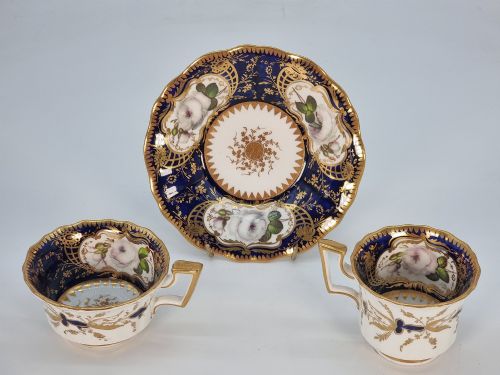
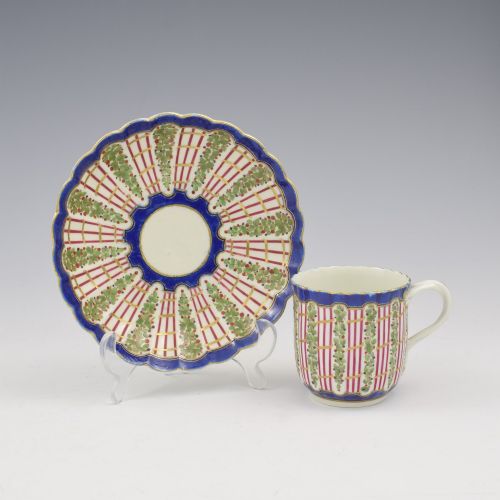
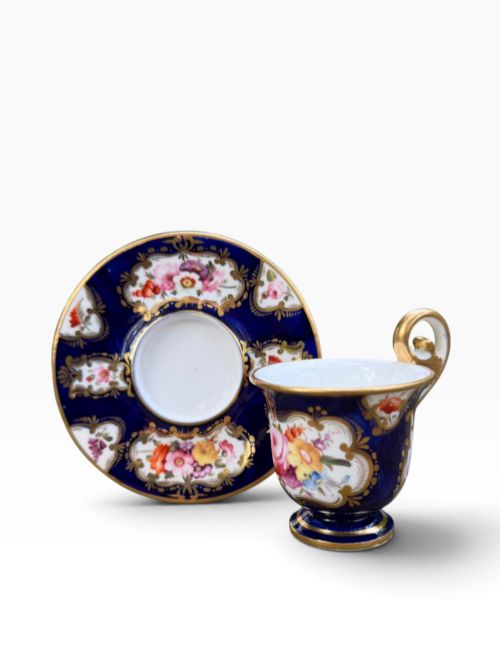
Decorators applied pigments by hand, sometimes over blue transfer-printed outlines, utilising botanical motifs, birds, landscapes and Japanese-inspired patterns. Gilding with gold leaf was frequently added to rims and handles to finish the wares.
Listings feature eighteenth and nineteenth century porcelain and ironstone, including soft-paste bodies from Worcester, Derby, and Chelsea.
Assessing Quality and Execution
Quality in these ceramics rests upon the precision of the hand painting and the clarity of the porcelain body. Finer examples display meticulous brushwork in botanical details or figures, whereas simpler wares show more repetitive or hurried application.
The complexity of the form and the preservation of the original gilding also distinguish better pieces. Items featuring armorial crests, bespoke botanical studies or intricate Chinoiserie landscapes generally represent the higher tiers of factory output.
Grainger Lee & Co·H & R Daniel·Derby Porcelain·Wedgwood·Chamberlain Worcester·Flight Barr & Barr·Richard Chaffers·Chelsea·Newhall Porcelain·John Rose Coalport·Dr Wall Worcester·Davenport·John Baley·Royal Doulton·Spode·Bloor Derby·Bow Porcelain·Minton·Rockingham Pottery
The Georgian Hand Painted China Glossary
- Soft-paste porcelain
- An artificial porcelain mixture fired at lower temperatures than hard-paste, common in early English ceramics. It produces a warm, slightly creamy body with a soft glaze.
- Bone china
- A porcelain body strengthened by the addition of bone ash, developed in England to create a whiter and more durable material. It allowed for thinner walled vessels and sharp glaze retention.
- Ironstone
- A heavy, durable type of earthenware patented in the nineteenth century to imitate porcelain. It frequently carried bold Japan and Imari patterns.
- Chinoiserie
- European decorative motifs inspired by Chinese art and design, showing imaginary landscapes, figures and pavilions. Painters often rendered these in blue or polychrome enamels.
- Trio
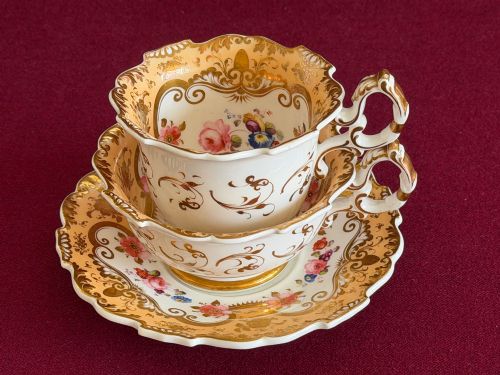
- A matching set comprising a teacup, coffee cup and saucer used in formal nineteenth century tea service. They allowed drinkers to alternate between different hot beverages.
Georgian Hand Painted China: Frequently Asked Questions
How do I identify a Dr Wall period Worcester piece?
Dr Wall period Worcester porcelain, produced during the eighteenth century, is recognised by its fine potting, blue scale grounds and delicate hand-painted Chinoiserie or floral motifs. Many pieces bear crescent or square fret marks underneath.
Inspect the glaze closely for small pooling effects and check the footrims, which often show signs of the sand used in early kiln stacking methods.
What is the difference between Japan pattern and Imari pattern?
Japan and Imari patterns on nineteenth-century ironstone and porcelain both draw inspiration from traditional Japanese export wares. They typically feature a palette of underglaze blue, iron red and gilt highlights.
Imari designs often lean towards structured floral and brocade panels, while Japan patterns frequently incorporate stylised landscapes, birds and geometric borders.
How were cabinet cups different from standard tea cups?
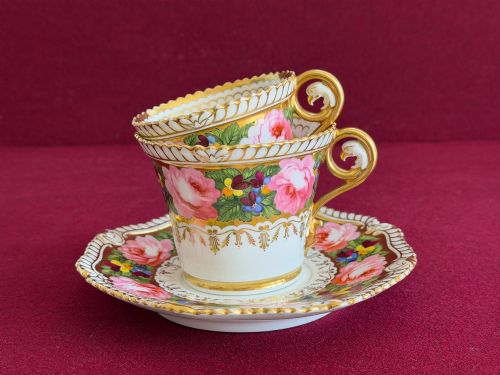
Cabinet cups and trios were designed primarily for display in glass-fronted cabinets rather than rugged everyday use. They often featured more elaborate painting, delicate handles and higher-quality gilding.
These pieces frequently included a matching coffee cup alongside the standard teacup and saucer, forming a complete trio for sophisticated domestic settings.