




Georgian Gold Wax Seal
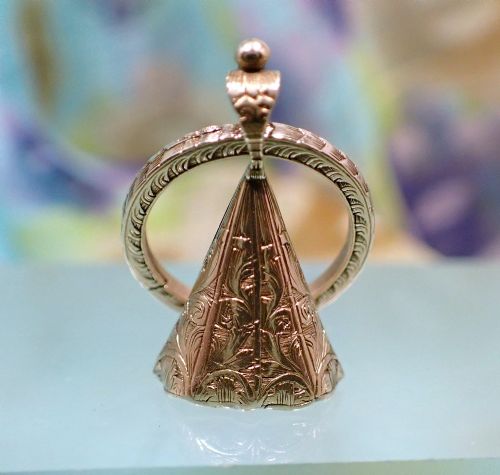
A georgian gold wax seal is a portable desk accessory or pendant used for impressing hot wax, combining precious metalwork with hand-carved hardstone intaglios.
Georgian Gold Wax Seal
When you search for a georgian gold wax seal, you are looking at small pendant items designed for personal correspondence, often configured as fobs, charms, or swivel pieces. The examples you meet on this page span the Georgian and Victorian eras, incorporating both solid gold and gold-cased or gilt metal mounts.
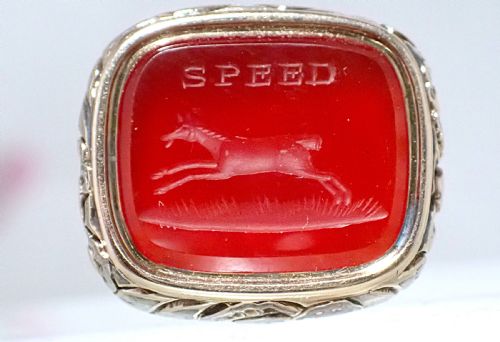
The functional base of each piece holds a carved matrix, presenting initials, names such as Ann or Jane, classical figures, animals like horses and elephants, or portraits including William Shakespeare. These objects transition easily between desk utility and wearable jewellery as pendants on watch chains.
While the search names the Georgian period, the surviving selection includes nineteenth-century pieces alongside genuine Georgian examples, reflecting enduring Victorian revivalism and continued production of similar hardstone seals well into later decades.
Materials and construction
The primary carving materials comprise hardstones such as carnelian, bloodstone, sardonyx, chalcedony, rock crystal, and ebony. Artisans engraved these minerals using abrasive wheels and hand tools to create intaglio designs that leave a raised impression when pressed into warm wax.
Georgian Gold Wax Seal Retail Price Guide 2026
Typical asking prices for georgian gold wax seal among the pieces listed under this phrase on Sellingantiques today, from the lower quarter to the upper quarter. They describe what is for sale here now, not the wider market.
Materials recorded across these items range from solid fifteen-carat gold and carnelian to gilt metal, ebony, and rock crystal.
Assessing quality and execution
The distinction between ordinary and superior pieces lies principally in the crispness and depth of the hardstone intaglio carving. Finer seals display meticulous detail in figures, lettering, or heraldic motifs, whereas lesser examples show shallower, simpler cuts.
Quality also appears in the weight and refinement of the metal mount, where solid fifteen-carat gold and intricate cast ornamentation surpass thin gilt metal casings. The integration between the swivel mechanism or suspension loop and the body determines the overall structural integrity.
The Georgian Gold Wax Seal Glossary
- Intaglio
- A design carved into the surface of a stone so that the impression produced in relief is positive. This technique forms the functional face of every wax seal.
- Fob
- A short chain, ribbon, or pendant attached to a pocket watch. Many wax seals were suspended from these to hang from a waist chain.
- Carnelian
- A brownish-red variety of chalcedony quartz used widely for signet rings and seal matrices. It offers a smooth surface that releases cleanly from cooling wax.
- Swivel
- A pivoting mount allowing a seal to rotate and display two different faces or a stone on one side and a blank shield on the reverse.
- Bloodstone
- A dark green chalcedony flecked with red jasper spots. It was a popular choice for nineteenth-century seals and signet rings.
Georgian Gold Wax Seal: Frequently Asked Questions
What is a georgian gold wax seal used for?
These pieces served to authenticate and close correspondence by pressing the carved hardstone matrix into melted sealing wax. The resulting impression left a personal monogram, crest, or motif unique to the sender.
Today, they function primarily as decorative pendants worn on chains or collected as miniature sculptures of metal and stone.
How do I wear a antique seal?
Most seals on this page feature a loop or swivel bail designed to attach to a chain, ribbon, or chatelaine. They hang effectively as standalone pendants or grouped alongside other charms.
Care should be taken to protect the softer hardstone matrices, such as carnelian or chalcedony, from impact against harder jewellery.
How do I tell Georgian from Victorian seals?
Georgian seals often feature restrained neoclassical motifs, hollow-backed gold construction, and crisp hand-chased ornamentation. Victorian pieces tend to be heavier, sometimes incorporating cast details, swivel mechanisms, or richer coloured hardstones.
Because seal forms remained consistent across generations, stones and mounts are often evaluated together alongside any hallmarks or engraved dates.
Are all these seals solid gold?
The materials vary across the selection, encompassing solid nine-carat and fifteen-carat gold alongside gold-cased metal and gilt brass. Descriptions specify whether a piece is solid precious metal or uses a base metal core beneath a gold layer.
Unmarked or tested metal is common in antique items where assay stamps were small or omitted entirely on small accessories.