




Carnelian Wax Seal Fob
A carnelian wax seal fob is a portable desk accessory for stamping correspondence, prized for its translucent orange stone and precious metal mount.
Carnelian Wax Seal Fob
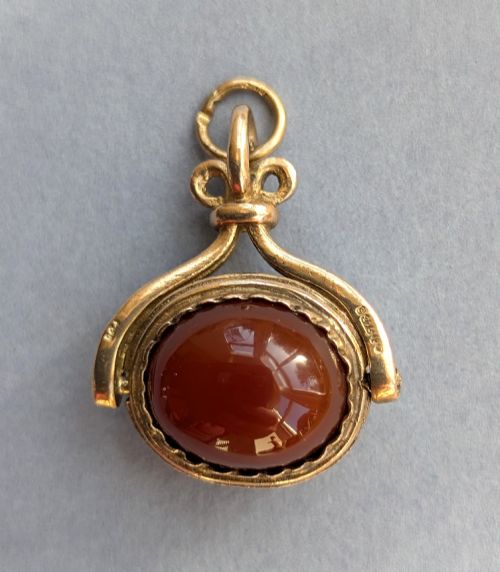
When you search for a carnelian wax seal fob, you are looking at small pendant seals designed to hang from a watch chain or bracelet. These pieces combine a polished stone base with a metal mount, often fashioned as a swivel or pendant.
The versions you are most likely to meet on this page date from the Georgian and Victorian eras, extending into the Edwardian period. They appear in forms ranging from simple gilt metal mounts to substantial nine carat rose and yellow gold settings.
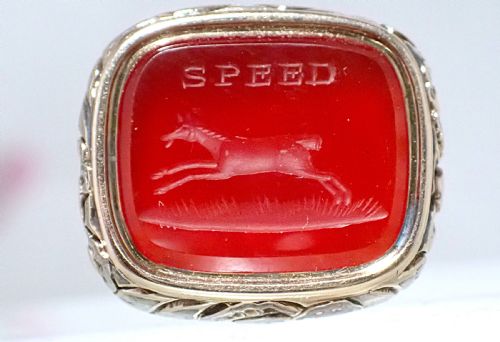
Makers of the period cut matrices into the stone base, featuring initials, crests, classical figures, or words like speed. These items served a practical purpose in correspondence before envelopes with adhesive flaps became common.
Materials and construction
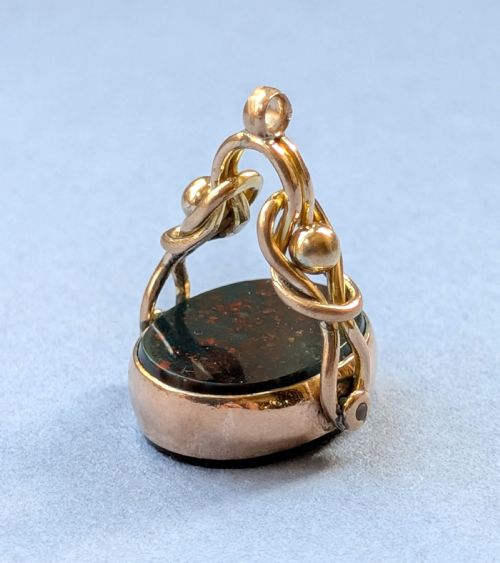
Makers shaped natural carnelian, sometimes referred to as cornelian, into smooth seals and set them into mountings of nine carat gold, gold cased metal, or gilt metal. Bloodstone and agate also appear alongside the primary orange-red chalcedony.
Craftsmen engraved intaglio designs directly into the flat base of the stone using hand tools to create reversed impressions for sealing wax. Swivel mechanisms allowed users to rotate the stone block between two different faces or a stone and a blank metal shield.
Carnelian Wax Seal Fob Retail Price Guide 2026
Typical asking prices for carnelian wax seal fob among the pieces listed under this phrase on Sellingantiques today, from the lower quarter to the upper quarter. They describe what is for sale here now, not the wider market.
One listed Victorian seal carries the carved word speed alongside a running horse, reminding us that nineteenth-century mail still felt slow enough to rush.
Quality variations
The distinction between standard examples and finer pieces lies in the crispness of the stone intaglio carving and the weight of the gold mount. Deeply cut Greek figures, Roman emperors, or carved horses show a higher degree of hand skill than simple engraved initials.
Solid nine carat gold settings represent a different tier of manufacture compared to gilt metal or gold cased alternatives. The clarity and depth of colour within the carnelian stone itself also influence the character of each piece.
The Carnelian Wax Seal Fob Glossary
- Carnelian
- A brownish-red variety of the mineral chalcedony, coloured by impurities of iron oxide. It takes a high polish and was favoured for signet rings and seals.
- Intaglio
- A design carved into the flat surface of a gemstone so that the impression produced in wax appears in relief. This technique required precise reverse carving by hand.
- Fob seal
- A small ornamental pendant hung from a pocket watch chain, featuring a hardstone matrix at the base for impressing into hot sealing wax. They served as personal signatures for letters.
- Swivel
- A pivoting mount that allows the seal head to turn on an axis, often presenting two distinct faces or a stone on one side and metal on the other.
- Gold cased
- A method of manufacturing watch chains and fobs by fusing a layer of gold to a base metal core, providing the appearance of solid gold with greater durability.
Carnelian Wax Seal Fob: Frequently Asked Questions
What is a carnelian wax seal fob?
It is a small historical pendant featuring a reddish-orange chalcedony stone mounted in gold or gilt metal. The base is carved with a reversed design for stamping wax on letters.
These items hung from pocket watch chains in the eighteenth and nineteenth centuries as functional items of gentleman's attire and personal stationery.
How were wax seal fobs used?
Users melted sealing wax onto the fold of a folded letter and pressed the carved stone base into the warm pool. This left a raised personal impression that kept the document secure and proved the sender's identity.
They functioned as the precursor to the modern signature before gummed envelopes replaced the need for wax closures.
How do I date a seal fob?
Dating relies on the metal alloy marks, the style of the mount, and the subject matter carved into the stone. Georgian pieces often feature heavier yellow gold mounts and neoclassical motifs, while Victorian and Edwardian examples include nine carat rose gold and varied swivel designs.
Hallmarks, where present, provide direct evidence of the assay office and year of manufacture.
Can I still use an antique fob for sealing wax?
Yes, the stone matrices remain durable enough to press into modern sealing wax. The intaglio design is hard enough to withstand repeated stamping provided proper care is taken.
Many collectors continue to use them for sealing correspondence or gift packaging today.