



Victorian Gold Watch Fob
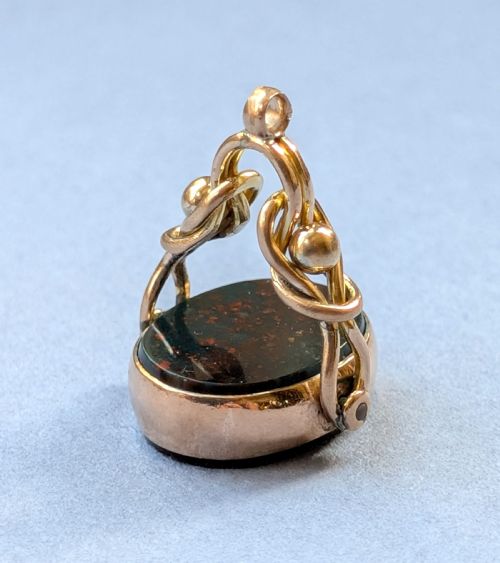
A victorian gold watch fob hangs from a gentleman's waistcoat, offering a glimpse of hardstone and engraved metal.
Victorian Gold Watch Fob
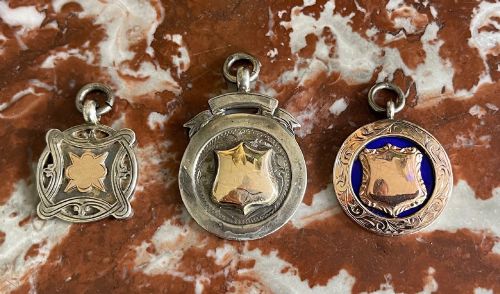
A victorian gold watch fob is a small ornamental pendant suspended from a pocket watch chain, designed to anchor the timepiece in a waistcoat pocket or display heraldic seals. The items gathered here span periods from the Georgian era through the Edwardian years, with a strong representation of Victorian and 19th-century designs.
Originating as practical writing tools or decorative appendages for pocket watches, these items now serve primarily as pendants or bracelet charms. The forms range from simple gold shields to elaborate revolving bezels and figural carvings.
Materials and construction methods
Goldsmiths utilised varying purities of gold, including 9ct, 15ct, and 18ct yellow and rose gold, alongside rolled gold and gold-cased methods over base metals. The warmth of rose gold predominates in many Albert chains and attached fobs from the later 19th century.
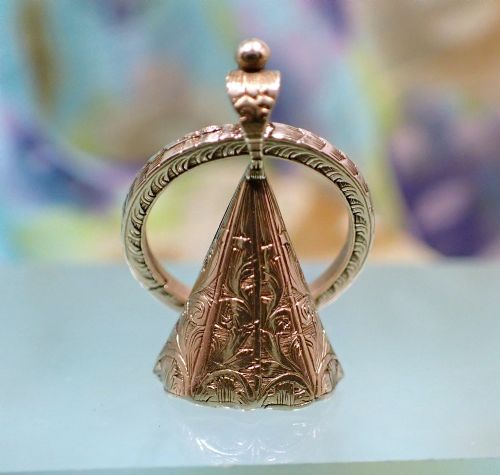
Stone-setting required precise lapidary skill, utilising natural chalcedony, bloodstone, and carnelian cut into flat faces for intaglio engraving or polished smoothly into rounded shields and spheres. Metal components were cast, stamped, or hand-engraved with floral motifs, monograms, and crests.
Among the creatures guarding waistcoats are tiny golden pigs, bugs, and elephants.
Assessing craftsmanship and condition
Quality rests upon the crispness of the hand-engraving on the gold mount and the depth of the intaglio cut into the stone. Superior examples display sharp lettering, well-defined figural details, and secure swivel mechanisms that hold position firmly.
The choice of materials also dictates standing, with solid higher-carat gold and substantial natural stones holding greater distinction than lighter gold-cased or rolled gold alternatives. Intact hallmarks and legible maker stamps add archival depth to a piece.
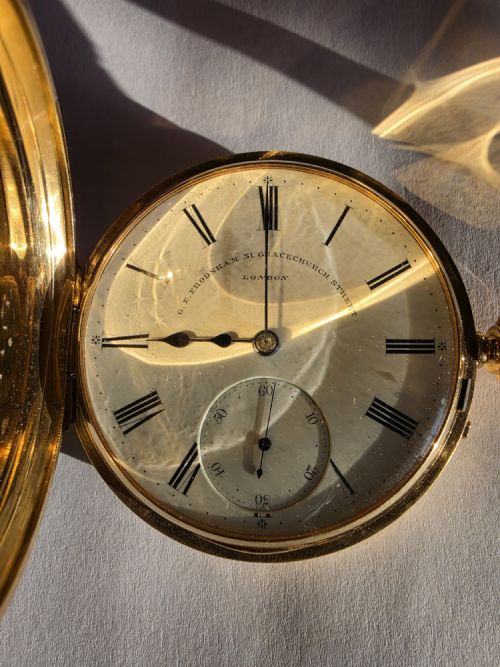
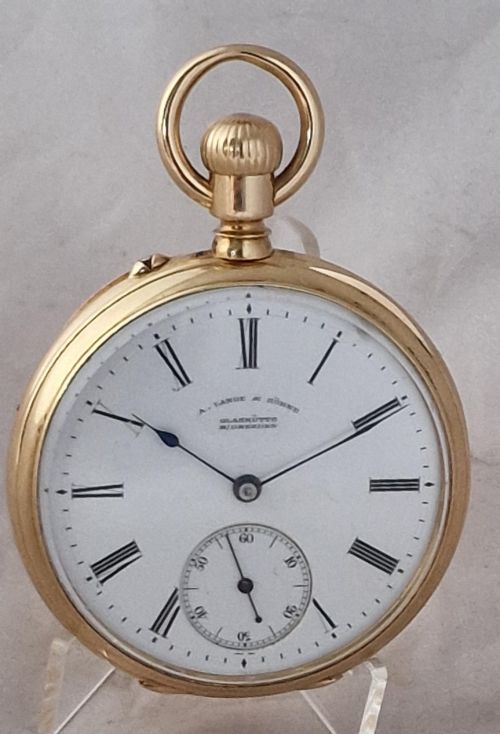
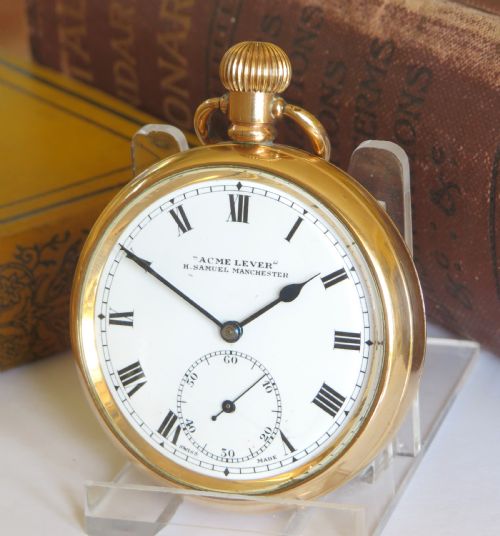
George Edward Frodsham·Lange & Sohne·H Samuel·A. Golay-Leresche Geneve·Baume & Co·J W Benson
The Victorian Gold Watch Fob Glossary
- Fob seal
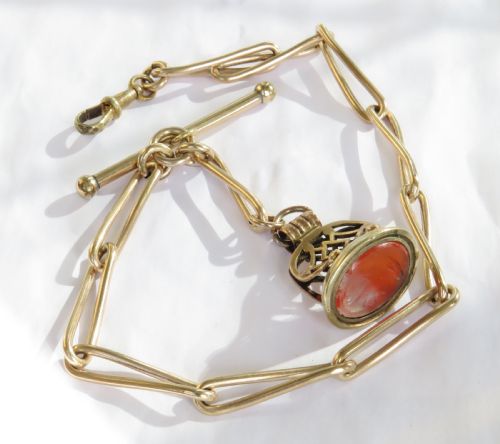
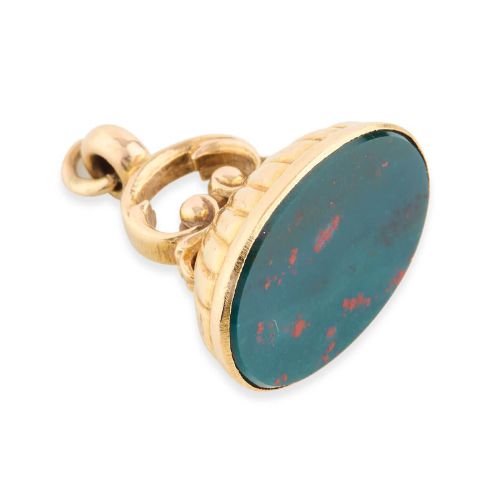
- A small pendant featuring an engraved matrix at the base, originally used to impress a seal into molten sealing wax. These often swivel on a central axis to display two different stones.
- Albert chain
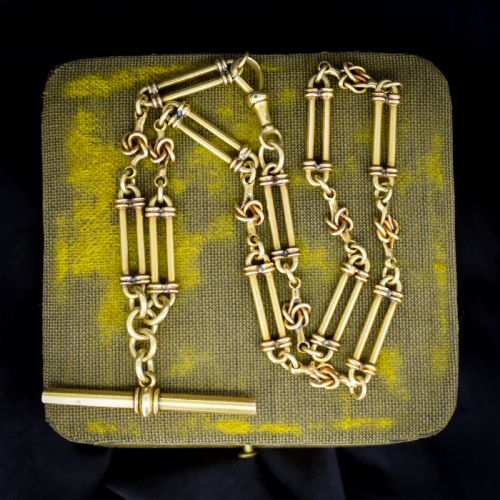
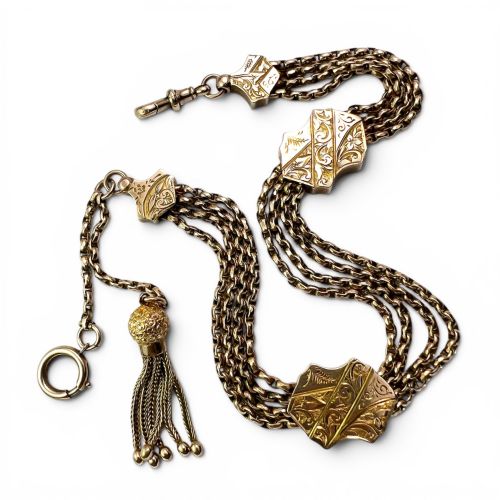
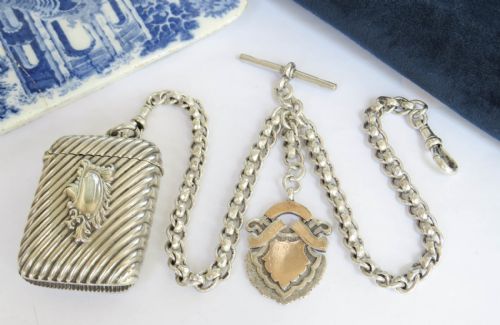
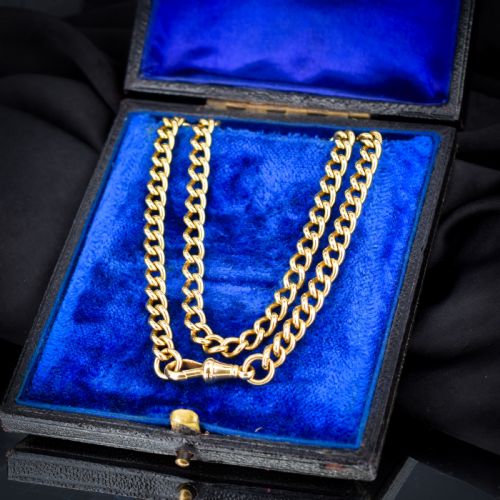
- A type of pocket watch chain designed to pass through a waistcoat buttonhole, named after Prince Albert. It typically carries a T-bar at one end and a swivel clip for the watch at the other.
- Intaglio
- A design carved into the surface of a gem so that an impression raised in relief is produced when pressed into wax. This technique appears frequently on carnelian and bloodstone fob inserts.
- Bloodstone
- A dark green chalcedony flecked with red jasper spots, frequently utilised in 19th-century fob pendants. It provides a striking contrast against yellow or rose gold mounts.
- T-bar
- The crossbar attached to the middle of an albert chain, slipped through a waistcoat buttonhole to secure the chain. It remains a hallmark of Victorian gentleman's accessories.
Victorian Gold Watch Fob: Frequently Asked Questions
What is the difference between a fob and a watch key?
A fob is an ornamental pendant meant to decorate and weight a watch chain, often featuring a decorative stone or seal. A watch key includes a small tubular end specifically designed to wind the movement of a key-wound pocket watch.
While some pieces combined both functions by housing a winding mechanism inside the fob pendant, many served solely as decorative heraldic or personal markers.
Can these fobs still be worn on a modern chain?
Yes, most victorian gold watch fobs feature a jump ring or swivel clip that adapts easily to modern chains or bracelets. Their compact size makes them well-suited for wear as pendant necklaces or charm bracelet additions.
Care should be taken with older swivel mechanisms to ensure they remain secure during daily wear.
What stones are most common in these pieces?
Carnelian and bloodstone are the most frequent hardstones found in 19th-century fobs, often mounted back-to-back in spinning designs. Chalcedony, sardonyx, and agate also appear regularly in various shades of red, green, and grey.
These minerals were chosen for their hardness and suitability for detailed intaglio carving.
How do I know if a piece is solid gold or rolled gold?
Examination of hallmarks stamped on the metal loop or mount provides the primary indication of solid gold purity, such as 9ct or 18ct marks. Rolled gold and gold-cased pieces often show base metal wear at high friction points or lack official assay office stamps.
Weight can also offer a clue, as solid gold pieces generally feel heavier than their gold-filled counterparts.