


Georgian Glass Carafe
A georgian glass carafe brings weighty lead crystal, deep cut facets and rich coloured glass to the table from the eighteenth and nineteenth centuries.
Georgian Glass Carafe
When you search for a georgian glass carafe, you encounter vessels designed for serving water, wine, and spirits on the dining table. These pieces span the eighteenth and nineteenth centuries, taking forms such as heavy lead glass bottles, shoulder decanters, and tall water jugs.
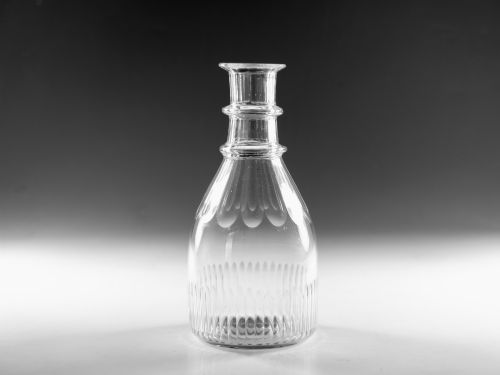
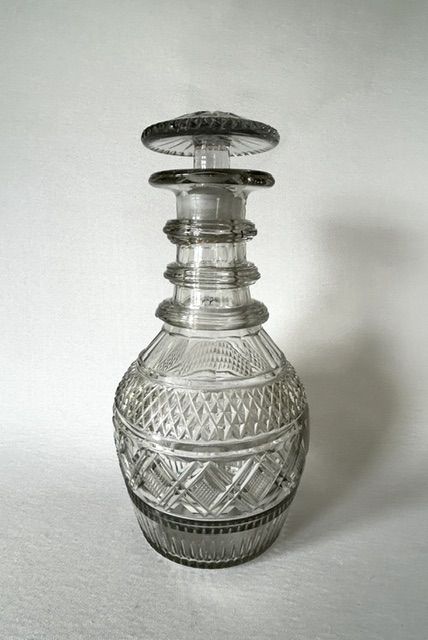
The most common examples on this page date from the Georgian, Regency, and early Victorian periods. You will frequently find mell decanters, three ring spirit bottles, and shaft and globe forms alongside dedicated carafes.
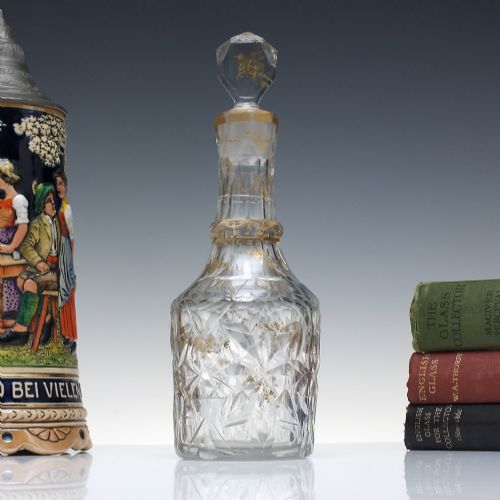
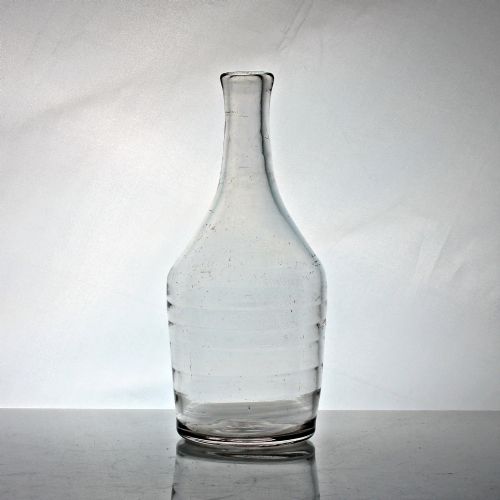
Makers and workshops produced these serving vessels in English and Irish glasshouses, as well as continental centres like Bohemia. They range from simple plain blown glass wine bottles to richly decorated items intended for formal dining.
How they were made
Glassmakers utilised lead glass and lead crystal to achieve the heavy weight and brilliant clarity expected in fine dining ware. Molten metal was blown into iron or wooden moulds, or free blown, then shaped by hand at the bench.
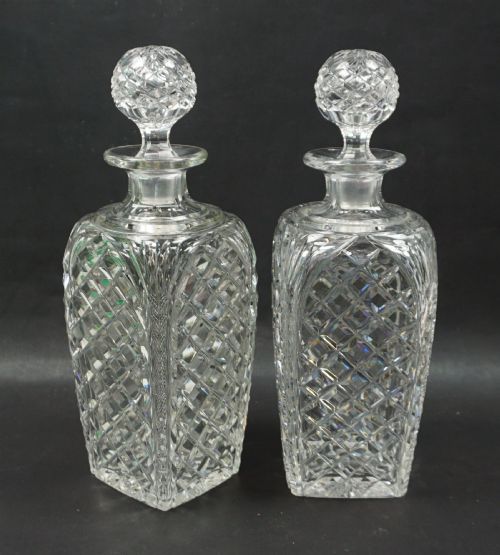
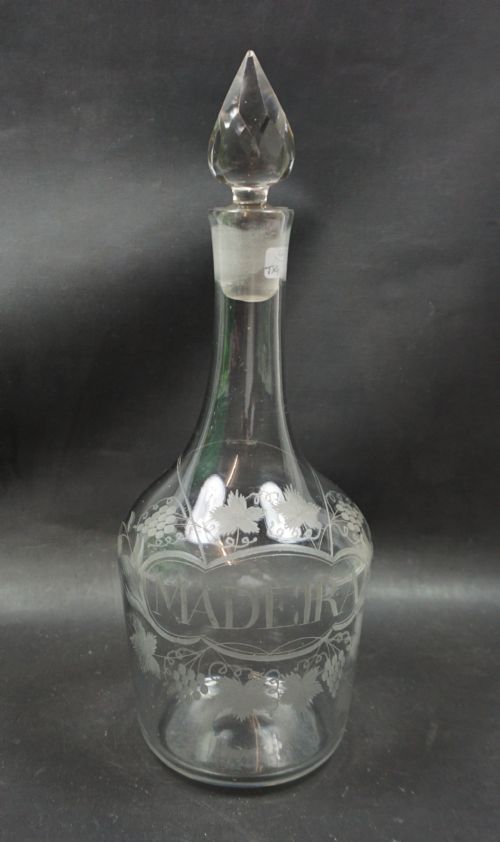
Workers decorated the surface using cutting wheels to create pillar, prism, and diamond facets that caught the candlelight. Other techniques included applied glass rings around the neck, hand engraving, enamel detailing, and gilding with gold leaf.
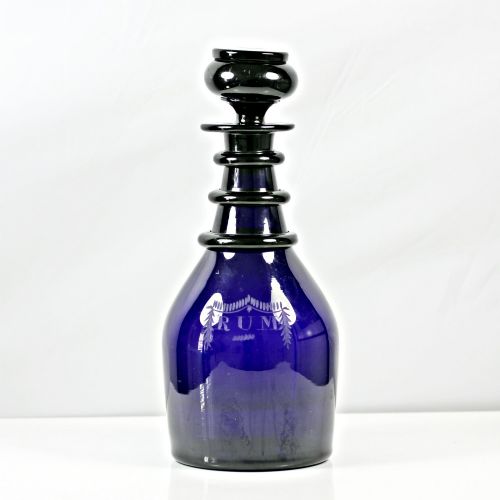
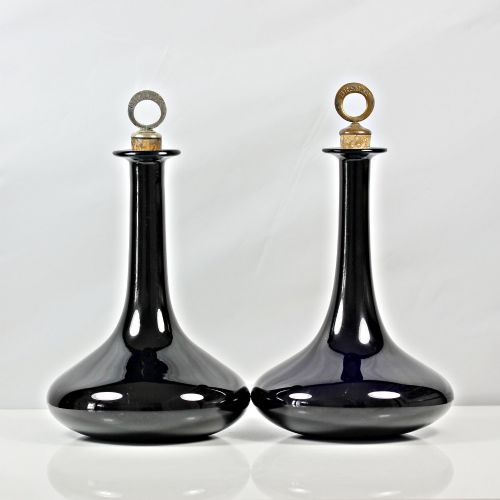
Coloured glass variations such as Bristol blue, green, amber, and amethyst were produced by adding metal oxides to the molten batch before blowing.
Object forms include spirit decanters, water jugs, serving bottles, and wine carafes.
What varies in quality
The quality of a georgian glass carafe depends on the weight and purity of the lead crystal and the crispness of the wheel cutting. Superior pieces display sharp, deep facets that catch the light cleanly without softening at the edges.
Design complexity and colour depth distinguish standard utility vessels from high status items. Rich, uniform tones in Bristol blue or amethyst glass combined with fine hand engraving or gilding indicate superior manufacture.
Atelier of James Giles
The Georgian Glass Carafe Glossary
- Carafe
- A glass container used for serving wine, water, or spirits at the table. These vessels often feature pouring necks and flat bases.
- Lead Crystal
- Glass containing lead oxide, which increases the weight, refractive index, and clarity of the material. This composition allows for deep, sharp cutting.
- Mell Decanter
- A serving bottle with a slender neck and a bulbous, tapering body shaped like a mallet. This form provides stability on the dining table.
- Lynn Rings
- Applied horizontal glass ridges encircling the neck of a decanter or carafe to ensure a secure grip for pouring. They are sometimes called neck rings.
- Pillar Cut
- A decorative technique involving wide, vertical flutes cut into the body of the glass vessel. It creates strong optical reflections.
Georgian Glass Carafe: Frequently Asked Questions
How do I use a georgian glass carafe?
These vessels serve water, wine, or spirits at the dining table, much as they did centuries ago. Their heavy bases and secure necks make them practical for everyday serving.
Hand wash them carefully in warm water to protect the historic glass and any delicate surface engraving or gilding.
How do I tell periods apart?
Earlier eighteenth century examples often feature simpler blown shapes like shaft and globe forms, or delicate wheel engraving. Regency and early Victorian pieces frequently introduce heavy cut pillar patterns, three neck rings, and vibrant coloured glass.
Examining the pontil mark on the base and the weight of the lead crystal helps determine the manufacturing era.
What is a mell decanter?
A mell decanter is a serving bottle shaped like a mallet, featuring a tapering body that provides stability during dining. This specific silhouette became popular during the Georgian period for holding wines and spirits.
They often incorporate multiple neck rings for grip and matching stoppers.
Why are some pieces coloured?
Glasshouses added metal oxides to the molten batch to produce striking colours such as Bristol blue, green, amber, and amethyst. These hues helped protect certain contents from light while adding visual richness to the table.
Coloured variants are particularly sought after by collectors of nineteenth century glassware.