



Georgian Giltwood Sconces
Georgian giltwood sconces are luminous wall lights and mirrors that bring warmth and architectural presence to a room.
Georgian Giltwood Sconces
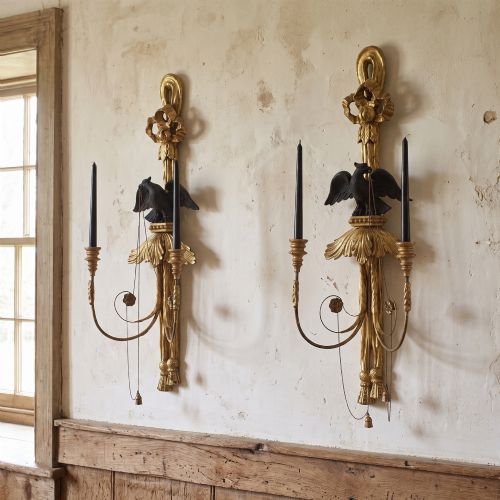
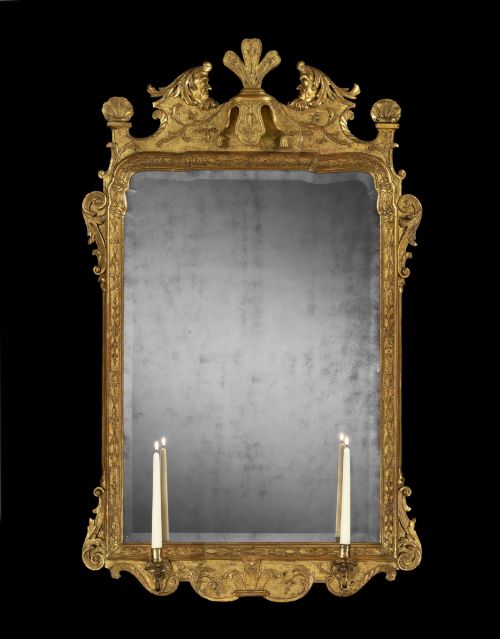
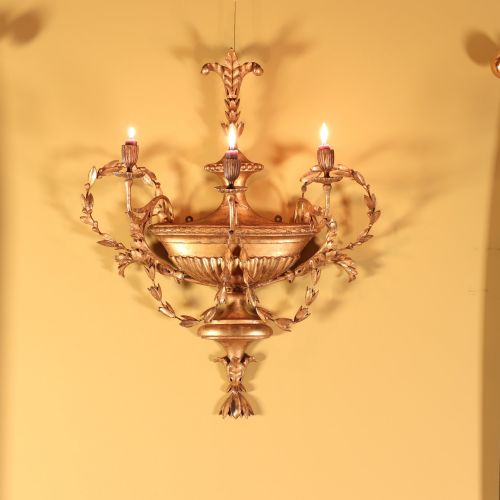
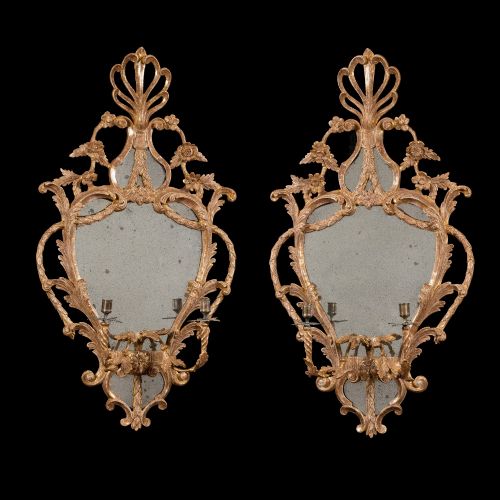
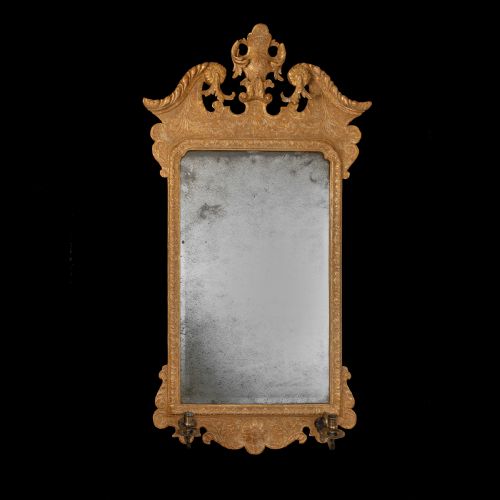
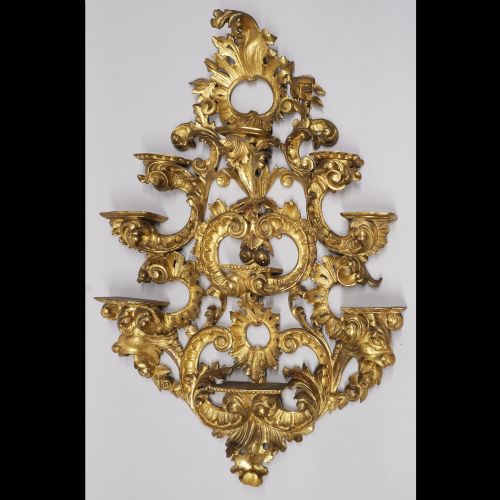
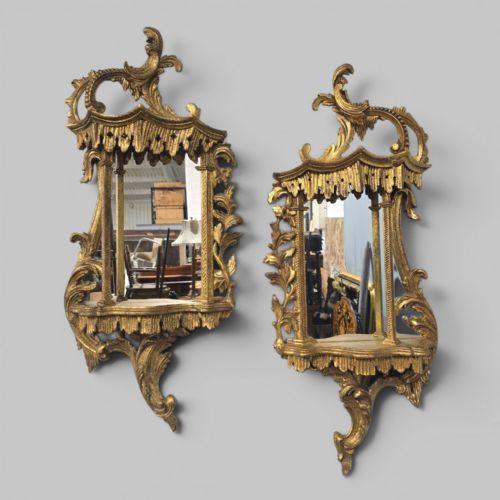
Georgian giltwood sconces encompass wall lights, girandole mirrors, and carved brackets originating from the eighteenth century onwards. Buyers searching for georgian giltwood sconces typically encounter carved wooden fixtures finished in gold leaf or gesso, often paired with glass plates or brass arms.
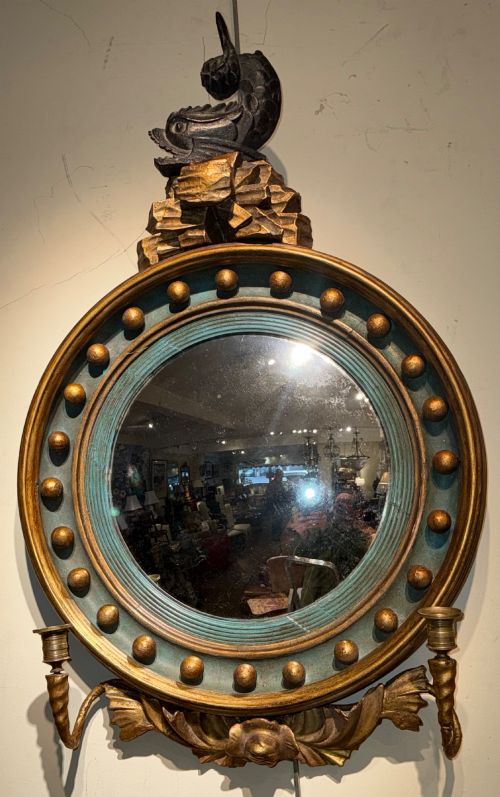
The selection ranges from early eighteenth-century George I and George II gesso pieces to later Regency convex mirrors and nineteenth-century revival styles. Wall brackets and multi-branch sconces frequently appear alongside circular girandole mirrors flanked by candle arms.
Originating in grand domestic interiors, these items served both to illuminate dark panelled rooms and to reflect candlelight across gilded surfaces. Surviving examples demonstrate the enduring appeal of classical ornamentation and carved timber within period and modern settings alike.
How they were made
Makers shaped structural elements from timber such as pine or hardwood, applying fine layers of gesso to build up intricate relief decoration before gilding. Gold leaf was meticulously laid over bole to create a brilliant metallic surface that catches low candlelight.
Mirrors incorporated heavy glass plates, sometimes bevelled or convex, held within rebated frames and secured with wooden backs. Metal components, particularly brass candle branches, were cast and fitted to support lighting in the principal reception rooms.
The inventory records wall brackets, girandole mirrors, and multi-branch wall sconces executed in Rococo Revival and Neoclassical styles.
What varies in quality
Carving depth and sharpness dictate the visual hierarchy of these objects, separating flat, mechanical work from spirited, deeply undercut foliage and figures. The crispness of gesso moulding before gilding determines how well relief ornament holds its definition under changing light.
Original gilding surfaces, showing natural wear through gold leaf to the red bole beneath, hold greater integrity than later repainted or heavily restored finishes. The structural cohesion of the timber frame and the authenticity of the glass plate further define the standing of any given piece.
Benjamin Goodison
The Georgian Giltwood Sconces Glossary
- Giltwood
- Timber covered with a thin layer of gold leaf. This finish defines the reflective surfaces of these wall fixtures.
- Gesso
- A plaster mixture applied to wood surfaces and carved in relief. It provides the smooth base required for fine gilding.
- Girandole
- A branched wall-light or candle sconce incorporating a mirror. The glass plate multiplies the candle illumination.
- Convex mirror
- A circular looking glass with a bulging curved surface. It provides a wide, distorted panoramic reflection of the interior.
- Bole
- A prepared clay layer applied beneath gold leaf. Its reddish tone shows through worn areas of gilding over time.
Georgian Giltwood Sconces: Frequently Asked Questions
How do I hang a heavy sconce?
Secure heavy timber and gesso pieces directly into wall studs using appropriate fixings to support the combined weight of wood, glass, and metal branches.
Ensure the hanging wire or integrated brackets distribute the load evenly to prevent strain on the antique frame.
Were these pieces used with candles?
Original branch sconces and girandoles held wax or tallow candles to illuminate rooms before the introduction of gas and electric lighting.
Many surviving examples retain their brass drip pans and candle nozzles designed for this purpose.
How do I date a sconce?
Examine the carving style, wood type, and construction methods to align the piece with documented design periods like George II or Regency.
Secondary woods at the back and the composition of the gesso layer provide further clues to the manufacturing era.