



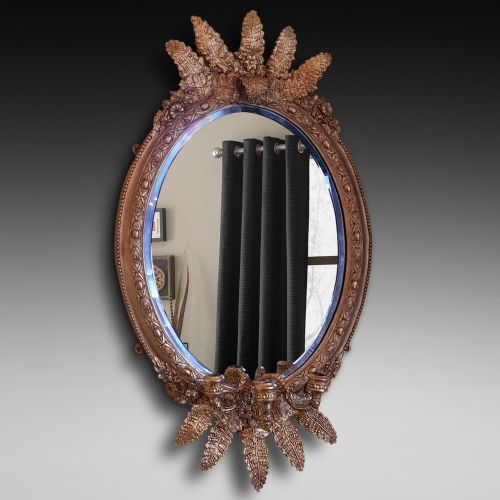
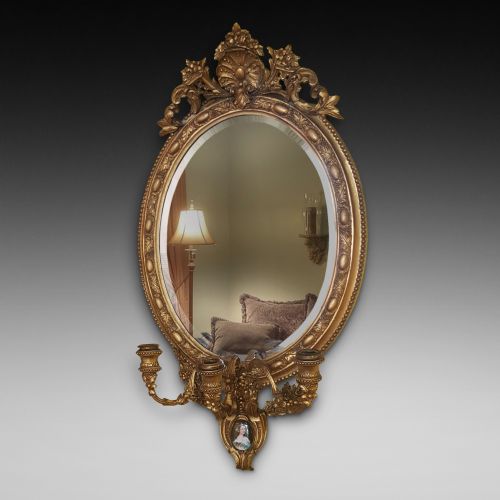

Oval Gilt Mirror Sconces
Oval gilt mirror sconces combine reflective glass with candle brackets, bringing historic light and decorative depth to any interior wall.
Oval Gilt Mirror Sconces
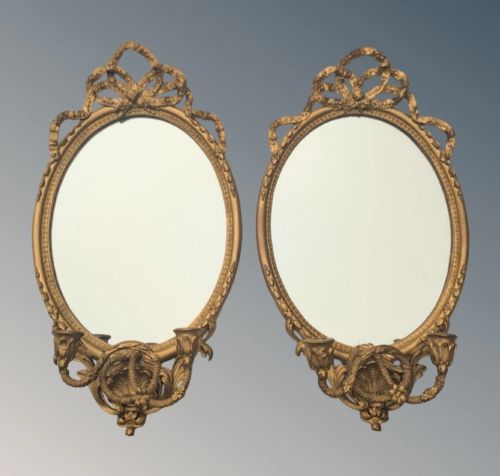
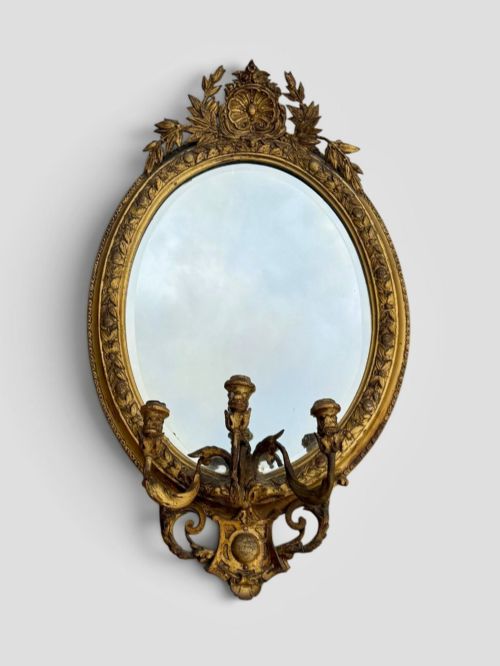
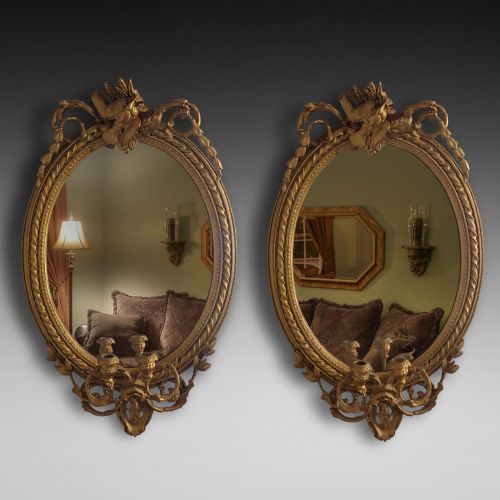
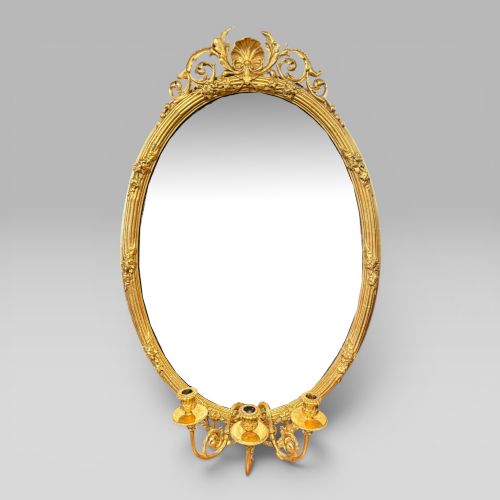
Oval gilt mirror sconces encompass wall-mounted looking glasses featuring integrated candle arms, emerging in styles from the eighteenth century through to the early twentieth century. When exploring oval gilt mirror sconces, buyers encounter forms that range from restrained neoclassical frames to elaborate Victorian rococo revival and French Belle Époque designs.
The pieces listed on this page span the eighteenth century, the nineteenth century, and the early twentieth century, including Victorian examples and later 1920 creations. These items primarily function as wall mirrors and girandoles, reflecting candlelight while serving as prominent decorative focal points within a room.
Makers and artisans utilised specific regional aesthetics, producing French chateau interpretations alongside British Victorian pieces. The resulting inventory offers buyers a diverse selection of oval formats, rope twist motifs, and ornate carved wooden frames.
How they were made
Artisans constructed these frames using timber, gesso, plaster, and metal, applying gold leaf or paint to achieve a brilliant metallic finish. Carved giltwood and moulded gesso allowed craftsmen to create intricate surface relief, floral motifs, and scrollwork.
Metal components, including brass and gilt brass, provided structural support for protruding candle arms on girandole pieces. Glass plates were silvered and set securely within the prepared rebates of the ornate frames.
Rope twist frames add a jaunty nautical touch to formal nineteenth-century drawing rooms.
What varies in quality
The standard of carving and moulding separates simpler production from exceptional craftsmanship, visible in the crispness of floral details and scrollwork. Deeply undercut wooden frames demonstrate superior manual skill compared to heavier plaster or composition alternatives.
The integrity of the original gilt surface and the preservation of the underlying gesso define the visual cohesion of the piece. Additionally, the clarity and age of the glass plate contribute significantly to the overall character and historical authenticity.
The Oval Gilt Mirror Sconces Glossary
- Giltwood
- Wood that has been decorated with gold leaf or gold paint. This technique provides a durable and reflective metallic surface across the carved frame.
- Girandole
- A decorative wall mirror fitted with one or more candle branches. The reflective glass multiplies the flickering light of the candles.
- Gesso
- A plaster-like mixture applied to wood surfaces as a base for gilding. It allows craftsmen to model intricate low-relief ornamentation.
- Rococo Revival
- A nineteenth-century design style characterised by asymmetry, C-scrolls, and naturalistic plant motifs. This aesthetic heavily influenced many Victorian mirror frames.
- Neoclassical
- A style inspired by classical antiquity, emphasising symmetry, straight lines, and restraint. It contrasts sharply with the exuberant curves of the rococo style.
Oval Gilt Mirror Sconces: Frequently Asked Questions
What is a girandole mirror?
A girandole is a wall mirror that incorporates candle brackets extending from the frame. The reflective glass surface enhances the illumination cast by the candles.
These pieces were historically placed between windows or above mantelpieces to maximise ambient light in a room.
How do I date these mirrors?
Dating relies on stylistic clues, framing materials, and construction techniques visible in the woodwork or metalwork. Victorian pieces often display heavy gesso and revival motifs, while eighteenth-century examples feature distinct hand-carved details.
Examining the reverse of the frame and the characteristics of the glass plate provides further evidence of age.
Where should I hang a sconce mirror?
These mirrors suit spaces where reflected light and decorative presence enhance the interior, such as hallways or living rooms. Historically, they hung on piers between windows to bounce daylight back into the room.
Ensure the wall construction safely supports the combined weight of the wood, metal, and glass.
Are all these frames solid wood?
No, makers combined various materials including gesso, plaster, and metal alongside wood bases. Gesso was frequently moulded over a wooden substrate to achieve intricate decorative relief.
Metal components like brass appear particularly on girandole arms and twentieth-century variations.