

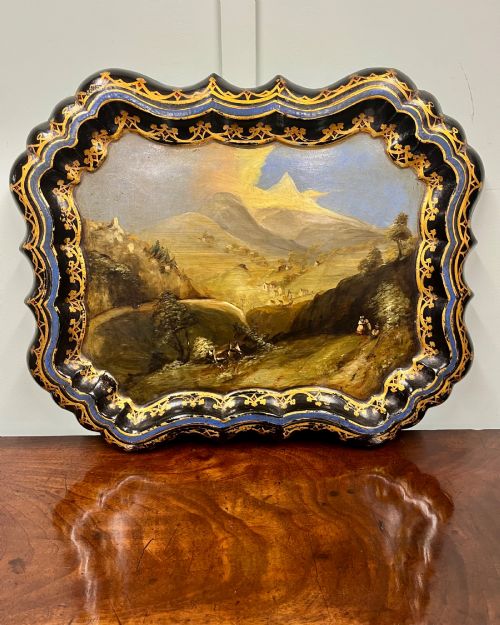
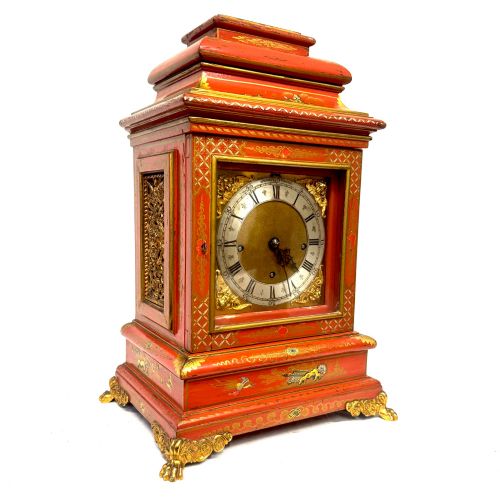
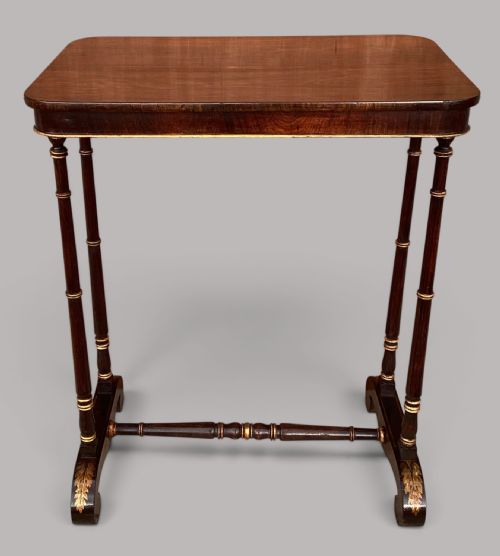
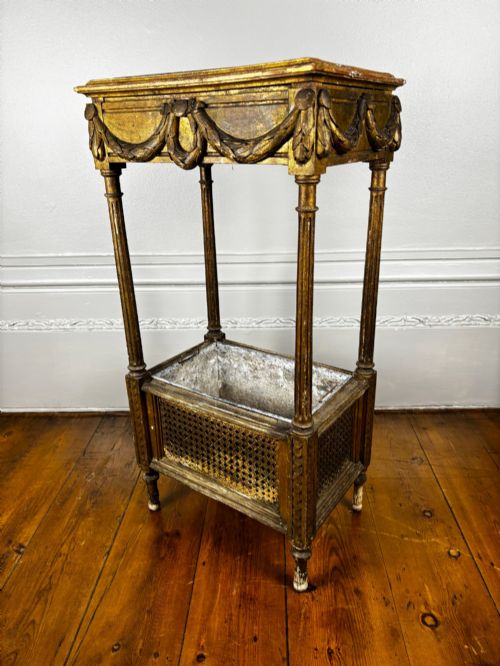


Georgian Gilt Table
A georgian gilt table brings formal polish to a room, offering a reflective surface and carved detail born of the eighteenth and nineteenth centuries.
Georgian Gilt Table
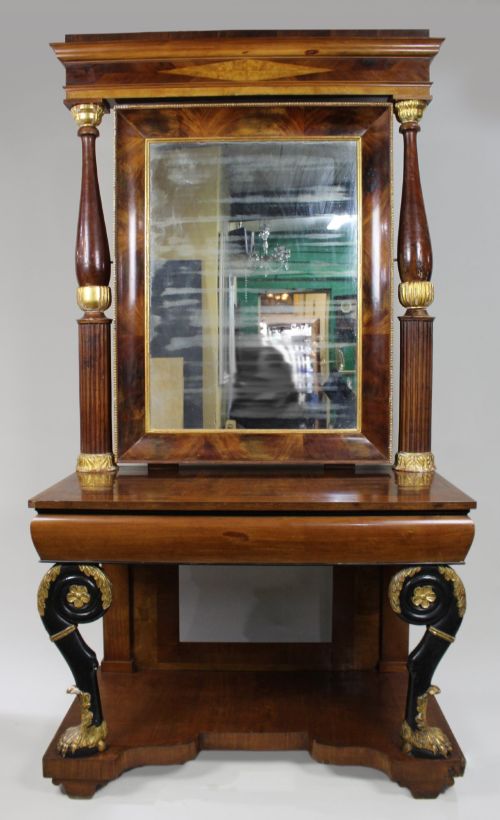
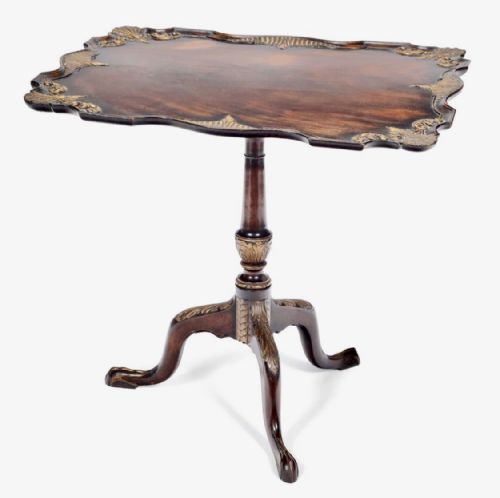
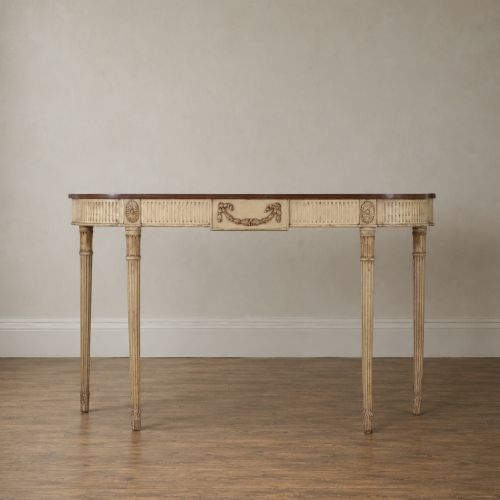
A search for georgian gilt table reveals console tables, side tables, and occasional tables shaped by Georgian, Regency, and Neoclassical design. These pieces often feature painted or giltwood surfaces designed to catch the light in a formal interior.
The pieces on this page span the 18th century, 19th century, and later Victorian revivals, demonstrating how makers returned to these ornamented forms across generations. Console and side tables dominate the selection, frequently paired with marble tops or parcel gilt accents.
Buyers encounter variations ranging from mahogany structures with parcel gilt details to full giltwood constructions. Each form reflects the decorative ambitions of its period, whether through the restrained lines of earlier work or the bolder curves of later styles.
Materials and Construction
Makers built these tables using timber foundations such as mahogany and rosewood, applying gold leaf or gesso to create the characteristic reflective surface. Wood carving provides the structural detail beneath the gilt finish.
Surface ornament often incorporates parcel gilt techniques, highlighting specific carved motifs against dark wood or painted grounds. Marble tops frequently complete the tables, adding weight and a cool tactile contrast to the gilded framework.
Georgian Gilt Table Retail Price Guide 2026
Typical asking prices for georgian gilt table among the pieces listed under this phrase on Sellingantiques today, from the lower quarter to the upper quarter. They describe what is for sale here now, not the wider market.
Materials across these listings include gold leaf, giltwood, mahogany, rosewood, brass, and marble.
Distinctions in Quality
Quality rests in the precision of the carving and the application of the gold leaf or gesso. Finer pieces display crisp botanical or classical motifs modelled by hand rather than cast in simpler compositions.
The integrity of the underlying timber and the preservation of the original gilt surface dictate the standing of an individual table. Structural balance and the harmonious integration of marble tops or painted panels further separate standard examples from superior work.
Rebecca Emes and Edward Barnard I·Thomas Shaw·David Hennell·William Bateman
The Georgian Gilt Table Glossary
- Parcel gilt
- A decoration method where only specific areas of an object receive gold leaf, leaving the underlying wood or paint exposed elsewhere. This technique creates contrast between the dark timber and the bright metallic highlights.
- Giltwood
- Timber that has been coated with a thin layer of gold leaf over a prepared base of gesso and size. It provides a luminous finish commonly found on formal furniture.
- Gesso
- A plaster mixture applied to wood surfaces as a smooth preparation layer before gilding or painting. It allows carvers to achieve sharp relief details that hold gold leaf effectively.
- Console table
- A table designed to stand against a wall, frequently supported by decorative brackets or legs rather than a full four-legged frame. These pieces often carry heavy marble or painted tops.
- Neoclassical
- A style drawing inspiration from classical antiquity, characterised by symmetry, straight lines, and restraint. It appears frequently in the decorative vocabulary of late eighteenth and early nineteenth century furniture.
Georgian Gilt Table: Frequently Asked Questions
Where should a gilt table live?
These tables find their natural home in entrance halls, drawing rooms, or principal reception spaces where formal furniture belongs.
Their reflective surfaces and decorative carving work best against plain walls that allow the silhouette and finish to stand out.
How do I clean a gilt surface?
Dusting requires a soft, dry brush or a feather duster to protect the delicate gold leaf layer from abrasion.
Moisture and chemical cleaners cause damage to gesso and gilding, so liquid products must stay away from the surface.
Are marble tops original?
Many console and side tables paired marble slabs with gilded wooden bases during the eighteenth and nineteenth centuries.
Examining the underside reveals whether the stone sits correctly within the original rebate of the wooden frame.
How do I date a gilt table?
Dating relies on observing the secondary timbers, the style of the carved ornament, and the composition of the gesso base beneath the gold.
Neoclassical motifs suggest the late eighteenth or early nineteenth century, while heavier proportions often point towards Victorian revivals.