





Georgian Gilt Chair
A georgian gilt chair brings immediate architectural presence and rich surface light to a room through carved wood and burnished gold leaf.
Georgian Gilt Chair
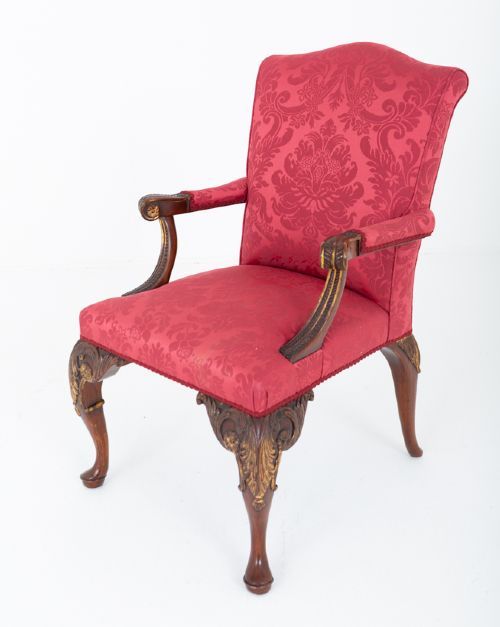
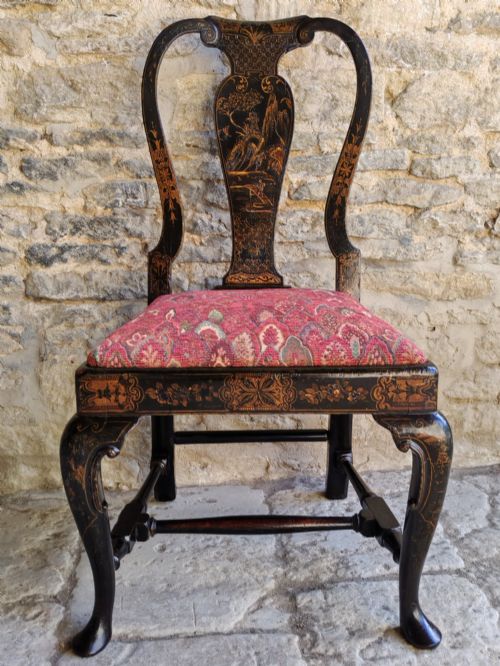
A georgian gilt chair spans elegant seating forms designed during the eighteenth and nineteenth centuries, taking the shape of armchairs, side chairs, dining chairs, and window seats. Buyers encounter pieces originating across the Georgian, Regency, and nineteenth-century periods, alongside later twentieth-century interpretations.
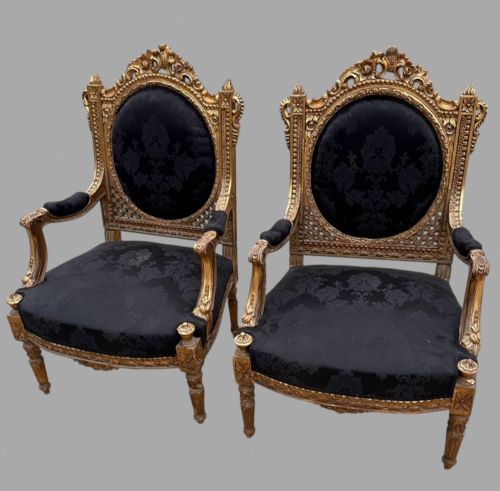
The selection frequently includes armchairs and side chairs finished in painted wood, parcel gilt, or full gold leaf. Maker attribution appears on select examples, including pieces associated with Waugh & Son and Gillows.
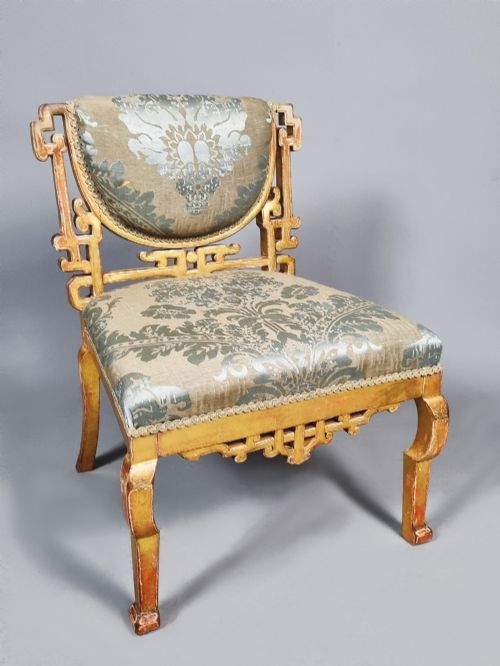
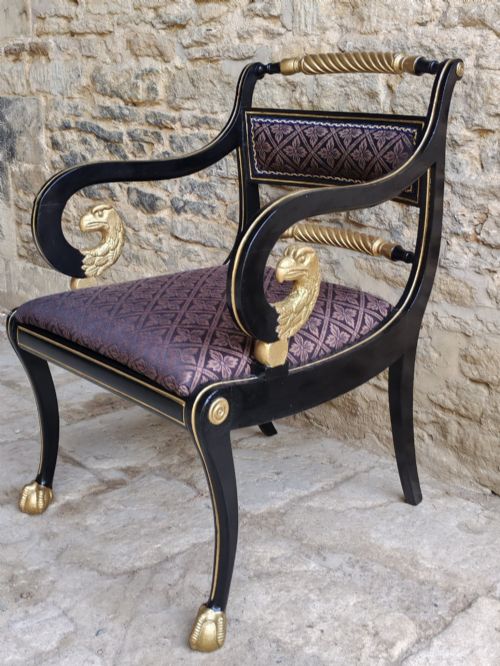
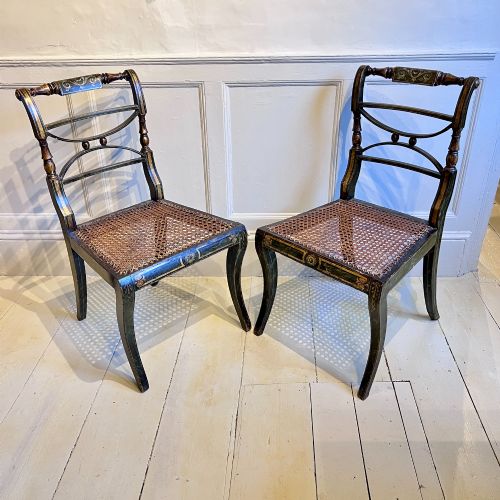
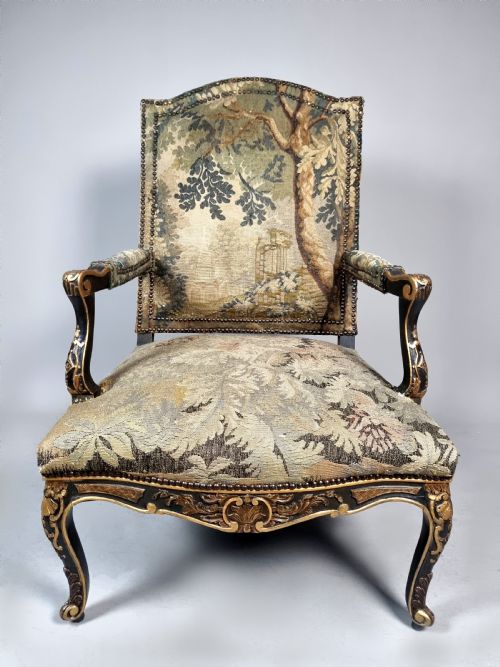
Styles range widely across the inventory, incorporating George III, Regency, Grand Regency, Chinese Chippendale, Queen Anne, and George III Neoclassical designs. Many items utilise cane seating, fabric upholstery, or simulated satinwood to complement the gilded frames.
How they were made
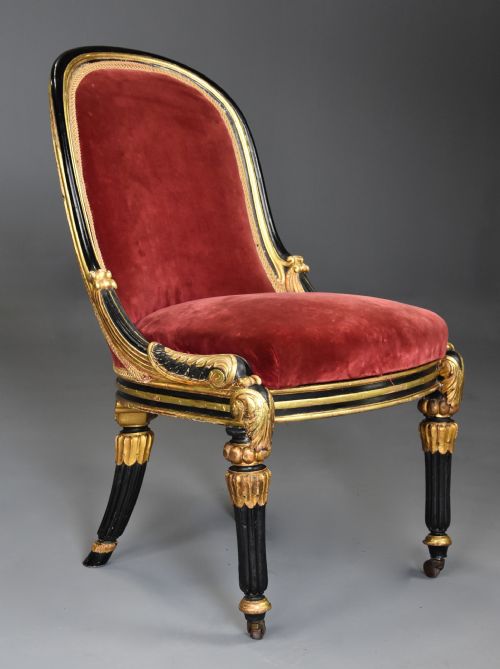
Craftsmen built these chairs from timber frames, applying layers of gesso before laying down gold leaf or parcel gilt surfaces. Ebonised finishes and paint were also utilised to contrast against the bright metallic highlights.
Carving defined the structural ornaments, with Chinese Chippendale, George III, and Neoclassical motifs hand-chiseled directly into the wood. Cane panels and upholstered fabric seats were integrated into the frames using traditional hand-weaving and tacking methods.
Georgian Gilt Chair Retail Price Guide 2026
Typical asking prices for georgian gilt chair among the pieces listed under this phrase on Sellingantiques today, from the lower quarter to the upper quarter. They describe what is for sale here now, not the wider market.
Object types span armchairs, side chairs, dining chairs, settees, and window seats or stools across multiple stylistic traditions.
What varies in quality
The crispness of the hand-carved ornament and the depth of the gesso preparation beneath the gold leaf dictate the visual standard of the piece. Superior examples exhibit fluid lines and precise jointing that survive structural stress over centuries.
Surface preservation separates standard items from exceptional ones, particularly regarding the intactness of the original gilding, paint, and cane work. Attribution to documented makers like Gillows or Waugh & Son further elevates the standing of a chair.
Waugh & Son·Gillows
The Georgian Gilt Chair Glossary
- Giltwood
- Wood that has been coated with gold leaf or powder over a prepared gesso ground. This finish catches ambient light and provides a brilliant metallic sheen.
- Parcel Gilt
- A decorative treatment where only specific carved details or raised ornaments are gilded, leaving the underlying painted wood or natural timber exposed.
- Chinoiserie
- European interpretations of Chinese and East Asian artistic motifs, frequently seen in the whimsical framing and decorative scenes of eighteenth-century seating.
- Cane
- Plant material woven into open mesh patterns to form lightweight, breathable seat panels. It appears on numerous Regency and eighteenth-century side chairs.
- Gesso
- A plaster mixture applied to wood frames to create a smooth, absorbent base for laying gold leaf. The quality of this foundation determines how well the gilding reflects light.
Georgian Gilt Chair: Frequently Asked Questions
How do I identify a true georgian gilt chair?
Examine the construction methods, timber types, and surface preparation to understand the age of the frame. Genuine period pieces display hand-carved details and traditional joinery rather than modern fasteners.
Look closely at the gesso and gold leaf application for signs of genuine ageing and wear. Makers' signatures or historical attribution records can also confirm authenticity.
Can I use these chairs for daily dining?
Many dining chairs and side chairs from the Georgian and Regency periods remain structurally sound for regular use. However, delicate cane-work and fragile gilded surfaces require careful handling.
Consider the weight capacity and structural integrity of each individual piece before placing it into heavy daily rotation. Protective measures can help preserve vulnerable antique finishes.
What is the difference between George III and Regency styles?
George III designs often feature classical proportions, elaborate carved mahogany or painted frames, and distinct influences like Chinese Chippendale or Neoclassical motifs. These pieces date from the mid to late eighteenth century.
Regency style emerged during the early nineteenth century, introducing bolder lines, ebonised finishes, simulated satinwood, and ancient Roman or Greek inspirations. Gilded armchairs and painted settees became particularly fashionable during this later era.