

Georgian Games Furniture
Georgian games furniture encompasses the clever folding tables and multifaceted boards designed for card play and social pastimes.
Georgian Games Furniture
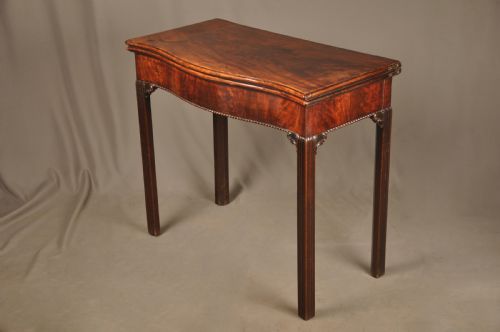
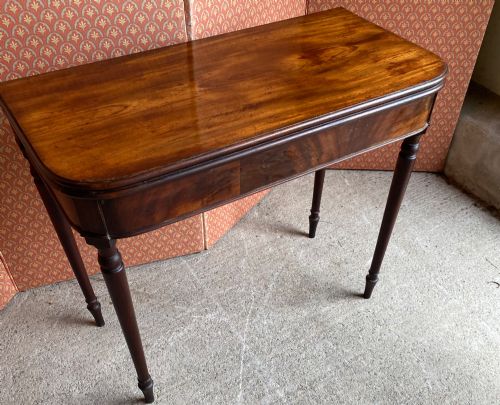
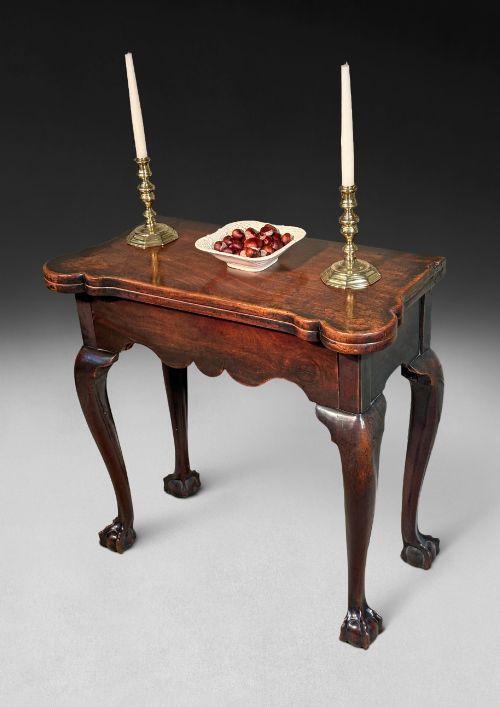
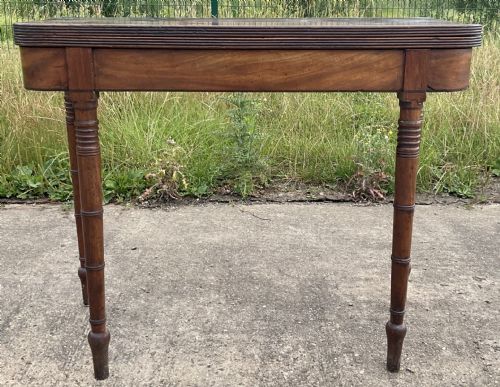
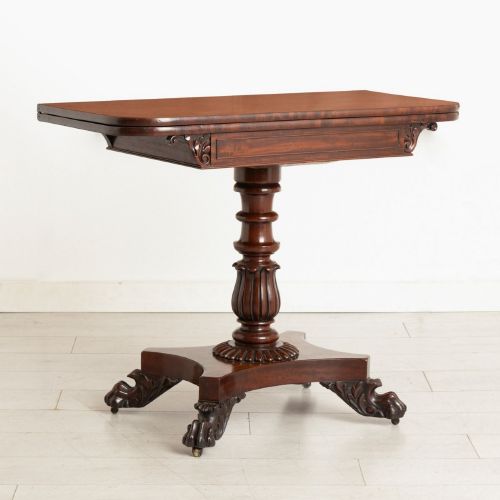
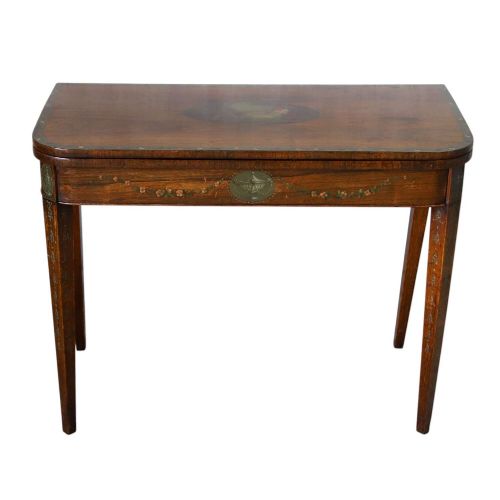
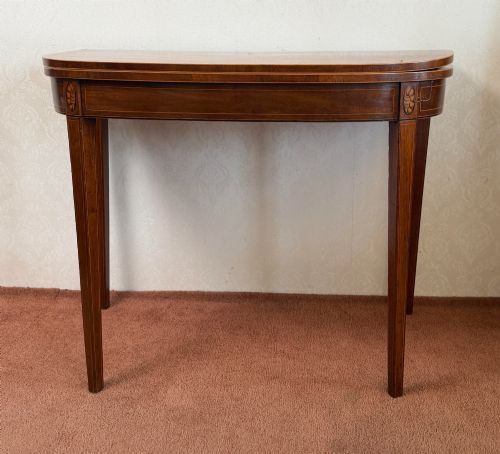
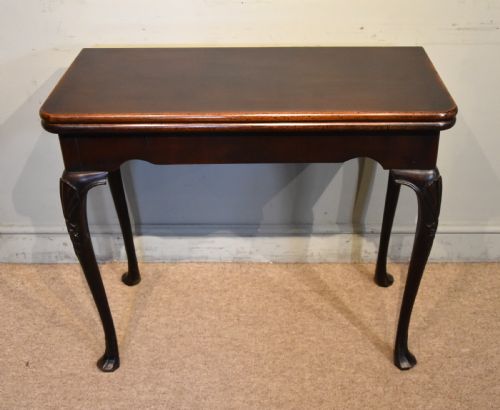
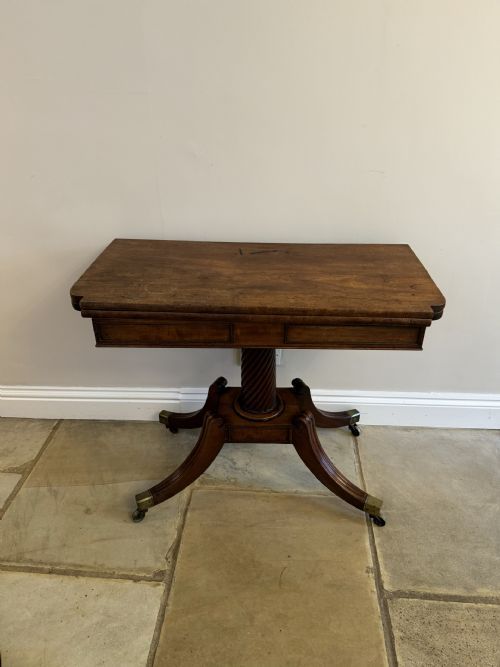
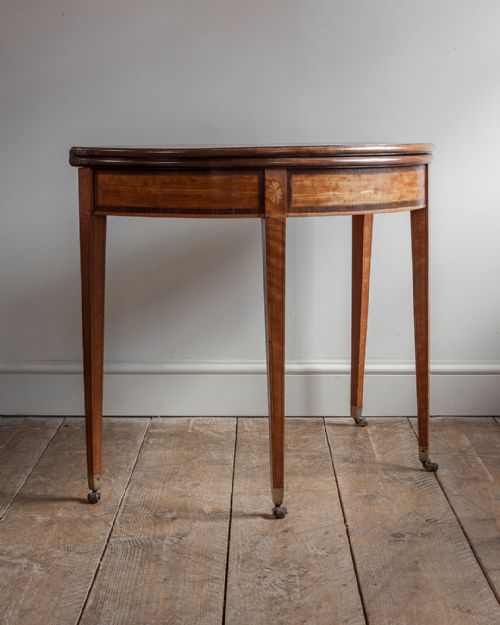
Georgian games furniture comprises specialised tables built for card play and social entertaining, spanning the 18th century, the Regency era, and subsequent revivals. The listings demonstrate a prevalence of card tables, tea tables, and console tables that feature fold-over tops and convertible surfaces for various pastimes.
Makers of these pieces worked across distinct stylistic phases, ranging from George II and George III designs to Sheraton and Regency interpretations. Materials shift from early solid walnut and mahogany to later applications of satinwood, rosewood, and exotic crossbandings.
Materials and construction
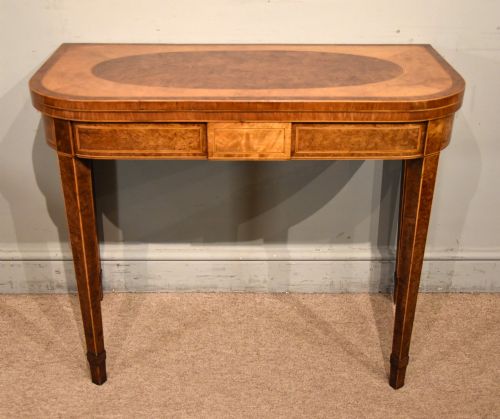
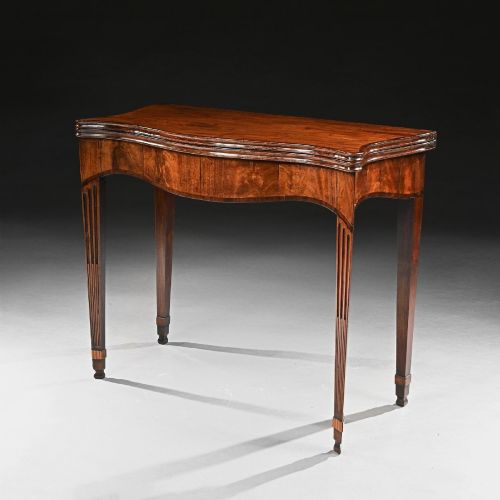
Cabinetmakers utilised dense timbers such as Cuban and Honduras mahogany, walnut, and rosewood as the structural foundation for these folding tables. Surfaces frequently showcase decorative veneers, including burr yew, satinwood, and kingwood, often enhanced with marquetry inlay or brass stringing.
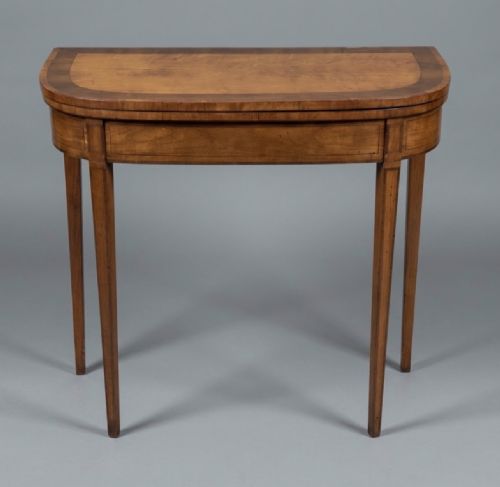
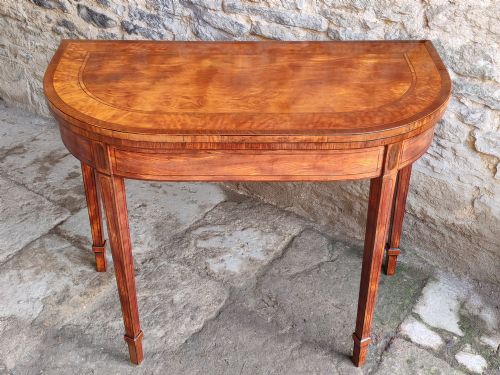
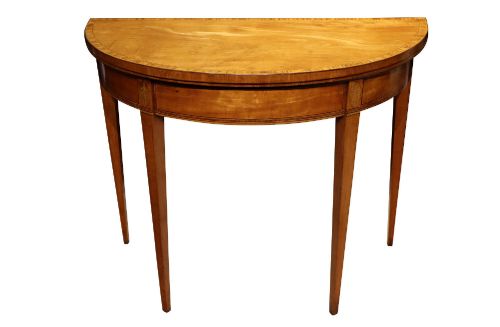
Construction techniques centred on clever pivoting mechanisms, folding leaves, and trifold tops that concealed wells for counters or alternative playing surfaces. Crossbanding and geometric stringing defined the outer borders of the demi-lune and rectangular tops.
Some tables double as sneaky repositories, hiding secret wells for counters and cards beneath unassuming fold-over tops.
Distinctions in craftsmanship
The division between standard workshop production and superior execution rests upon the selection of timber and the precision of the cabinetwork. Tables featuring highly figured mahogany, intricate marquetry, or carefully matched satinwood veneers demonstrate a higher tier of manufacture.
The integrity of the folding and pivoting mechanisms dictates the functional success of each piece. Refined examples integrate secret drawers, combination work spaces, or penwork decoration that remains crisp and undisturbed through centuries of use.
The Georgian Games Furniture Glossary
- Demi-lune
- Having a half-moon shape. This semicircular form allows tables to sit flat against a wall when folded.
- Crossbanding
- A strip of veneer applied to the border of a table top so that the grain runs at right angles to the central panel. It frames the primary wood with a contrasting decorative edge.
- Trifold
- A tabletop constructed with three folding sections. This configuration expands to reveal multiple functional surfaces.
- Penwork
- A decoration technique using ink applied to wood to create delicate illustrative motifs. It appears on select Regency tables.
Georgian Games Furniture: Frequently Asked Questions
How do you use a fold over card table?
A fold-over card table operates by lifting and rotating the hinged top leaf to rest upon an expanded gateleg or swinging frame. This mechanism doubles the surface area to create a stable table for cards or writing.
When not in use, the leaf folds back down and the table returns to a slim console profile suitable for placement against a drawing room wall.
What wood was used for georgian tables?
Cabinetmakers primarily used mahogany, including dense Cuban and Honduras varieties, alongside walnut during earlier decades. Tables also feature exotic decorative timbers such as rosewood, kingwood, and satinwood.
Finer examples incorporate contrasting veneers like burr yew or elaborate marquetry inlay to accentuate the geometric form of the top.
How to date a regency games table?
Dating a Regency games table involves examining the timber selection, decorative motifs, and hardware characteristic of the early nineteenth century. Rosewood and kingwood veneers, brass inlay, and specific pedestal or saber leg configurations point toward this period.
Makers of the era often embraced classical revival styles, diverging from the earlier rectilinear proportions associated with George III designs.