
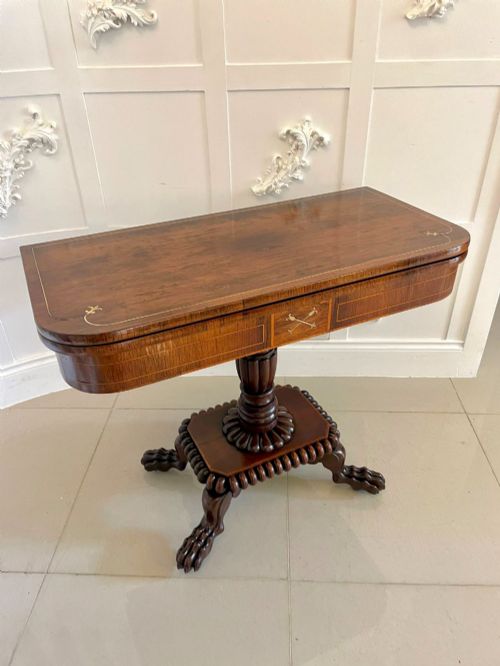
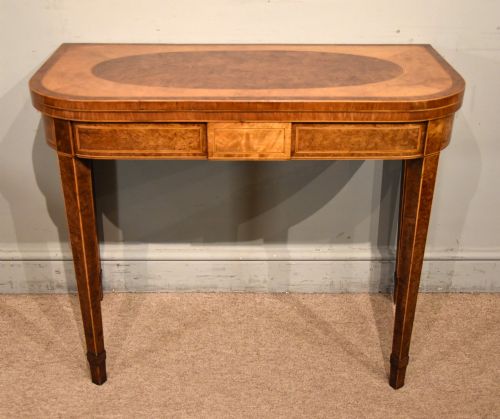
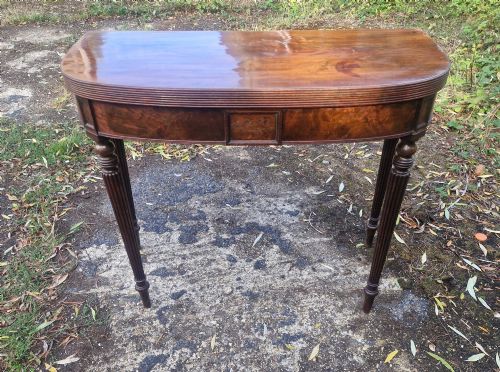
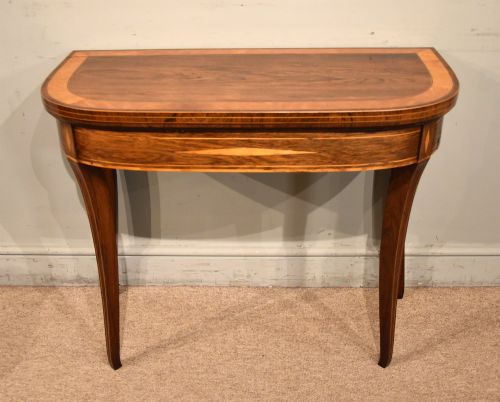

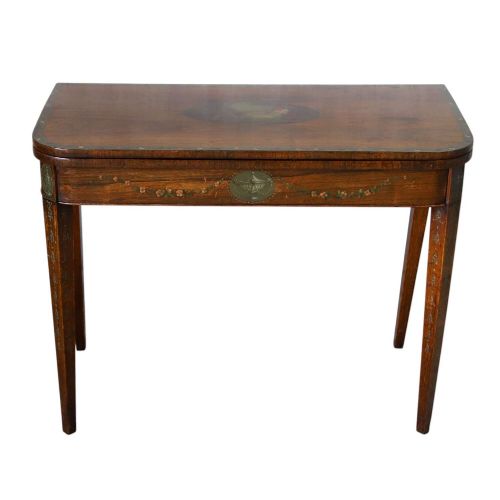
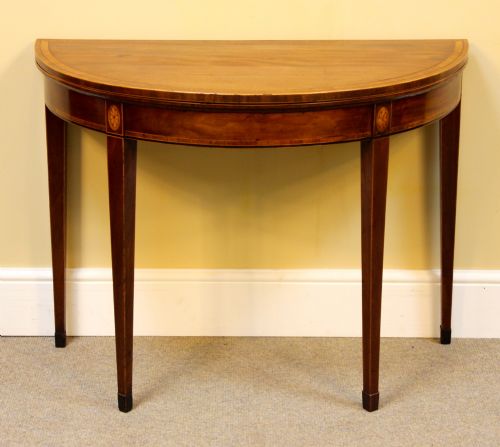
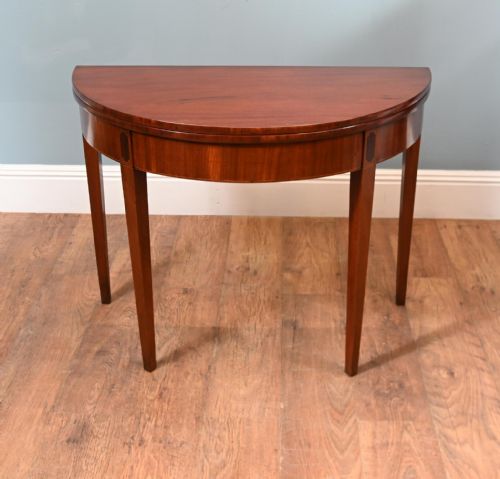
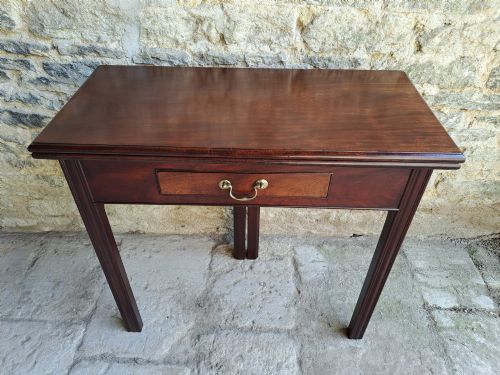

Georgian Foldover Games Table
A georgian foldover games table transforms from a compact console into a surface for cards, offering dual purpose elegance.
Georgian Foldover Games Table
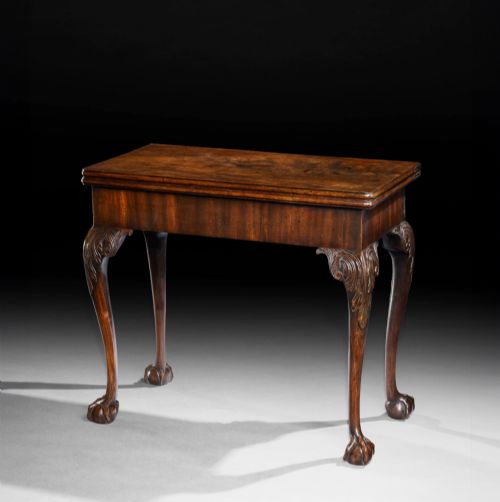
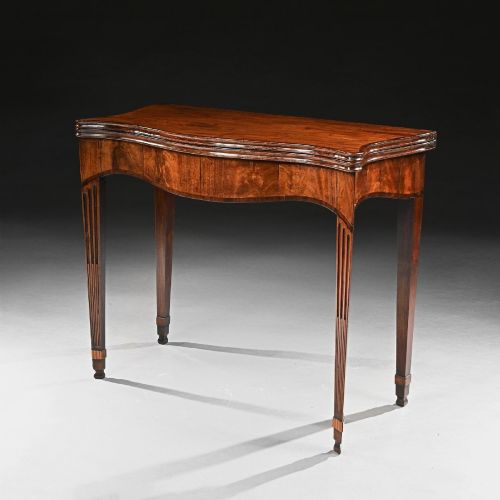
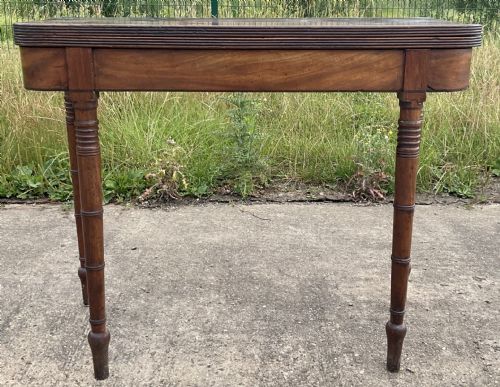
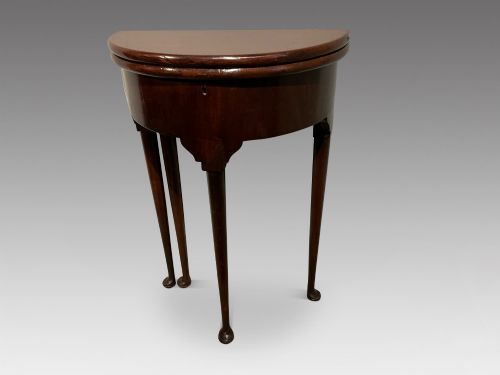
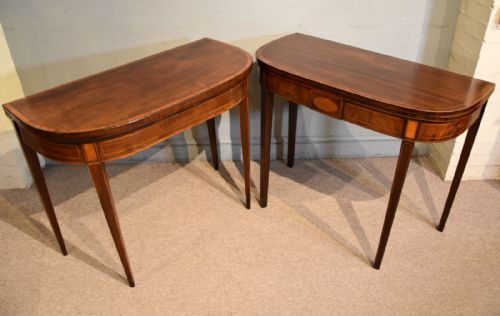
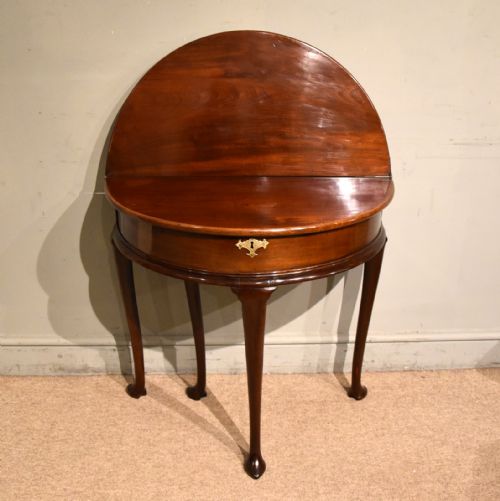
A georgian foldover games table serves dual purposes as a console or side table and an expanded playing surface. The listings show forms ranging from half round and demi lune shapes to rectangular and serpentine tea tables.
Makers designed these pieces across the eighteenth and nineteenth centuries, spanning George II, George III, George IV, and Regency periods. Mahogany dominates the selection, accompanied by rosewood, satinwood, and oak.
Card tables, concertina action tables, and trifold games tables appear frequently among the object types. Buyers encounter both plain timber constructions and examples featuring elaborate inlay and brass work.
How They Were Made
Cabinet makers utilised solid timbers alongside wood veneer, applying mahogany, burr yew wood, and Cuban mahogany over structural frames. Satinwood and boxwood provide contrasting details for stringing and decorative motifs.
Workshops incorporated brass inlay, marquetry, and satinwood inlay to enrich the primary surfaces. Concertina actions and foldover mechanisms required precise carpentry to ensure stability when the top leaf opened.
Listings feature mahogany, rosewood, satinwood, and oak, with George III and Regency periods appearing most frequently.
What Varies in Quality
The sophistication of the timber figure and the crispness of the carving dictate the standing of a piece. Finer examples display matched veneers, such as burr yew or figured mahogany, paired with meticulous brass inlay.
Structural complexity sets apart standard folding tops from concertina action tables that expand evenly on a frame. The integration of dished gaming wells and superior patination elevate specific items.
Gillows·Giles Grendey·Chippendale
The Georgian Foldover Games Table Glossary
- Concertina action
- An expanding frame mechanism that allows all four legs to move outward when the table top opens, supporting the unfolded leaf evenly. This design requires intricate joinery.
- Demi lune
- A half moon shape characteristic of tables designed to stand flat against a wall. These forms often feature inlaid satinwood borders.
- Patination
- The surface sheen and deep colour developed by timber over centuries of handling and exposure. Good patination indicates age and careful maintenance.
- Serpentine
- A gently undulating curved line found along the front edge of tea and card tables. This contour demands skilled shaping of solid wood.
- Trifold games table
- A table featuring a top that opens in three sections to reveal a larger playing surface or hidden compartments. It provides multiple configurations for use.
Georgian Foldover Games Table: Frequently Asked Questions
How do I use a games table today?
These tables function well as console tables against a hallway or living room wall when closed. Opening the leaf provides a sturdy surface for playing cards or writing letters.
Positioning the piece away from direct sunlight protects the polished mahogany or rosewood surfaces from fading. Placing coasters on the top preserves the historic polish during daily use.
How do I tell George III from Regency pieces?
George III pieces often exhibit classical proportions, straight or carved cabriole legs, and understated mahogany veneers. Regency examples, dating from the early nineteenth century, frequently incorporate rosewood, bold brass inlay, and heavier columns.
Stylistic influences shift from eighteenth century restraint toward more dramatic classical revivals in the later period. Examining the secondary woods and hinge construction helps clarify the manufacturing era.
Were these tables only used for cards?
While primarily built for card games, many examples doubled as tea tables or general side tables in the home. The enclosed wells often stored counters, dice, and deck markers when not in use.
Their versatile foldover design allowed households to save space in principal rooms. Families opened the tables only when entertaining guests or taking tea.