
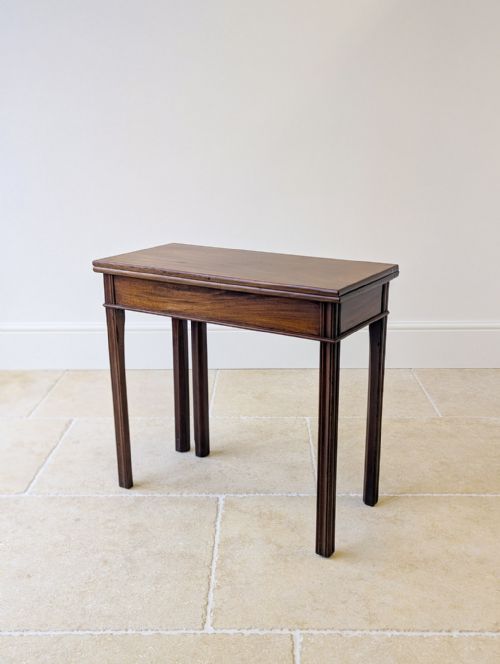
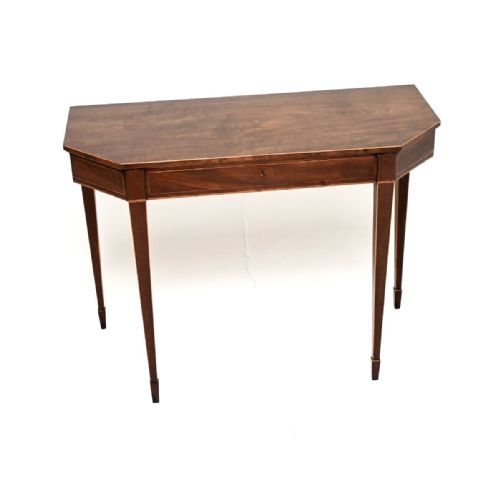
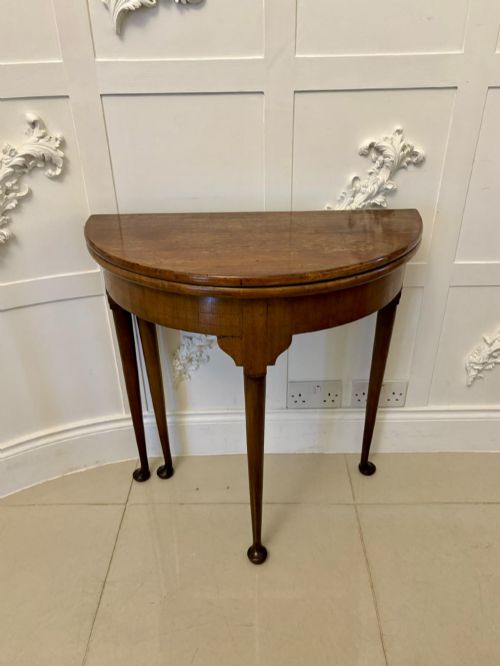
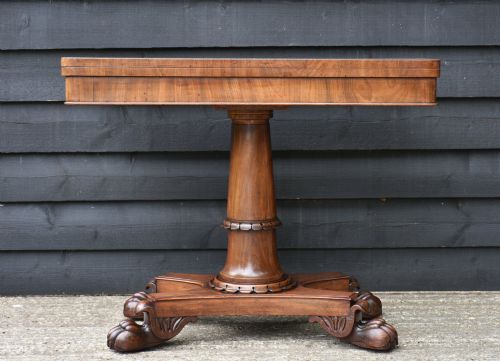

Georgian Folding Card Table
A georgian folding card table brings domestic entertainment of past centuries into modern rooms with hinged timber surfaces that open for play.
Georgian Folding Card Table
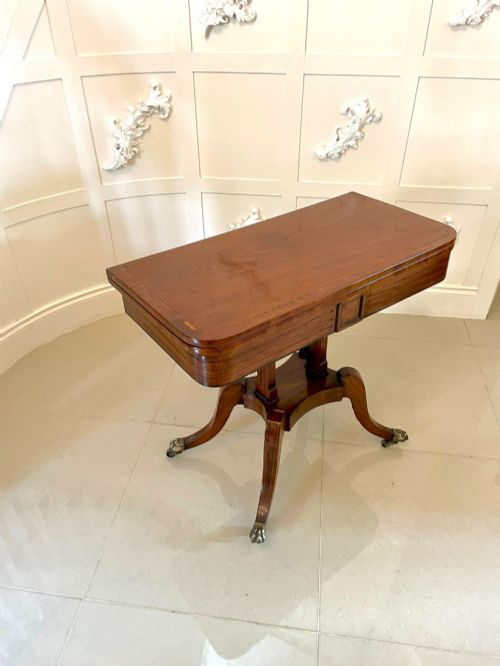
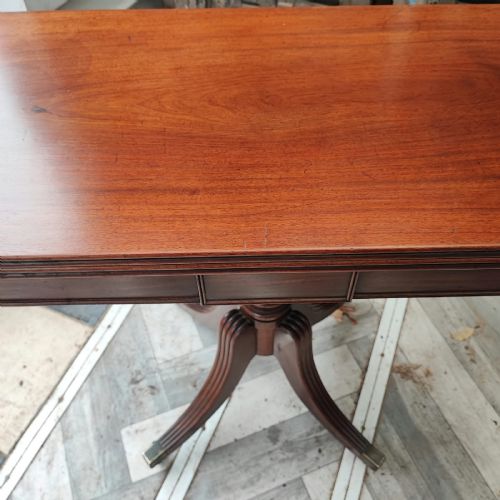
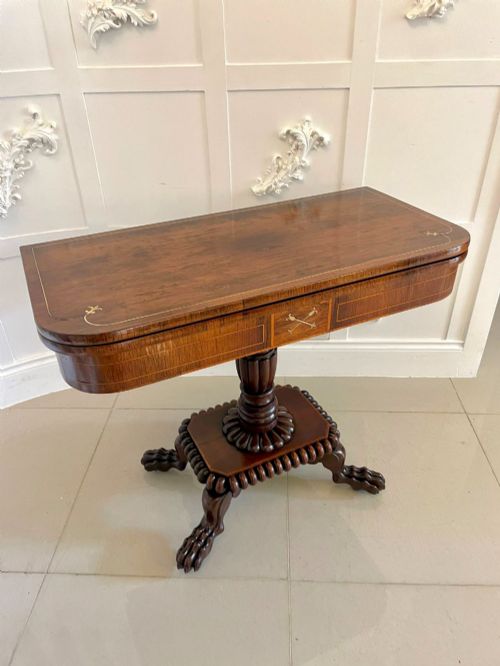
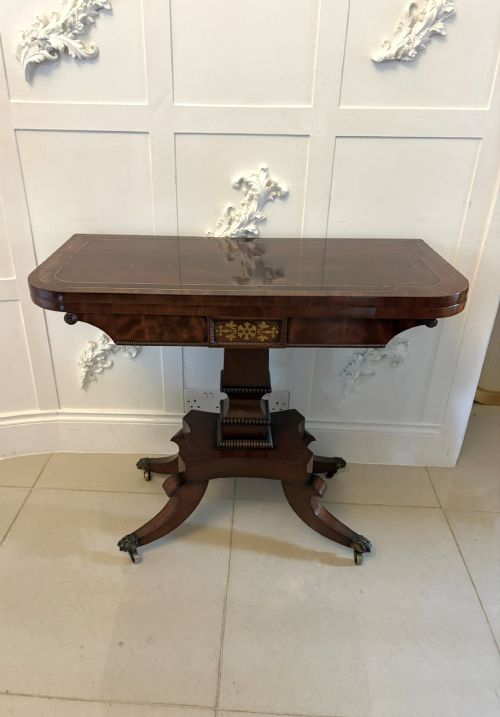
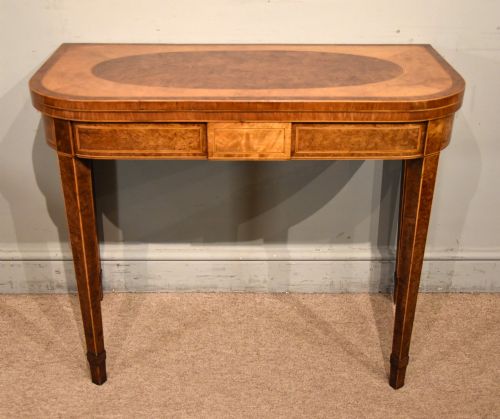
A georgian folding card table is a multi-functional piece designed for social gaming and evening entertainment in eighteenth and nineteenth-century homes. These pieces typically feature a hinged top that folds open to reveal a baize-lined playing surface, supported by pivoting rear legs or a concertina action.
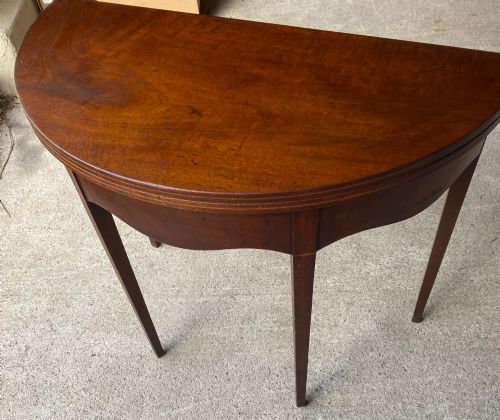
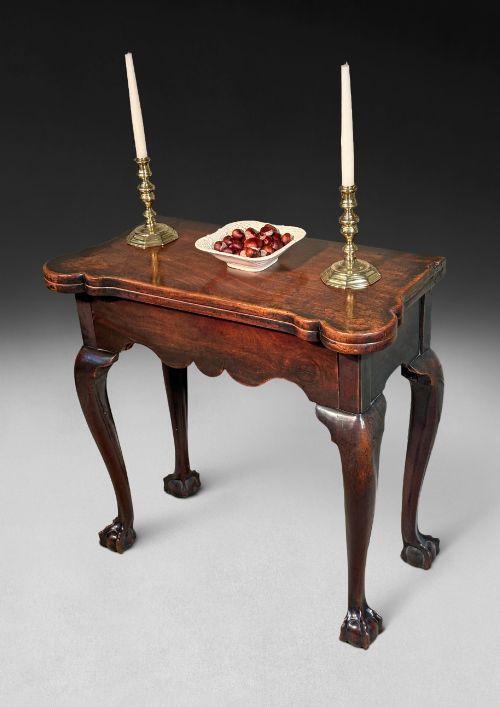
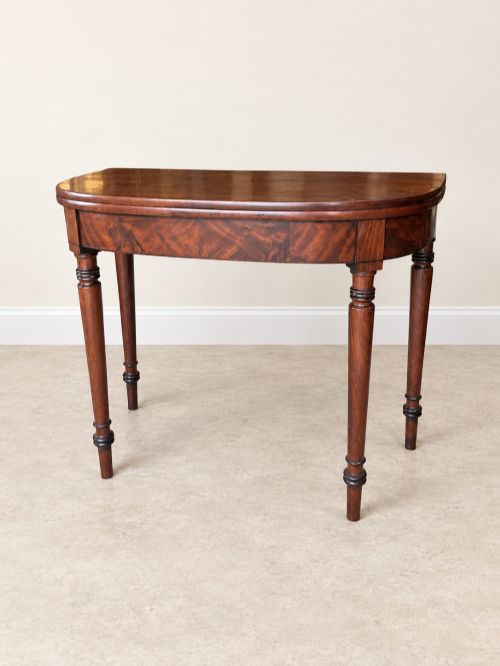
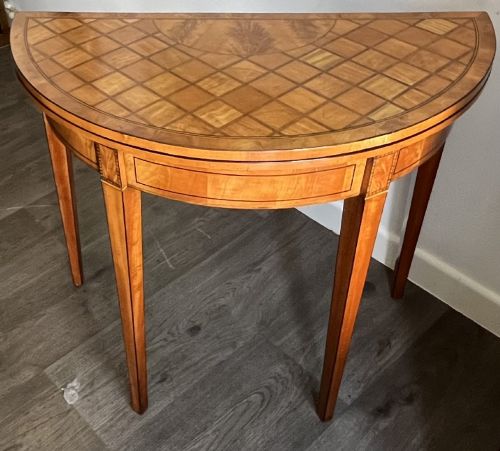
The versions most commonly met on this page date from the Georgian and Regency periods, spanning the eighteenth and early nineteenth centuries. Makers built them in various shapes including demi-lune, serpentine, D-shaped and rectangular formats to suit domestic spaces.
Beyond card playing, these items double as tea tables and console tables when closed against a wall. The construction accommodates both utilitarian daily use and formal drawing room display through careful joinery.
Craftsmanship and Proportion
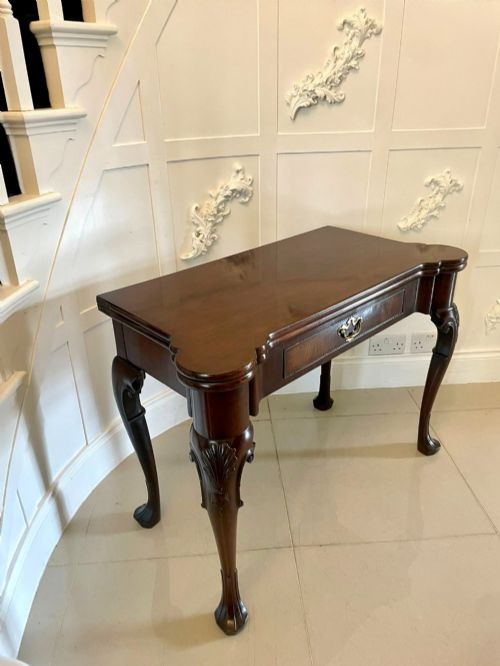
Quality separates through the crispness of carved details on legs, such as sabre forms or neoclassical motifs, and the selection of figured timbers like flame mahogany. Better examples maintain smooth mechanical action in their folding leaves and concertina frames without sagging.
The depth of colour, original patination and restraint in secondary wood choices distinguish superior workshops from standard commercial output. Proportion and symmetry in demi-lune and serpentine formats dictate the visual balance of the piece.
Listings span mahogany, rosewood and satinwood, moving from mid-eighteenth-century George II designs through Regency brass inlay to Edwardian interpretations.
The Georgian Folding Card Table Glossary
- Concertina action
- A table frame that expands on an accordion-like timber mechanism to support the opened leaf evenly on four sides. This construction allows all four legs to move outward symmetrically.
- Demi-lune
- A half-moon shape with a straight back edge designed to sit flat against a wall. This profile became popular for console and card tables during the late eighteenth century.
- Crossbanding
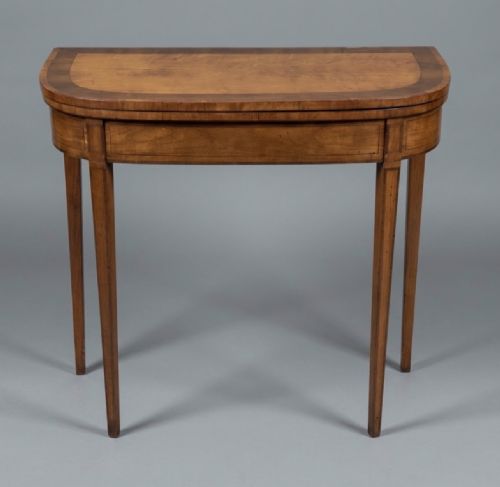
- A strip of veneer applied perpendicularly to the grain of the main surface to form a decorative border. It often incorporates contrasting timbers like satinwood or rosewood.
- Baize
- A coarse woollen woven fabric used to line the playing surface of games tables. It provides a soft, non-slip texture for cards.
- Serpentine
- A curved outline featuring a convex centre flanked by concave curves. This undulating shape requires skilled carpentry to execute on table edges and friezes.
Georgian Folding Card Table: Frequently Asked Questions
How were folding card tables used?
These pieces served households during the evening for card games, chess and social assembly in the parlour or drawing room. When not in use, the top folded flat and the unit stood against a wall as a side or console table.
During the daytime, families frequently utilised the closed surface for serving tea or displaying decorative objects. This dual purpose made them versatile furniture items in historical domestic interiors.
How do I tell a Georgian table from a Regency one?
Georgian pieces, particularly from the George III era, often feature straight tapered legs, restrained mahogany veneers and classical stringing. Proportions remain balanced with subtle carving.
Regency examples tend to introduce bolder elements such as brass inlay, rosewood timbers, heavier pillar-and-claw bases or sabre legs. The influence shifts from neoclassical straight lines toward more robust classical revival forms.
Can I use a card table for daily dining?
While the folding top opens to a generous surface, the underlying support framework and heritage timbers are not engineered for heavy daily dining loads. The hinges and swing legs are designed specifically for light gaming and decorative display.
Placing hot dishes or liquids directly onto historic polished wood or baize risks permanent staining and heat damage. Gentle use for drinks or casual placement suits them better.
What is a concertina action?
A concertina action is an ingenious mechanical frame where the rear rails and legs extend outward like an accordion when the top is unfolded. This provides a sturdy corner support directly beneath all four corners of the opened leaf.
Simpler tables rely on a single swing leg that pivots from the back frame, leaving one corner unsupported. The concertina mechanism indicates a higher standard of cabinetmaking.