



.jpg)

Georgian Floor Standing Cupboard
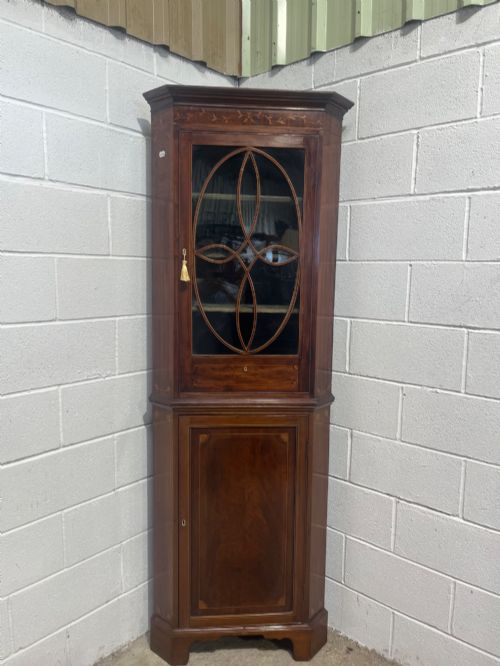
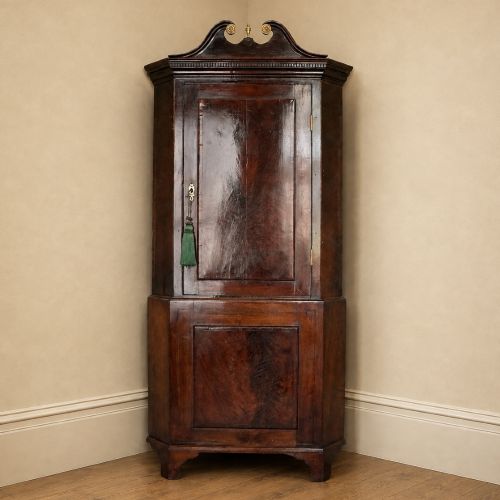
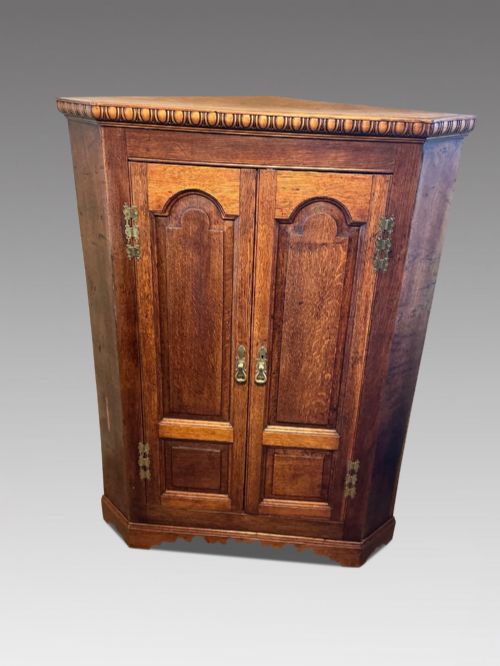
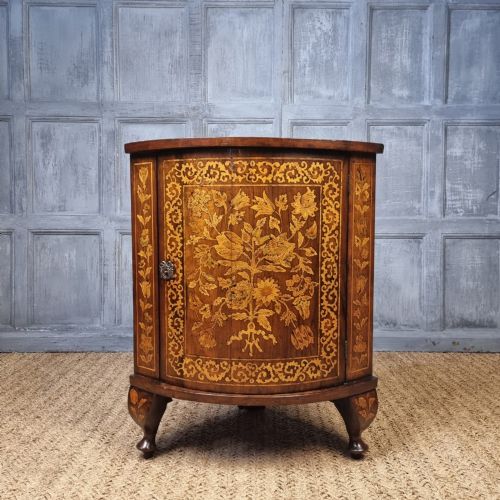
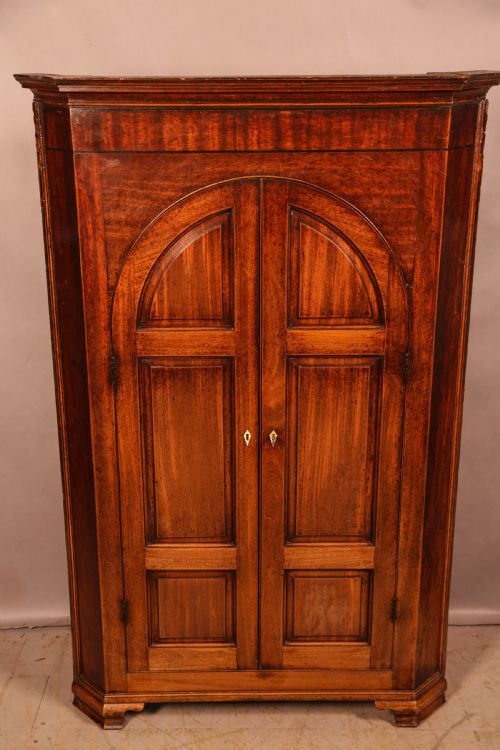
A georgian floor standing cupboard fills an empty room corner with architectural timber storage that grounds the space.
Georgian Floor Standing Cupboard
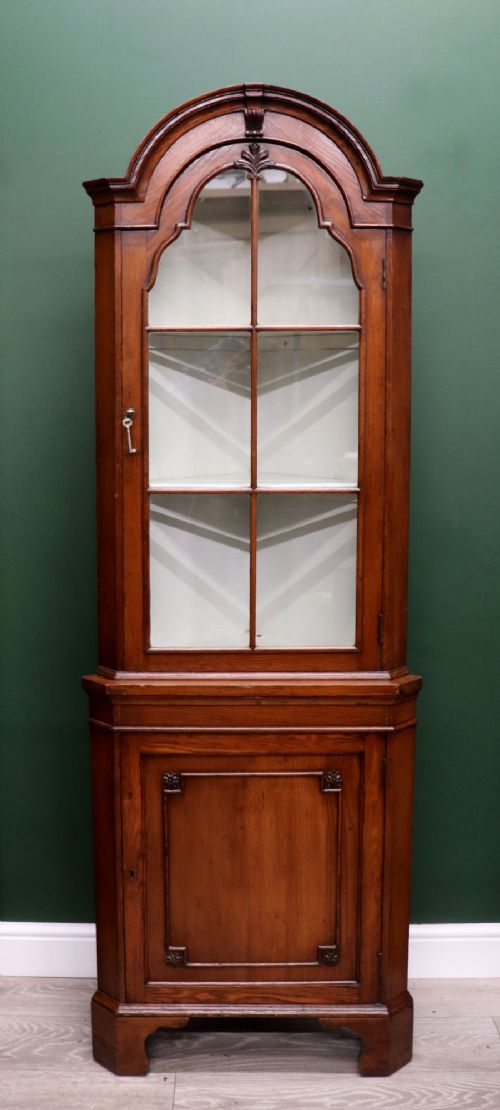
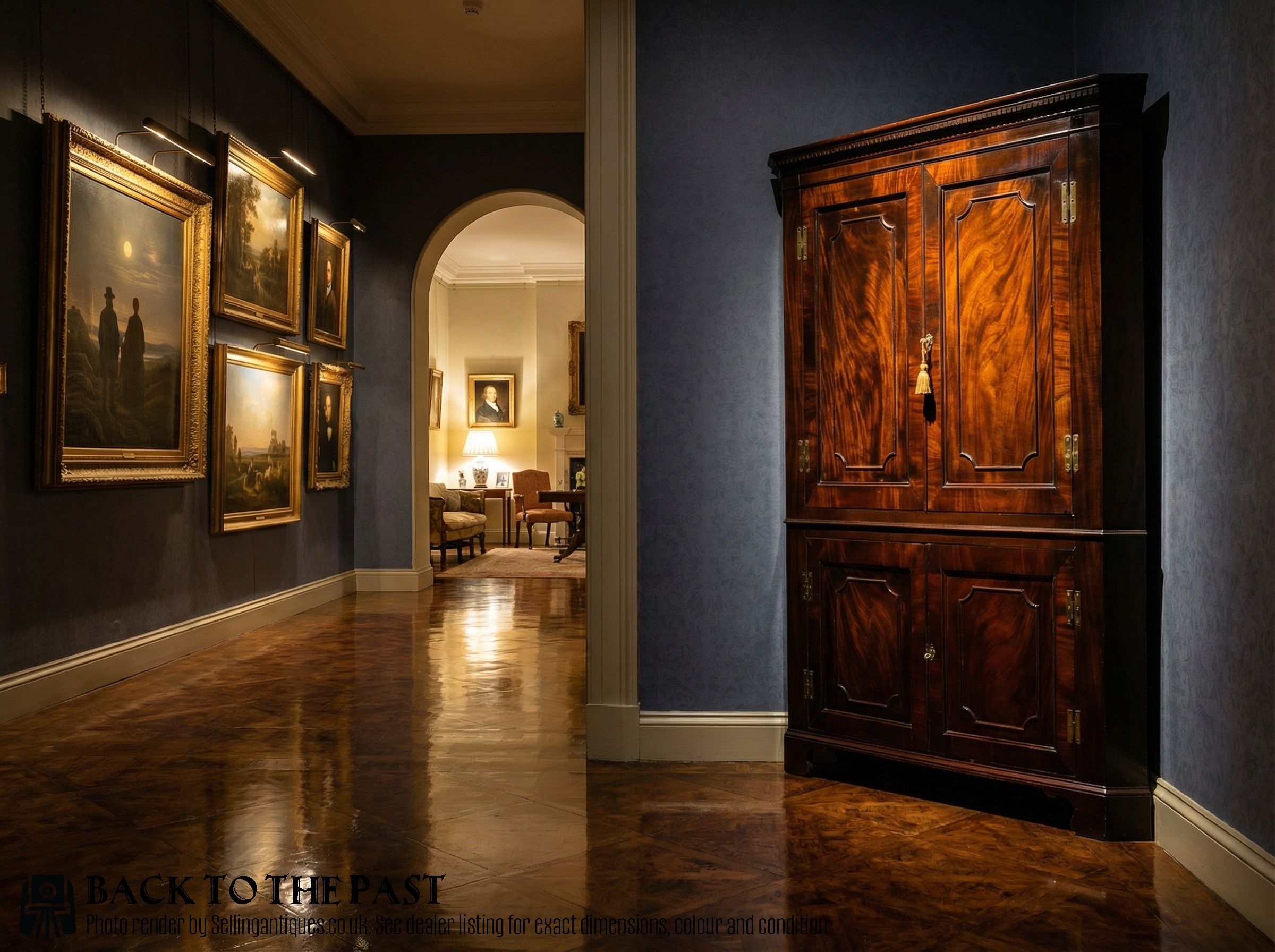
A georgian floor standing cupboard typically takes the form of a tall corner cabinet designed to utilise neglected angles in a room. The pieces seen here span periods from the eighteenth century through to later revivals, crossing regional variations in English, Irish, Welsh and Dutch workshops.
Most examples present as single tall carcasses or as two-part constructions with upper display sections above lower panelled doors. Buyers frequently encounter oak and mahogany carcases, sometimes built with bow fronts or fitted for drinks storage.
Materials and construction
Cabinet makers utilised dense native timbers such as oak and mahogany, often pairing them with secondary woods like fruitwood, pine or walnut for internal shelving and drawer linings. Finer pieces incorporate decorative veneers including satinwood, flame mahogany and marquetry detailing.
Glazing bars hold glass panes in upper display doors, while brass hinges, escutcheons and working locks secure the panelled lower compartments. Larger examples are constructed in two separate upper and lower sections to ease transport and placement.
Georgian Floor Standing Cupboard Retail Price Guide 2026
Typical asking prices for georgian floor standing cupboard among the pieces listed under this phrase on Sellingantiques today, from the lower quarter to the upper quarter. They describe what is for sale here now, not the wider market.
Recorded construction periods range from mid-eighteenth-century George III pieces to later nineteenth-century revivals.
Judging the timber and build
The value of a georgian floor standing cupboard rests upon the choice of timber figure, the crispness of inlaid banding and the integrity of the original joints. Dense grain patterns in figured oak and rich flame mahogany distinguish superior cabinet work from plain vernacular builds.
Proportion and scale dictate the visual weight of the piece within a room, where well-balanced cornices and clean sightlines in the astragal glazing demonstrate higher workshop standards.
The Georgian Floor Standing Cupboard Glossary
- Astragal glazing
- Wooden bars that divide glass panes within a cabinet door into smaller geometric shapes. These delicate mouldings define the upper display sections of many tall corner units.
- Bow front
- A convex curved cabinet front that projects outward from the room corner. This stylistic choice softens the rigid angles of standard corner furniture.
- Two part
- A cabinet constructed as separate upper and lower vertical sections that stack together. This method simplified the movement of heavy timber furniture through tight stairwells and doorways.
- Marquetry
- Decorative veneer patterns formed by fitting contrasting pieces of wood into a prepared ground. Craftsmen employed this technique on door panels and friezes.
- Escutcheon
- A protective metal plate surrounding a keyhole. These fittings are commonly cast from brass and match the door hinges.
Georgian Floor Standing Cupboard: Frequently Asked Questions
How were corner cupboards used?
These cabinets served to store dining china, glassware and household provisions while occupying awkward room angles that standard square furniture could not fit.
Upper glazed sections displayed tableware to guests, whereas lower panelled doors kept less decorative items hidden from view.
How do I fit one in a modern room?
A tall corner unit anchors an empty wall junction and draws the eye upward, making it useful in dining rooms, living spaces or hallways. Measure the vertical height and wall depth carefully before placement, as eighteenth-century proportions vary significantly.
Ensure the cabinet stands level on uneven floors so the heavy panelled doors swing correctly on their original hinges.
How can I tell oak from mahogany examples?
Oak pieces generally exhibit visible medullary rays and a coarse, open grain that ranges from golden honey to deep brown tones. They often reflect country house or regional vernacular traditions.
Mahogany displays a denser, reddish-brown grain that sometimes shows flame or figured patterning, aligning with formal urban cabinet making.
What is a two-part corner cupboard?
A two-part cupboard consists of a distinct upper cabinet that rests securely upon a matching lower base cabinet. This modular build helped tradesmen transport tall timber furniture safely between properties.
The horizontal dividing line usually sits at counter height behind the opening doors.