



.jpg)


Georgian Timber Corner Cabinet
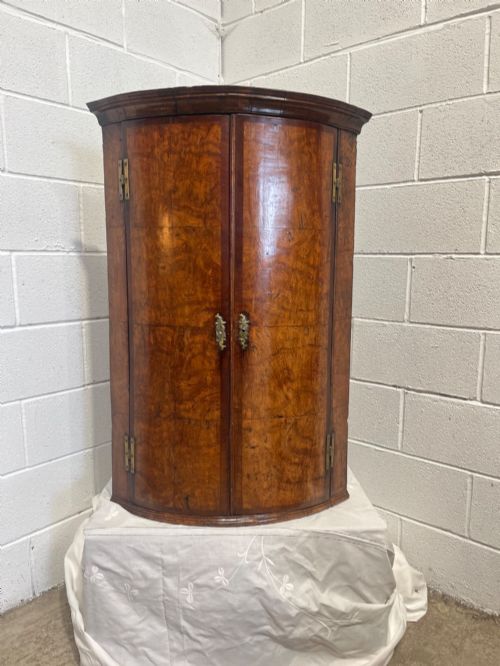
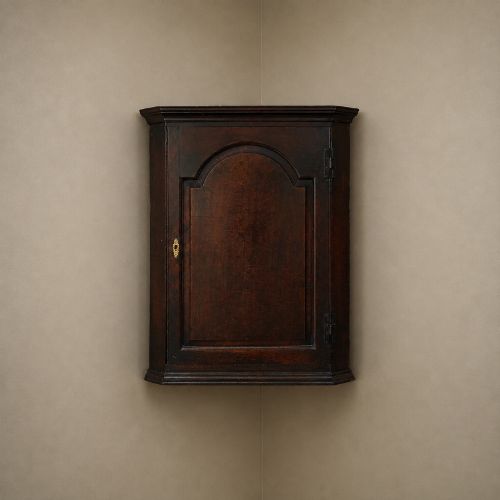
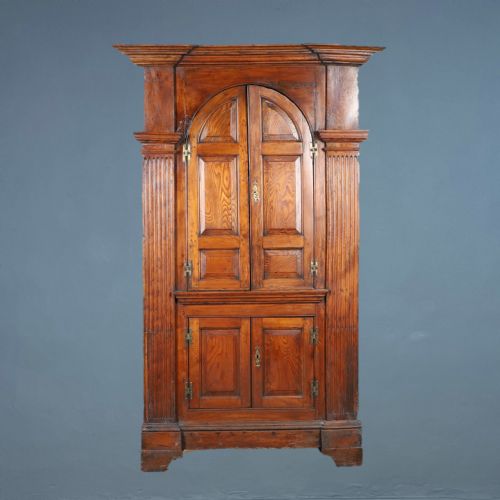
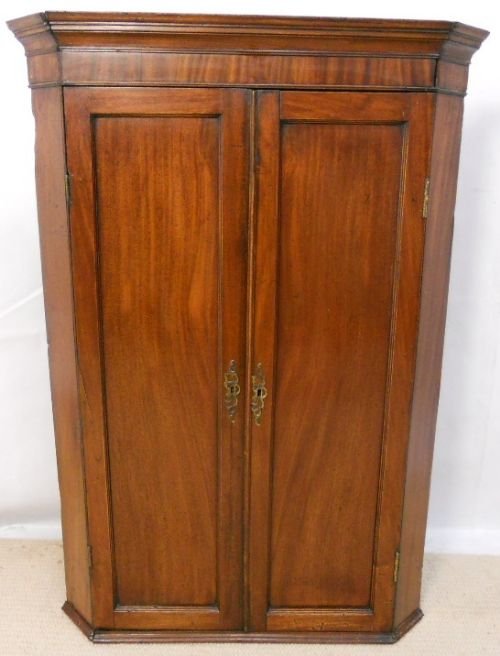
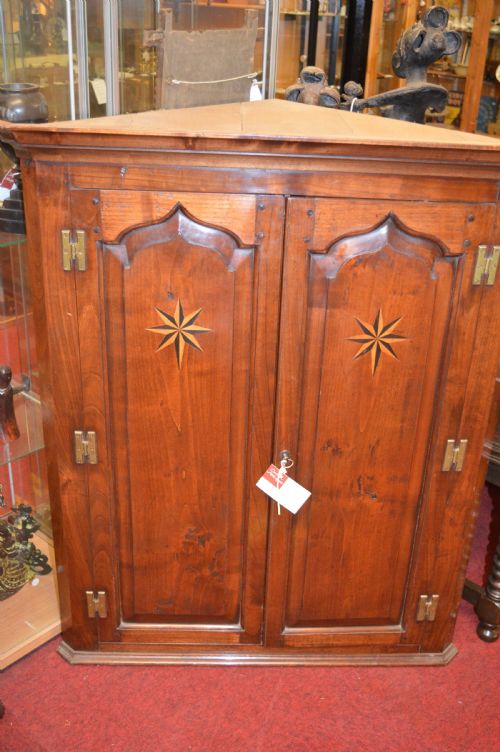
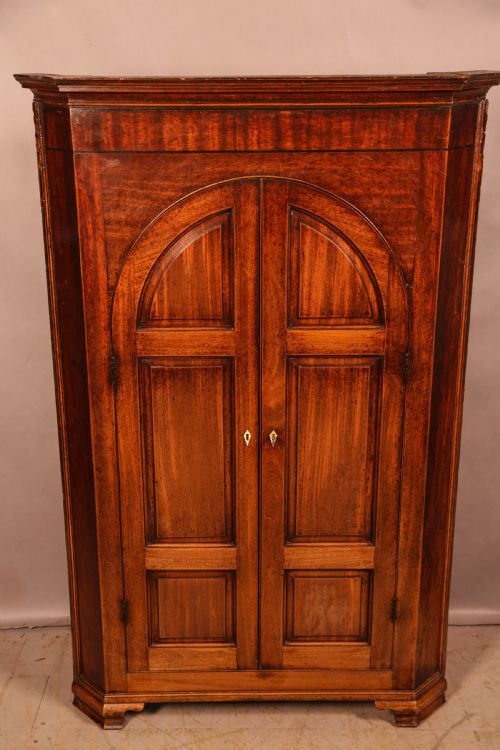
A georgian timber corner cabinet brings architectural grace to awkward spaces, offering clever storage in timber varieties from mahogany to burr oak.
Georgian Timber Corner Cabinet
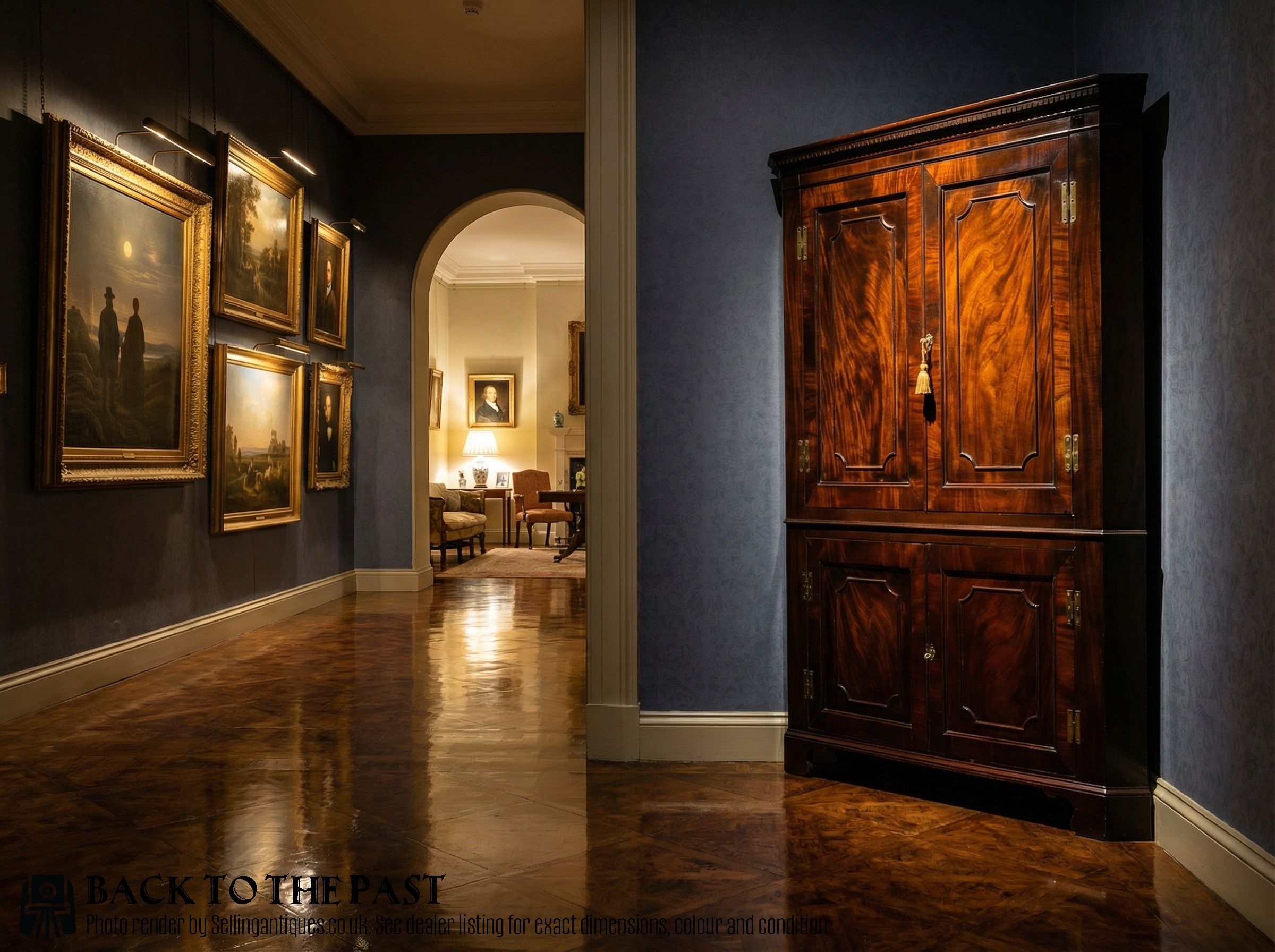
A georgian timber corner cabinet is a specialised storage piece designed to fit neatly into the right angle of a room, maximising space whilst displaying or concealing contents. Buyers searching for a georgian timber corner cabinet will encounter both wall-hanging examples and free-standing floor models spanning the eighteenth and nineteenth centuries, alongside later revival interpretations.
The pieces listed on this page showcase forms ranging from compact wall-mounted cupboards to large architectural standing cupboards. Materials vary from dense mahogany and figured burr oak to country timbers like elm, fruitwood, and yew, reflecting both formal urban workshops and regional vernacular traditions.
Most variants feature a single panelled or glazed door, though some examples incorporate elaborate satinwood inlay or brass hardware. Whether originating from the Chippendale period or built in the Sheraton style, each cabinet utilises the corner footprint to alter the dynamic of a room.
How they were made
Makers constructed these cabinets using solid timbers such as mahogany, oak, and elm for the carcase and framing, often applying veneers of burr oak or satinwood to primary surfaces. Cabinetmakers joined the angular side panels with dovetail or rebate joints to ensure structural stability against the walls.
Doors were hung on brass hinges, frequently securing with original locks and escutcheons, whilst glazed variants utilised wooden glazing bars to hold individual panes of glass. Interior shelving was shaped to match the triangular or segmental floor plan of the cabinet.
Georgian Timber Corner Cabinet Retail Price Guide 2026
Typical asking prices for georgian timber corner cabinet among the pieces listed under this phrase on Sellingantiques today, from the lower quarter to the upper quarter. They describe what is for sale here now, not the wider market.
Several cupboards hide interior spice drawers behind their lower shelves, offering secret compartments for eighteenth-century secrets.
What varies in quality
The hierarchy of quality rests on the selection of timber and the sophistication of the joinery rather than mere age. Cabinets exhibiting highly figured mahogany or choice burr oak display a visual depth that simpler fruitwood or plain oak versions lack.
Refinement in architectural details, such as dentil cornices, crossbanding, and precise marquetry or satinwood inlay, separates standard utilitarian cupboards from high-style workshop productions. The integrity of the original hinges, glass, and interior configuration further defines the standing of a piece.
The Georgian Timber Corner Cabinet Glossary
- Corner cupboard
- A storage unit specifically built with a triangular cross-section to slot into the corner of a room. These pieces can be wall-hanging or floor-standing.
- Glazed door
- A door fitted with glass panels to display the contents within the cabinet. It is often divided into smaller panes by wooden bars.
- Marquetry
- Decorative patterns created by fitting thin pieces of wood veneer onto a structural surface. This technique adds pictorial or geometric detail to the exterior.
- Satinwood inlay
- Contrasting pale exotic wood inserted into recesses in a darker primary timber. It creates crisp linear decoration typical of late eighteenth-century furniture.
Georgian Timber Corner Cabinet: Frequently Asked Questions
Where should I place a corner cabinet?
These cabinets suit unutilised room junctions, dining rooms, or hallways where standard rectangular furniture blocks circulation. Their geometry draws the eye upward and softens bare wall angles.
Ensure the wall angles match the ninety-degree right angle of the cabinet carcase before hanging wall-mounted versions.
How do I distinguish wall-hanging from standing cabinets?
Wall-hanging examples feature bracket fixings or sturdy hanging plates on the back panels, and their proportions remain lighter for elevation. Standing models extend all the way to the floor with a plinth or bracket feet.
Both forms utilise the same triangular internal layout but serve different scale requirements within a room.
What timbers were commonly used?
Mahogany and oak dominate formal and vernacular production, complemented by decorative veneers like burr oak and satinwood. Regional pieces frequently employ fruitwood, elm, or yew.
Each timber dictates the surface character, ranging from the dark reddish-brown of polished mahogany to the dense grain of oak.
Are the interiors fitted with shelves?
Most cabinets contain shaped wooden shelving designed to follow the triangular or bow-fronted interior contours. These shelves often feature fixed plate grooves in display-oriented glazed cupboards.
Early interiors frequently retain their original painted or varnished surfaces.