




Georgian Floor Corner Cupboard
A georgian floor corner cupboard turns wasted angles into stately storage, bringing warmth and proportion to dead space.
Georgian Floor Corner Cupboard
A georgian floor corner cupboard is a tall, freestanding cabinet designed to fit neatly into the corner of a room. These architectural pieces often utilise vertical space efficiently while softening sharp room angles.
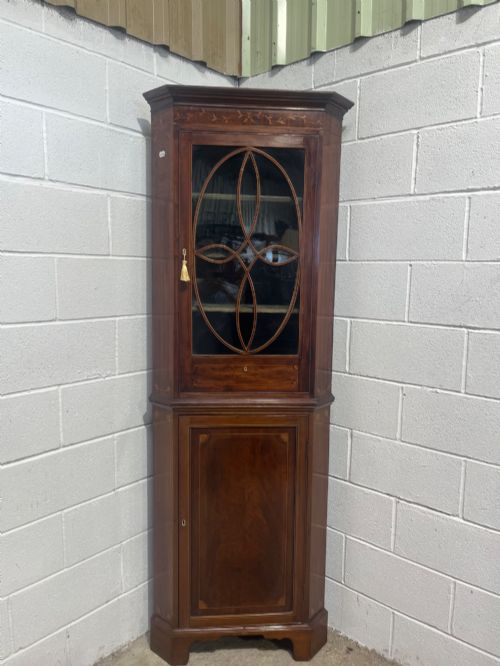
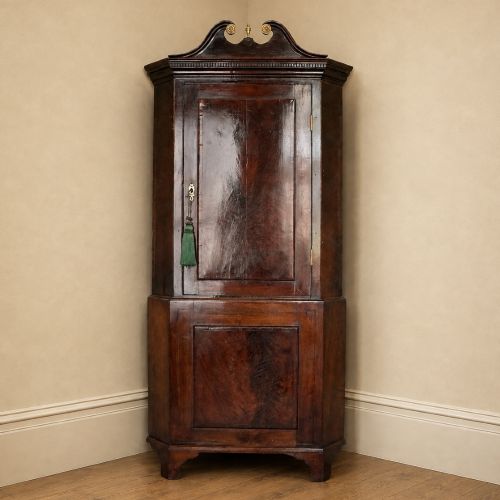
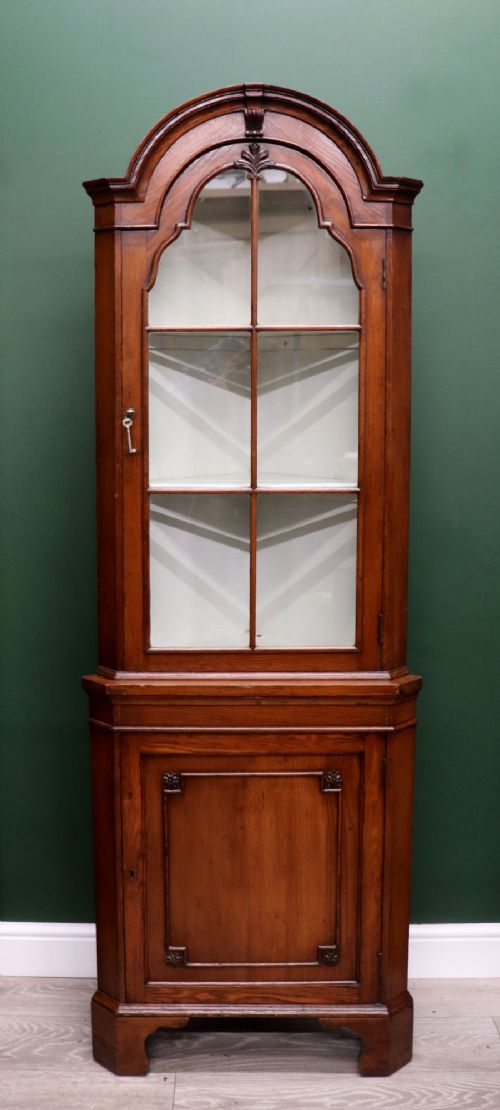
The versions met most frequently on this page originate from the Georgian era and the nineteenth century, constructed in substantial oak, mahogany or fruitwood. Many examples divide into two distinct parts, featuring a glazed or panelled upper display section above a lower enclosed cupboard.
How They Were Made
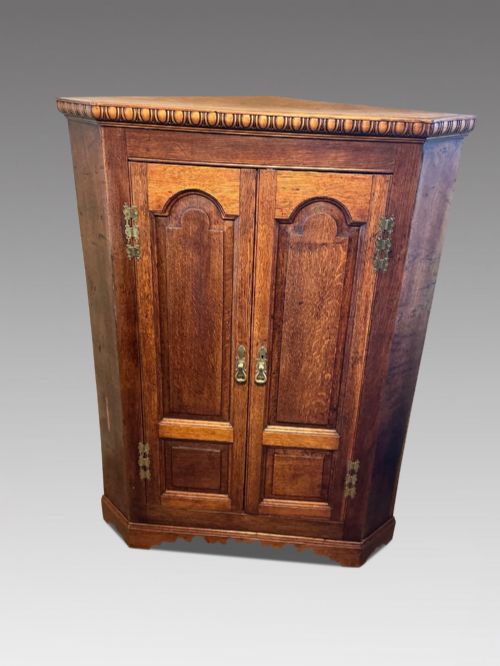
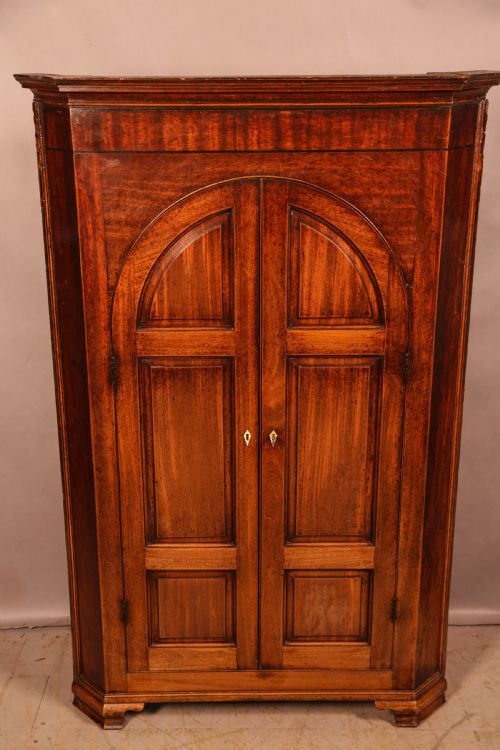
Cabinet makers built these tall carcases predominantly using native oak and imported mahogany, occasionally incorporating satinwood, walnut, yew and fruitwood for contrast and banding. Solid timber frames were joined to panelled backs designed to hug intersecting walls tightly.
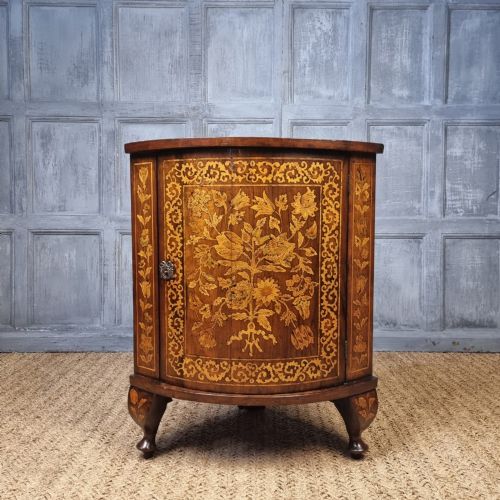
Surface ornamentation relied on natural wood figures, flame mahogany veneers, marquetry inlay and brass H-hinges or escutcheons. Glazed doors frequently employed wooden astragal bars arranged in geometric or arched patterns.
Listings feature woods including oak, mahogany, satinwood, walnut, fruitwood and yew, spanning periods from the eighteenth to the twentieth century.
What Varies in Quality
Quality rests upon the choice of timber and the crispness of the cabinet work, from plain country oak boards to heavily figured flame mahogany with delicate satinwood stringing. Superior pieces display thoughtful proportions, well-matched door timbers and original brass hardware.
Construction methods also separate standard items from finer works, visible in the precision of the dovetail joints, the glazing bar thickness and whether the piece survives in one unified carcase or two original stacked sections.
The Georgian Floor Corner Cupboard Glossary
- Astragal glazed
- A glass door divided into smaller panes by slender wooden bars called glazing bars. These frameworks lighten the visual weight of heavy timber cupboards.
- Bow front
- A convexly curved cabinet front that projects outward from the corner. This curved profile requires skilled joinery to shape solid wood or bent veneers.
- Two part
- A tall cupboard constructed as separate upper and lower sections stacked together. This split construction helped transport heavy furniture through domestic doorways.
- Marquetry
- Decorative veneer patterns formed by fitting together thin pieces of coloured wood. Craftsmen used this technique to create floral or geometric motifs on cabinet doors.
Georgian Floor Corner Cupboard: Frequently Asked Questions
How do I place a corner cupboard in a modern room?
These tall cabinets slide directly into ninety-degree room angles, utilising dead space that standard rectangular furniture cannot occupy.
Position them away from direct heat sources to protect historic timbers and aged veneers from drying and splitting over time.
Were these cupboards built in one piece?
Many examples are constructed in two stacked sections, featuring an upper display cabinet sitting upon a lower enclosed base. This modular approach made movement and placement much simpler in period homes.
Single-piece tall cupboards also exist across the inventory, requiring careful measurement of stairwells and ceiling heights before installation.
What is the difference between oak and mahogany versions?
Oak examples generally lean toward English country aesthetics with robust pegged frames, visible grain and straightforward brass fittings.
Mahogany variations often display finer urban cabinet-making, incorporating flame veneers, inlaid stringing, bowed fronts and glazed upper doors for display.
Can I use the top section for display?
Upper sections frequently feature wooden shelving enclosed by glass doors with astragal bars, specifically intended for tableware or books.
Lower sections provide concealed storage behind solid wooden panels to keep household items out of sight.