




Antique Corner Armoire
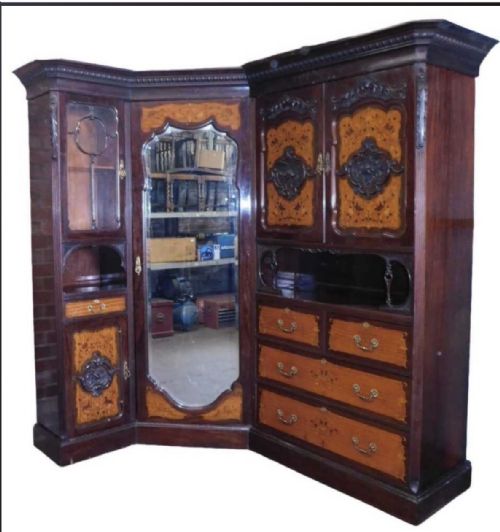
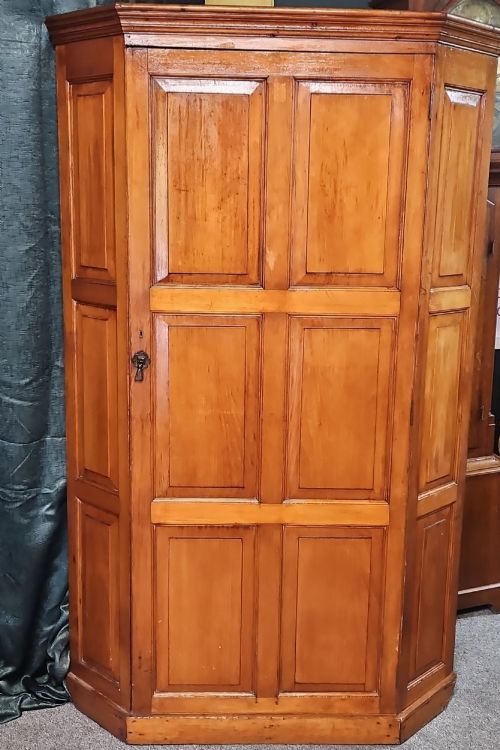
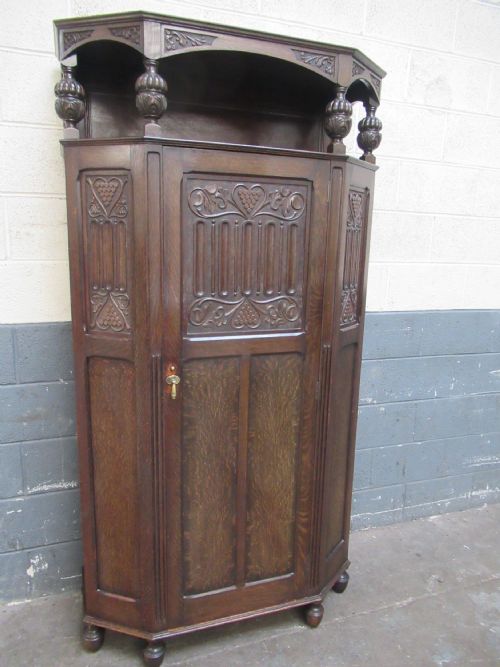
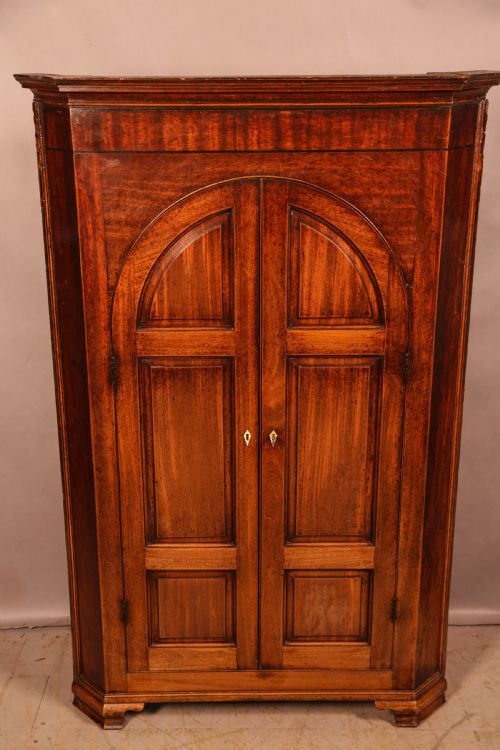
An antique corner armoire is a clever piece of timber architecture designed to turn dead wall space into generous storage.
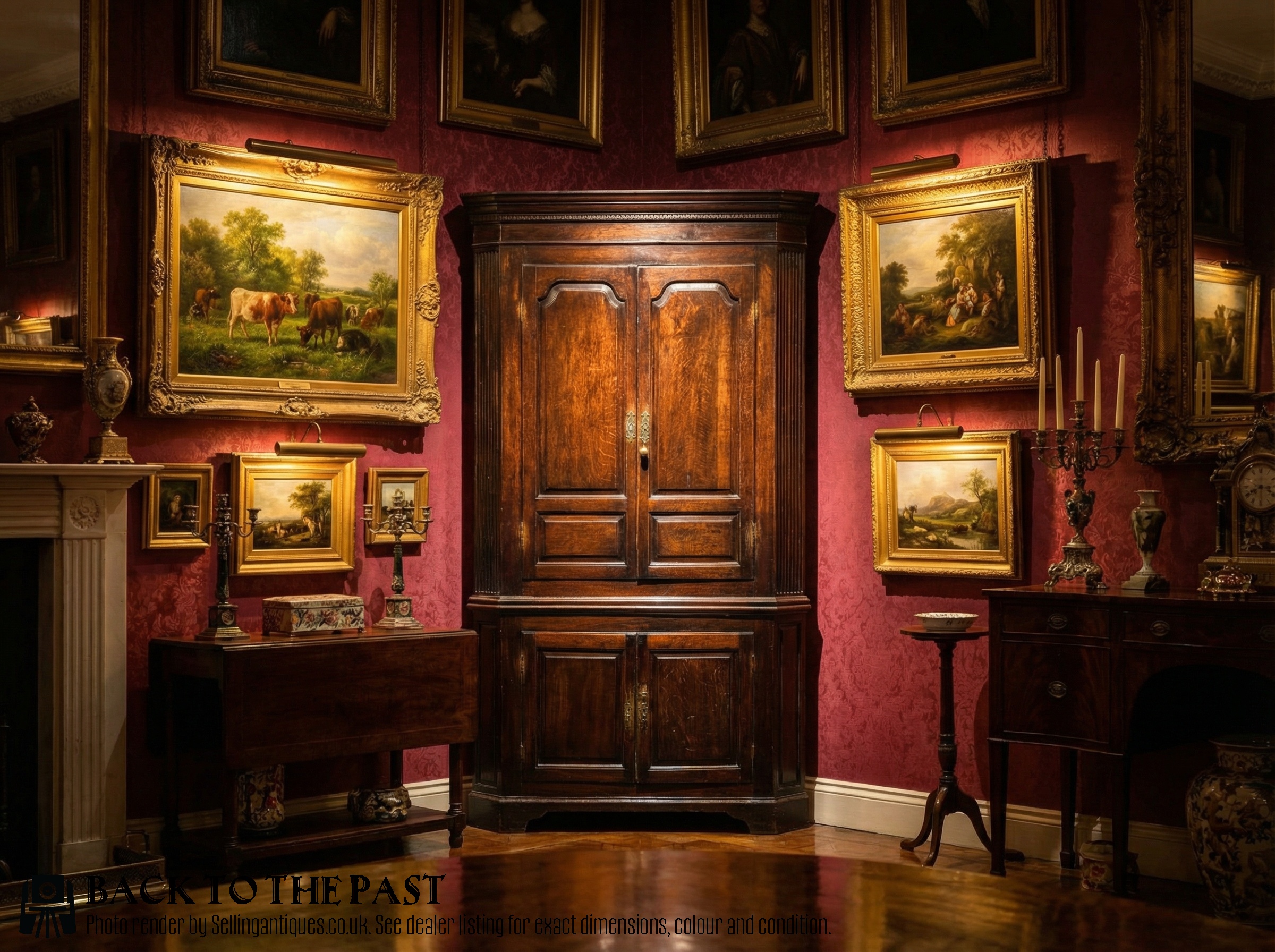
Antique Corner Armoire
When buyers search for an antique corner armoire, they want a substantial storage piece that fits neatly into a room junction without dominating the floor plan. These pieces solve architectural challenges while offering deep hanging space or shelving inside panelled doors.
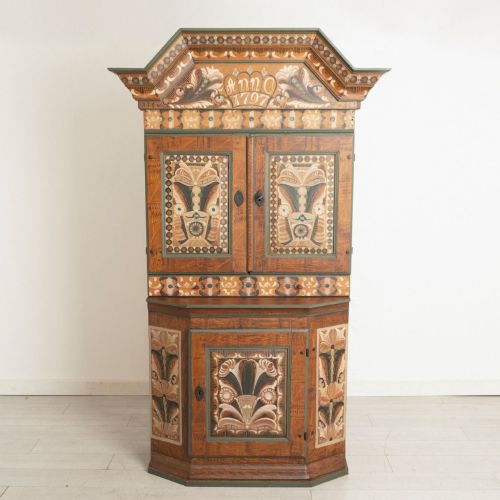
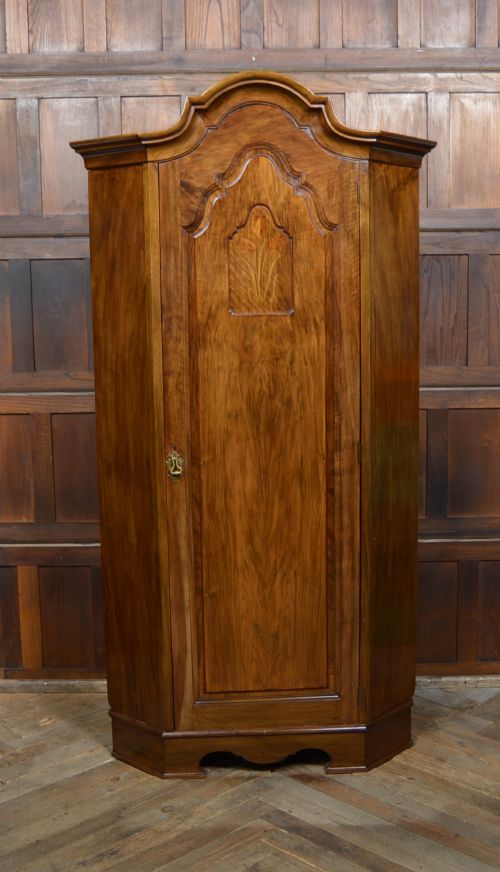
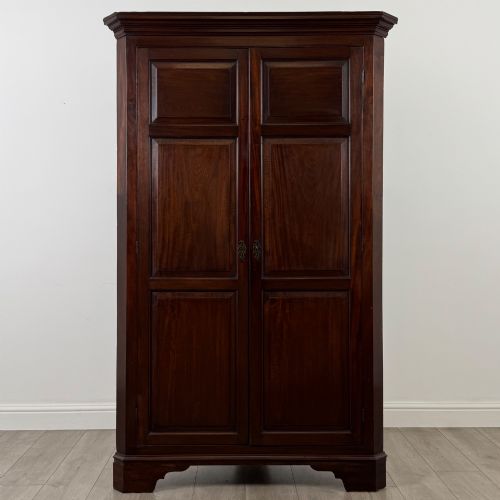
The versions most frequently met on this page range from compact Georgian mahogany bowfront cupboards to towering Victorian pine wardrobes and 18th century Scandinavian painted examples. Cabinetmakers constructed them in one or two sections to ease transport into tight domestic spaces.
Makers utilised various regional timbers including oak, mahogany, and pine, often incorporating satinwood inlay or hand-painted finishes depending on the Scandinavian or British origin of the workshop.
Materials and Construction Methods
Cabinetmakers relied heavily on dense hardwoods like mahogany and oak for structural integrity, alongside softer pine for vernacular and painted pieces. Grain selection dictated whether a door panel received a clear polish or a layer of decorative paint.
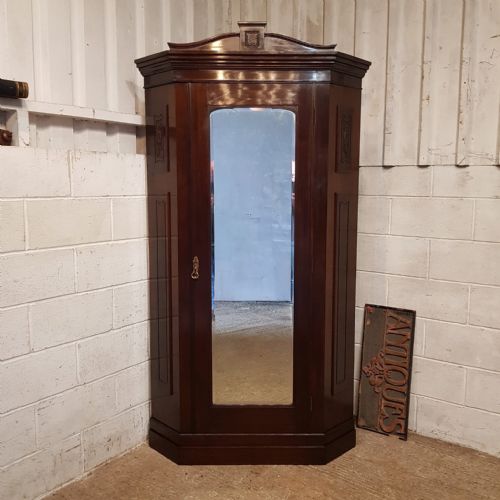
Joinery techniques such as dovetailing and mortise and tenon joints kept the angled frames square under heavy timber loads. Brass hinges and iron hardware secured the heavy doors, while glass panels occasionally appeared on display variants.
East German workshops contributed surprisingly robust hinges to the mix.
Factors Separating the Grades
Quality rests primarily on the selection of timber and the precision of the mitred corner joints. Superior pieces exhibit well-figured mahogany veneers or neatly executed satinwood inlay that remains stable over centuries of environmental change.
The refinement of internal shelving, original brass furniture, and the smoothness of door alignment separate standard utilitarian cupboards from high-status architectural commissions.
The Antique Corner Armoire Glossary
- Armoire
- A tall wardrobe or cupboard used primarily for hanging clothes. They typically feature panelled doors enclosing deep storage space.
- Bowfront
- A convex curved cabinet front that projects outward. This shape softens the hard angles of a standard room corner.
- Compactum
- A fitted wardrobe containing multiple internal compartments such as drawers, shelves, and hanging space. They maximise utility within a single footprint.
- Gustavian
- A Swedish neoclassical style characterised by pale painted finishes and restrained classical carving. Pieces often feature grey, white, or cream pigments.
- Inlay
- A decorative technique where contrasting pieces of wood or other materials are inserted into recesses. Satinwood is frequently used for this contrasting detail.
Antique Corner Armoire: Frequently Asked Questions
How do I measure for a corner armoire?
Measure the wall depth extending out from the corner on both sides, ensuring you account for skirting boards and cornices. Check that the diagonal clearance in your hallway permits the piece to enter the room.
Larger models arrive in two stacked sections to ease tight turns on staircases during delivery.
Can these hold modern clothes hangers?
Many older corner wardrobes feature shallow internal depths designed for historical garments rather than modern padded hangers. You may need to inspect the internal hanging clearance from back corner to door front.
Some pieces rely on traditional peg rails instead of modern metal rails for storing apparel.
How do I care for painted Scandinavian surfaces?
Protect historical paint finishes by keeping them away from direct sunlight and fluctuating radiator heat. Dust gently with a dry, soft cloth rather than using liquid polishes.
Wax can occasionally nourish old pine surfaces without harming the underlying pigment.
Are these cabinets always in two parts?
Tall architectural cupboards from the 18th and 19th centuries often break down into a top and bottom section to facilitate transport. Smaller hanging wardrobes generally remain as a single solid unit.
Check the cornice and base plinth to see if the join splits horizontally.