
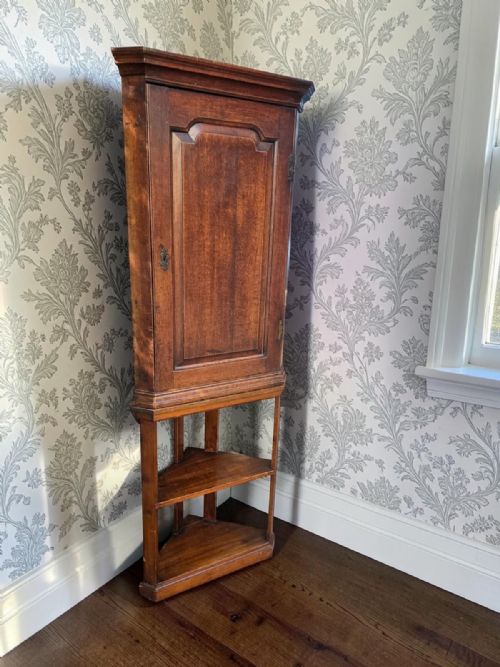
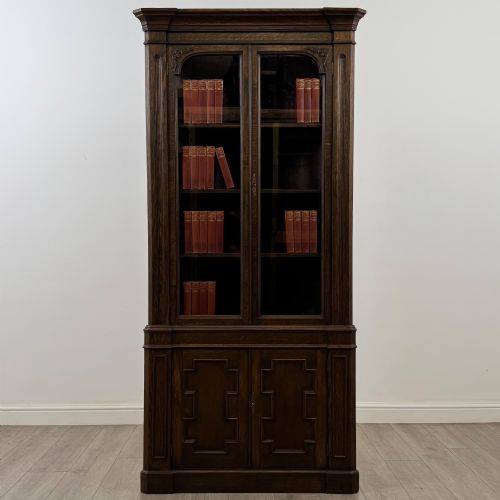

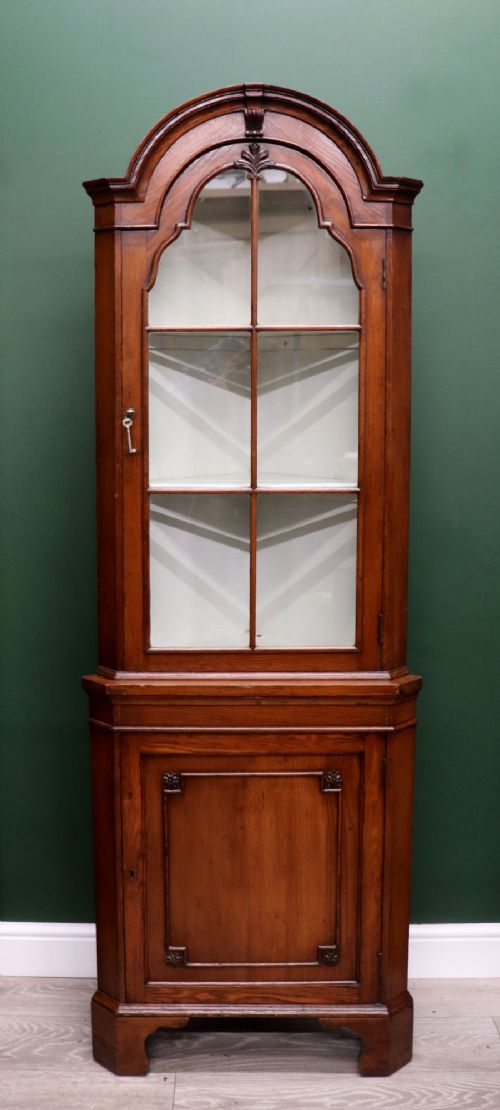


Freestanding Oak Corner Cupboard
A freestanding oak corner cupboard turns an awkward room junction into storage, bringing warm grain and period character to otherwise dead space.
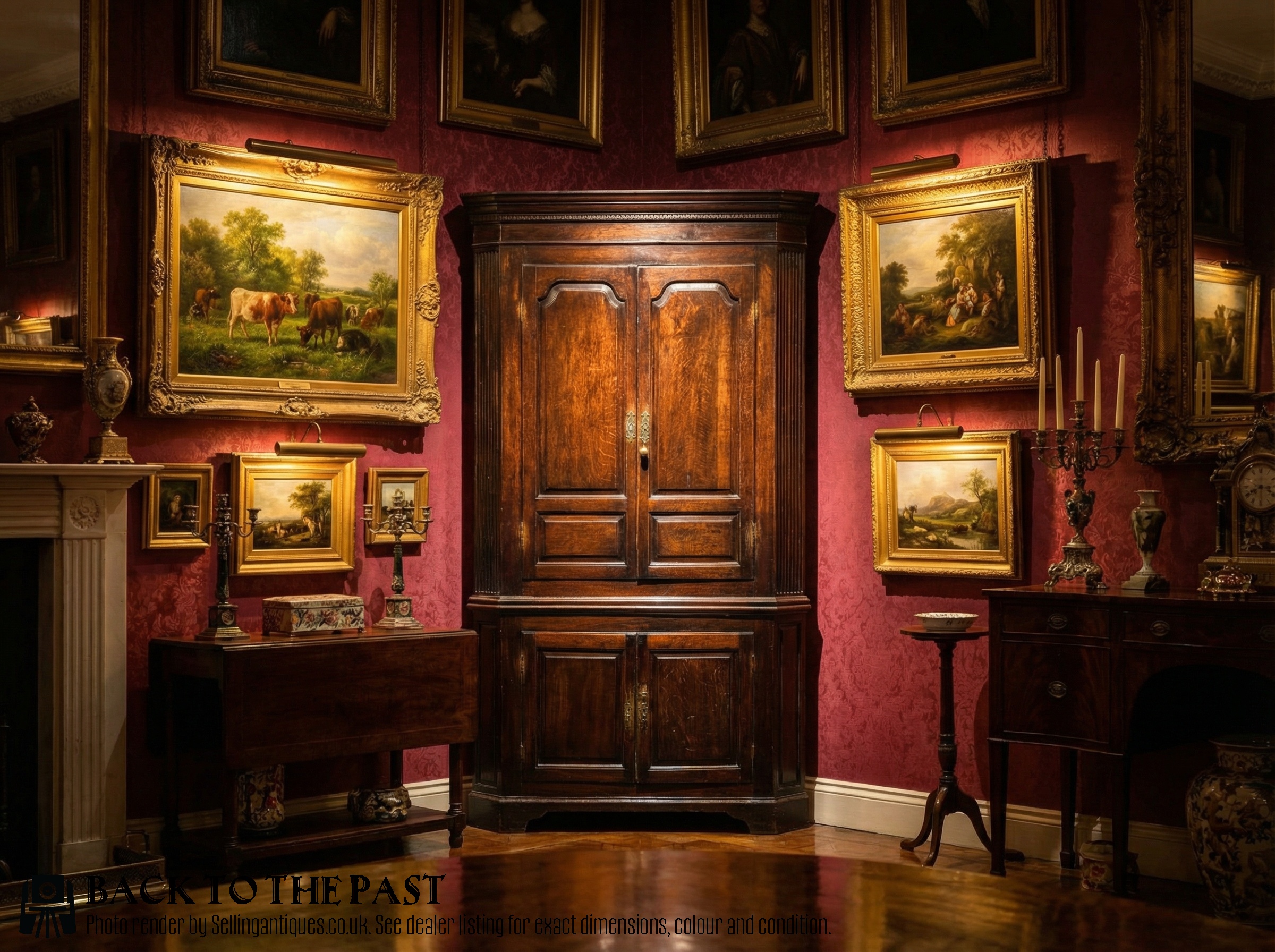
Freestanding Oak Corner Cupboard
When you search for a freestanding oak corner cupboard, you are looking at practical furniture designed to fit neatly into the ninety-degree angle of a room. These pieces utilise corner space efficiently while providing enclosed shelving for display or storage.
The versions you are most likely to meet on this page span the Georgian, Victorian, Edwardian, and 1930 periods, taking the form of corner cabinets and corner cupboards made from oak. Some examples arrive as single tall units, while others are built in two parts or raised on stands.
Originating from English and Welsh country traditions, these items range from plain panelled construction to carved or inlaid variations. They appear in both early forms and later revival styles such as Jacobean and Georgian.
How they were made
Construction relies primarily on solid oak, shaped into panelled doors and sturdy frames designed to stand independently without wall hanging. Cabinetmakers joined timbers using traditional methods to ensure stability across the angled sides.
Metal fittings such as brass hinges and iron hardware secure the doors, while occasional fruitwood inlay adds decorative contrast to the timber surfaces. Glazed sections appear in selected pieces to allow the display of contents.
Listings span multiple eras from the eighteenth century through the Georgian and Victorian periods into Edwardian and 1930 examples.
What varies in quality
The distinction between standard examples and finer pieces rests on the choice of timber and the crispness of the cabinetwork. Golden oak finishes and well-figured grain elevate the visual presence of a piece.
Construction details such as panel thickness, original brass or iron hardware, and the integration of stands or two-part sections separate simpler country items from more elaborate vernacular and revival pieces.
The Freestanding Oak Corner Cupboard Glossary
- Freestanding
- Furniture designed to rest on the floor independently without requiring wall attachment or built-in installation. This allows the cabinet to be moved easily within a room.
- Panelled
- Construction method where thin wooden panels are fitted within grooved frames to allow for natural wood expansion and contraction. This technique adds structural stability and traditional depth to doors.
- Fruitwood inlay
- Decorative woodwork where contrasting light fruitwood is inserted into recesses in the oak surface. This technique creates geometric or floral patterns.
- Corner cupboard
- Storage furniture shaped to occupy a room angle, often featuring upper and lower sections for varied display and utility.
Freestanding Oak Corner Cupboard: Frequently Asked Questions
What is a freestanding oak corner cupboard?
A freestanding oak corner cupboard is a self-supporting cabinet designed specifically to occupy the ninety-degree angle of a room. It provides enclosed shelving while making use of space that standard rectangular furniture cannot easily fill.
These pieces sit directly on the floor without wall mounting, appearing in single-body formats, two-part stacking constructions, or raised upon integrated stands.
How were these cupboards used historically?
Historically, these cupboards served to store dining china, glassware, and household provisions while keeping rooms tidy. Their corner placement maximised floor area in smaller parlours, dining rooms, and hallways.
Glazed variants allowed owners to display prized ceramics, while solid panelled doors concealed everyday utility items out of sight.
How do I date a corner cupboard?
Dating relies on examining construction methods, timber patination, and stylistic markers such as panel thickness and hardware. Eighteenth-century and Georgian pieces often display pegged joinery and hand-planed timbers.
Later Victorian, Edwardian, and 1930 examples incorporate revival styles like Jacobean carving, machine-sawn components, or lighter oak tones.
How do I live with one in a modern home?
Living with these cupboards involves placing them in underutilised room corners where they provide practical vertical storage. They anchor empty wall junctions and introduce warm wooden tones to contemporary interiors.
Ensure the room has sufficient clearance for the door swing, particularly with wider single-door formats or two-part stacking designs.