
Georgian Flame Mahogany Drawers
Georgian flame mahogany drawers bring deep, rippling wood grain and precise cabinet-making into a room.

Georgian Flame Mahogany Drawers
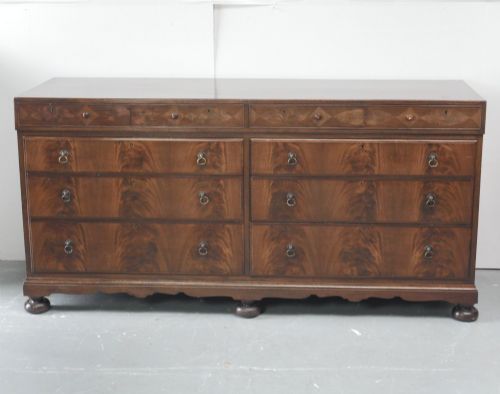
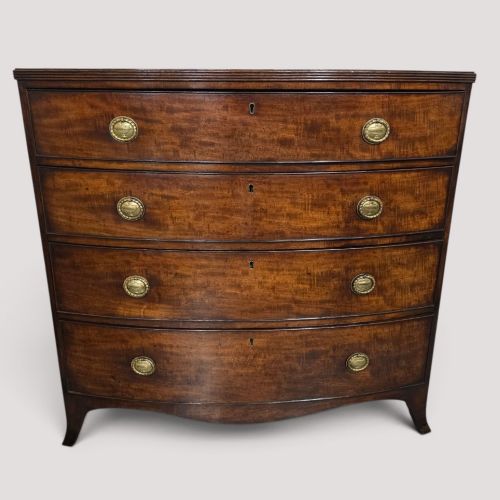
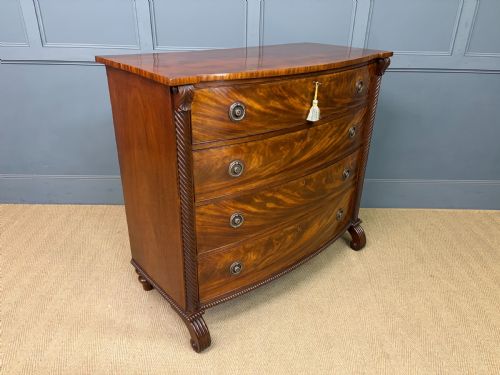
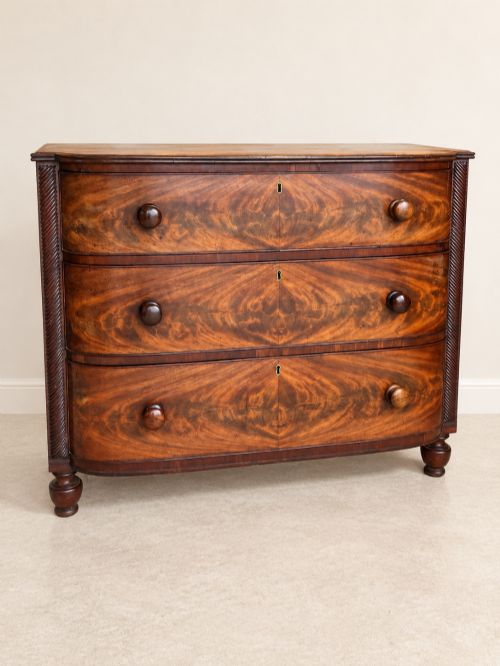
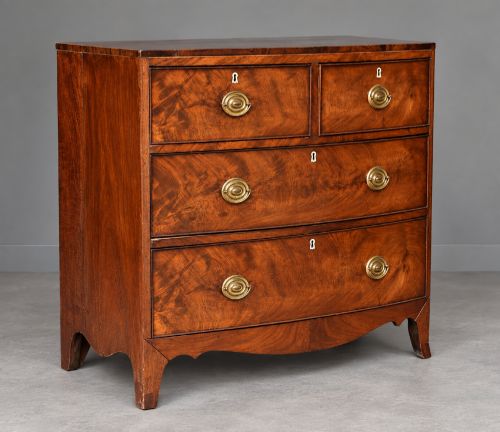
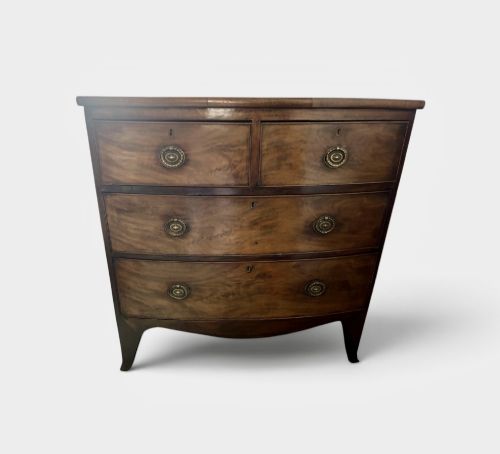
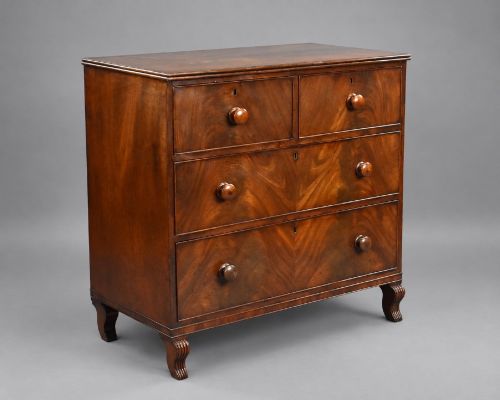
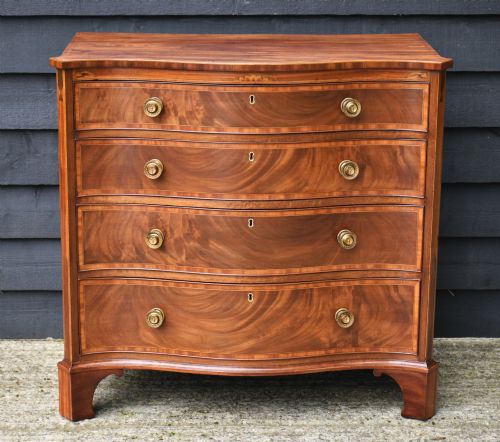
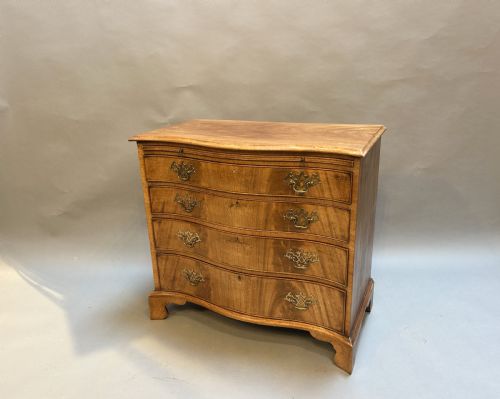
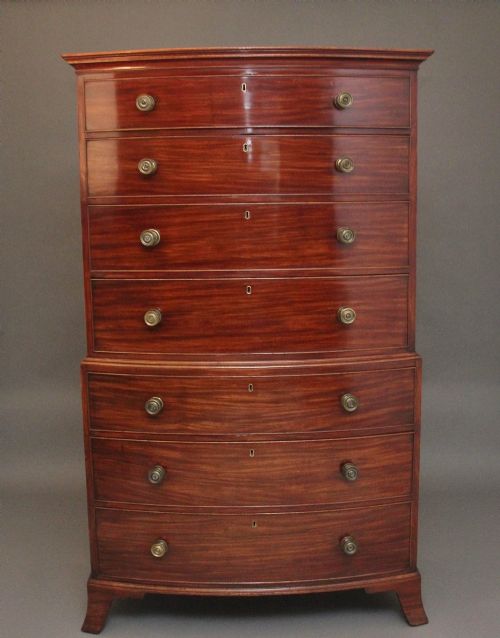
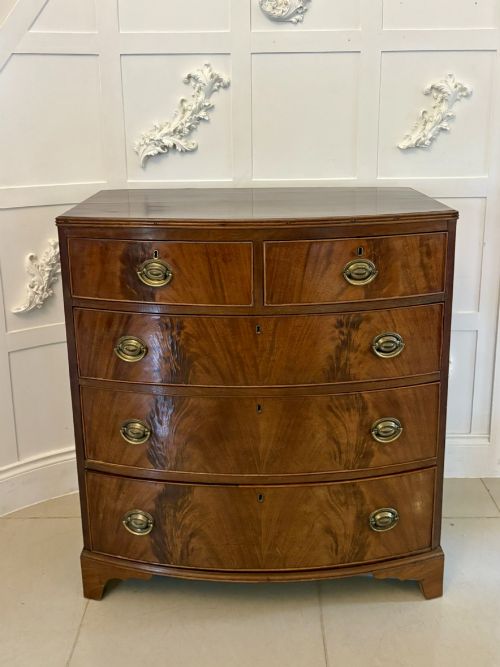
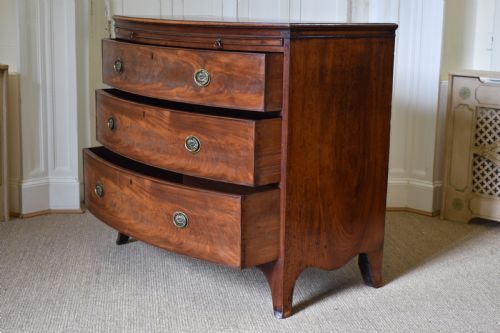
When you search for georgian flame mahogany drawers, you encounter storage furniture defined by figured wood veneers applied to sturdy carcases. Chests of drawers dominate the selection, appearing in both straight-fronted and curved silhouettes.
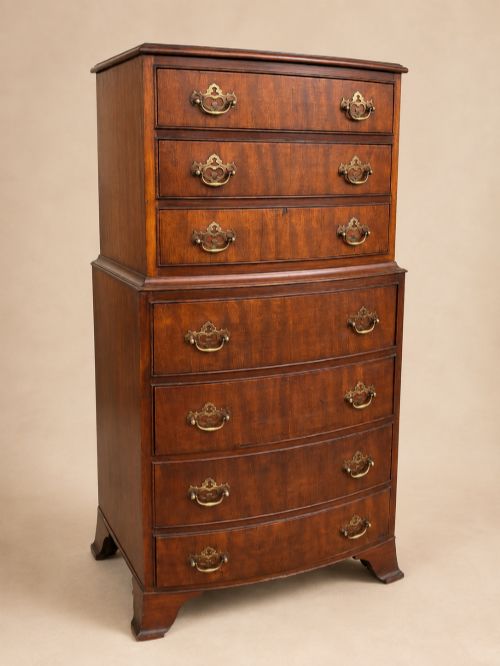
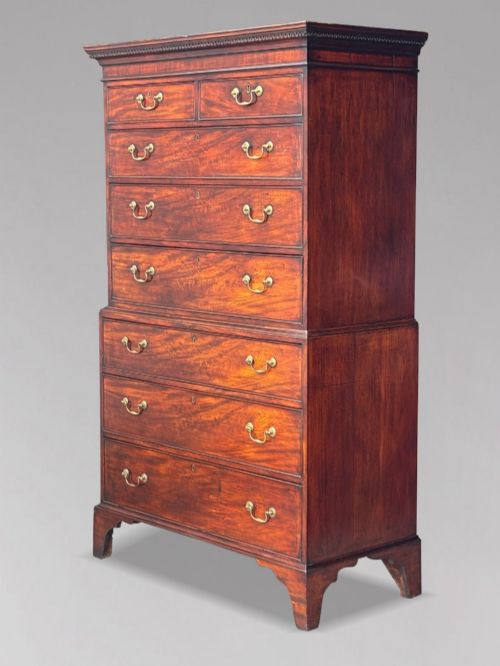
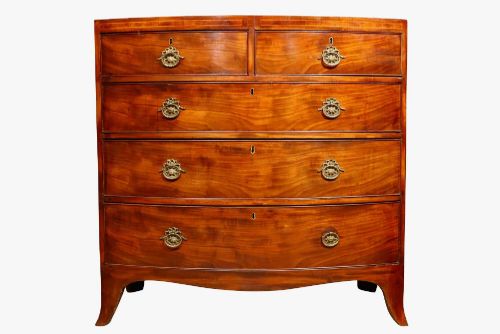
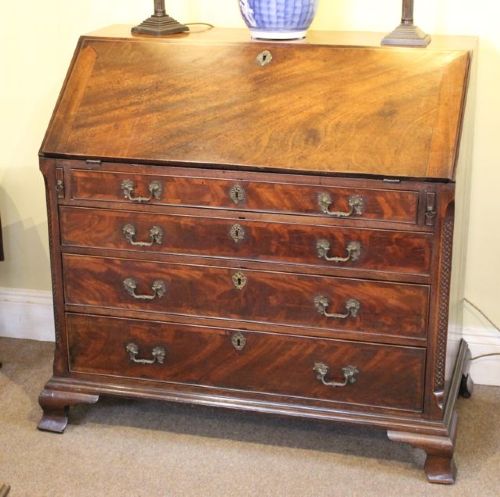
Bow front chests and tallboys are widely represented, alongside sideboards, bureaux and smaller bedside tables. The pieces span genuine Georgian and Regency periods as well as later Georgian Revival interpretations.
Makers utilised select timber cuts to create distinctive mottled and wavy patterns across the drawer fronts. These storage items served utilitarian domestic purposes while displaying refined decorative taste.
How they were made
Cabinet-makers applied thin slices of flame mahogany veneer over solid secondary timbers such as oak and deal. This technique maximised the visual impact of the figured grain across expansive drawer fronts and table tops.
Constructive integrity relied on traditional joinery methods, including dovetailed drawer construction and internal framing. Brass handles, escutcheons and occasional bone inlay added functional detail and contrast to the polished wood surfaces.
Certain Welsh regional variations feature a secret drawer hidden beneath the top moulding, kept away from casual inspection.
What varies in quality
The visual strength and symmetry of the veneer pattern dictate much of the distinction between standard examples and superior pieces. Skilled artisans selected cuts that mirrored across drawer banks, creating balanced optical movement.
Whytock & Reid
The Georgian Flame Mahogany Drawers Glossary
- Flame mahogany
- A veneer cut from timber where the branches join the trunk, producing a rippling, flame-like grain pattern. This timber forms the primary visual draw of the furniture.
- Bow front
- A convex curved cabinet front popular during the Georgian and Regency eras. It softens the linear profile of a chest of drawers.
- Serpentine
- A front contour characterised by a convex centre flanked by concave curves. This undulating shape requires advanced woodworking skill.
- Tallboy
- A vertical chest on chest configuration providing elevated storage capacity. They often combine deep lower drawers with smaller upper tiers.
- Cockbeading
- A narrow rounded moulding applied around the edges of drawer openings. It protects the drawer edges and frames the individual fronts.
Georgian Flame Mahogany Drawers: Frequently Asked Questions
What is flame mahogany?
Flame mahogany is a decorative wood veneer sourced from specific sections of the mahogany tree where the grain twists and catches the light. The resulting patterns resemble flickering flames across the surface of the furniture.
Cabinet-makers prized this figure for its dramatic visual movement, reserving it for the most prominent display areas like drawer fronts and table tops.
How do I date a chest?
Dating relies on observing structural characteristics, timber choices, and overall design proportions. Earlier Georgian pieces often feature oak linings and specific foot configurations, while later revival works adopt different construction signatures.
Examining the secondary woods inside the drawers and the style of the brass hardware helps confirm the manufacturing era.
Where should I place one?
These chests function effectively in bedrooms, hallways and living spaces where their polished wood tones can complement surrounding decor. Their substantial storage capacity makes them practical companions for daily organisation.
Positioning them away from direct sunlight and excessive heat sources protects the delicate veneer layers from drying out.
What is a bow front?
A bow front is a gently rounded convex facade that projects outward from the centre of the furniture piece. This design softened the rigid angles typical of earlier rectangular chests.
Mastering this curved shape demanded precise geometry from the cabinet-maker to ensure the drawers operated smoothly within the frame.